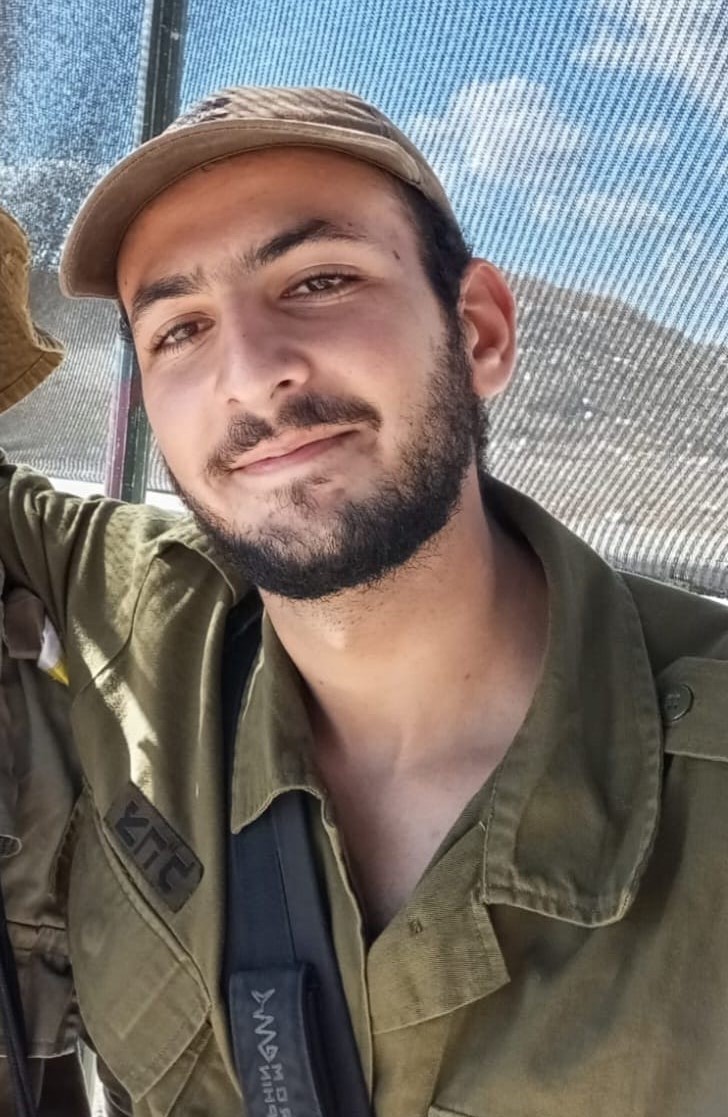
The story
The home in Nir Banim, a small and fertile kibbutz nestled in the southern expanses, was perpetually brimming with life. There was never a silent moment, no corner too quiet. Six children, Gur and his five younger siblings, filled the space with boundless energy, with peals of laughter, with small squabbles that quickly dissolved, and with an abundance of love. Gur, the son of Maayan and Ron, was born into this vibrant cauldron on the 2nd of Tishrei, 5765, which corresponds to September 17th, 2004, and from the very beginning, he seemed to be a quiet anchor within the sweet storm. Even as a swaddled infant, he appeared to carry an inner calm, a gaze that was both curious and serious, constantly seeking to understand the world around him, not merely to experience it. His parents, Maayan and Ron, recalled the long nights when he cried less than his siblings, preferring instead to observe, his large eyes tracking the flickering lights beyond the window, as if even then he was already connected to the open spaces that lay just outside their home. They made a conscious effort to grant each of their children the freedom to grow and develop in their own unique way, but with Gur, the bond with nature and the earth was innate, almost instinctive, something that sprang from the depths of his soul long before he could articulate it in words.
Nir Banim, in many profound ways, shaped Gur more than any other place could have. The moshav, with its verdant fields stretching to the horizon, its meticulously tended fruit trees, and the dusty paths that wound their way to the citrus groves, was for him not just a place of residence but an endless playground, an open-air laboratory for exploring the world. He was not a child who spent much time indoors, glued to a screen; instead, one could often find him for hours, either alone or with his friends, wandering among the paths, his hands instinctively reaching into the damp earth, examining fallen leaves, or intently following ants as they diligently carried crumbs far larger than themselves. He cherished the sensation of soil between his fingers, the rich, earthy scent of plants after the first rain, the vibrant chirping of birds that erupted from the trees in the early morning hours, when the air was still crisp and cool, untouched by the day's heat. Around the family dinner table, which was invariably noisy and alive with conversation, Gur would often bring with him stories of his latest discoveries in the fields – a sparrow that had built a particularly intricate nest, the distinct tracks of a jackal he had spotted along the way, or a rare wild flower that had bloomed in an unexpected spot. His parents, both deeply connected to the land and to the values of hard work and cultivation, listened to him with patience and genuine interest, fostering his innate curiosity and nurturing his profound love for his surroundings. "Look, Abba," he once said, holding up a dry, heart-shaped leaf between his small fingers, "even dead things have beauty." Ron smiled, gently stroking his son's hair, "You're right, my son. Beauty is everywhere; you just need to know how to look for it."
As he grew a little older, Gur learned to discern the tiny details that many adults often overlooked. He could identify almost any bird by its unique song, distinguish between various types of trees by the shape of their leaves and bark, and unerringly find the secret spots where the first mushrooms would sprout after a cleansing rain. He was a child profoundly connected to life in its entirety, even to those aspects hidden from plain sight. When he was seven, Maayan recalled, he returned home with a small, injured, limping fox cub he had found on his way to school. Unlike other children who might have been startled or simply walked past, Gur approached it cautiously, without any trace of fear, and gently tried to feed it. He sat with the frightened creature for hours, soothing it with a quiet, gentle tone of voice, until his parents found a way to transfer the fox to a wildlife rescue organization. This incident, in its simple humanity, spoke volumes about Gur's character – his deep empathy, his boundless love for every living creature, and an unwavering determination to protect those in need. He wasn't a child who sought to stand out or draw attention to himself, yet his presence was always palpable, quiet but undeniably strong, like an ancient tree deeply rooted in the earth, a steadfast part of the landscape.
His elementary and high school years unfolded in and around Nir Banim, and Gur continued to cultivate his deep-seated love for nature and the open expanses. He was a serious student, a loyal friend, but he always found his way back to the fields and the groves. Instead of spending his afternoons at the mall or in front of a computer screen, he preferred to grab his bicycle and ride along the dirt paths, discovering hidden corners, climbing gentle hills, and watching the magnificent sunsets that painted the skies in fiery reds and oranges above the southern plains. His friends remembered him as "the man of the field," the one who always knew where to find the best spot for a picnic, the most interesting route for a hike, or the most picturesque angle for a landscape photograph. He didn't need grand words to express his appreciation for the beauty surrounding him; a brightened look in his eyes, a small, knowing smile, or a quiet gesture towards a passing flock of birds was often enough. He learned to photograph these landscapes, to capture with his lens the magical moments of nature – glistening dew drops on a morning leaf, a hawk soaring effortlessly in the vast sky, a herd of gazelles grazing peacefully in the distance. His photographs, which adorned the walls of his home, were more than mere pictures; they were a profound expression of his soul, a testament to his unconditional love for this land, for every tree, every flower, every single grain of earth.
His connection to the land was not merely aesthetic; it was a bond of profound responsibility and commitment. He understood, even from a young age, that this beauty was also delicate and vulnerable, requiring constant care and protection. This idea solidified within him throughout his teenage years and led him to a natural and clear decision: a year of pre-military service with the Society for the Protection of Nature. For Gur, this was not just a casual choice or a way to defer his military service; it was the fulfillment of a deep, internal calling. He yearned to contribute, to do something truly meaningful for the very thing he loved above all else. And so, upon completing his high school studies, instead of embarking on a grand post-graduation trip or starting a job, he packed his backpack and set out for a year of intense, hands-on work dedicated to the environment.
That year of service with the Society for the Protection of Nature proved to be a foundational period for Gur, shaping his personality and deepening his connection to the land even further. He didn't just "volunteer"; he lived this work with every fiber of his being. In the mornings, he would rise early, when the air was still cool and invigorating, and set out on his tasks. One day, he might find himself clearing hiking trails in the Jerusalem mountains, his hands caked with earth, sweat beading on his forehead, yet a wide smile gracing his face as he watched the path gradually take shape beneath his efforts. On another day, he would participate in complex nature surveys in the Negev, crawling on all fours among thorny bushes, meticulously documenting every detail, every sign of life, striving to decipher the desert's ancient secrets. The nights were often quiet, illuminated by a canopy of stars, where he would sit with his fellow service year friends around a crackling bonfire, sharing experiences, dreams, and hopes. He learned to collaborate, to lead when necessary, but also to listen attentively and respect diverse opinions. He learned the true meaning of responsibility – not just towards a specific task, but towards a community, and most importantly, towards nature itself.
Memories from that year flooded the minds of his service year friends: Gur, with his faded straw hat, gently leading a group of enthusiastic children along a stream, explaining to them about fox tracks and medicinal plants. His voice was soft and patient, his eyes sparkling with genuine delight as he witnessed the burgeoning curiosity in the children's faces. He was capable of sitting for hours by a small pool of water, observing the tadpoles and tiny fish, trying to comprehend the intricate dynamics of the miniature ecosystem. He didn't view his work merely as a chore; he saw it as a sacred mission. "This land," he once told one of his friends, as their eyes rested upon a breathtaking view from a high cliff, "it's not just a piece of earth. It's a story. And our role is to protect every single page of that story." For him, protecting the landscapes and nature was not just a matter of conservation but of identity. He believed that our connection to the land passed through our connection to the very soil, to the flora and fauna, and that safeguarding them was, in essence, safeguarding our national soul. He experienced the land not merely as a place of residence, but as a living, breathing entity, an inseparable part of himself. The profound satisfaction derived from a day of arduous physical labor under the sun, witnessing the tangible results of his efforts – a clean trail, a well-tended forest, a rehabilitated landscape – was for him a reward greater than any other. He would return home on weekends, exhausted but profoundly happy, with fresh stories of the sights he had seen, the people he had met, and the invaluable lessons he had learned from nature. His parents watched with pride as that year of service built him up, strengthened him, and transformed him from a boy into a young man imbued with a deep sense of responsibility and purpose.
And then came October 7th. That morning, which irrevocably altered the face of the nation, found Gur, like many of his generation, deeply engrossed in contemplating his future. He had completed his year of service and was considering his next steps, perhaps pursuing higher education, or continuing to work in the environmental field. But as the news began to pour in, as the horrifying images flooded screens and hearts, as pain and shock gripped the entire country, all his plans were irrevocably shattered. The sounds of the rockets, the echoes of the inferno, the cries of anguish – all these resonated deeply within his soul. The moshav of Nir Banim, where he had grown up and which he loved so dearly, lay perilously close to the Gaza Strip. He knew every path, every hidden corner, every field in the area. The agonizing realization that his home, his land, the very things he had worked for and loved, were being attacked with such savagery, was utterly unbearable. He watched as his friends and family members were called up for emergency reserve duty, as surrounding communities were evacuated, as fear and uncertainty hung heavy in the air. Amidst this chaos, the decision ripened within him with swiftness and absolute clarity.
The love he felt for the land, the same love that had driven him to explore it, to cultivate it, and to preserve its landscapes, now transformed into a profound commitment to defend it, not merely with a plow or a hoe, but with a weapon. He simply could not stand by idly as the earth he cherished so deeply burned beneath the feet of an enemy. His conversations with his parents were brief and unequivocal. "I have to enlist," he told his father, Ron, his eyes blazing with an unshakeable resolve, "I cannot stay home while all of this is happening." Ron, who had watched his son grow into a man of the earth, understood the powerful driving force behind this decision. "We are with you, Gur," Maayan said, tears choking her throat, but in her heart, there was also an immense pride for her son. Gur did not hesitate. He knew precisely where he wanted to go: to the Golani Brigade. For him, Golani was a symbol of that very earth, of that deep-seated commitment to the terrain, to the ground itself, to face-to-face combat, much like the physical and direct work he had always loved in the field. He wanted to be at the forefront, to protect what others sought to take away.
December 10th, 2023. Gur's enlistment day. The air was thick with a palpable tension and a steely resolve. Hundreds of young men, just like him, stood in line at the induction center, their faces serious, all part of the massive wave of enlistments that followed the events of October 7th. The farewell from his family was difficult, yet imbued with profound meaning. Long, lingering hugs, whispered words of love and worry. "Take care of yourself, my son," Maayan whispered, her head resting on his broad shoulder, inhaling the familiar scent of his clothes one last time before he would exchange them for olive green fatigues. "I'll be back," Gur promised, his voice steady and firm. "Take care of the home." Neta, Abigail, Ivri, and Ira, his younger siblings, stood around him, their eyes filled with a mixture of admiration and sadness, already seeing him as a hero even before he donned his uniform. They parted from him with the solemn understanding that he was embarking on a momentous mission, a mission that was greater than any of them.
The transition from the quiet civilian life to the harsh military world was swift and brutal. Gur found himself plunged into the intense chaos of Golani basic training, amidst dozens of other young men, all sharing the same purpose, the same unwavering determination. The days of training were grueling, exhausting, both physically and mentally. Long hours of drills, arduous marches, crawling through thick mud, push-ups until his muscles screamed in protest, and all of this under the looming shadow of an ongoing war. The smell of sweat, dirt, and dust became an inseparable part of his daily existence. He learned to disassemble and reassemble his weapon with his eyes closed, to shoot with precision, to navigate through unfamiliar terrain, to operate effectively under fire. But Gur, with his background in manual labor and his intimate knowledge of the outdoors, adapted with remarkable speed. He never complained, even when his muscles ached and his body protested. He viewed every challenge as an opportunity to learn, to grow stronger. "This land," he once told a teammate, both of them panting after a long, arduous march, "it's not just dirt. It's a part of us. And we must know how to walk on it, how to fight for it." His teammates deeply appreciated his quiet demeanor, his calm resolve, and his ability to remain focused even in the most difficult moments. He was often the anchor, the one who always seemed to find a solution, to calm frayed nerves, or simply to offer a supportive shoulder. He didn't need to speak much for his presence to be felt. He was an outstanding soldier, not because he sought honor or recognition, but because he was wholeheartedly committed to his mission.
He completed his basic training, and subsequently his advanced training, and then joined Battalion 13 of the Golani Brigade. The battalion, like the entire brigade, had been deeply involved in the fighting since the war's inception, and its soldiers had endured harrowing experiences. Gur entered a complex operational reality, where every day presented a new challenge, and every mission was critical. He learned the true meaning of teamwork, mutual responsibility, and unwavering discipline. He witnessed his comrades fighting with immense courage, risking their lives for the sake of the country, for the sake of home. He became an integral part of the operational framework, a vital cog in a complex machine of defense and offense. The months that passed from his enlistment until November 2024 were filled with relentless intensity. He moved from one training exercise to another, from one mission to the next, mastering the intricacies of combat in the field, becoming proficient in every aspect of his role as an infantry fighter. Communication with his family was maintained through brief WhatsApp messages and snatched phone calls whenever possible. "I'm okay," he would text his mother, "Take care of yourselves. Love you." He knew they worried incessantly, but he wanted to reassure them, to promise them that he was fine, that he was doing what needed to be done.
The tension in the North escalated significantly during these months. Raids, exchanges of fire, and constant threats became an unsettling part of the daily routine. Gur and his battalion were dispatched to the northern sector, to southern Lebanon, to defend the country's borders and thwart any attempt to harm the northern communities. The atmosphere was tense, heavy, imbued with the unsettling feeling that any moment could erupt into a significant event. The nights were cold, quiet, yet filled with an acute sense of alertness. Every rustle, every shifting shadow, heightened the soldiers' senses. Gur, with his extensive field experience and his inherent love for nature, was exceptionally skilled at identifying movements, understanding the terrain, and reading the subtle cues of the environment. He was often the eyes and ears of his team, the one who consistently noticed the tiny detail that could make all the difference between safety and danger. His profound connection to the land, the connection that had begun with small hands digging in the soil of Nir Banim, had now transformed into a crucial tool in warfare, an ability to detect danger, to protect his comrades.
On the 19th of Marcheshvan, 5785, which was November 20th, 2024, Gur set out with his comrades on an operational mission in southern Lebanon. It was a bright, clear day, yet the air was thick with the scent of readiness and anticipation. They trekked through mountainous terrain, dense with vegetation, acutely aware of the dangers lurking around every corner. Their mission was vital – to locate enemy infrastructure and neutralize terrorist activity that threatened the northern communities. Gur was focused, his steps sure and deliberate, his eyes meticulously scanning his surroundings. He identified every subtle change in the topography, every broken branch, every unusual sign. His deep connection with the land, with its hidden paths, with its dense foliage, now served him as both a shield and a powerful tool in combat.
And then, with brutal suddenness, battle erupted. Abruptly, from an ambush, heavy fire was unleashed upon them. Bursts of gunfire echoed from all directions, and the quiet landscape that had moments before been so still transformed into an inferno. Gur and his comrades responded with lightning speed and professional precision, taking cover, returning fire. The air filled with dust, the acrid smell of gunpowder, and the deafening sounds of shots and explosions. Amidst the chaos, Gur operated with astonishing composure. He knew that every second counted, that every action had to be precise and decisive. He saw his comrades fighting valiantly alongside him, protecting one another with fierce determination. His heart pounded fiercely in his chest, but he did not lose his focus. He saw the danger, he saw the enemy, and he understood the imperative need to protect his friends, to protect his country.
He fought with immense courage, fire in his eyes, an unyielding resolve in his heart. He quickly identified the source of the enemy fire, aimed his weapon with practiced precision, and returned accurate shots. He moved strategically through the terrain, utilizing his camouflage skills and his deep knowledge of the environment, attempting to pinpoint the enemy's positions. The war, which had begun with the horrifying images of October 7th, had now reached him personally, into his focused eyes, into his hands gripping his weapon. He wasn't thinking of heroism in some abstract, grand sense; he was thinking of his friends, of his family, of Nir Banim, of the land he loved so profoundly. He fought for all of these. And in the intense blaze of battle, amidst the volleys of gunfire and the concussive blasts, an enemy bullet struck him. Gur Kehati, the Golani fighter, the man of the earth, fell in battle in southern Lebanon. He was twenty years old.
The bitter news reached Nir Banim like a thunderclap on a clear day. The knock on the door, the serious faces of the IDF officers, and the terrible words that shattered the world of Maayan and Ron. The home that had once resonated with life, that had echoed with the laughter of six children, fell silent for a moment. Screams of anguish, tears that streamed down faces, and then a painful, heavy silence, the silence of shock and disbelief. Neta, Abigail, Ivri, and Ira, Gur's siblings, simply could not comprehend it. Their hero, the one who had always protected them, the one who had shown them the beauty of nature, had been taken from them far too soon. A pall of grief descended upon the entire moshav, upon the close-knit community that had watched Gur grow from a modest boy into a young man full of unwavering values.
Gur was laid to rest in the civilian cemetery in Nir Banim, the very earth he had loved so dearly, where he had first taken his steps, where he had played as a child, where he had dug and explored, now embraced him in its final embrace. Thousands accompanied him on his last journey – family, friends, childhood companions, his comrades from the pre-military service year, and his commanders and brothers-in-arms from the Golani Brigade, all standing stooped with grief, their eyes red from tears, yet also filled with an immense pride for the fallen warrior. They eulogized him, speaking of his profound inner peace, his boundless love for the land, and his unyielding resolve. They spoke of his gentle smile, his wise, knowing eyes, and the way he knew how to truly listen and understand. On his gravestone, still fresh and radiating pain, were inscribed the words: "Sergeant Gur Kehati." His rank had been posthumously elevated, a mark of appreciation and recognition for his heroism and his invaluable contribution. Sergeant. A rank that symbolized not only his military service but also his being a symbol and an exemplar for an entire generation.
The void Gur left behind is immeasurable. He is missed by Maayan and Ron, his parents, every single day, every single moment. He is missed by his siblings, who lost a beloved older brother and a profound role model. He is missed by his friends, who lost a loyal companion and a partner on life's journey. But from this deep, aching pain, a sense of resurgence also emerges. Gur did not fall in vain. He fell defending his home, the land he loved so deeply, the values in which he so firmly believed. He was part of the generation that was forced to stand at the breach, to defend its nation against enemies who rose up against it. He was a hero not because he was fearless, but because he chose to act despite his fear, despite the immense danger. He was a hero because his boundless love for this land, for its people, led him to the battlefield.
The legacy of Gur Kehati lives and breathes. It lives in the verdant fields of Nir Banim, in the wind that whispers through the citrus trees, in the vibrant birdsong that greets the morning. It lives in the stories told about him, in the hearts of those who remember his quiet smile and his unwavering resolve. It lives in the ongoing struggle for the existence of the State of Israel, a war in which Gur was a soldier, a defender, and a fallen hero. He was a symbol of that deep Israeli spirit – a spirit of profound love for the land, of diligent hard work, of mutual responsibility, and of a willingness to sacrifice the most precious of all for the sake of the collective. The memory of Sergeant Gur Kehati, the man of the earth who loved his country as if it were an inseparable part of himself, will be cherished in the heart of the nation forever, as a testament to human heroism, to inner peace, and to a love that is unconditional, a love worth fighting and dying for. He fell in the War of Revival, and he is an integral part of its story, a story of a people who do not surrender, who rise again, and who will continue to build and to prosper on this land, thanks to heroes like Gur.
In the media
Articles
- Investigation into Gur Kehati’s death sparks public reaction
7 канал — Аруц Шева ·
- Family of slain IDF Sgt. Gur Kehati
Jerusalem Post ·
- Gur Kehati’s Family Dismantled His Military Headstone
וואלה ·
- An Interview with Gur Kehati’s Father and Grandfather
N12 ·
- Family of slain soldier rages at conference
Times of Israel ·
- “A cowardly chief of staff who is afraid to stand his ground against a corrupt political leadership”
אייס ·
Memorial sites
- Yizkor — Sergeant Gur Kehati
משרד הביטחון — יזכור
- Gur Kehati
צה״ל
Memorial projects
According to his grandfather Asaf Agmon's remarks quoted in Israel Hayom, Daniel Garmandy, a former participant taught by Gur, set out a chair in his memory at the end of a Society for the Protection of Nature in Israel young guides' course.
Iris Shani dedicated the poem “You Are the Ram” to Gur on page 29 of Iton 77, issue 440 (December 2024–January 2025). The dedication identifies his age, community, battalion and date of death.
Stories told about them
Gur spent a year of volunteer service with the Society for the Protection of Nature in Israel, in its Haifa hiking clubs. Alongside his love of nature and the outdoors, he restored cars and motorcycles and had extensive technical knowledge.
Life & service
Profile
Service
- Rank
- Sergeant
- Unit
- Golani Brigade
- Honours
- Posthumously Promoted
- Battle Location
- In Southern Lebanon
Family
- Father
- Ron
- Mother
- Maayan
Burial
Cemetery
Nir Banim
Tributes & remembrance
נזכור אותך תמיד ומתגעגעות, והיית המדריך הכי טוב בעולם
לא נשכח
כל "הותר לפרסום" הלב מחסיר פעימה, רק שלא יהיה משלנו. הפעם הלב נשבר לרסיסים. גור קהתי נער מקסים וחיית שטח. נזכור אותך לעד חיבוק ענק לכל המשפחה המקסימה
יהי זכרו ברוך. כאב ושבר גדול.
תהא נשמתם צרורה בצרור החיים
מתגעגע חבר, חסר לי חלק מהלב מאז היום הנורא ההוא
יהי זכרך ברוך גיבור
אני מתגעגעת גורי
לזכרך גור, לזכר האדם שהיית , הערכי הרגיש אוהב הארץ, ולהביע כאב על מותך הטרגי והכה מיותר
יהי זכרך מהפכה!!
כשההלוויה קורעת הלב של הנכד של אסף אגמון החלה, כמה גברים חסונים נשאו בידיהם את הארון כדי להביא את נכדו, סמל גורקהתי מגולני למנוחת עולמים. הארון הורד בעזרת חבלים לתוך הבור שנחפר מבעוד מועד בבית העלמין בניר בנים ו... הארון לא הצליח להיכנס פנימה. במשך דקות ארוכות הגברים ניסו להכניס את הארון, לדחוף מהצדדים, לדחוף מלמעלה, לגרד עוד מקום לדפנות... והארון לא נכנס. אמרתי בשקט לאורלי בר לב שהיתה לידי "האדמה כנראה עדיין לא רוצה לקלוט אליה את גור" ואורלי מיררה בבכי וענתה לי "כי עדיין לא הגיע הזמן שלו להיכנס לאדמה"... ושנינו דמענו. ואז הביאו טוריות ואת חפירה, ובתום מאבק ארוך עם האדמה הסרבנית הארון נטמן והטקס קורע הלב התחיל. כשהגיע התור של 'סבא אסף' לשאת הספד, אסף עמד דקה ארוכה מבלי יכולת לדבר, התחיל לומר כמה מילים בקול מרוסק ואז, בכוחות שאין לי מושג מאיפה גיבור ישראל הזה הביא, אסף אגמון פתח בהספד מלא אהבה על נכדו האהוב וסיים בדברי תוכחה מאוד קשים כנגד הממשלה, כנגד הקצונה הבכירה בצה"ל ש'פוחדת להשמיע את קולה' וכנגד כולנו שמקבלים את המצב. יש לי הרגשה שההספד הנוקב והמצמרר של אסף יילמד עוד שנים רבות בשיעורי ההיסטוריה ותקומת ישראל.
יהי זכרו ברוך
יהיה זכרו ברוך
אדם יקר שמח שזכיתי לבכיר אותך,גיבור ישראל תודה רבה
לא נשכח
גור , בן של בן דודה
דור שלא הכרתי , רק מהסיפורים בלוויה
אבל ההכרה הגיעה מהיר , היה מספיק לראות את שם המשפחה והפנים וישר הבנתי את הקשר המשפחתי
יהי זכרו ברוך
עצוב. יהי זכרך ברוך. שהמשפחה לא תדע צער יותר.
בליבנו תמיד.
גור יקר ואהוב
איש חינוך ואהבת הארץ וטבע שהאדמה זרמה לו בעורקים .
איש שטח , חובש בחסד ולוחם .
תמיד זוכר אותך עם חיוך ומצב רוח שטות .
שותף שלי לכל כך הרבה הרפתקאות, תמיד שהיה לי מצב רוח לעוד הרפתקה ידעתי לפנוך אליך גור.
אוהב אותך לעד חבר שלי
בדרך ללוויה של גור הרגשתי שסבא רבא שלי (מתס), שהוא גם סבא רבא של גור, נמצא איתי, ומלווה יחד איתי את גור בדרכו האחרונה. ובדיוק כשהרגשתי את זה, חלפה על פניי שיירה של רכבים צבאיים. השיירה של גור.
כואב, קשה. לא נשכח.
יהי זכרו ברוך.
יהי זכרך ברוך!
גיבור ישראל
גור, שבכלל לא היה גור, עלם חמודות, חייכן, נדיב ומצחיק. כל כך כך כך עצוב ומיותר שהלכת מאיתנו. שמור עלינו שם מלמעלה.
אני תמיד איתך, אני זוכרת כל צחוק איתך, כל בדיחה מטומטמת וכל חיוך קטן שאז-היה נראה חסר משמעות .
אם הייתי יכולה לראות אותך אחרי מותך, אפילו רק לדקה אחת, הייתי רוצה פשוט לוודא שהכל בסדר שם, ושטוב לך-הייתי גם אומרת לך בדיוק את כל שאמרתי לך פה, ומספרת על איזו דמות משמעותית אתה בשבילי ועל כך שעדיין עוברות ביני לבין חברותי שהכירו אותך, הבדיחות עדיין נשארו-כמו ניבי האפלה, ועוד דברים שפשוט הפכו ליום יומיות
לא נשכח
לחברי היקר אסף אגמון לזכר נכדו גור ושלא תדע עוד צער
הלב כואב כל כך על פרח מיוחד במינו
נזכור אותך בחן האישי שמחת החיים החום והגאגה. היית איש מורכב ושלם. ילד סקרן עם עיניים מנצנצות משמחה. תנחומים למשפחה הנפלאה. יהיה זכרו ברוך
כואב. עצוב. מכעיס
אוהב אותך אח יקר, אולי לא יצא לנו לדבר הרבה אבל בפעמים שכן הארת לי את היום,יהי זכרך ברוך
יהי זכרו ברוך. לבי עם המשפחה. אתכם ומאחוריכם תמיד.
פרח יקר שנקטף בתרם עת עצוב כואב לא נתפס ,יהי זכרו ברוך
גור היקר, מדריך הסיירות של איתי, וקולגה של מיכל בשנת השירות, אוהב אדם וטבע, תמיד תהיה בליבנו.
תהי מנוחתך עדן
חיל הרפואה מתייחד עם זכרם של נופליו.
אנו מדליקים נר לזכר כוחות הרפואה שנפלו בעת מילוי תפקידם, במסירות אין קץ ובאהבת האדם.
אנו מרכינים ראש לזכרם, מוקירים את תרומתם ומתחייבים לשאת את מורשתם עמנו, בכל אשר נלך.
כי מדי דברי בו, זכור אזכרנו עוד. (ירמיהו לא)
The soldiers’ blood is on all our hands.
Source:אייס
Read the Hebrew original
דם החיילים על הידיים של כולנו.
He was an outdoorsman, a soul everyone admired
Source:ynet
Read the Hebrew original
הוא היה איש שטח, נשמה שכולם העריצו
I have another son in the army. How am I supposed to send him?
Source:זמן ישראל
Read the Hebrew original
יש לי עוד בן בצבא. איך אני אמורה לשלוח אותו?
We were betrayed to an unbelievable degree
Source:זמן ישראל
Read the Hebrew original
נבגדנו ברמה שלא תיאמן
It is a shock, it hits me where it hurts most
Source:N12
Read the Hebrew original
זה הלם, פוגע בי במקום הכי קשה
It was a plot, not a mission
Source:N12
Read the Hebrew original
זו הייתה מזימה לא משימה
When you read the findings of the investigation, you understand the scale of the crime, the inaction, and the disgrace
Source:7 канал — Аруц Шева
Remembrance Day addresses
יום הזיכרון לחללי מערכות ישראל התשפ"ה – 2025
בכל יום שעובר, אזכור יותר! אזכור, את אלו שיצאו עימי לקרב ולא שבו, ולהם אין מי ידמה ומי ישווה. אזכור, שהכאב לא יעבור לעולם, והזמן, הוא לא מרפה ולא מרפא. אזכור, את שיברון הלב הגובר ואת הבית שבוער. אזכור, את צדקת הדרך, ואשבע שוב, שמה שהיה לא יהיה יותר. אזכור, שיותר מכל דבר אחר – אני חסר! ביום הזה, אני נתקף געגוע לדמותם, לחיתוך דיבורם, לחיוכם, ומדליק נר לזיכרון דרכם ומורשתם!
משרד הביטחון
אגף משפחות, הנצחה ומורשת
יום הזיכרון לחללי מערכות ישראל התשפ"ה – 2025
בכאב, בהצדעה ובתקווה אני מתכבד להדליק נר זיכרון זה. השנה, כשאנו נלחמים במלחמה ארוכה, רב זירתית וצודקת, הזיכרון נושא משמעות עמוקה. ביום זה נעצור ונתייחד עם זכרם של טובי בנינו ובנותינו שנפלו בהגנה על המדינה. מורשתם היא המצפן שמתווה את דרכינו, והיא המעניקה לנו כוח להמשיך ולהגן על מדינת ישראל ותושביה. משפחות יקרות, אנו מרכינים ראשנו ומתחייבים שנעמוד לצידכן תמיד. יהי זכר הנופלים ברוך.
אלוף דדו בר כליפא
ראש אגף כוח האדם, צה"ל
יום הזיכרון לחללי מערכות ישראל התשפ"ה – 2025
בשעה שאנו זוכרים את גודל תרומתם ועומק מסירות נפשם של טובי בנינו ובנותינו, נופלי מערכות ישראל לדורותיהן, ממשיכים צה"ל וכוחות הביטחון במימוש המשימה למענה לחמו ועבורה נפלו: הכרעת אויבינו מדרום, מצפון, ביהודה ובשומרון, וגם בזירות רחוקות יותר. בהערכה רבה ובגאווה אדירה אנו מרכינים ראש בפני הנופלים והנופלות, מאמצים את משפחותיהם אל לבנו, וממשיכים במשימה להבטחת קיומה של ישראל לדורי דורות. יחד נעשה ונצליח.
רב אלוף אייל זמיר
הרמטכ"ל, צה"ל
יום הזיכרון לחללי מערכות ישראל התשפ"ד – 2024
כאשר דגלינו מורדים לחצי התורן וראשינו מורכנים לזכר הנופלים והנופלות במערכות ישראל, ממשיכים לוחמי צה"ל ומפקדיו בלחימה בדרום, בצפון, ביהודה ובשומרון ובזירות נוספות. על כל דור מוטלת המשימה של הגנת העם והארץ – משימה שאף פעם אינה פוסקת. נצדיע בגעגוע ובגאווה לנופלים ולנופלות, נחבק את משפחותיהם, ונמשיך ברוח הציווי שהותירו לנו. עם ישראל חי.
רב ניצב יעקב שבתאי
המפקח הכללי, משטרת ישראל
יום הזיכרון לחללי מערכות ישראל התשפ"ד – 2024
אחיי הנופלים, כל נר הוא זיכרון יחיד ומיוחד, על חיים שהיו ואינם, געגוע שנצרב עמוק בלב, עולם ומלואו. הנרות כולם הם זיכרון של אומה כי לעולם לא עוד, בשורת הציונות וקוממיות ישראל. זיכרון כי הדרך לעם חופשי בארצנו עוברת דרך מסדר הנופלים. אור הנר יזכיר לנו את מסירות נפשכם להציל חיים, להגן על הבית. הנרות מסמנים לנו נתיב גבורה ערכי מחייב שאנו מצווים ללכת לאורו. נמשיך להילחם ולהוסיף אור מתוך אמונה בנצח ישראל.
יואב גלנט
שר הביטחון
יום הזיכרון לחללי מערכות ישראל התשפ"ד – 2024
בהצדעה ובכאב, בשם צה"ל כולו, אני מדליק נר זיכרון. בעיצומה של מלחמה, הזכרון נושא משמעות יום-יומית, שעבר והווה מתלכדים בה. לאורם של הנופלים נמשיך לצעוד, חיילי הסדיר והמילואים. לאורם של הנופלים נמשיך להגן על ארצנו ועל מולדתנו, גם כשהמחיר כבד. להבת-הזכרון תבער בנו בעודנו ממשיכים להלחם ונזכור את הנופלים ואת אומץ ליבם. משפחות יקרות, צה"ל מרכין היום ראש, מצדיע לכן וכואב איתכן. יהי זכר הנופלים ברוך.
אלוף יניב עשור
ראש אגף כוח האדם, צה"ל
יום הזיכרון לחללי מערכות ישראל התשפ"ד – 2024
בהוקרה, בגאווה ובכאב שאין לו סוף, אני מתכבד להדליק נר לזכרם של הנופלים והנופלות במערכות ישראל. סיפור חייהם בארץ הזאת, מסכת שירותם, גבורתם והקרבתם – הם סיפורה של הארץ הזאת, אך גם סיפור המחיר הכבד שהיא תובעת מאוהביה. מחויבותנו לזכר הנופלים ולדרך שהותירו לנו ניצבת תמיד לנגד עינינו. את המשימה שלא זכו להשלים, משלימים כיום, וישלימו, אנשי כוחות הביטחון, הממשיכים בדרכם ולאורם. יהי זכרם של הנופלים ברוך.
משרד הביטחון
אגף משפחות, הנצחה ומורשת
יום הזיכרון לחללי מערכות ישראל התשפ"ד – 2024
בחרדת קודש אני מתכבד להדליק נר לזכרם של חללי מערכות ישראל, חברנו שנפלו, מראשית היציאה מהחומות ולאורך כל שנות עצמאותנו המדינית והציונית, מהווים תמרור זיכרון לדרך חיינו ולמחוייבות הלאומית להנצחת זכרם. דרכם נותרה דרכנו ומורשתם נר להמשך עשייתנו. יהי זכרם ברוך!
בני גנץ
שר הביטחון
יום הזיכרון לחללי מערכות ישראל
נזכור אותם, כולנו יחד. כל אחד ואחת מהם, מדי יום ביומו, והיום ביתר שאת, כך – לנצח. "כי מדי דברי בו זכור אזכרנו עוד"
משרד הביטחון
אגף משפחות, הנצחה ומורשת