
The story
In Kibbutz Masilut, nestled in the Beit She’an Valley, on the seventh day of Shevat, 5728, which was February 6, 1968, a boy named Gil was born. He was the second son of Tamar and Natan, a younger brother to Yaron, who eagerly awaited him at home, and, in time, an older brother to little Shiri. “Gili,” his mother affectionately called him, a soft sound that captured his quiet, composed nature. His friends, who recognized something unique in him, nicknamed him “Gilgul”—a name perhaps reflecting his depth and his ancient, expansive soul. Gil grew up in the kibbutz as a child of the earth; from his earliest years, he was connected to the clods of the fields, to the open air, and to the sun overhead the valley. He was an island of calm in a vibrant world of children, radiating stability, serenity, and a quiet, steadfast love. His mother vividly recalled how, in the children’s house, the caregivers and counselors would always ask her permission to place children struggling to adjust in his room—those who hadn't found their place or had social difficulties. Gil, with his maturity and inner nobility, always agreed without hesitation to open his personal space to anyone in need of a safe haven. In his room, these children found release, quiet, and a listening ear, often without many words, simply through his calming presence.
When Gil was only five years old, a terrible tragedy struck the family, changing the course of their lives forever. A horrific car accident claimed the life of his father, Natan, leaving an immense void. Young Gil, trying to comprehend the world around him, expressed his pain and longing in simple, honest words, well-remembered by his mother: “Maybe someday someone will agree to be our dad.” A heartbreaking sentence that conveyed his hope and innocence. A few years later, when Tamar, his mother, met Ephraim, a member of Kibbutz Be’eri, and married him, life took an unexpected turn. Gil, who had yearned for a father figure, became instantly and deeply attached to Ephraim. “I remember you literally hanging on his arm,” his mother recounted, “everywhere we went.” This bond, forged slowly and sensitively, filled some of the emptiness left by his father’s death. Thus, at the age of eight, Gil left the green fields of Masilut and the Beit She’an Valley, making Kibbutz Be’eri, in the south of the country, his new home. Besides a new and loving father, Gil also gained an extended family—Ephraim’s children from his first marriage, who became his new brothers and sisters, and after some time, another brother, Lior, was born, completing the family mosaic.
In Be’eri, Gil grew up and was educated in the "Hadar" group, a children’s cohort that bonded its members around values of sharing, mutual aid, and kibbutz life. He was naturally a shy child, one who preferred to listen and observe, yet despite his shyness, he was described as very sociable. He knew how to form deep connections with his friends, even if he wasn't the biggest talker in the group. He went with his group to first grade at the elementary school in Be’eri, and later moved with them to "Nofei HaBasor" High School in Kibbutz Magen. The school desk, with all its blackboards and notebooks, was not where Gil felt most comfortable. "He wasn't crazy about academics, to say the least," people used to say about him. He preferred the open spaces to classroom walls, the smell of the earth to the scent of paper and ink. But the fields—those he grew up with in Masilut and those that welcomed him in Be’eri—Gil loved with every fiber of his being. At sixteen, still a teenager, he began working on the tractor in the field crops division of the kibbutz. He plowed, sowed, and harvested in the cotton, wheat, and potato fields. There, between the paths and rows, he gave his all to the work, and the division managers spared no praise for him. They were impressed by his diligence, his ability to absorb knowledge and operate the large machinery with precision and dedication, and they knew they could rely on him implicitly. For long hours, Gil sat alone on the tractor, just him, the blue sky reflected in his eyes, and his favorite music in his ears. There, surrounded by the endless expanses, he felt the deepest connection to the place, to the land, and to the healing quiet.
Music, which Gil loved so much, filled the space where others used words. He was not a man of many words, preferring to express himself through actions or sounds. “When I have something to say, I say it,” he once remarked, and this approach characterized him throughout his life—precise, honest, and unadorned speech. In contrast, he loved to sing. “Even as a child, in bed, before sleep, you would hum tunes,” his mother recounted with a smile. She remembered a time when the night watchwoman, who was also a music teacher, entered his room and asked in awe, “Who is singing like that?” Gil’s voice, as quiet as it was in daily life, found its way out through song. And as he grew a little older, he continued to sing—in the shower, when the walls of the rooms vibrated with the sounds of his voice, and later on the tractor, alone in the field, accompanying the iron plow with the songs he loved. In time, as a young man, Gil served as a DJ at the kibbutz pub. He carefully selected the music, matched the rhythm to the atmosphere, and perfectly controlled the dance floor, all with the quiet professionalism that characterized him.
Upon his enlistment in the IDF in 1986, Gil was assigned to the Armored Corps. There, amidst the tank tracks and engine roar, he was trained as a tank crewman—a role demanding responsibility, precision, and close cooperation. He served in the security zone in South Lebanon, a tense and challenging area, and later in the Gaza Strip, where he experienced the complexities of the security reality firsthand. Military service shaped him, equipping him with tools of quiet leadership, the ability to function under pressure, and dedication to the mission. After his discharge from the army, like many Israelis his age, Gil embarked on the "Big Trip" with a friend from the kibbutz—a long and fascinating journey through Thailand and the Far East. He traveled, experienced new cultures, and absorbed exotic landscapes, but he always knew his path would lead him back home, to the kibbutz and the land he so loved. Upon his return to Israel, Gil went back to his natural and familiar place—to work in the kibbutz’s field crops division. This time, he was no longer just a teenager spending hours on the tractor, but had advanced to the role of operational manager in the division, responsible for coordinating and managing the daily work. Despite being a quintessential "man of the earth," as his family members admiringly described him, "his hands were always clean and tidy." He insisted on cleanliness and organization, even in hard physical labor, and was a symbol of professionalism and the ability to attend to the smallest details.
At the end of the millennium, just before the world transitioned into the 21st century, a woman entered Gil’s life who would change his world—Ayelet. Ayelet, a native of Sderot who then lived in Tel Aviv, met Gil thanks to her father, who worked in Be’eri. Ayelet’s father, likely a man with a highly developed matchmaking sense and a keen eye, knew with absolute certainty that these two young people were destined to be together. He planned everything meticulously and hit the mark perfectly, as Ayelet described with a smile, “My parents used to invite half the kibbutz to the Mimouna event at their home, and Dad insisted on introducing us.” On that festive evening, amidst the hustle and colorfulness, Gil’s shy smile and his enormous sky-blue eyes captivated Ayelet. There was something quiet, deep, and captivating about him. A month later, they were already a couple, talking on the phone from the moment they woke up until they went to sleep, building a shared world of words, laughter, and dreams. In a short time, Ayelet left the bustling city life of Tel Aviv and joined Gil in Be’eri, to the quiet of the kibbutz and the love that blossomed between them.
In June 1999, Gil and Ayelet were married. The colorful Henna ceremony was held in Sderot, Ayelet’s hometown, and the joyous and vibrant wedding took place at the kibbutz swimming pool in Be’eri, under the open sky. The captivating music and relaxed atmosphere led many guests to jump into the water, clothes and all, amidst shouts of joy and laughter—"and that was just the beginning of the celebration and happiness," Ayelet recalled. Gil and Ayelet dreamed of a large family, a home filled with children’s laughter. Their dream began to come true in 2000 with the birth of their eldest son, Inbar. Gil was overjoyed, often taking little Inbar on the tractor, along the kibbutz’s field paths, showing him the world he loved so much. Three years later, on Shavuot, Omer, Inbar’s brother, was born, adding more color and vitality to the home. In 2005, Anog, their first daughter, was born, and in 2007, Adi joined them—the youngest son, completing the family mosaic. Fatherhood sent Gil to the moon. His love for his children was total, deep, and boundless. The Boyum family living room overflowed with games, laughter, and happiness. The children rode on Gil’s back as if he were a horse, snuggled with him and into him, and enjoyed discovering new technologies with him through the gadgets he loved. "I learned so much from you," Omer wrote, recalling the lessons he received from his father, "from riding a bike, to driving a car, to values and respect." Gil was their first teacher of life, of journey, of the path.
Family served as Gil’s anchor and a source of inner calm, strength, and the security he instilled in everyone. He was deeply devoted to his mother, Tamar, caring for her well-being and visiting her frequently. He also had a special bond with his mother-in-law, Ayelet’s mother, who often said she had gained another son. After the passing of his father-in-law, Ayelet’s father, Gil served as a paternal and supportive figure to Ayelet’s siblings, becoming a pillar of strength for them. In 2005, Gil left his work in the field crops division and moved to work at Be’eri Print, a significant change in his professional life. The move to Be’eri Print allowed him to be closer to home and the children, which was most important to him. It was not an easy transition for the child and man connected to the open spaces and quiet of the fields, suddenly finding himself in a factory, amidst walls and noisy machines. But Gil, with his determination and quiet nature, quickly adapted to the new environment, learned it deeply, and became an integral part of the print shop. He initially worked on the production floor, where he learned all the tools and processes that transform knowledge and equipment into an efficient and optimal industrial production unit. He advanced rapidly, and thanks to his abilities and managerial talent, he rose to manage the "Max" credit card production site—a role he held with pride and professionalism for about twelve years. His colleagues at the print shop described him as a diligent, caring department manager with an amazing ability to remain calm and composed even under pressure. He always set a personal example, being the first to arrive in the morning and the last to turn off the lights at the end of the workday. He demonstrated high motivation and showed everyone how dedication and investment in work pay off. "He was an example for all of us, a figure to rely on and admire, always smiling, upright, and loved by everyone," they said. His employees, both kibbutz members and those from outside, spoke of a considerate and professional man who always spoke at eye level, a man of peace who never raised his voice, "but when he needed to say something, he said it, and when he spoke—everyone listened." One of them concluded with deep appreciation: "Gil was the best boss I ever had in my life, and I'm already sixty."
Gil continued to fulfill his love for nature and the land, deeply etched in his soul, in his private life. He lovingly tended his home garden, investing time and effort to create a green and flourishing haven. On weekends, he regularly went cycling in the Negev expanses with his brother-in-law and good friend, Ilan Weiss. Together, they pedaled along the open trails, the desert wind caressing their faces, and the endless quiet surrounding them. He loved going on family picnics in the kibbutz area, spending time with his children in nature, and taking his family on trips throughout Israel and around the world—with Ayelet, with the children, and sometimes with the extended family. Gil and Ayelet’s relationship, the fruit of her father’s successful matchmaking, was admired and emulated. "I also want a relationship like my parents'," their eldest son Inbar told his partner, seeing the special and deep bond between his parents. Whenever Ayelet dreamed a dream, Gil was there to make it happen, to bring it to reality. This led them to a family caravan trip in Portugal, a unique and unforgettable life experience, where they created lifelong shared memories. Music, which they both loved, was always present in their lives, starting from one of their first dates, which included a captivating band performance. "Almost every night Gil put on headphones and listened to music," Ayelet shared, "he had playlists that really characterized him." He loved a wide range of styles, from heavy rock to Zohar Argov, and concerts became their preferred form of entertainment, a source of energy and connection. Together, they nurtured a shared dream—that after their retirement, they would buy a small house in Cyprus, and live facing the sea, with the sun setting over the waves, and the sounds of music mingling with the rustle of the waves. "Gil was an amazing and embracing partner, the best partner I could ask for," Ayelet wrote, "and a generous and loving father who loved with all his heart." He had a big hug, enveloping and reassuring, one that felt like home. "Every night, until the last night, he told me he loved me," she recounted, a testament to an uncompromising love and an unbreakable bond.
Throughout the years, Gil served in the reserves with dedication and loyalty, always ready to enlist for the sake of the country. In 2006, at the age of 38, he fought in the Second Lebanon War, experiencing once again the intensity and difficulties of combat. Upon reaching the age of exemption from reserve duty, he did not rest on his laurels, but immediately joined the standby squad of Kibbutz Be’eri. "We need to protect our home," he used to say, a simple sentence that expressed his worldview and values. He instilled this perspective in his children, who followed in his footsteps and enlisted for combat service in the IDF, out of a deep understanding of the importance of defending their home. Gil was a "news junkie," very involved in current affairs, always with his finger on the pulse, knowledgeable about details and events. He served as the "home news anchor," the first to update on any news event, delivering information quietly and precisely.
During the intermediate days of Sukkot, 5784, just a few days before the inferno erupted, following a dream he had, Gil took his entire family—Ayelet, Inbar, Omer, Anog, and Adi—to visit his father Natan’s grave in Kibbutz Masilut. It was a two-and-a-half-hour drive from Be’eri, a journey into the past, to their roots. Together, the family cleaned the plot, planted new plants, refreshed the inscription on the gravestone, and read excerpts from the booklet published in memory of his father Natan fifty years earlier. It was a kind of closing of a circle, a moment of deep connection between generations. When they returned home, to the quiet of Be’eri, Gil told Ayelet: "I feel relieved, a weight has been lifted from my heart. I fulfilled my role. I did my part." In this sentence, it seemed as if he had completed an internal mission, released a heavy burden. That week, the family spent a lot of time together, in moments of closeness and joy. With Ayelet’s sister, they were already planning their next trip—to Naples, Italy, dreaming of pizzas, Mediterranean landscapes, and more family moments. A few days later, happiness turned into a nightmare.
On Saturday, the 22nd of Tishrei, Simchat Torah 5784, the morning of October 7, 2023, at 6:30 AM, the first siren sounded. The Hamas terrorist organization launched a cruel and unprecedented surprise attack on Israel. Under the cover of massive barrages of thousands of missiles and rockets from the Gaza Strip into wide areas of Israel, thousands of terrorists infiltrated—by land, sea, and air—and began a murderous assault on the Gaza Envelope communities, on Sderot, Ofakim, and Netivot, on revelers at nature parties near Kibbutzim Re’im and Nir Oz, on IDF bases, and on those traveling on the roads in the area. The terrorists murdered some eight hundred civilians in their homes, in their cars, after committing severe and cruel crimes against them. They abducted hundreds of Israelis to the Gaza Strip and destroyed, looted, and set fire to homes and property. Hundreds of soldiers, police officers, security forces personnel, and members of local standby squads fell in battle, defending civilians with their bodies. On this morning, at dawn, the War of Revival began.
Upon hearing the horrifying sirens, Gil, with his characteristic determination and calm, entered the apartment’s safe room with Ayelet and Adi, their sixteen-year-old son. He looked after them, reassured them, and waited to see what would unfold. At 6:50 AM, when it became clear that the situation was far more severe than just rocket fire, and that terrorists had infiltrated the kibbutz, Gil understood that his call to "protect our home" had become a painful reality. He took his weapon and vest, got on his bicycle, and set off, intending to join the standby squad, to defend his kibbutz, his home, and his family. He did not hesitate for a moment, did not think twice. On his way to the armory, riding along the familiar kibbutz paths, Gil was shot and lost consciousness. His friends from the standby squad, who saw him fall, dragged him to the clinic, and for a long half-hour, under the intense fire of terrorists rampaging through the kibbutz, they tried to revive him. They fought for their friend’s life, but their efforts were in vain. At 7:36 AM, Gil was pronounced dead. At that very moment, another tragedy struck the family: at the Gevim Junction, not far away, his eldest son, Inbar, was murdered. Inbar had left his girlfriend's house in Mabu'im to arm himself and come to defend his home, his parents, and his siblings, and he too fell in the heroic battle.
Ayelet and sixteen-year-old Adi were rescued from the safe room only after seventeen and a half hours of terror, during which the terrorists shot at and looted their home, not before sitting down to eat in their kitchen, with horrifying inhumanity. Shiri, Gil’s sister, and her daughter Noga, were abducted to Gaza, and only breathed a sigh of relief after about fifty days, when they were released from captivity. Gil’s brother-in-law, Ilan Weiss, Shiri’s husband, who was deputy head of Be’eri’s community emergency team and Gil’s partner in cycling the Negev trails, was missing for many long days, and it was later learned that he was brutally murdered and his body abducted to Gaza. Master Sergeant First Class (res.) Gil Boyum, fifty-five years old at his fall, fell in battle in Kibbutz Be’eri on the 22nd of Tishrei, 5784, October 7, 2023. He was laid to rest in the military plot of the Savyon cemetery, and his son Inbar, whose body was identified only after six agonizing days of absence, was buried beside him. They lay together, father and son, heroes who paid with their lives for their home. Gil left behind a beloved wife, Ayelet, two beloved sons, Omer and Adi, and a beloved daughter, Anog, a bereaved mother, Tamar, and two brothers and a sister.
With his passing, Gil left an immense void, but also a rich legacy of love, quiet, dedication, and heroism. His mother, Tamar, eulogized him with moving and heartfelt words: "Gili, my pure child, the saying 'beautiful on the outside and inside' was coined for you. Sad or happy, in difficult or good years, always quiet, expressing yourself in few words and small actions. Kind-hearted and calm. ... You were a good son. During Ephraim’s illness, you supported us and visited frequently. Afterward, you worried about me. Every time you were in the orchard with one of the boys, you would bring me a pile of pomelos, because you knew it was my favorite fruit. Once on my birthday, when you couldn’t find a suitable gift, you brought me a box full of red heart-shaped candies... Rest peacefully, my child, we will meet up there." Ayelet, his beloved wife, wrote: "My beloved, my best friend, the wonderful father of our children, thank you for twenty-five years of perfect love and partnership... A man with a heart as wide as the blue sea. The purity of your love and your modesty will illuminate our path forever. Rest in peace. Watch over our Inbari up there. I love you forever." His daughter, Anog, expressed her pain and admiration: "My father, a pure, modest, and special man. You always helped for every good cause, even if the price was your life. You went out with the first force of the standby squad to save us, the kibbutz. You fell a hero, and thanks to you, we are here today. You are my whole world, and I cannot imagine a world without you in it. Thank you for everything you were to me and for all the things you did for me. You were everything to us, and we were to you. I love you so much, forever." His brother-in-law, Ofer, also shared his feelings: "Gil—your purity of character, your love, your dedication, and your modesty will be a guiding light for us... You left an imprint on our hearts that will never be forgotten—your beautiful and kind blue eyes, your concern for all of us, your endless caring, and your unique and quiet way of reaching everyone's heart. Gil and Inbar—you are the salt of the earth! Our heroic angels, we miss you, beloved ones. Rest in peace, embraced and whole." And a kibbutz friend, Yair, painted a picture of his unique character: "Gil, you were a diligent and quiet worker, an example and role model for all of us. There isn't a person you didn't touch with your pleasantness, your kind smile, your gentle gaze, your honesty, your quietness, and the humility so characteristic of you. Rare were the times you complained, asked, or demanded anything. You managed a team of employees who followed you through thick and thin because of your character. Your management was always one of personal example and working shoulder to shoulder. You never missed a standby squad training, you volunteered even after you finished your reserve duty. You were always the thoughtful and serious person in the group. As a devoted family man, you were a role model for me. You always accompanied and took the children everywhere. Family flights and outings in Israel and around the world at every opportunity, and an awe-inspiring concern for family cohesion were your daily bread. I will never forget your kind gaze, moments before the terrible end. I love you so much and miss you, dear friend."
Gil's legacy, alongside that of his son Inbar, has been commemorated in many ways, as an expression of national pain and pride. The company "WINE & FRIENDS" dedicated a unique trio of wines—red, white, and rosé—to their memory, each sip recalling the taste of life and heroism. The beer brands "Goldstar" and "Kremzina" also chose to immortalize their names, as a symbol of simplicity, love of the land, and connection to Israeli roots. On March 10, 2024, a moving ceremony was held at the Eilat Ashkelon Pipeline Company (EAPC) in memory of Gil and Inbar, an event that emphasized the void they left behind and the inspiration they continue to provide. The "Community Remembers" association, a digital network connecting communities of the fallen and murdered, established a community page in their memory on the "coing.co" website, featuring their life stories, a photo gallery, and updates on commemoration events and projects to perpetuate their legacy. Gil Boyum, a man of the earth and a family man, a quiet hero who loved his home and his people with all his soul, continues to live in memory, in the stories, and in the actions of those who knew and loved him. He fell while defending his home, his kibbutz, and his values, and his human, simple, and pure heroism is now an integral part of the story of the revival of the people of Israel. May his memory be eternal.
In the media
Memorial sites
- Gil and Inbar Boyum
סיפור חיי
- The Boyum Family From Kibbutz Be’eri on October 7
Kan 7.10.360
Memorial projects
Wine and Friends markets a trio of wines in memory of Gil and Inbar: Gil red wine, Inbar rosé and a white wine in memory of both.
According to Kan, Gil’s brother established the Three from Be’eri Lookout near Neve Ur in memory of Gil, Inbar and Ilan Weiss. The timeline states January 2025.
The KTM Montreal website allows a tree to be dedicated in his memory under ID H249; there is no evidence that a specific tree was planted.
The brewer Karamzin created three types of beer called Bowom in memory of Gil and Inbar following a request from his wife, the mother of the two. According to the article, the beers were handed out at a family memorial event.
Stories told about them
Yair Avital described Gil as a manager who worked shoulder to shoulder with his employees. He said Gil preferred not to conduct employee performance reviews because he wanted to feel part of the team.
Gil was about to go cycling on the morning of the attack, but the ride was canceled. He left the safe room when the local emergency response team was called up and was killed; his son Inbar was killed elsewhere that morning.
According to Kan's English-language timeline, Nirit Honold-Kornfeld came to treat Gil after he was shot, and Shahar Tzemach broke open the dental clinic door and carried him inside. The page describes his death there from his wounds before the later massacre at the clinic.
“As long as someone remembers us, we live.”
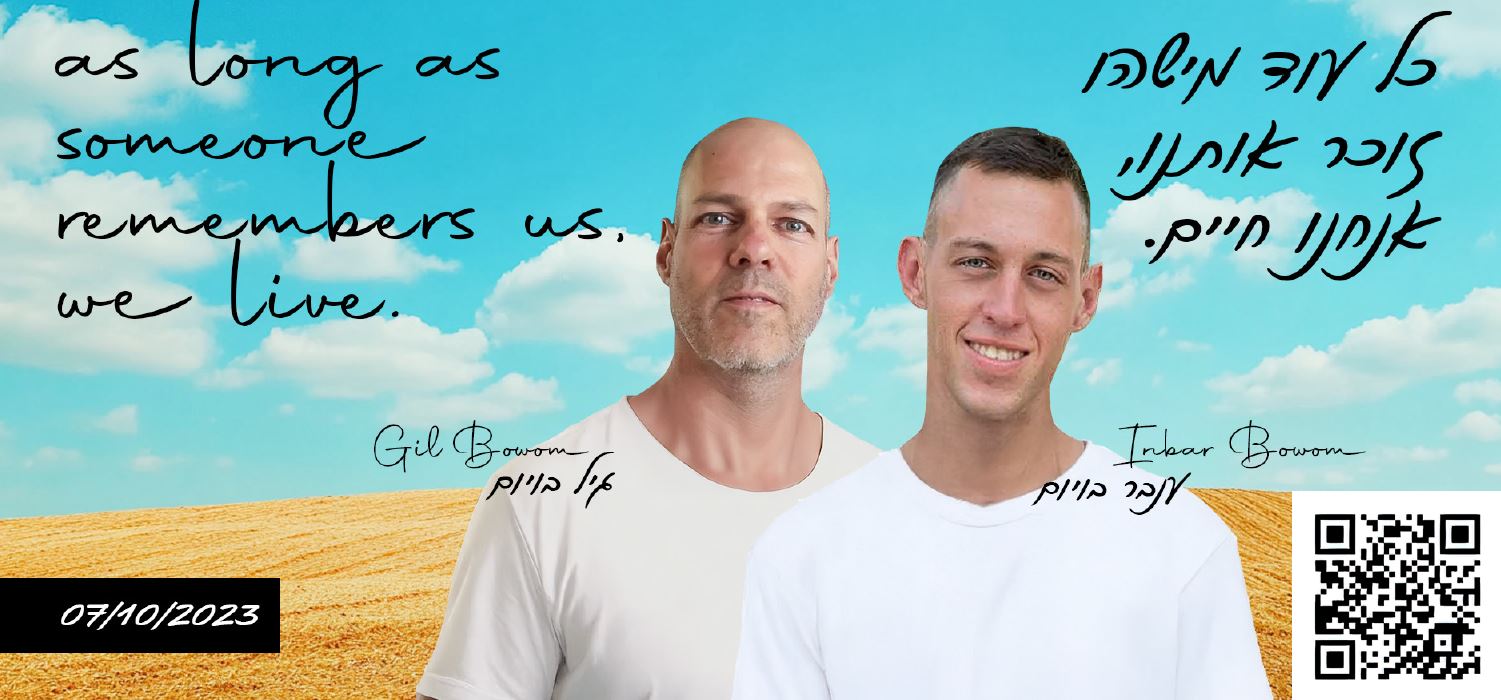
Life & service
Service
- Rank
- Warrant officer (res.)
- Service Type
- Reserve Forces
Family
- Father
- Natan
- Mother
- Tamar
Burial
Tributes & remembrance
ממשפחת בהל״ג מרץ 2025
אוהבים משפחת בהלג
אוהבים משפחת בהלג
ממשפחת בהל״ג
ממשפחת בהלג
יהי זכרך ברוך
״להמשיך לשמוח בכל הכוח״- אמן!
נזכור אותך לעד גיל.
לצידכם, משפחת בהל״ג
יהי זכרו ברוך
לצידכם, משפחת באח הגנת הגבולות
גיל גיסי היקר, כמה אתה וענבר חסרים כאן.
אוהבים אותך ואת ענבר ולעד נזכור אתכם, את הטוהר, הרגישות, הטוב לב והנתינה שלך ושל ענבר
גיל, איש של שמחה שקטה וחודרת, איש של אנשים (מאלו שיודעים לחדור ללב בשקט המרגיע שמקרין), ״היכן יש עוד אנשים כמו האיש ההוא״ נכתב בשיר שכמו נכתב בדיוק עבורו.
אתה חסר כל יום, כל חג-אבל הזיכרון והזכרונות עימנו לעד. יהי זכרו ברוך ומברך.
השם יקום דמך
מתגעגעת עד כאב. יום זכרון שני בלעדיך.
אוהבת עד הנצח.
שלך לתמיד, איילת
יהי זכרו ברוך .
הלב נשבר
משפחה לתפארת גידלת ורוממת
תהיה נשמתך צרורה בצרור החיים ..
מלח הארץ
מאחל לעוד אנשים כמוך, ומקווה שנהיה ראויים לך
ת.נ.צ.ב.ה.
לא הכרתי אותך אבל אני רואה כמה אמא שלי עצובה מזה שאתה כבר לא איתנו ואני מקווה לזכור אותך לתמיד
גיל גיסי האהוב
אפשר למלא את הדף במלא מילים ורק טובות עליך אך הדף לא יוכל להכיל את כל מה שארצההיית לי לנו הגיס המושלם, הטהור והטוב.
היית בעל הכי טוב בעולם לאחותי, אבא הכי מושלם לילדיך והאדם הכי טוב ביקום כולו!! זה בלתי נתפס שטוב כזה בעולם הלך מאיתנו ובאכזריות מאין כמוה - לא נשכח ולא נסלח!! הארורים לקחו אותך ואת ענברי אך לא לקחו את זכרונכם לעולםחקוקים בליבנו
אהובים נוחו על משכבכם בשלום
גיל שלי, הימים הולכים ונעשים קשים בלעדיך ובלעדי ענברי.
עומר, ענוג, עדי ואני עושים ככל שביכולתנו להנציח ולספר את סיפור הגבורה שלך ושל ענבר. בתקופה הזו, שהחלה בערב פסח, הקושי התגבר. כל יום חסרונכם קשה מנשוא.
אוהבת אתכם, מתגעגעת הרבה.
נוחו על משכבכם בשלום אהובים שלי
נעמת לנו בחייך
יהי זכרך ברוך
גיל גיס יקר שלי
כמעט ולא עובר יום מבלי שאני רואה מישהו שדומה לך, שמזכיר לי אותך ובכל פעם אני מחסירה פעימה ובוהה..
גילוש, איש טהור שאתה, אתה חסר כאן, אתה וענברי
אני מקווה שאתם שם ביחד למעלה ושהרבה יותר טוב לכם. תנו סימן שטוב לכם כדי שנהיה רגועים
אוהבת אותך גיס אהוב שלי
אתה וענבר כל כך חסרים במשפחתה
גיל גיסי היקר!
לא מאמינה שאני כותבת לך פה כשאתה אינך, אנחנו רגילים לראות אותך בכל מקום, בחג, בשולחן השבת ובכל מקום שמישהו מבקש עזרה.
תמיד היית כזה, עד לרגע שלקחו האכזריים את חייך ב-7.10 היית הראשון לתת עזרה, הגנה וסיוע לכל מי שהיה זקוק , כך בשבת השחורה, יצאת הראשון בכיתת הכוננות מקיבוץ בארי להגן על משפחתך ועל קהילה שלמה, אבל לצערנו פגשת את הרוע האכזר ונלקחת מאיתנו בטרם עת נזכור אותך תמיד
נוח על משכבך בשלום אהוב שלי, שמור על ענברי שם למעלה.
אהוב ליבי, החבר הכי טוב שלי, האבא נמופלא של ילדינו, נוח על משכבך בשלום. שמור על ענברי שלנו שם למעלה. אוהבת אותך לנצח.
אבא, מתגעגע אלייך ואל בורי בלי סוף מקווה שאתם שם עם אילן וסבא, משלימים קצת פערים
לא זכיתי להכיר את גיל.
מרכין ראשי בכאב עצום, מזדהה עם מפעלו, וכואב את כאב משפחתו היקרה.
זוכה לומר קדיש מידי יום לעילוי נשמתו, ונשמת בנו היקר ענבר.
יהי זכרם ברוך לעולם ועד.
Dozens of good people worked under you in the department over the years
Source:סיפור חיי
Read the Hebrew original
עשרות אנשים טובים עבדו תחתיך במחלקה במהלך כל השנים
You were a quiet, hardworking man
Source:סיפור חיי
Read the Hebrew original
היית איש עבודה חרוץ ושקט
Beloved neighbors, we miss you😢
Source:סיפור חיי
Read the Hebrew original
שכנים אהובים מתגעגעים אליכם😢
You are the salt of the earth!!
Source:סיפור חיי
Read the Hebrew original
אתם, מלח הארץ!!
Twenty-five years of love and a perfect partnership.
Source:סיפור חיי
Read the Hebrew original
עשרים וחמש שנים של אהבה וזוגיות מושלמת.
I learned so much from you
Source:סיפור חיי
Read the Hebrew original
למדתי ממך כל כך הרבה
Remembrance Day addresses
יום הזיכרון לחללי מערכות ישראל התשפ"ה – 2025
בכל יום שעובר, אזכור יותר! אזכור, את אלו שיצאו עימי לקרב ולא שבו, ולהם אין מי ידמה ומי ישווה. אזכור, שהכאב לא יעבור לעולם, והזמן, הוא לא מרפה ולא מרפא. אזכור, את שיברון הלב הגובר ואת הבית שבוער. אזכור, את צדקת הדרך, ואשבע שוב, שמה שהיה לא יהיה יותר. אזכור, שיותר מכל דבר אחר – אני חסר! ביום הזה, אני נתקף געגוע לדמותם, לחיתוך דיבורם, לחיוכם, ומדליק נר לזיכרון דרכם ומורשתם!
משרד הביטחון
אגף משפחות, הנצחה ומורשת
יום הזיכרון לחללי מערכות ישראל התשפ"ה – 2025
בכאב, בהצדעה ובתקווה אני מתכבד להדליק נר זיכרון זה. השנה, כשאנו נלחמים במלחמה ארוכה, רב זירתית וצודקת, הזיכרון נושא משמעות עמוקה. ביום זה נעצור ונתייחד עם זכרם של טובי בנינו ובנותינו שנפלו בהגנה על המדינה. מורשתם היא המצפן שמתווה את דרכינו, והיא המעניקה לנו כוח להמשיך ולהגן על מדינת ישראל ותושביה. משפחות יקרות, אנו מרכינים ראשנו ומתחייבים שנעמוד לצידכן תמיד. יהי זכר הנופלים ברוך.
אלוף דדו בר כליפא
ראש אגף כוח האדם, צה"ל
יום הזיכרון לחללי מערכות ישראל התשפ"ה – 2025
בשעה שאנו זוכרים את גודל תרומתם ועומק מסירות נפשם של טובי בנינו ובנותינו, נופלי מערכות ישראל לדורותיהן, ממשיכים צה"ל וכוחות הביטחון במימוש המשימה למענה לחמו ועבורה נפלו: הכרעת אויבינו מדרום, מצפון, ביהודה ובשומרון, וגם בזירות רחוקות יותר. בהערכה רבה ובגאווה אדירה אנו מרכינים ראש בפני הנופלים והנופלות, מאמצים את משפחותיהם אל לבנו, וממשיכים במשימה להבטחת קיומה של ישראל לדורי דורות. יחד נעשה ונצליח.
רב אלוף אייל זמיר
הרמטכ"ל, צה"ל
יום הזיכרון לחללי מערכות ישראל התשפ"ד – 2024
כאשר דגלינו מורדים לחצי התורן וראשינו מורכנים לזכר הנופלים והנופלות במערכות ישראל, ממשיכים לוחמי צה"ל ומפקדיו בלחימה בדרום, בצפון, ביהודה ובשומרון ובזירות נוספות. על כל דור מוטלת המשימה של הגנת העם והארץ – משימה שאף פעם אינה פוסקת. נצדיע בגעגוע ובגאווה לנופלים ולנופלות, נחבק את משפחותיהם, ונמשיך ברוח הציווי שהותירו לנו. עם ישראל חי.
רב ניצב יעקב שבתאי
המפקח הכללי, משטרת ישראל
יום הזיכרון לחללי מערכות ישראל התשפ"ד – 2024
אחיי הנופלים, כל נר הוא זיכרון יחיד ומיוחד, על חיים שהיו ואינם, געגוע שנצרב עמוק בלב, עולם ומלואו. הנרות כולם הם זיכרון של אומה כי לעולם לא עוד, בשורת הציונות וקוממיות ישראל. זיכרון כי הדרך לעם חופשי בארצנו עוברת דרך מסדר הנופלים. אור הנר יזכיר לנו את מסירות נפשכם להציל חיים, להגן על הבית. הנרות מסמנים לנו נתיב גבורה ערכי מחייב שאנו מצווים ללכת לאורו. נמשיך להילחם ולהוסיף אור מתוך אמונה בנצח ישראל.
יואב גלנט
שר הביטחון
יום הזיכרון לחללי מערכות ישראל התשפ"ד – 2024
בהצדעה ובכאב, בשם צה"ל כולו, אני מדליק נר זיכרון. בעיצומה של מלחמה, הזכרון נושא משמעות יום-יומית, שעבר והווה מתלכדים בה. לאורם של הנופלים נמשיך לצעוד, חיילי הסדיר והמילואים. לאורם של הנופלים נמשיך להגן על ארצנו ועל מולדתנו, גם כשהמחיר כבד. להבת-הזכרון תבער בנו בעודנו ממשיכים להלחם ונזכור את הנופלים ואת אומץ ליבם. משפחות יקרות, צה"ל מרכין היום ראש, מצדיע לכן וכואב איתכן. יהי זכר הנופלים ברוך.
אלוף יניב עשור
ראש אגף כוח האדם, צה"ל
יום הזיכרון לחללי מערכות ישראל התשפ"ד – 2024
בהוקרה, בגאווה ובכאב שאין לו סוף, אני מתכבד להדליק נר לזכרם של הנופלים והנופלות במערכות ישראל. סיפור חייהם בארץ הזאת, מסכת שירותם, גבורתם והקרבתם – הם סיפורה של הארץ הזאת, אך גם סיפור המחיר הכבד שהיא תובעת מאוהביה. מחויבותנו לזכר הנופלים ולדרך שהותירו לנו ניצבת תמיד לנגד עינינו. את המשימה שלא זכו להשלים, משלימים כיום, וישלימו, אנשי כוחות הביטחון, הממשיכים בדרכם ולאורם. יהי זכרם של הנופלים ברוך.
משרד הביטחון
אגף משפחות, הנצחה ומורשת
יום הזיכרון לחללי מערכות ישראל התשפ"ד – 2024
בחרדת קודש אני מתכבד להדליק נר לזכרם של חללי מערכות ישראל, חברנו שנפלו, מראשית היציאה מהחומות ולאורך כל שנות עצמאותנו המדינית והציונית, מהווים תמרור זיכרון לדרך חיינו ולמחוייבות הלאומית להנצחת זכרם. דרכם נותרה דרכנו ומורשתם נר להמשך עשייתנו. יהי זכרם ברוך!
בני גנץ
שר הביטחון
יום הזיכרון לחללי מערכות ישראל
נזכור אותם, כולנו יחד. כל אחד ואחת מהם, מדי יום ביומו, והיום ביתר שאת, כך – לנצח. "כי מדי דברי בו זכור אזכרנו עוד"
משרד הביטחון
אגף משפחות, הנצחה ומורשת