
The story
In Karmiel, a verdant city nestled among the hills of the Galilee, a child named Eyal was born on a summer day in late July of 1999. The home of Flora and Asher Shuminov was a warm one, where the sounds of laughter and deep conversations mingled in the air. Eyal was not an only child, but part of a trio: he was the middle child, between his older sister Eden, who looked out for him and stood by his side, and his younger brother Niv, with whom he shared secrets and games. The house in Karmiel was his entire world, a place where warm and deep bonds were woven, strengthening with each passing year. Eyal meticulously scheduled "quality time with siblings," a phrase he carefully noted in his weekly journals, as if it were an important business meeting. They spent long hours together, in the neon-lit corridors of bowling alleys, ball after ball rolling with a muffled thud towards the pins, or in neighborhood restaurants, where they shared dishes and stories, laughing and recounting the day's experiences. These moments of family closeness, of rolling laughter and heart-to-heart conversations, laid the foundation for the man he became – a man of values, loyalty, and uncompromising love.
Eyal spent his early years in the quiet alleys of Karmiel, among the playgrounds of elementary schools, first at "HaIrisim," where his insatiable curiosity was already evident. He was never content with the first answer, but would dig, question, and inquire until he understood the matter deeply. At "Ort Psagot" high school, in the marketing track, Eyal distinguished himself as an outstanding student, not only for his high grades but for the way he approached every task. He possessed a rare combination of sharp intelligence, exceptional analytical and abstract thinking abilities, and an inexhaustible desire to acquire knowledge and broaden his horizons. Teachers often noted his ability to lead, organize, and structure, traits that manifested in all areas of his life, from his meticulously organized desk to the most complex academic projects. His achievements earned him the title "Peripheral Excellence Award," a recognition that guaranteed him a university tuition scholarship, opening doors to any future he chose.
Beyond his academic achievements, Eyal was a principled young man, possessing solid moral values and profound thinking, which often manifested in lively discussions with his friends and family. He did not shy away from difficult questions; on the contrary, he was drawn to them. One of the formative events in his life was the trip to Poland in 12th grade. Walking among the extermination camps, the gray buildings, the testimonies of survivors, left a deep impression on him. In his travel diary, amidst lines filled with impressions and emotions, he wrote a question that haunted him: "They always ask where God was during the Holocaust, and I asked, where was man?" This was not merely a philosophical question, but an internal compass, a deep commitment he held as a person and a Jew, never to be indifferent.
A close-knit group of friends accompanied Eyal from elementary school, a bond woven from true and deep friendship. They met regularly, shared experiences, and laughed at inside jokes only they understood. His friends always mentioned his unique sense of humor, which combined wit and intelligence, his rare memory that allowed him to recall amazing details and quotes, and his endless curiosity, which always led him to seek the next piece of knowledge. "He always had a book in his hand," they noted, a description that painted his character as a young boy and as an adult – always learning, always reading, always seeking to understand. When not engrossed in a book, Eyal found solace and expression in music. He played the guitar, the wooden strings vibrating under his fingers, and particularly loved Israeli songs. On long drives, as the Galilean landscape passed outside the car window, he would listen to the songs of Yehoram Gaon, Shlomo Artzi, Aviv Geffen, and Idan Raichel, words and melodies that became the soundtrack of his life.
Upon graduating from high school, when it was time for his peers to begin planning their futures, Eyal already knew his path. He did not seek shortcuts or easy routes. He joined the "Acharei!" association in Karmiel, a framework designed to prepare young people for meaningful combat service in the IDF. There, under the scorching summer sun and the freezing winter cold, he developed his leadership abilities, improved his physical fitness through grueling field training, and learned the meaning of perseverance. He ran with weights, crawled in the mud, navigated fields and groves, feeling his body and soul forge themselves for the next challenge. This preparation was not only physical but also mental. It taught him about teamwork, pushing himself beyond limits, and the importance of leadership derived from personal example.
On November 21, 2017, on a bleak and cold day, Eyal enlisted in the IDF. Initially, he aspired to follow in his father's footsteps, Asher, who served in the Paratroopers Brigade, but fate, or perhaps operational needs, led him to the Givati Brigade. The moment he received the purple beret was a moment of pride mixed with a heavy sense of responsibility. He was a combat soldier, weapon in hand, part of a large machine whose purpose was to defend the country. Eyal quickly distinguished himself among his comrades and commanders. He completed a squad commanders' course (Makam), during which he not only excelled but was chosen as "Platoon Outstanding Soldier" and at its conclusion, also "Company Outstanding Soldier." This was not just a matter of grades, but of presence, of natural leadership, of the ability to unite those around him for a common goal. Simultaneously, he completed a medic course, also with distinction, another testament to his diverse abilities and his desire to serve and help in every possible way.
After completing the squad commanders' course, he served as a recruit squad commander, where he left his mark on a new generation of soldiers. He taught them not only the fundamentals of combat but also the values by which to live and fight. From there, the path to officers' course was natural. Eyal completed the first training stage, sometimes called "the basic stage," with exceptional distinction, but in the second stage of the course, a dramatic event momentarily changed the course of his life. During a routine exercise, Eyal slipped and fell from a height of four meters. The pain was sharp and immediate, and his lower back injury was severe. He was rushed for medical treatment, and doctors, given the severity of the injury, determined he was unfit for any role in the IDF. For Eyal, who had dedicated his life to command and combat, this was a lightning bolt. However, those who knew Eyal understood that surrender was not part of his vocabulary. With uncompromising, almost stubborn, determination, he refused to accept the verdict. He underwent a long and painful rehabilitation, intensive physiotherapy, coping with daily pain, but he did not ask for any medical leniency. He returned to the officers' course, marched alongside his comrades, carried the same weights, completed the same treks, and finished it with astounding success, a conclusive proof of his willpower and inner strength.
After the officers' course, Eyal served as a platoon commander in the advanced training stage, which took place at the "Mount Keren" brigade training base in the northwestern Negev, arid and expansive landscapes that served as a backdrop for grueling training. From there, he was transferred to serve as a platoon commander in the operational company of the "Tzabar" Battalion (432), where he advanced to the role of deputy company commander. The operational field, the encounter with real challenges, only strengthened his abilities. He learned to know the terrain, the enemy, and his subordinates in depth. After completing a company commanders' course with distinction, he served as a recruit company commander in the "Tzabar" Battalion, and later, in his last role, as commander of a leading company in the "Shaked" Battalion (424). In all his roles, he earned great respect from his commanders, who recognized his unique talent, his professional abilities, and his being a special and exceptional person. He was an officer who was, above all, a father to his soldiers, an admired, responsible, and professional commander, whom the soldiers loved and admired, trusted implicitly, and followed with their eyes closed.
During his military service, Eyal accumulated a series of achievements and commendations. While serving on the Gaza border, a tense and sensitive sector, he was chosen as "Outstanding Operational Employment Soldier," a title that attested to his ability to act efficiently and professionally under pressure. During his service in the Golan Heights, when the battalion conducted operational employment in the snowy Hermon area, he received a "Certificate of Appreciation for Leading Operational Activity in the Sector," for his ability to navigate his soldiers through difficult and challenging terrain. The highlight of his operational activity came during his service in the Judea and Samaria sector. In one of the complex operations, he prevented a significant attack planned by terrorists, thanks to quick thinking, meticulous planning, and perfect execution by the forces under his command. Afterwards, he even spoke in the media about the battalion's activities in the Nablus area. "One must remember all the attacks that didn't happen, and that's thanks to the IDF's activity on the ground," he said then, in a calm but determined voice. "Every night we carry out offensive activities and thwart many terrorists, and that's what's supposed to bring security." His words reflected his deep conviction that security is not self-evident, but the product of hard work, determination, and daily professionalism.
Eyal wonderfully combined "sword and book" in his life. He was a fierce warrior, a principled commander, but also a deep spiritual person, always seeking knowledge and understanding. His inner world was rich and diverse: he showed great interest in philosophy, Israeli heritage, Zionism, history, especially the Holocaust which left a deep impression on him, law, economics, Torah and Gemara, and more. His personal journals, found after his fall, were silent testimony to this: a list of over two hundred books in these fields, which he read with persistence and dedication, even within the busy and demanding military framework. He did not just read, but systematically and thoughtfully. In each book, he noted key points for himself, to build his content worlds, wrote summaries of everything he learned, and even re-read the summaries to internalize them. He slept only four hours a night, to make time for reading and studying, an example of dedication and an uncompromising desire to be "the improved version of himself," as he used to say. He did not keep this knowledge to himself: he used to distribute books to his subordinates, on leadership, on the Land of Israel, and on the Holocaust, including a clear emphasis: "You must learn and study the memory of the Holocaust, it is a national and moral obligation." He also told his parents, in his unique voice, "Read books and be a better version of yourselves every day anew."
The vast knowledge he acquired, and the tools he adopted and developed, greatly contributed to his professional and personal decision-making, and granted him a broad perspective and a sober outlook. He not only applied this knowledge to himself but used it to positively influence soldiers in his company who stood at crossroads and shared their dilemmas with him. He served as their guide, not only in the military sense but also in a personal one. He pushed, promoted, and encouraged, showing them the way forward. Just as he himself overcame many difficulties without complaining, so too did he educate his subordinates. He used to encourage his soldiers when they struggled, telling them authentically: "Everyone finds it hard, even the battalion commander finds it hard, everyone finds something different hard. A hero is one who finds it hard and knows how to cope!" He was a leader who made sure to set a personal example in every step, to foster his soldiers' motivation and build their mental resilience. He also used to tell them about his severe injury and how he dealt with it, not to pity himself, but to show that one rises and strengthens from difficulties. "You served for me and for all my friends as a listening ear, a supportive shoulder, and most importantly – an embracing and loving father figure," one of his subordinates wrote after his fall, a moving testament to the deep impact he had on their lives.
Eyal excelled at conveying messages through words, speaking words of meaning that remained etched in the heart. After his fall in battle, inspiring statements were found in his writings and in the stories of his subordinates, attesting to his rich inner world and his well-defined worldview. "What kind of life is it when everything is always routine for you," he once said, "there are no times when you fight for something, even if not in battle, but fight for some value in some way." He spoke of the importance of struggle, even if it is internal and personal, and the importance of values. "We fight for home!" was a recurring phrase on his lips, not only in the military context but in the broader context of defending what exists. He believed in constant preparation: "We prepare, as if there's a war tomorrow!" and saw routine not just as a sequence of uneventful days, but as a "template of emergency," meaning, a sequence of opportunities to prepare for the moment of truth. He emphasized the importance of communication: "We need good communication between the units, when there's communication problems are solved, both in relationships and in battle!" Eyal was not interested in the length of life, but in its content: "It's not important what the length of life is, what's important is the content in life." He also spoke of habits: "The reward for a good habit is in the future, the reward for a bad habit is in the present." He always urged to see the big picture: "Look at everything broadly! Understand that we are significant even in the small things." And above all, he believed in the power of appreciation: "People don't need anything, except appreciation!" He used to quote a Gemara about idolatry, which tells of Rabbi Hanania ben Teradion, one of the "Ten Martyrs": "'The scrolls are burned, but the letters fly into the air.' Meaning, even if we burn the body, the idea will be in the air and will not burn. Even if people die, the letters – the spirit will remain." This was a profound statement, which shaped his perception of the connection between body, spirit, and legacy. On the shields he distributed to his soldiers, he used to bless: "May you conquer every mission given to you with courage and humility!" a rare combination of strength and humility that characterized him so much.
And then came that morning, on Saturday, the 22nd of Tishrei, Simchat Torah 5784, October 7, 2023. It was six-thirty in the morning, and a tense silence hung in the air of Karmiel. Suddenly, the sounds of sirens shattered the quiet, announcing a massive surprise attack. Television and radio broadcast confused reports, the phone vibrated incessantly with urgent WhatsApp messages. Thousands of terrorists from the Hamas terror organization had infiltrated Israel – by land, sea, and air – under the cover of massive missile and rocket fire. They began a murderous attack on the Gaza Envelope communities, on Sderot, Ofakim, and Netivot, on innocent nature partygoers, and on IDF bases. Within hours, hundreds of civilians were murdered in their homes and cars, hundreds were kidnapped, and many homes were looted and set ablaze. Hundreds of soldiers, police officers, and security forces fell in battle. This morning marked the beginning of a war.
Eyal, who was on leave and staying at his home in Karmiel, did not hesitate for a moment. Although he was responsible for the Talmonim sector near Ramla, his heart and his conscience pulled him south, into the inferno. He jumped into his car, refueled in haste, and sped down roads that were increasingly filled with chaos. The sights that met his eyes along the way, of burned cars and strewn bodies, were unbearable, but only strengthened his resolve. He reached the Gaza Envelope area, and already at the entrance to Kibbutz Kissufim, he encountered terrorists. Without a second thought, he entered into close-quarters combat, bullets whistling over his head, grenades exploding. He was wounded by a bullet in his hand, and grenade shrapnel hit his leg. Blood flowed, the pain was intense, but Eyal did not stop. He pulled out his personal medic kit, quickly and professionally bandaged himself, and continued to fight. When he managed to evacuate his wounded comrades to the hospital, he received medical treatment there, but adamantly refused to be admitted. He could not stay behind while his friends were fighting. He drove south again, into the heart of the battles, to continue defending home.
In late October 2023, as all of Israel prepared for the ground entry into the Gaza Strip, Eyal gathered the soldiers of the company he commanded. Their faces were tense, fear hung in the air, but Eyal's gaze was resolute. He stood before them, a young officer yet full of power and authority, and spoke in a quiet, clear voice, but full of faith: "The nation is in a state of emergency. This is the time to put the personal aside and the national at the center! We have the most important mission – to defeat the enemy. There is no greater right than to bring comfort and well-being to our people. From here, we will emerge stronger, both us and the entire nation. This is a national mission, and we are entering the pages of history. It's us now, our generation. When it's hard, think about who has it harder. When it's scary, seal your heart. We are stronger than them! This is the most just war there is! We are fighting for truth, for life, for captives and children who need to return home. Look at everything broadly! Understand that we are significant even in the small things. This is the most significant thing you can do at this age!" His words deeply penetrated the hearts of the soldiers, instilling in them strength and faith, transforming them from fearful to determined.
In December 2023, amidst the fierce battles within the Gaza Strip, Eyal and his soldiers found themselves in Palestine Square in Gaza City. It was the first night of Hanukkah, and in the midst of the destruction and devastation, Eyal decided to light a small menorah. The small light flickered in the darkness, a symbol of hope and faith. He gathered the company around him, and told them, his voice audible above the roar of engines and distant gunfire: "It is a privilege to be those who raise national honor and pride. It took the Maccabees thirty years for the revolt, and we are only sixty days in. When they speak of 'the eternal nation is not afraid of a long road,' it is worth looking at it from a historical perspective – that for two thousand years menorahs have been lit, and the spirit continues to beat. We are not the story here." He did not speak of himself or his friends, but of continuity, of legacy, of an entire people that survived thousands of years of persecution.
When asked about his well-being in the war, his answer was always the same, sharp and clear: "My well-being is as the well-being of my people!" There was no moment of doubt, of personal hesitation. He was driven by purpose, and it was absolutely clear to him that the private Eyal, with all his considerations and desires, was pushed aside. "There is no more Eyal Shuminov!" he said, "Eyal Shuminov – with all his private accounts – does not exist now! I am now part of my people, the entire nation is in a state of emergency, and the only thing that interests me now is to fight for my people! Only with the end of the fighting, after victory in battle, will 'Eyal Shuminov' return." It was a dramatic declaration, attesting to absolute devotion, a deep understanding of the gravity of the hour, and complete self-sacrifice for the common good. In a letter he left for his family, words that encoded the essence of his faith, he wrote: "I am very proud to fall for our beloved country, if there is no value for which to give one's life, life itself has no value!"
In the four months Eyal fought Hamas terrorists within the Gaza Strip, as throughout his service as a commander, he led his soldiers with determination, responsibility, and initiative. He managed battles with strategic thinking and meticulously adhered to strict safety procedures, which saved the lives of his subordinates many times. He was an admired, intelligent, and professional commander, who led his company with courage and bravery, yet always with quiet humility. His mother, Flora, remembers their conversations, the worry that gnawed at her heart, and his reassuring answers: "In those four months, you didn't have a single wounded soldier," she eulogized him in pain, "You told me, 'We plan every step and learn and draw lessons.' You protected your soldiers with your body, because you said no soldier would be killed." Eyal was supposed to be discharged from the IDF in January 2024, at the end of his regular military service, but the war changed all plans. He could not imagine leaving his soldiers behind, in the midst of such a difficult and just fight. "It's immoral to be discharged now, not in the middle of a war," he told his mother, "All the company commanders are wounded and the army needs me, my soldiers need me. This is the most just war there is. We will fight until victory and bring back all the captives." He stayed.
Towards the end of February 2024, in the midst of a raid on the Zeitoun neighborhood of Gaza City, in the northern Strip, Eyal was killed. An explosive device planted by terrorists detonated, abruptly ending the life of a young and promising officer. Captain Eyal Shuminov fell in battle on the 15th of Adar I, 5784, February 24, 2024, at the age of only twenty-four. He was laid to rest in the military plot of the Karmiel cemetery, the city where he grew up and loved so much. He left behind broken parents, Flora and Asher, an older sister, Eden, and a younger brother, Niv, their world turned upside down in an instant. After his fall, he was posthumously promoted from Captain to Major, a further recognition of his heroism and professionalism.
At the funeral procession, under gray skies and accompanied by thousands of people, heartbreaking eulogies were heard. His mother, Flora, stood by his fresh grave, her voice trembling with pain but full of pride: "Eyal, my beautiful child, the light of my eyes, you extinguished my light. You extinguished all the lights in the house. In one moment, you plunged us into darkness. It was almost over. You were supposed to be discharged in January, and you said it was immoral to be discharged now, not in the middle of a war. You told me, 'All the company commanders are wounded and the army needs me, my soldiers need me. This is the most just war there is. We will fight until victory and bring back all the captives.' In those four months, you didn't have a single wounded soldier. You told me, 'We plan every step and learn and draw lessons.' You protected your soldiers with your body, because you said no soldier would be killed. You fulfilled your mission, my child, no soldier was killed, you are the first from your company. You kept your promises. Rest, my child. Rest, my love. Rest, my hero."
Roy, a long-time soulmate, stood there, his face etched with pain: "My soulmate, the days are getting harder. Every day the hole in my heart grows. Like stabs in the chest that only those close to you will understand. Not a day goes by that you don't cross my mind. I miss you so much. I wish you were here." Nir, another friend, added: "Shuminov, the most special guy I ever met. A real man with good values. A Zionist who gave his soul for the country and protected his soldiers with his body. Dear Shumi, you lived as a hero and died as a hero. I learned so much from you. I love, appreciate, and thank you for everything. Rest up there."
His subordinates, those who saw him as a father figure, shared memories. Marom wrote: "You were a great military man, but you didn't want it. You were committed to your people, your land, and your homeland. You talked to me about going to the squad commanders' course, and I told you I wasn't a military man and had nothing to contribute, because I also don't like all the fighting. And then you told me something amazing that I never thought I'd hear from a company commander: 'What do you think, that I like being here? I'm here because I'm needed. No one asks you whether to go to the squad commanders' course or not. You're not the story here at all.'" Orel, a subordinate from an "operational" company in the "Tzabar" Battalion, added: "We always said you were an unstoppable machine, one of those people who are successful at everything. It was clear to everyone that you would be a politician or some successful businessman if you allowed yourself to be discharged from the system. But you didn't allow yourself, even after you were wounded in the first round. Home was more important to you than anything. I love you and miss you, dear brother." And Michal, the mother of a subordinate, expressed the pain of the soldiers' families: "There are no letters in the Hebrew language that can connect the pain I have in my body and soul now. The brilliant company commander, the soul, the professional, the father and mother of the company, was killed. It's simply unfathomable." Haim, his high school educator, was also in shock: "We are in shock. The people of Israel lost one of their precious fighters. Eyal was one who never gave up. I would wish every educator a student like him, with values and respect. Even as a student, he always strived and made every effort to succeed. It is clear that in the army too he was wholeheartedly for the country."
Major Eyal Shuminov, of blessed memory, left behind an immense void, but also a glorious legacy of heroism, learning, principled leadership, and love for people and country. His short life, cut short in its prime, was full of content, action, and deep meaning. He fought not only with weapons but also with his spirit, his faith, and the personal example he set. His memory and image continue to live in the hearts of his parents, siblings, friends, and especially – in the hearts of his soldiers, for whom he was a commander, mentor, and father. He was "Shuminov" – the name that became a symbol. In his memory, a website was established, www.eyal-shuminov.com, featuring his life story in words and pictures, eulogies, and details of commemoration activities carried out in Israel and around the world, to ensure that Eyal's spirit continues to beat, that the letters do not burn, and that his legacy accompanies future generations. His legacy is a constant reminder of national and moral duty, of the importance of fighting for values, and that even in small things, we are significant. The memory of Major Eyal Shuminov will continue to be a beacon of courage, dedication, and love, an inseparable part of the story of the rebirth of the people of Israel.
Moments of a life
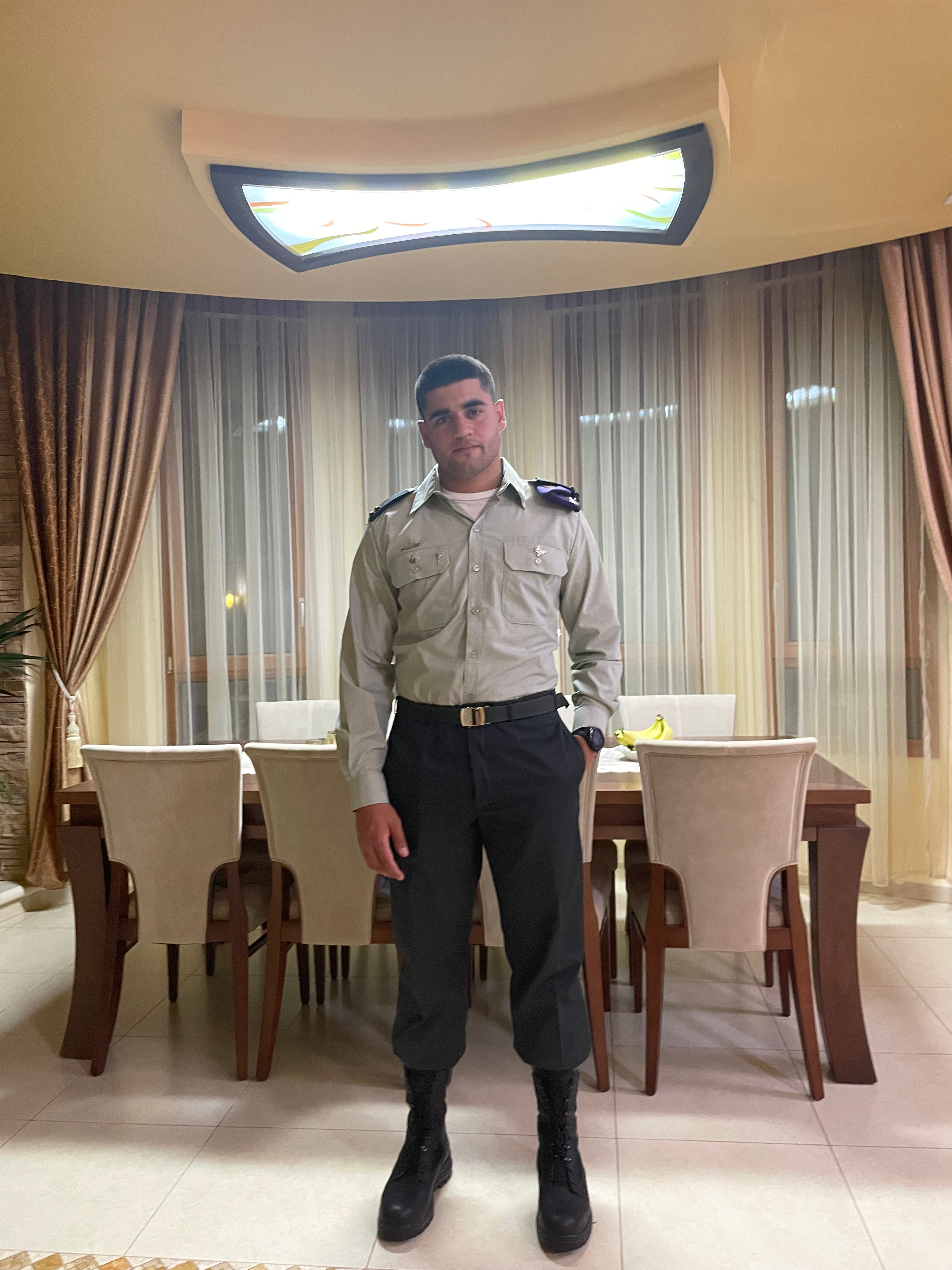
All photographs · 1
In the media
Articles
- Flora, an Elbit employee responsible for safety and environmental matters in the Aerospace Division, spoke last week to all Elbit employees about her beloved son, Major Eyal Shuminov, of blessed memory. In a talk filled with memory and love, she told the life story of… | Elbit Systems Israel
linkedin.com ·
- Moving: yeshiva students dedicated a Torah scroll in memory of their fallen commanders - Srugim
srugim.co.il ·
- Salt of the earth. One story.
Israel National News ·
- Saying Farewell to the Fallen: “I Wanted You to Be Only Mine, and Now I Am Left Alone”
ynet
- Yizkor — Major Eyal Shuminov
izkor.gov.il
Memorial sites
- Commemoration | Eyal Shuminov
אתר הזיכרון המשפחתי לאייל שומינוב
- Eyal’s Library
אתר ההנצחה אייל שומינוב
Memorial projects
Students of Yeshivat HaGolan and their parents, including seven fighters who were wounded, initiated a Torah scroll in memory of Eyal Shuminov, Yiftah Shahar and Itay Seif. The writing was completed and the scroll brought into the yeshiva in Hispin in November 2025.
The family website documents a defibrillator in his memory in Givat Ram in Karmiel, an Israeli beit midrash in partnership with Beit Brodet in Tel Aviv, and the book “Lights from Darkness” by Tuvia Rones about the war and him.
The memorial website presents Eyal's personal library and reading list, organized by topic, alongside a printable bookmark. This is a digital project, not evidence of a physical library opening.
Stories told about them
His mother said that Eyal was due to be discharged in January but decided to continue serving because his soldiers and the army needed him. She described conversations in which he explained his choice to her.
Eyal scheduled quality time with his siblings and used it to spend time with them. His diaries also contained a list of more than 300 books he had read alongside his military service, including works on history, philosophy and Torah.
Life & service
Profile
Service
- Rank
- Major
- Unit
- Givati Brigade
- Honours
- Posthumously Promoted
- Battle Location
- In the northern Gaza Strip
Family
- Father
- Asher
- Mother
- Flora
Burial
Tributes & remembrance
ט"ו באדר. לימוד הדף היומי היום מוקדש לזכרו.
יהי זכרך ברוך.
במותם ציוו לנו חיים
גיבור ישראל. קדוש הוא
פלורה והמשפחה שולחת חיבוק וחיזוק
השם יקום דמו
אייל שומינוב היקר
מפקד נערץ ואהוב
אישיות נדירה ,עשירה בכל הטוב שיכול להתקיים בבן אנוש !
זוכרים ומוקירים אותך לעד
יהי זכרך ברוך
יזכות על ישראל את בניו ובנותיו...
לעולם לא נשכח....
גיבור ישראל
בן אדם משכמו ומעלה איש להערצה על הדרך שלו ומסלול חייו על השינוי שהוא הביא את המשפחה , את החברים ואת החיילים שלו וכמובן מה שעשה בשביל המדינה שלנו והחטופים ומשפחותיהם .
נזכור אותך תמיד גיבור ישראל יהי זכרו ברוך מלאך שלנו
מי שלא הכיר אותך הפסיד
מפקד אמיץ! תודה על הכל
הפכת את חברה שלי למאושרת
מפקד דגול ואדם דגול יותר אפילו יותר אוהב ואזכור אותך לנצח אחי
יהי זיכרך ברוך ניזכור אותך לעד
יהי זכרו ברוך
גיבור ישראל
נזכור אותך לעד
שומינוב היה המ״פ שלי בהכשרה
בחיים לא ראיתי מפקד כמוהו שיא הדוגמא אישית תמיד לפני שדרש מאיתנו עשה קודם
הלוחם הכי טוב וחזק שיש שהאמנתי בלב שלם שכלום לא יכול לפגוע בו
ומעבר לזה בן אדם חכם מאוד שתמיד לומד ויודע לצטט קטעים מספרים ומהתנך בעל פה
תמיד אעריך אותך ואזכור איזה אדם גדול היית
מהרגע הראשון בטירונות ולכל אורך הדרך היה ברור שתגיע רחוק בצבא, לצערנו זה נגדע באמצע ועדיין לכל מקום שהגעת הובלת את כולם. בליבי אנצור לעד
מנהיג, מפקד אמיץ, ובן אדם עם לב ענק.
מדינת ישראל הפסידה את אחד האנשים הכי טובים שלה
יהי זכרו ברוך
בזכותך אייל אני, אנחנו, המשפחות שלנו וכל עם ישראל עומדים פה !
תודה על מי שאתה ומה שאתה בישביל מדינת ישראל , ה״יד , מתגעגע , מקווה שאתה ואבא לומדים תורה יחד וטועמים ממעדני המלכות
יואב בן צוריה של תקופתנו. מפקד. הוגה. שילב ספרא וסייפא. ציוני ברמ"ח איבריו. בני הבכור שימש כקשר של אייל ולמד ממנו לא רק את המקצועי הצבאי אלא הרבה הרבה יותר.
חבל על דאבדין.
יהי זכרו נצור בלב האומה לעולמים.
היית ותישאר הכי טוב בעולם
בהכל
אוהב ומתגעגע
מי ייתן וניהיה ראויים לך
מלח הארץ , בן אדם ישר אמיתי וטוב לב מהיסוד שלו , אבדה ענקית לאנושות ולעם שלנו .
תודה שהגנת עלינו בגופך לנצח נזכור ולעולם לא נשכח אותך
אייל, לא מאמינה שעברה שנה. אני זוכרת את הרגע השחור שהודיעו לי שאתה איננו, הרגשתי חץ בלב.
אתה חסר כאן לכולנו, אני עדיין לא מצליחה לעכל את זה. היית ותישאר מלאך!
שומינוב אין איך לתאר בן אדם כמוך , השארה גדולה . בן אדם הכי שמח ואנרגטי שראיתי בחיים שלי . הקצין הכי מקצועי שפגשתי בצבא והיה פשוט כבוד גדול לשרת לצידך . אוהב ומתגעגע בלי סוף
היה ילד שהדגיש את חייו על שמירת מדינתנו יהיה זיכרו ברוך
אייל, נח לי לקרוא לך כאילו שאתה עדיין כאן,
אתה כל כך חסר, ולפעמים אני מרגיש שאין בזכותי להרגיש כך, כי איתי היית רק בסוף השירות, אבל זאת הנקודה, חוויתי ממך כל כך מעט, ואיכשהו השארת בי כל כך הרבה.
קשה לי היה לחשוב על הלוחמים שבאמת הייתה להם לא רק למ״פ, אלא לאבא, לחבר, יועץ,
המ״פ הכי טוב שאפשר לבקש.
תודה , תודה רבה על מי שהייתה, עדיין כואב, הגעגוע רב, שמור עלינו מלמעלה , בליבי אנצור לנצח
אייל יהיה ילד מדהים. חכם. יהי זכרו במקורו החיים. מוניות עדן
A man of books, educated and broad-minded
Source:ynet.co.il
Read the Hebrew original
איש ספר, משכיל, רחב אופקים
He always was the first to volunteer. Salt of the earth.
Source:Israel National News
We really felt the connection with Eyal.
Source:srugim.co.il
Read the Hebrew original
הרגשנו ממש את החיבור עם אייל.
This is a very special Torah scroll
Source:srugim.co.il
Read the Hebrew original
זה ספר תורה מיוחד מאד
My Eyal was a born leader, a researcher at heart, and an uncompromising fighter.
Source:linkedin.com
Read the Hebrew original
אייל שלי היה מנהיג מלידה, חוקר בנשמתו ולוחם ללא פשרות.
The most special guy I have ever known.
Source:izkor.gov.il
Read the Hebrew original
הבחור הכי מיוחד שהכרתי.
An unstoppable machine
Source:izkor.gov.il
Read the Hebrew original
מכונה בלתי ניתנת לעצירה
The kind soul, the professional
Source:izkor.gov.il
Read the Hebrew original
הנשמה, המקצוען
Eyal was someone who never gave up.
Source:izkor.gov.il
Read the Hebrew original
אייל היה אחד שלא מוותר.
A genius and a hard worker
Source:izkor.gov.il
Read the Hebrew original
גאון ושקדן
Fortunate is the people who have such commanders
Source:izkor.gov.il
Read the Hebrew original
אשרי העם שאלו מפקדיו
A listening ear, a shoulder to lean on
Source:izkor.gov.il
Read the Hebrew original
אוזן קשבת, כתף תומכת
Remembrance Day addresses
יום הזיכרון לחללי מערכות ישראל התשפ"ה – 2025
בכל יום שעובר, אזכור יותר! אזכור, את אלו שיצאו עימי לקרב ולא שבו, ולהם אין מי ידמה ומי ישווה. אזכור, שהכאב לא יעבור לעולם, והזמן, הוא לא מרפה ולא מרפא. אזכור, את שיברון הלב הגובר ואת הבית שבוער. אזכור, את צדקת הדרך, ואשבע שוב, שמה שהיה לא יהיה יותר. אזכור, שיותר מכל דבר אחר – אני חסר! ביום הזה, אני נתקף געגוע לדמותם, לחיתוך דיבורם, לחיוכם, ומדליק נר לזיכרון דרכם ומורשתם!
משרד הביטחון
אגף משפחות, הנצחה ומורשת
יום הזיכרון לחללי מערכות ישראל התשפ"ה – 2025
בכאב, בהצדעה ובתקווה אני מתכבד להדליק נר זיכרון זה. השנה, כשאנו נלחמים במלחמה ארוכה, רב זירתית וצודקת, הזיכרון נושא משמעות עמוקה. ביום זה נעצור ונתייחד עם זכרם של טובי בנינו ובנותינו שנפלו בהגנה על המדינה. מורשתם היא המצפן שמתווה את דרכינו, והיא המעניקה לנו כוח להמשיך ולהגן על מדינת ישראל ותושביה. משפחות יקרות, אנו מרכינים ראשנו ומתחייבים שנעמוד לצידכן תמיד. יהי זכר הנופלים ברוך.
אלוף דדו בר כליפא
ראש אגף כוח האדם, צה"ל
יום הזיכרון לחללי מערכות ישראל התשפ"ה – 2025
בשעה שאנו זוכרים את גודל תרומתם ועומק מסירות נפשם של טובי בנינו ובנותינו, נופלי מערכות ישראל לדורותיהן, ממשיכים צה"ל וכוחות הביטחון במימוש המשימה למענה לחמו ועבורה נפלו: הכרעת אויבינו מדרום, מצפון, ביהודה ובשומרון, וגם בזירות רחוקות יותר. בהערכה רבה ובגאווה אדירה אנו מרכינים ראש בפני הנופלים והנופלות, מאמצים את משפחותיהם אל לבנו, וממשיכים במשימה להבטחת קיומה של ישראל לדורי דורות. יחד נעשה ונצליח.
רב אלוף אייל זמיר
הרמטכ"ל, צה"ל
יום הזיכרון לחללי מערכות ישראל התשפ"ד – 2024
כאשר דגלינו מורדים לחצי התורן וראשינו מורכנים לזכר הנופלים והנופלות במערכות ישראל, ממשיכים לוחמי צה"ל ומפקדיו בלחימה בדרום, בצפון, ביהודה ובשומרון ובזירות נוספות. על כל דור מוטלת המשימה של הגנת העם והארץ – משימה שאף פעם אינה פוסקת. נצדיע בגעגוע ובגאווה לנופלים ולנופלות, נחבק את משפחותיהם, ונמשיך ברוח הציווי שהותירו לנו. עם ישראל חי.
רב ניצב יעקב שבתאי
המפקח הכללי, משטרת ישראל
יום הזיכרון לחללי מערכות ישראל התשפ"ד – 2024
אחיי הנופלים, כל נר הוא זיכרון יחיד ומיוחד, על חיים שהיו ואינם, געגוע שנצרב עמוק בלב, עולם ומלואו. הנרות כולם הם זיכרון של אומה כי לעולם לא עוד, בשורת הציונות וקוממיות ישראל. זיכרון כי הדרך לעם חופשי בארצנו עוברת דרך מסדר הנופלים. אור הנר יזכיר לנו את מסירות נפשכם להציל חיים, להגן על הבית. הנרות מסמנים לנו נתיב גבורה ערכי מחייב שאנו מצווים ללכת לאורו. נמשיך להילחם ולהוסיף אור מתוך אמונה בנצח ישראל.
יואב גלנט
שר הביטחון
יום הזיכרון לחללי מערכות ישראל התשפ"ד – 2024
בהצדעה ובכאב, בשם צה"ל כולו, אני מדליק נר זיכרון. בעיצומה של מלחמה, הזכרון נושא משמעות יום-יומית, שעבר והווה מתלכדים בה. לאורם של הנופלים נמשיך לצעוד, חיילי הסדיר והמילואים. לאורם של הנופלים נמשיך להגן על ארצנו ועל מולדתנו, גם כשהמחיר כבד. להבת-הזכרון תבער בנו בעודנו ממשיכים להלחם ונזכור את הנופלים ואת אומץ ליבם. משפחות יקרות, צה"ל מרכין היום ראש, מצדיע לכן וכואב איתכן. יהי זכר הנופלים ברוך.
אלוף יניב עשור
ראש אגף כוח האדם, צה"ל
יום הזיכרון לחללי מערכות ישראל התשפ"ד – 2024
בהוקרה, בגאווה ובכאב שאין לו סוף, אני מתכבד להדליק נר לזכרם של הנופלים והנופלות במערכות ישראל. סיפור חייהם בארץ הזאת, מסכת שירותם, גבורתם והקרבתם – הם סיפורה של הארץ הזאת, אך גם סיפור המחיר הכבד שהיא תובעת מאוהביה. מחויבותנו לזכר הנופלים ולדרך שהותירו לנו ניצבת תמיד לנגד עינינו. את המשימה שלא זכו להשלים, משלימים כיום, וישלימו, אנשי כוחות הביטחון, הממשיכים בדרכם ולאורם. יהי זכרם של הנופלים ברוך.
משרד הביטחון
אגף משפחות, הנצחה ומורשת
יום הזיכרון לחללי מערכות ישראל התשפ"ד – 2024
בחרדת קודש אני מתכבד להדליק נר לזכרם של חללי מערכות ישראל, חברנו שנפלו, מראשית היציאה מהחומות ולאורך כל שנות עצמאותנו המדינית והציונית, מהווים תמרור זיכרון לדרך חיינו ולמחוייבות הלאומית להנצחת זכרם. דרכם נותרה דרכנו ומורשתם נר להמשך עשייתנו. יהי זכרם ברוך!
בני גנץ
שר הביטחון
יום הזיכרון לחללי מערכות ישראל
נזכור אותם, כולנו יחד. כל אחד ואחת מהם, מדי יום ביומו, והיום ביתר שאת, כך – לנצח. "כי מדי דברי בו זכור אזכרנו עוד"
משרד הביטחון
אגף משפחות, הנצחה ומורשת