The story
In the bustling streets of Rehovot in the early nineties, a city vibrant with life, constantly expanding and building, a new soul entered the world on an autumn day, the first of Heshvan 5754, which was October 16, 1993. This was Avitar, the fifth child born to Tzilla and Avihud Ben Yehuda. He arrived as a younger brother to Orit, Efrat, Eyal Yosef, and Eitan, and would later become an older brother to Elisheva, Ruth, Yonatan, David Moshe, and Elchanan. Their home was a symphony of life, always filled with the cheerful cacophony of many voices, the bright peals of laughter echoing through the rooms, the comforting, savory aromas of warm home-cooked meals wafting from the kitchen, and the soft, rhythmic hum of Torah study that was the bedrock of their family life. Avitar stepped into this vibrant whirlwind with a wide, infectious smile that instantly captivated every heart it touched, and with sparkling eyes that were windows to an energetic and profoundly insightful soul. Even from his earliest childhood, an inexhaustible vitality was evident in him; he seemed to know no rest, always in motion, perpetually seeking out some small adventure, whether it was exploring the hidden corners of the backyard or orchestrating an imaginative game in the living room. His parents recognized in him a truly special child, blessed with a natural charisma that drew everyone around him into his orbit, and an inner strength that was far greater than his physical stature suggested.
Yet, alongside his inherent joy and boundless energy, Avitar carried with him significant challenges, trials that would forge his character and temper his spirit long before he could articulate them in words. At a tender age, he began to experience hair loss across his entire body, a condition known as alopecia. He vividly recalled the first time his mother discovered a clump of hair on his pillow, the fleeting moment of alarm in her eyes, which swiftly transformed into a quiet, steely maternal resolve. The subsequent cycle of treatments, medical tests, and frequent visits to various doctors became an unwelcome but undeniable part of his daily routine, accompanied by a persistent, subtle sensation of being different. When he began his primary education in Rehovot, he was forced to contend not only with his altered physical appearance but also with the often-unfiltered reactions of other children. He remembered distinctly the hushed whispers that followed him down the school corridors, the curious, lingering stares, and, at times, the cruel laughter that erupted in the schoolyard during recess, as other children found a misguided source of amusement at his expense. His small heart ached with a pain he couldn't fully comprehend, unable to grasp why they would hurt him so, and this hurt refused to subside. But his father, Avihud, a man of deep wisdom and quiet strength, would sit with him for long, comforting conversations, gently stroking his smooth, bare head. "Avitar," he would say in his calm, warm voice, "they don't understand. You are special. You will turn these lemons into lemonade, and you will laugh back. You will show them that who you are on the inside is far stronger than anything they see on the outside." Avitar absorbed this profound advice, and it became a foundational pillar of his worldview. He learned to return smiles to curious glances and to summon the inner fortitude to laugh, even when the wound inside still throbbed.
To the challenge of alopecia, another difficulty presented itself: a struggle with reading. While his classmates effortlessly glided their eyes across the lines of text in their books, the Hebrew letters seemed to dance and intertwine before Avitar's eyes, stubbornly refusing to coalesce into coherent words. He was diagnosed with a rare form of dyslexia, which made it exceedingly difficult for him to comprehend written material. His mother, Tzilla, would spend long hours with him, patiently trying to explain, to demonstrate, but the frustration was often immense for both of them. However, nature had bestowed upon Avitar a remarkable gift: a phenomenal memory. He might have struggled with reading, but every word he heard, every story he was told, every fact presented to him orally, was seared into his mind with astonishing clarity and precision. This extraordinary ability allowed him to progress in his studies despite his reading difficulties. His teachers, recognizing his unwavering determination, his immense willpower, and his excellent memory, provided him with dedicated support and alternative methods of learning. Avitar never gave up on himself. He firmly believed that no door was truly blocked, that there was always another way to enter—if not through the door, then through the window, and if not the window, then through the roof. This profound insight, which he credited to his friend Yoni, became a guiding philosophy for his life. "To conquer yourself and be joyful"—this was his mantra, a call to battle internal hardships, to rise above external limitations, and to always choose optimism and a vibrant zest for life.
As he matured into a young man, Avitar moved to study at the "Torat HaChaim" Yeshiva in the community of Yad Binyamin. This supportive and intellectually stimulating environment allowed him to truly flourish. He was far from a quiet child; on the contrary, his abundant energy often found it challenging to be contained within prolonged periods of sitting in a classroom. He was known as a "master of deeds" (רב מעללים), always initiating games, cracking jokes, and organizing spontaneous activities that brought immense joy to all his friends. His teachers and peers deeply appreciated his positive energy, his unique ability to inject life and vibrancy into every corner. He possessed a natural leadership quality, one that drew everyone along with him, not because he shouted or demanded, but because of his inherent self-confidence, the high aspirations he set for himself, and his authentic capacity for initiative and organization. He was the beating heart of his group, the one who ensured no one ever felt left out or alone, the one who always knew how to find the right words of encouragement. His smile was the invisible glue that bound everyone together, and his rolling laughter was like a captivating melody that swept everyone along in its wake. He adored dancing, and at every wedding or celebration, he was invariably the first to leap into the circle, his movements uninhibited and infectious, filling the dance floor with an exhilarating, contagious energy.
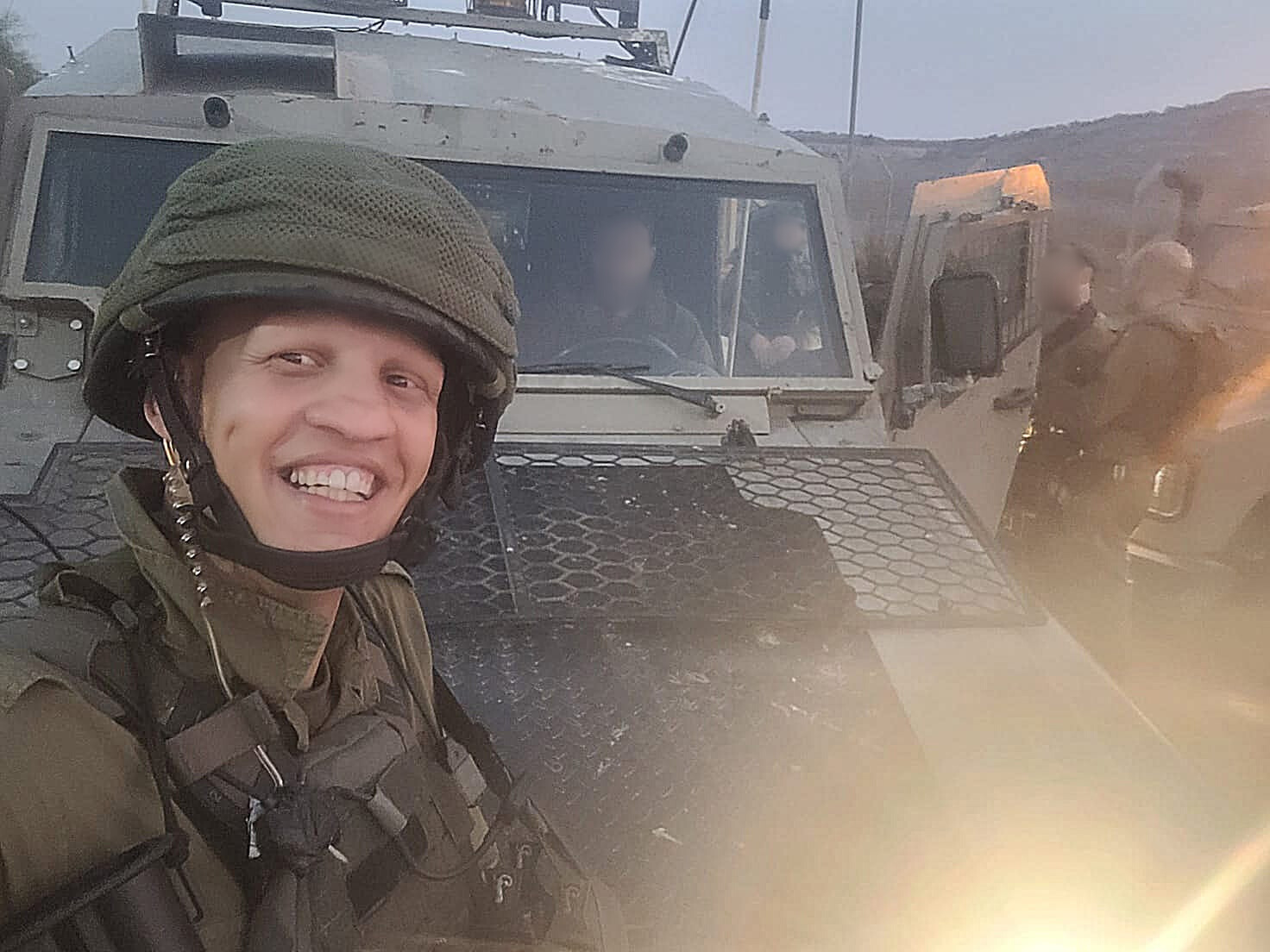
The years passed, and Avitar transitioned from a child to a teenager, and then to a young man whose eyes were fixed firmly on the future. Like many of his peers, he yearned to enlist in the Israel Defense Forces, to serve his people and his homeland. For him, this was not merely a duty but a sacred mission. However, alopecia, the condition that had accompanied him since childhood, once again presented a formidable obstacle. His applications to serve as a combat soldier were rejected repeatedly. He remembered the disheartening phone calls, the official letters stating he was unfit for combat service, each one a fresh sting. But Avitar was never one to surrender. His unwavering willpower, his deep-seated belief in his abilities, and his inherent right to serve propelled him to action. He simply refused to accept "no" as an answer. He filed appeal after appeal, met with numerous officers, underwent additional medical examinations, and explained, again and again, that his physical limitation in no way reflected his mental fortitude and unwavering determination. He fought passionately for his right to wear the uniform, just as he had fought for his right to be a normal child despite his differences. And indeed, after immense effort and numerous difficulties, he succeeded in enlisting. He was assigned as a combat soldier to the "Netzach Yehuda" battalion of the "Kfir" Brigade in the Infantry Corps. The moment he first donned the olive-green uniform, complete with the beret and military boots, was a moment of immense personal triumph. He had proven to himself and to the world that no external limitation would prevent him from realizing his aspirations. He endured rigorous basic training, confronted the demanding challenges of field exercises, and emerged as a proud, devoted, and fully-fledged combat soldier.
Even after his discharge from regular service in the IDF, Avitar remained deeply connected to the military. He was called up periodically for reserve duty and was assigned to Battalion 8211 of the "Ephraim" Territorial Brigade, where he served as a combat soldier in the Forward Command Post (FCP) for the battalion commander. His role was absolutely critical—to act as the eyes and ears of the battalion commander in the field, to assist him in making swift, crucial decisions under immense pressure, and to actively participate in complex operational activities. In this role, too, the powerful sense of mission resonated deeply within him. He viewed the defense of his people and his homeland not merely as a job, but as a way of life, a profound expression of his values of giving, responsibility, and an abiding love for the land of Israel.
In his civilian life, Avitar continued along his path of selfless giving and positive influence. He began working as a youth instructor in a boarding school, an environment where he could apply his profound insights into coping with adversity and transcending personal limitations. He possessed an innate ability to deeply understand the individuals before him, to discern both their overt and hidden physical or emotional needs, and to offer every boy and girl a compassionate, listening ear, unwavering encouragement, and practical guidance. Hundreds of young people passed through his care, profoundly influenced by his radiant presence and the sheer force of his personality. He taught them that no difficulty was truly insurmountable, that one should never give up, even if feeling different, and that self-worth was never dependent on external circumstances. "I am not defined by what others say about me, but by what I do," he often remarked, and his words permeated deep into the souls of these young people, equipping them with invaluable tools to navigate the challenges of their own lives. Subsequently, he served as a youth coordinator in Moshav Maor, where he continued to leave his indelible mark on the next generation, tirelessly working to build a strong, cohesive, and vibrant young community.
Avitar established his own private home, a haven of love and joy, with Rivka, a woman who shared his values and his deep love for life. They built their nest in the communal settlement of Nitzan, a tranquil and close-knit community nestled near Ashdod, a place where they could raise their growing family in peace. In 2022, their first son, Netai Yosef, was born. Avitar, who was an exceptionally devoted and loving family man, formed a profound and unbreakable bond with his son. He was a father who truly saw his children, who engaged with them in play, who educated them through personal example, and who instilled in them the cherished values he so deeply believed in. Their home in Nitzan was perpetually filled with the joyful laughter of children, the comforting aromas of family meals, and long, heartfelt conversations about life and the path they were forging together. He managed to strike a delicate balance between his public and community responsibilities and his role as a present and deeply involved husband and father.
Around that time, Avitar began working as the maintenance and IT manager at the "Torah VeHa'aretz" Institute in Nitzan. Here too, in his new workplace, his professionalism and the "golden hands" with which he was blessed shone brightly. There was no malfunction he couldn't diagnose, no technical problem he couldn't fix. He worked with diligent dedication, always with a warm smile on his face, brimming with good will and an eagerness to assist anyone who sought his help. In this work, too, he perceived a profound sense of mission, viewing it as an integral part of the larger effort to transmit ideals and values to future generations. He seamlessly integrated his technical work with the deep spirituality and values that pulsed within him, transforming every task into an opportunity to exert a positive influence. He was an energetic, bright-faced individual with a powerful presence that was noticeable in any gathering. He infused his surroundings with positive energy and made a beneficial impact on every person he encountered. He firmly believed that life's difficulties were not obstacles but rather engines for growth and success, and that within every trial lay a tool for personal development. "Hard? Yes, it's hard, but it's not terrible," he often said, "Work hard, overcome, and you'll rise back up!"
These profound insights, which he had gleaned from his own complex life experiences, he did not keep to himself. He utilized them to help and care for others with boundless generosity. He excelled in acts of kindness and giving to his fellow human beings, seeing them as simply the natural order of things. "This is simply how it should be done!" he would tell those around him. Whether it was a teenager in the boarding school in need of support, a friend requiring encouragement, or a family in need of assistance—Avitar was always there, offering a listening ear, sound advice, and a helping hand. He possessed an extraordinary ability to see deeply into the person before him, to identify a hidden need, and to then act decisively to fulfill it. On Shabbat evenings, during Rosh Hashanah, and throughout the entire cycle of the year's festivals, he made it his mission to assist others with love and self-sacrifice, never pausing to consider the time or effort it demanded of him.
To inspire children and teenagers grappling with bullying and social exclusion, and to equip them with the inner strength to cope, Avitar chose to share his life story in a moving lecture titled "Conquer Yourself and Be Joyful." He spoke with remarkable openness and honesty about his struggles as a child and teenager with alopecia and learning difficulties, about the challenging path he navigated to enlist in the IDF, and about the many successes that followed. His voice was imbued with passion, his eyes sparkled with conviction, and the audience, young and old alike, sat utterly captivated. He didn't merely tell a story; he offered hope. He demonstrated through his own personal example that nothing stands in the way of an unwavering will, and that each and every individual possesses the inner power to overcome any obstacle and to discover joy in life.
And then came that bitter and swift morning, the Sabbath of the 22nd of Tishrei, Simchat Torah 5784, October 7, 2023. Avitar and his family, Rivka and their young son Netai Yosef, were spending the holiday weekend at his parents' home in Rehovot, immersed in an atmosphere of festive joy and family warmth. It was half past six in the morning when the piercing wails of the air raid sirens began to tear through the pre-dawn quiet, and then, like a rolling wave of horrifying news, the reports of the murderous surprise attack by the Hamas terrorist organization began to pour in. Massive barrages of missiles and rockets launched from the Gaza Strip blanketed vast areas of the country, providing a smoke screen for the infiltration of thousands of terrorists—by land, by sea, and by air—who then unleashed a rampage of murder and atrocities in the communities surrounding Gaza, in Sderot, Ofakim, and Netivot, and at outdoor nature parties near Kibbutzim Re'im and Nir Oz. The images that began to stream onto mobile phones, the heartbreaking reports, made the sheer magnitude of the disaster horrifyingly clear within a matter of hours. Hundreds of civilians were brutally murdered in their homes and cars, hundreds were abducted and dragged into Gaza, and countless homes and properties were destroyed and looted. On that morning, a war began.
Avitar, sitting in his parents' home in Rehovot, found it impossible to remain idle. He instantly grasped the enormity of the event, the profound depth of the threat. His heart cried out to go, to help, to defend. Even though he did not have a weapon with him, he leaped into his car and drove south on his own initiative, directly into the unfolding inferno, driven by an intense desire to assist in any way he could and to fight. En route, as the chaos around him intensified, he managed to contact his battalion commander. The commander, who was himself in the midst of confusion and desperately trying to organize his forces, directed Avitar to a base in Samaria, where troops were beginning to gather for a wide range of missions. Avitar did not hesitate for a moment. He immediately changed direction, driving with urgent speed towards Samaria, resolute in his determination to take part in the defense effort.
From that day forward, Avitar served continuously in reserve duty in the Samaria region. His first deployment stretched for many long months, lasting until the end of January 2024. He participated regularly in crucial operational activities, displaying immense courage and unwavering fearlessness. In Samaria, just as in the south and the north, intense fighting was underway against terrorists and terror organizations attempting to exploit the volatile situation. Avitar, as a combat soldier in the battalion commander's FCP, was at the very forefront of the action, accompanying his commander in every operation, bearing heavy responsibility, and executing every task with uncompromising dedication and professionalism. He understood deeply that every action, no matter how small or large, contributed directly to the protection of the residents of Israel.
During this arduous period, while he was serving on reserve duty for weeks on end, far from his home, his family expanded. His baby daughter, Tehillah, was born. The joy of her birth was, however, tinged with a constant undercurrent of worry and profound longing. He managed to make it home for brief, precious visits, to embrace Rivka, to gently caress Netai Yosef, and to hold the soft, new form of Tehillah in his arms. Yet, his heart remained perpetually divided between his duty to his family and his unwavering commitment to his people. Even after his first round of reserve duty concluded, Avitar did not return to a normal routine. He volunteered for various missions within the sector, driven by a deep sense of mission that never truly released its grip on him. In this way, he served continuously for over two hundred days of reserve duty, an extended and utterly exhausting period during which he dedicated his entire being to the war effort. He stood as a living symbol of commitment, determination, and an unwavering willingness to sacrifice personal comfort for the collective security of his nation.
On January 5, 2025, Avitar was called up for a third round of reserve duty, planned to last for a month and a half. He was deployed to the sector of the "Menashe" Territorial Brigade in northern Samaria, a complex and highly sensitive area that demanded constant operational vigilance. He bid farewell to Rivka and his children with a long, tender embrace, promising to return home swiftly. He knew this was just another mission, another chapter in the war that had become an inseparable part of his very existence. He climbed into the military vehicle, its engine rumbling, and drove towards the sector, fully prepared for whatever challenge lay ahead.
Just two weeks after he had begun his third round of reserve duty, on the 20th of Tevet 5785, January 20, 2025, Staff Sergeant (res.) Avitar Ben Yehuda embarked on an operational activity in the area of Tamun village, in the Tubas district, eastern Samaria. He was driving the battalion commander's vehicle, with the commander seated beside him. It was, to all outward appearances, a routine activity, one of many that were undertaken daily during those days of heightened security tension. The sun was already high in the sky, casting long, stark shadows across the dusty paths. Avitar was intently focused on his driving, his eyes constantly scanning the surroundings, acutely alert to any suspicious movement, just as he had learned to do countless times throughout his extensive service. He spoke with the battalion commander about the day's plans, perhaps even about home, about the children who were waiting for him.
And then, with horrifying suddenness, a powerful explosive device detonated. The deafening blast, its roar tearing through the quiet afternoon, struck the vehicle directly. Shrapnel and metal fragments flew violently through the air, and the car was instantly transformed into a twisted, mangled mass of iron. Avitar was catastrophically wounded. The medical forces, urgently summoned to the scene, acted with incredible speed and bravery under fire, amidst immense pressure, to provide him with initial treatment and evacuate him. An evacuation helicopter was rushed to the location, and he was lifted onto it, suspended between earth and sky, en route to the hospital. But his injuries were too severe. En route, his death was tragically confirmed. Beside him, the battalion commander was severely wounded, and three other soldiers also sustained injuries in the horrific incident.
Avitar Ben Yehuda fell in battle, at the young age of thirty-one, leaving behind an immense void. He was laid to rest in the military plot of the cemetery in Nitzan, the very community where he had built his home and raised his family. A vast multitude accompanied him on his final journey, heads bowed in sorrow, eyes glistening with tears, but in the hearts of all present, there also pulsed a deep sense of appreciation and gratitude for a man who had dedicated his life to the well-being of the collective. He left behind his beloved wife, Rivka, his son Netai Yosef, and his tender baby daughter Tehillah, who had known him only for the briefest of moments. He left his parents, Tzilla and Avihud, and his nine brothers and sisters, all bearing the profound pain of his loss and the immense pride in the path he had walked.
His father, Avihud, spoke of him with both pain and deep admiration: "He taught me how to educate, how to truly contain, how to look differently at children... He overcame everything. He grew into a young man with charisma, with self-confidence, with immense inner strength. He decided to take life into his own hands, and out of his difficulties, he built his life to give and to do good for everyone around him... Avitar was a living symbol of unwavering willpower and the ability to rise above external limitations from a place of profound inner strength, and he taught us that a sense of self-worth is not dependent on circumstances." These words resonate with everything Avitar embodied—a fighter in spirit, not only on the battlefield but in the battles of his personal life, where he triumphed over every obstacle and transformed it into a springboard for growth.
Avitar's legacy is not merely a memory, but a living spirit that continues to act and inspire. The Hof Ashkelon Regional Council organized a football tournament in Moshav Hodaya in memory of the fallen from the council's communities, and Avitar was among them. The football team from the community of Nitzan, named "Bnei Yehuda Avitar" in his honor, participated in the tournament, with the players proudly wearing his name on their jerseys, carrying his infectious spirit onto the field. A dedicated webpage in his memory was launched on the council's website, featuring photographs, stories, and testimonies that immortalize his unique character. His close friends, those who had accompanied him for years, decided to perpetuate his spirit of giving and kindness in a practical way: they established a moving project called "Leading with Love – In Avitar's Way," which is a nationwide network for lending trailers (a *gemach*). These trailers are used for the benefit of the community, for transporting equipment, assisting with events, and much more, thereby continuing the many circles of kindness that Avitar had created in his lifetime. Avitar's cousin, Elchanan Yaish, wrote and composed a song in his memory, titled "My Brother," a song that touches the deepest chords of the soul, expressing the pain, the longing, and the profound appreciation for the brother he had. The song, accompanied by a moving music video, is available for viewing online, allowing many to feel the intensity of their bond and the depth of the loss.
One year after the fall of Staff Sergeant Avitar Ben Yehuda, a deeply moving memorial evening was held at the Torah VeHa'aretz Institute in Nitzan—the very place where he had served as operations and maintenance manager, leaving his indelible mark with his golden hands and his bright, welcoming smile. The event, attended by hundreds of people—family, friends, neighbors, commanders, soldiers, and young people he had mentored—was filled with profound sadness, yet also with immense inspiration. During the evening, a new classroom bearing Avitar's name was dedicated, a place where new generations will continue to learn and develop, and where a special exhibition on Kfar Darom will also be displayed, as part of commemorating his legacy and work. At the very spot where he fell, a lookout point was established in his memory in the community of Alon Moreh, gazing out over the open landscape of eastern Samaria, towards Tamun village. This lookout, a quiet point of remembrance, allows visitors to pause for a moment, to contemplate the view, and to reflect on Avitar's path—a path of courage, determination, giving, and a deep love for humanity, a path where every difficulty became an engine for growth, and every challenge an opportunity to conquer oneself and live joyfully. Avitar Ben Yehuda, who lived a life full of meaning and selfless giving, fell as a hero, but his spirit continues to beat in the hearts of many, a symbol of Israeli revival, of human bravery, and of the unwavering belief in humanity's power to overcome every limitation, for himself, for his family, and for his people and homeland.
Moments of a life
All photographs · 3
In the media
Articles
- Rabbi Avihud Ben Yehuda in a moving interview about his son who fell in an explosive device blast
וואלה ·
- Sergeant First Class (res.) Eviatar Ben Yehuda fell during operational activity
Israel National News ·
- Evyatar Ben-Yehuda killed in northern Samaria. Details
7 канал — Аруц Шева ·
- Memorial Archive — Lev Evyatar
leveviatar.org.il
- Evyatar Ben Yehuda. Continuing the path of Evyatar Ben Yehuda, of blessed memory — visit “Commemorate Through Action — Fill the Void.”
male-halal.co.il
- The father of Evyatar Ben Yehuda, may God avenge his blood, speaks about his son, the counselor, fighter, and social leader | Arutz Sheva
ערוץ 7
Songs
- My Brother – Elhanan Yaish – Missing Evyatar Ben Yehuda, may God avenge his blood
המכון הישראלי לכלכלת הבית! / YouTube ·
Memorial sites
- Eviatar Ben Yehuda
ynetnews גל-עד
- Yizkor - Sergeant Major Evyatar Ben Yehuda
יזכור
Memorial projects
The song “Ahi,” performed by Elhanan Yaish, was dedicated to Evyatar Ben Yehuda; the association’s website links to the recording. The written description credits Elhanan Yaish as lyricist and Yaish and Eliya Madmon as composers.
The Lev Evyatar association carries on his path through a nationwide charitable trailer-lending service and a lecture titled “Overcoming Yourself.” The website also documents the Evyatar lookout established in Elon Moreh.
Nitzan’s football team was named Bnei Yehuda Evyatar and took part in a memorial tournament held by the Hof Ashkelon Regional Council.
Stories told about them
His father said Eviatar had dealt with hair loss and bullying since childhood and learned to cope with the difficulties. As an adult, he gave five or six talks to children experiencing bullying and social exclusion to encourage them.
Life & service
Profile
Service
- Rank
- Sergeant first class
- Service Type
- Reserve Forces
- Battle Location
- Menashe Brigade Area
Family
- Father
- Avihud
- Mother
- Tzila
Burial
Tributes & remembrance
תודה לך, אביתר היקר, על שהגנת עלינו ונלחמת למעננו במחיר ההקרבה היקרה והנוראה מכל! תנחומים מלב כואב לכל יקיריך. יהא זכרך ברוך, גיבור ישראל!
· ברוך דיין האמת: רס"ל אביתר בן יהודה, יליד רחובות ובנם של הרב אביהוד וצילה בן יהודה, נהרג בפעילות מבצעית בצפון השומרון. אביתר ז"ל הותיר אחריו את רעייתו רבקה, בן ובת, שני הורים ותשעה אחים. יהי זכרו ברוך
אביתר גיבור ישראל
השם יקום דמו
תודה לך על זה שמרטה אל המדינה שלנו ועל העם שלנו, לא נשכך אותך גיבור ישראל, אביתר בן יהודה.
רס״ל אביתר בן יהודה בן 31, מניצן, לוחם בגדוד 8211 של חטיבת אפרים, נפל במהלך פעילות מבצעית במרחב חטיבת מנשה. האירוע התרחש זמן קצר אחרי חצות, כאשר לוחמים מגדוד מילואים 8211 יצאו לפטרול שגרתי בכפר טמון באזור טובאס. במהלך הנסיעה, בתוך שיירת רכבים, רכב המג"ד מסוג "דוד" עלה על מטען חבלה רב עוצמה. נהג הכלי אביתר נהרג, מפקד הגדוד שישב לידו נפצע קשה. הגיבורים האלה משאירים אישה וילדים ויוצאים למאות ימי מילואים. ומשלמים בחייהם. הלב נשבר
אביתר,
אני כל כך מתגעגע אליך, לצחוק שלך. לאופטימיות חסרת התקנה.
תמיד ראשון לעזור וראשון לשמח.
כמה שימחת אותי בחתונה שלי ושל אשתי עד כששמעתי שנפלת אמרתי באמת ה לוקח את הטובים ביותר.
יהי זכרך ברוך!
גיבור, שנה לפני ראיתי וצילמתי אותך רוקד ומאושר בסעודת הודיה לאחי, חבר מהצוות שלך . ת.נ.צ.ב.ה
הבחור עם החיוך המקסים תמיד...
זוכרת אותך גאה, אבא נלהב
בניצן
עיניים טובות שאין דברים כאלה
יהי זכרו ברוך
זכרנו לברכה
בחור בלתי נשכח , כל מי שהכיר אותך יבין , יהיה זכרך ברוך אביה , מי האמין שאכתוב עליך בעבר
אזכור אותך תמיד אחי היקר, נמשיך את דרכך להפיץ אור בעולם
ונזכור את כולם תודה על ההקרבה. זוכרים ומוקירים
אביוסור הכהן כך קראנו לך מגיל קטן חיוך לא ישכח מליבי. אני זוכר שהתארחת אצלנו בשבת בהיותך בגיל 12.שכל השבת היית צמוד אליי. צופיה ומיכל התחברו איתך בקלות. יהי זכרך ברוך. השם יקום דמך. תהא נשמתך צרורה בצרור החיים אמן
מתגעגעים אליך אביתר.
אהוב למטה ואהוב למעלה
יהי זכרו ברוך. ונשמתו צרורה בצרור החיים
יהי זכרו ברוך
יהי זכרו ברוך
לנצח את עצמך ולהיות בשמחה
יהי זכרו ברוך
He grew into a man who saw others and gave to others. It was endless giving
Source:וואלה
Read the Hebrew original
הוא הפך להיות לגבר שרואה את האחר ונותן לאחר. זו הייתה נתינה בלתי סופית
He took charge of his life and worked to do good
Source:ערוץ 7
Read the Hebrew original
הוא לקח את החיים בידיים, פעל לעשות טוב
With a smile and a big heart
Source:ערוץ 7
Read the Hebrew original
עם חיוך ולב גדול
May his memory be a blessing
Source:ערוץ 7
Read the Hebrew original
יהי זכרו ברוך
Always with a smile, always ready to help
Source:ערוץ 7
Read the Hebrew original
תמיד עם חיוך, תמיד נרתם לעזור
He just has charisma; he was born with charisma
Source:ערוץ 7
Read the Hebrew original
פשוט יש לו כריזמה, הוא נולד עם כריזמה
He comes in and sits next to me
Source:ערוץ 7
Read the Hebrew original
הוא נכנס ויושב לידי
He helped those who were struggling
Source:ערוץ 7
Read the Hebrew original
הוא עזר למי שהתקשו
No matter how much he fooled around, he always knew how to take responsibility
Source:ynet
Read the Hebrew original
כמה שהוא עשה שטויות, הוא תמיד ידע לקבל את האחריות
The word 'no' simply was not in his vocabulary
Source:ynet
Read the Hebrew original
המילה 'לא' פשוט לא הייתה בלקסיקון שלו
Remembrance Day addresses
יום הזיכרון לחללי מערכות ישראל התשפ"ה – 2025
בכל יום שעובר, אזכור יותר! אזכור, את אלו שיצאו עימי לקרב ולא שבו, ולהם אין מי ידמה ומי ישווה. אזכור, שהכאב לא יעבור לעולם, והזמן, הוא לא מרפה ולא מרפא. אזכור, את שיברון הלב הגובר ואת הבית שבוער. אזכור, את צדקת הדרך, ואשבע שוב, שמה שהיה לא יהיה יותר. אזכור, שיותר מכל דבר אחר – אני חסר! ביום הזה, אני נתקף געגוע לדמותם, לחיתוך דיבורם, לחיוכם, ומדליק נר לזיכרון דרכם ומורשתם!
משרד הביטחון
אגף משפחות, הנצחה ומורשת
יום הזיכרון לחללי מערכות ישראל התשפ"ה – 2025
בכאב, בהצדעה ובתקווה אני מתכבד להדליק נר זיכרון זה. השנה, כשאנו נלחמים במלחמה ארוכה, רב זירתית וצודקת, הזיכרון נושא משמעות עמוקה. ביום זה נעצור ונתייחד עם זכרם של טובי בנינו ובנותינו שנפלו בהגנה על המדינה. מורשתם היא המצפן שמתווה את דרכינו, והיא המעניקה לנו כוח להמשיך ולהגן על מדינת ישראל ותושביה. משפחות יקרות, אנו מרכינים ראשנו ומתחייבים שנעמוד לצידכן תמיד. יהי זכר הנופלים ברוך.
אלוף דדו בר כליפא
ראש אגף כוח האדם, צה"ל
יום הזיכרון לחללי מערכות ישראל התשפ"ה – 2025
בשעה שאנו זוכרים את גודל תרומתם ועומק מסירות נפשם של טובי בנינו ובנותינו, נופלי מערכות ישראל לדורותיהן, ממשיכים צה"ל וכוחות הביטחון במימוש המשימה למענה לחמו ועבורה נפלו: הכרעת אויבינו מדרום, מצפון, ביהודה ובשומרון, וגם בזירות רחוקות יותר. בהערכה רבה ובגאווה אדירה אנו מרכינים ראש בפני הנופלים והנופלות, מאמצים את משפחותיהם אל לבנו, וממשיכים במשימה להבטחת קיומה של ישראל לדורי דורות. יחד נעשה ונצליח.
רב אלוף אייל זמיר
הרמטכ"ל, צה"ל
יום הזיכרון לחללי מערכות ישראל התשפ"ד – 2024
כאשר דגלינו מורדים לחצי התורן וראשינו מורכנים לזכר הנופלים והנופלות במערכות ישראל, ממשיכים לוחמי צה"ל ומפקדיו בלחימה בדרום, בצפון, ביהודה ובשומרון ובזירות נוספות. על כל דור מוטלת המשימה של הגנת העם והארץ – משימה שאף פעם אינה פוסקת. נצדיע בגעגוע ובגאווה לנופלים ולנופלות, נחבק את משפחותיהם, ונמשיך ברוח הציווי שהותירו לנו. עם ישראל חי.
רב ניצב יעקב שבתאי
המפקח הכללי, משטרת ישראל
יום הזיכרון לחללי מערכות ישראל התשפ"ד – 2024
אחיי הנופלים, כל נר הוא זיכרון יחיד ומיוחד, על חיים שהיו ואינם, געגוע שנצרב עמוק בלב, עולם ומלואו. הנרות כולם הם זיכרון של אומה כי לעולם לא עוד, בשורת הציונות וקוממיות ישראל. זיכרון כי הדרך לעם חופשי בארצנו עוברת דרך מסדר הנופלים. אור הנר יזכיר לנו את מסירות נפשכם להציל חיים, להגן על הבית. הנרות מסמנים לנו נתיב גבורה ערכי מחייב שאנו מצווים ללכת לאורו. נמשיך להילחם ולהוסיף אור מתוך אמונה בנצח ישראל.
יואב גלנט
שר הביטחון
יום הזיכרון לחללי מערכות ישראל התשפ"ד – 2024
בהצדעה ובכאב, בשם צה"ל כולו, אני מדליק נר זיכרון. בעיצומה של מלחמה, הזכרון נושא משמעות יום-יומית, שעבר והווה מתלכדים בה. לאורם של הנופלים נמשיך לצעוד, חיילי הסדיר והמילואים. לאורם של הנופלים נמשיך להגן על ארצנו ועל מולדתנו, גם כשהמחיר כבד. להבת-הזכרון תבער בנו בעודנו ממשיכים להלחם ונזכור את הנופלים ואת אומץ ליבם. משפחות יקרות, צה"ל מרכין היום ראש, מצדיע לכן וכואב איתכן. יהי זכר הנופלים ברוך.
אלוף יניב עשור
ראש אגף כוח האדם, צה"ל
יום הזיכרון לחללי מערכות ישראל התשפ"ד – 2024
בהוקרה, בגאווה ובכאב שאין לו סוף, אני מתכבד להדליק נר לזכרם של הנופלים והנופלות במערכות ישראל. סיפור חייהם בארץ הזאת, מסכת שירותם, גבורתם והקרבתם – הם סיפורה של הארץ הזאת, אך גם סיפור המחיר הכבד שהיא תובעת מאוהביה. מחויבותנו לזכר הנופלים ולדרך שהותירו לנו ניצבת תמיד לנגד עינינו. את המשימה שלא זכו להשלים, משלימים כיום, וישלימו, אנשי כוחות הביטחון, הממשיכים בדרכם ולאורם. יהי זכרם של הנופלים ברוך.
משרד הביטחון
אגף משפחות, הנצחה ומורשת
יום הזיכרון לחללי מערכות ישראל התשפ"ד – 2024
בחרדת קודש אני מתכבד להדליק נר לזכרם של חללי מערכות ישראל, חברנו שנפלו, מראשית היציאה מהחומות ולאורך כל שנות עצמאותנו המדינית והציונית, מהווים תמרור זיכרון לדרך חיינו ולמחוייבות הלאומית להנצחת זכרם. דרכם נותרה דרכנו ומורשתם נר להמשך עשייתנו. יהי זכרם ברוך!
בני גנץ
שר הביטחון
יום הזיכרון לחללי מערכות ישראל
נזכור אותם, כולנו יחד. כל אחד ואחת מהם, מדי יום ביומו, והיום ביתר שאת, כך – לנצח. "כי מדי דברי בו זכור אזכרנו עוד"
משרד הביטחון
אגף משפחות, הנצחה ומורשת