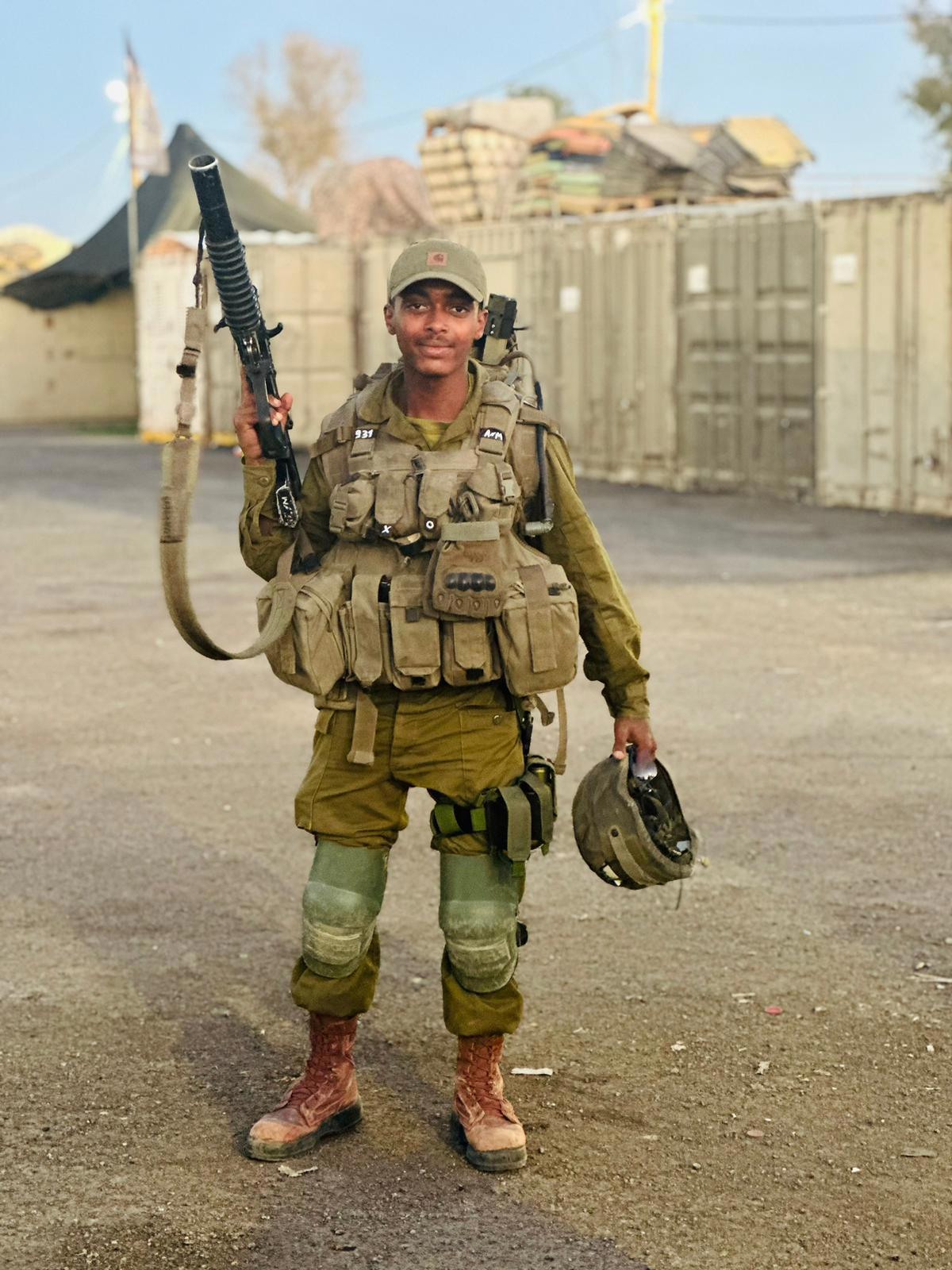
The story
When the first rays of a soft Ethiopian winter sun cast a pale light on the small mud hut on the 20th of December, 2004, the 8th of Tevet 5765, Armias Mekuriyaw was born. He was the third son of Aniyyat and Dago, a younger brother to Dor, and an older brother to Orel and Lior, who would follow him later. In those early days, wrapped in thin cloth and his mother’s warm embrace, he was just a baby whose large eyes absorbed the world around him – the reddish-brown hues of the earth, the sounds of ancient lullabies, the scent of spices from Aniyyat’s kitchen, and the rough yet comforting touch of Dago, his father’s, hands as he was lifted high. Dor, his older brother, then a small child himself, already stood by the makeshift cradle, curious and protective, gazing at the new addition to the family, unaware of how deep and significant their bond would become in the future. Four years passed with the swiftness of an Ethiopian childhood, four years in which Armias learned to crawl on the cool dirt floor, to walk with hesitant steps behind his mother to the colorful market, and to play with stones and twigs under the hot sun. He absorbed the slow pace of life, the soft voices of the community, the warmth of his close-knit family, and a deep sense of belonging to the place and its roots. He remembered the touch of the dry wind, the taste of cool water from the well, the laughter of children playing in the dirt streets. These were initial memories, blurred like a dream, but they laid the foundations for the gentle and kind-hearted character that defined him throughout his life.
In 2008, when he was four years old, the Mekuriyaw family left their familiar home and embarked on a long and winding journey to a new land – Israel. Little Armias didn't fully grasp the meaning of the move, but he sensed his parents' excitement mixed with apprehension, the anticipation in the air. He remembered the long flight, the twinkling lights of the big city visible through the airplane window, the feeling of strangeness mixed with promise when they arrived in Be'er Sheva. Everything was different: the houses, the language, the food, even the smell of the air. For a four-year-old, it was an entirely new world, both magnificent and intimidating. Settling in Be'er Sheva involved many challenges. His parents struggled to find their way in the new society, to learn the language and build a home. Armias, with his older brother Dor and now also with Orel and Lior who were born in Israel, grew up within a complex tapestry of cultures, between memories of Ethiopia and the emerging Israeli reality. He was a curious child, absorbing everything. He learned Hebrew with surprising speed, as young children often do, and frequently became the family's little interpreter, a bridge between worlds. At home, his parents made sure to preserve Ethiopian traditions, the familiar flavors of the cuisine, and family stories passed down through generations. Outside, in the streets of Be'er Sheva, he ran and played with Israeli children of all backgrounds, learning new street games, childhood jokes, and different social codes. Even then, his unique ability to connect people, to understand different worlds, and to stand out positively wherever he went, blossomed – not through forcefulness, but through his kindness and captivating smile.
Armias spent his early years in the Israeli education system at the "Talmud Torah Netiv Meir" elementary school in Be'er Sheva. The school, with its religious framework and emphasis on values, suited his gentle and respectful nature. In first grade, when he stood before the blackboard for the first time, as the sharp smell of pencils and notebook paper filled the room, he wasn't just another child. He was "a child with kind eyes," as many would say of him. His eyes were large, sincere, and reflected a rich and sensitive inner world. He was one of those children who sat quietly, listened attentively, and internalized every word. He wasn't one of the extreme students, neither the unruly one nor the one who struggled, but rather the child who was at the center, connecting everyone. In the schoolyard, it was often possible to see him mediating small disputes between children over a ball or a turn on the playground equipment, offering a compromise with a soft smile, and making all parties feel seen and heard. He was the one who shared his cheese sandwich with a friend who forgot breakfast, or helped a little girl find her lost pencil. These small acts, which accumulated into a reputation for having a "heart of gold," were an integral part of who he was. He truly and genuinely loved people, and it radiated from him. He was naturally beloved by everyone, in a way that required no effort, but stemmed from his very presence.
Even from childhood, a deep aspiration to give of himself stood out in him. It wasn't a matter of obeying instructions, but a genuine inner drive. If there was a call for volunteers to clean the classroom after an art lesson, he would be the first to raise his hand, without expecting anything in return or any praise. If the teacher needed help carrying piles of notebooks, Armias would be there, with a big, magnetic smile. He was present in every school activity related to giving and helping the community, and he committed to them wholeheartedly. He saw it not as a chore, but as an opportunity to make others happy, to ease their burden, and to feel part of something larger. The sense of belonging and community responsibility was deeply ingrained in him, whether it was collecting bottles for recycling, preparing signs for a school event, or helping an elderly woman carry her groceries. He didn't seek the spotlight, but rather the light that lit up in the eyes of someone who received help. He learned this from home, from the values his parents instilled in him, and from the personal example of a supportive and warm community.
Family was the cornerstone of Armias's life, the most important thing to him. He strived to make his parents, Aniyyat and Dago, happy and proud in everything he did. It wasn't just a desire to be a good child, but a deep need to repay them for all they had given him, for the long journey they had made for him and his siblings. His high school homeroom teacher, who holds many memories of him in her heart, recounted a small, touching story that encapsulates everything that characterized Armias. At the end of a school day, after a lesson in which he had behaved exemplary, sat attentively, and participated actively, Armias approached his teacher shyly, mixed with hope. "Mrs. Mamo," as the teacher was called, "can I ask for something?" His voice was soft and quiet, but his eyes held a big request. "Of course, Armias," she replied. "Can you call my dad? To tell him I behaved well in class?" he asked, and the small smile that spread across his face, a smile that was a combination of hope and apprehension, moved her to the depths of her soul. She, of course, called. She imagined Dago, his father, receiving the call, the look of surprise on his face, and then the wide smile that spread as he heard about his good son. She knew it would make him feel good, and that was Armias's entire purpose. This desire, to make his parents happy with small, everyday actions, was a powerful engine in his life, deeply rooted in his soul.
As he grew older, his unique personality intensified. From seventh grade until he finished twelfth grade, Armias found another home, a place where he flourished and developed – the "Fidel" club in Be'er Sheva. The club, which served as a center for learning, inspiration, and empowerment for teenagers, was fertile ground for his growth. He wasn't just another one of the many teenagers who frequented the place; he was one of the most prominent and dominant, one whose presence filled the space with positive energy. He formed deep and meaningful connections with the other teenagers and with the instructors, relationships based on trust, sincerity, and genuine love. He was there to listen, to advise, to make people laugh, and to lift spirits. At "Fidel," Armias found his voice, his ability to lead not by forcefulness but by quiet charisma, a smile, and kindness. He participated in activities, led discussions, and simply was there for everyone. He remembered well that time when a close friend was struggling with difficulties at home, and Armias, instead of offering complex solutions, simply sat next to him, silent, and held his hand, without saying a word. Just his presence, full of empathy, was enough. "You're not alone," he whispered to him that evening, "I'm here with you." That was Armias: a supportive shoulder, a listening ear, a true friend.
At the religious high school "Makif Amit" in Be'er Sheva, Armias continued his path. The curriculum, combining religious and secular studies, suited him. He wasn't an exceptionally diligent student, but he was responsible, serious, and respectful. Teachers remembered him as a sweet, smiling teenager, always with a kind word. He didn't stand out for his high grades, but for his radiant personality. He was the one who cared for all his friends, who was a social pillar, and who spread optimism everywhere. His friends loved being in his company. He knew how to make them laugh until they cried, with inside jokes that only they understood, or with captivating self-deprecating humor. He was the one who initiated joint outings, late-night gatherings on a neighborhood bench, deep conversations about life, the future, fears, and dreams. He knew how to make everyone feel loved, important, and surrounded. A common phrase of his, which became a kind of mantra for his friends, was: "Be like me, there's no day that isn't happy for me." This wasn't an arrogant statement or one that ignored difficulties, but an expression of a deep life philosophy, of an active choice for optimism, even when things were tough. His smile was genuine, contagious, and managed to light up any room, any situation. He was surrounded by dozens of friends, not only at "Fidel" or at school, but in all circles of his life – from the neighborhood, from youth movements, from his extended family. To each of them, he gave a feeling of a special connection, of sincere caring.
When the time came for him to enlist in the IDF, Armias knew it would be a natural and inevitable step. The sense of mission, which had developed in him since childhood through acts of giving and volunteering, now had a clear direction. He enlisted on August 13, 2023, a combat soldier in Battalion 931 of the Nahal Brigade. The choice of Nahal was no coincidence. His older brother, Dor, also served in the brigade and was a role model, a figure of admiration for Armias. The pride in following in Dor's footsteps was immense. He saw it not just as military service, but also as a kind of family legacy, a chain of commitment to the land and the state. Enlistment day, with its tense anticipation, the farewell to family, the bus ride full of fresh recruits, the receipt of new uniforms that smelled faintly of a warehouse, was a pivotal moment. He stood there, Private Armias Mekuriyaw, tall and straight, with his familiar smile, despite the slight apprehension that gripped him. He knew it wouldn't be easy, but he was determined to give his all.
Military service, especially combat training, was an immense physical and mental challenge. The grueling runs with heavy equipment, the long hours of guard duty in the desert cold of the Negev, the intense firing drills, the dirty and exhausting field weeks – all these demanded endurance, determination, and a strong character. And Armias, with his gentle nature, surprised many. He proved to be a professional and skilled combatant, one who never gave up, who always pushed forward. He showed exceptional responsibility, seriousness in every task, and quiet, natural leadership. His commanders saw him as an outstanding soldier, "a valuable, prominent, and charismatic soldier," as they described him. They noted his leadership ability and his maturity, which was beyond his young years. "There was no mission he couldn't accomplish," they said. He didn't need to shout orders to be listened to; his presence, the determination in his eyes, and his personal example were enough. He was the first to volunteer for the toughest missions, the last to complain about fatigue or difficulty.
His teammates, who quickly became a second family, saw him as "the anchor and glue of the team." He was the one who always boosted morale, even in the toughest moments, when everyone was exhausted and despairing. "Come on, guys, just a little more, we can do it!" he would say, accompanied by a warm hug or an encouraging pat on the back. He provided motivation, pushing everyone forward, not just physically but mentally. When one of his friends struggled on a march, Armias would take some of his equipment, distract attention with a joke, or simply walk beside him, offering quiet support. There was an inner light that radiated from him, a presence that couldn't be missed. Even when he was tired, dirty, and hungry, he always smiled, expressed optimism, and knew how to encourage and spur on his friends. "Be like me, there's no day that isn't happy for me" – this phrase, which had been common in his vocabulary since high school, took on new meaning in the green uniform, under the scorching sun of training. He didn't just say it, he lived it. He knew how to make everyone feel loved, even in the tough and challenging environment of the army. He was the friend you could trust implicitly, the one who maintained his smile and his heart even when everything around was harsh and gray.
And then, on the morning of Simchat Torah, the 7th of October, 2023, the 22nd of Tishrei 5784, everything changed. It was six-thirty in the morning, and the holiday quiet was suddenly torn apart by incessant rocket barrages from the Gaza Strip. Armias was in the midst of his training, and suddenly, urgent phone calls, panicked WhatsApp messages, and news reports that began to detail the infiltration of terrorists, painted a picture of unbelievable horror. Thousands of terrorists from the Hamas terror organization infiltrated Israel – by land, sea, and air. They raided the Gaza Envelope communities, Sderot, Ofakim, and Netivot, massacred participants at nature parties, attacked IDF bases, and brutally murdered innocent civilians in their homes and cars. Hundreds were kidnapped to the Gaza Strip, homes were looted and set on fire. Hundreds of soldiers, police officers, and security forces personnel fell in battle. On that terrible morning, a war began. The new reality struck Armias and his friends with immense force. The quiet of training was replaced by maximum alertness. Their commanders explained the situation, the gravity of the hour, the responsibility resting upon them.
The training, which was planned to be long and gradual, was suddenly shortened. Every day, every hour, became critical. The drills became more intense, faster, more purposeful. The sound of gunfire on the firing ranges became a daily reality, and the understanding that they were training for the real thing, for actual combat, hung in the air. The fears were great, but so was the determination. Armias, with his inner light, was once again an anchor for his friends. He encouraged, strengthened, and reminded them of their purpose. "We'll have to be the best we can be," he told them one evening, when everyone sat tired after a grueling day of training, "for those who need us."
At the end of the shortened course, in a pivotal moment of mixed pride and sorrow, his older brother, Dor, presented him with the green beret of the Nahal Brigade. The beret ceremony, usually a joyous and emotional event, was this time heavy with meaning. Dor, who had already completed the course and served in the brigade, stood before his younger brother, looking at him with pride and also with apprehension. He presented the pristine beret, a symbol of a combatant, a symbol of commitment, a symbol of a long and difficult path. Their eyes met, and in them were all the unspoken words – the love, the pride, the mutual concern, and the understanding that from now on, Armias stood at the threshold of a new and dangerous reality. Dor hugged him a long and strong embrace, the hug of a protective older brother, the hug of a combatant to a combatant. He whispered words of encouragement, promises to stay in touch, and most importantly – a request to take care of himself. Armias, with the beret on his head, felt the weight of responsibility, but also the strength flowing through him from family, from heritage, from love. His commanders, who recognized his exceptional abilities and performance, recommended that he would later attend a squad commander's course – further testament to the natural leadership and maturity he displayed. He was on the verge of a new chapter in his life, a chapter of command and leadership, but the war pushed all these plans aside.
After the shortened training was completed, there was no time to delay. Armias's company quickly entered combat in the Gaza Strip. The transition from simulated training to the reality of warfare was sharp and difficult. Suddenly, the sounds of gunfire were real, the smell of gunpowder was acrid, and the tension was unbearable. Armias found himself in the heart of Gaza, in crowded neighborhoods, among ruined buildings and narrow alleys. Every step was calculated, every glance alert. He fought with bravery, dedication, and determination. The qualities that had characterized him since childhood – responsibility, seriousness, the ability to connect people, and tireless optimism – took on new meaning under fire. He was not deterred by danger, but confronted it resolutely. He cared for his friends, ensuring that everyone was ready, that everyone was protected. He was there to calm, to encourage, to set a personal example. "There's no day that isn't happy for me" – even in the midst of battle, he found a way to spread a little light, a little hope, a little resilience. He knew that every small act of humanity, of friendship, of support, was no less important than the operational actions. He was the warrior who kept the team's heart beating, even when danger loomed over every head. He bore the weight of responsibility with honor, knowing that he was protecting his family, his friends, and all the people of Israel.
The days and nights in the Gaza Strip blurred into one another. Sleep was short and fragmented, food was simple, and alertness was constant. On Friday, May 10, 2024, Armias's force went on an operational mission in the Zeitoun neighborhood of Gaza City. The neighborhood, like many others, was complex, full of buildings and risks. The soldiers moved carefully, step by step, clearing houses, scanning alleys. The tension was high. Every hole in the wall, every corner, every shadow, could conceal a threat. They advanced professionally, in coordination, as a cohesive team. Armias was an integral part of the movement, alert, attentive, aware of his surroundings. He trusted his friends, and they trusted him. At some point, as the force was operating in one of the buildings or alleys, an explosive device planted there was detonated. The explosion was violent, sudden, and deafening. One moment everything was quiet and tense, and the next – chaos. Armias, a young corporal of nineteen, was killed instantly. With him, three other soldiers, his comrades in arms, his brothers in arms, were killed. The inner light that radiated from him, the magnetic smile, the heart of gold, all extinguished at once, in a cruel and merciless explosion.
The bitter news reached the Mekuriyaw family home in Be'er Sheva like a bolt from the blue. The knock on the door, the military delegation, the choked words – all shattered the world of Aniyyat and Dago, of Dor, Orel, and Lior. Armias's smile, which they loved so much, was gone. The void left was immense, irreplaceable. The child who loved to make his parents happy, who was the "anchor and glue" of his friends, who spread light and joy everywhere, was cut down in the prime of his life. Only nineteen years old, with all of life ahead of him, with plans and dreams for the future, with immense potential. He was laid to rest in the military cemetery in Be'er Sheva, his hometown, surrounded by thousands who came to pay their last respects. Family, friends, commanders, teachers, acquaintances – a sea of pained faces, tearful eyes, broken hearts. He fell as a hero, as one who chose to defend his home, his people, the future of this place. After his fall, he was promoted to the rank of Sergeant, further recognition of his courage, leadership, and dedication.
At his fresh grave, under the skies of Be'er Sheva, his brother Dor stood, his voice choked with tears but full of pride. "My brother, my soul, my blood," he eulogized him. "Everyone here knows what our connection was. Beyond being my brother, you were also my best friend." Dor spoke of the special, deep bond they shared, a bond of brothers and friends. He mentioned the hundreds of people who came to pay their last respects to Armias, living proof of who he was. "If they ask who you are," Dor said, "everyone will say: 'a true friend who supports everyone around him'." He recalled his captivating smile, his touch on each and every person. "My brother, I love you. I know you fell with a smile and with pride without me seeing you, simply because that's who you are. Always loyal to the family's principles. My brother, rest in peace, we will meet, come visit me in my dreams, don't leave me alone." The words touched the souls of all present, echoing the immense love, the incomprehensible pain, and the promise to remember, never to forget.
Yarden, the director of the "Fidel" club where Armias was active and flourished, wrote him painful but appreciative words of farewell. "A child who was all good," she described him, "smiling, respectful, intelligent, spreading love and joy everywhere, humble, brave, and hilarious." She recalled the days when she saw him grow and develop, an experience that was "illuminating, instructive, and full of fun and love" for her. Yarden testified that Armias taught her to look at the glass half full, to give more room for joy and laughter in life, and to be grateful for what she had. "You were an inspiring child," she wrote, "I don't think I've ever hurt to lose someone as much as I hurt to lose you." Her words reflected the immense impact Armias had on his surroundings, the light he spread, and the enormous void he left behind.
Armias Mekuriyaw, of blessed memory, the child with the kind eyes and heart of gold, the warrior with the magnetic smile, fell as a hero in the War of Revival, a war forced upon us in which he fought valiantly for his people and his land. He left behind not only pain and longing, but also a legacy of love for humanity, boundless giving, tireless optimism, and quiet human heroism. His life story, short yet rich, is a story of aliyah, of integration, of building a life, and of deep commitment. He symbolizes the spirit of Israeli youth, the choice to serve and protect, the power of community, and the resilience of family. His memory is not just a memory of mourning, but a memory of inspiration, of hope, and of deep Israeli pride. He continues to live in the hearts of all who knew him, in the light he left behind, and in the laughter that still echoes in their memories. May his memory be a blessing.
In the media
Articles
- "I felt as though my son had died twice": The family of a fallen IDF soldier discovered that the Torah scroll they commissioned for the elevation of his soul was invalid
N12 ·
- Cleared for publication: Four Nahal Brigade soldiers fell in battle in the northern Gaza Strip
N12 ·
- IDF announces deaths of 4 soldiers killed by explosive in Gaza City alleyway
The Times of Israel ·
- Tsahal annonce la mort de 4 soldats, tués dans une explosion dans la ville de Gaza
The Times of Israël ·
Songs
- Orel Lavi — “Dear Warrior” (in memory of Ermias Mukrie, of blessed memory).
אוראל לביא - Orel Lavi ·
Memorial sites
- Yizkor — Sergeant Ermias Mekuria
יזכור - משרד הביטחון
- Memorial to the Fallen of Nahal - Armias Mekuriya
עמותת הנח"ל
Memorial projects
His family and friends initiated the writing of a Torah scroll in his memory, which was dedicated at the Shuvu Banim synagogue in Beersheba. In a later interview, the family claimed that defects had been found in the scroll; this is a reported claim rather than an independent examination of the scroll.
His friend Orel Lavi wrote the song “Dear Soldier” in his memory; Yizkor notes that the song can be heard on YouTube, but the video URL was not verified.
Stories told about them
Armias was proud to follow his brother Dor’s path in the Nahal Brigade. At the end of the shortened wartime training, Dor gave him his beret.
His homeroom teacher said he used to ask her to call his father and tell him about his good behavior in class. According to the official biography, he did this to make his father happy.
Life & service
Profile
Service
- Rank
- Sergeant
- Unit
- Nahal Brigade
- Honours
- Posthumously Promoted
- Battle Location
- North Gaza Strip
Family
- Father
- Dago
- Mother
- Aniyat
Burial
Tributes & remembrance
יהי זכרו ברוך
יהי זכרו ברוך
סמל ארמיאס מקוריאו הי"ד עלה לישראל בגיל ארבע, התגייס לקרבי מתוך תחושת שליחות עמוקה, ובמותו היה רק בן 19. חיוך תמידי, ענווה גדולה ולב ענק – כך מתארים אותו משפחתו וחבריו. "אם ישאלו מי אתה, כולם יגידו: חבר אמת שתומך בכל מי שסביבו. עם החיוך המשגע שלך נגעת בכל אחד ואחד", כך ספד לו אחיו איינאו. מפקדיו תיארו לוחם מוביל וכריזמטי, שלא הייתה משימה שלא עמד בה. הוא בחר להיות לוחם מתוך שליחות, ונפל על משמרתו באמונה, בגבורה ובגאווה. יהי זכרו ברוך.
גיבור ישראל.
תודה על המסירות. תודה על ההקרבה הגדולה.
גאווה גדולה לעיר באר שבע.
מקווה שאנחנו ראויים.
יהי זכרו ברוך.
ערב ראש השנה תשפ"ו.
איש יקר. גיבור ישראל.
יהי זכרו ברוך.
מתגעגע בלי סוף מחכה לך יום אחד שתחזיר לכולנו את האור לחיים אחי היקר אתה חסר
תודה על המסירות וההקרבה הגדולה.
רק שנהיה ראויים. שנה לנפילתו.
יהי זכרו ברוך.
תודה על הזכות להכיר אותך אני אוהבת אותך עד השמיים ויודעת שניפגש
גיבור ישראל
היי אני הבן של רענן דהן אתה שירטת איתו או סתם חבר שלו
אני לא מכיר אותך אבל אבא סיפר עלייך דברים טובים אני רוצה להכיר יותר את הסיפור שלך
טוב נוח על משכבח בשלום ביי
תודה על הכל. אצלנו בלב לתמיד
יהי זכרך ברוך
אהבה שלי חיים שלי איך איך אתה לא איתי פה אתה לא מבין כמה אני מתגעגעת
זוכרים
ארמיאס תלמידי היקר ,יהי זכרך ברוך
לזיכרו
על במותיך חלל איך נפלו גיבורים.
נזכור אותך לנצח גיבור ישראל והלוואי נהיה ראויים לך
לוחמי ומפקדי חטיבת הנח״ל
מרכינים ראש ומתייחדים עם זכרם של חללי הנח״ל .
יהי זכרם ברוך!
יהי זכרו ברוך, שנהיה ראויים.
ביום הזיכרון הזה אנו, חיילי ומפקדי גדוד ״שחם״ 931 מרכינים ראש וכואבים את לכתו של אחד מטובינו.
זכרו מלווה אותנו בכל צעד,
דמותו חקוקה בלב הגדוד לנצח.
יהי זכרו ברוך, ונצור בליבנו לעד
יהיה זכרו ברוך.
אח שלנו היקר מתגעגעים אליך המון תשמור עלינו מלמעלה מלאך שלנו
ארמיאס,לא כל כך הכרתי אותך,פשוט היינו מכירים דרך האינסטגרם,אבל רק לפי איך שהייתי רואה אותך,והסיפורים עליך,אני מבינה שהיית בן אדם מדהים,תשמור על כולנו מלמעלה,יהי זכרך ברוך .
ארמיאס היקר איזה בנאדם היית קשה לי לעכל את מה שקרה לך עדיין תשמור עלינו מלמעלה מלאך
עדיין קשה לעכל לא חשבתי משהו כזה יקרא לבנאדם טוב כמוך לנצח יזכרו אותך גיבור ישראל מקווה שאתה למעלה מחייך מלאך יפה שכמותך
יהיה זכרו ברוך
יהי זכרך ברוך חייל יקר
תודה על הכל גיבור ישראל!
גיבור ישראל
יהיה זכרך ברוך
תודה על הכל ארמיאס
תשמור עלינו מלמעלה מלאך
תודה על הכל, מתגעגעים המון
גיבור ישראל
יהיה זכרו ברוך
השם ינקום מותו.
He was a boy with kind eyes and a kind heart.
Source:N12
Read the Hebrew original
הוא היה ילד עם עיניים טובות ולב טוב.
Throughout the shiva, we thought about doing something to elevate his soul, and we thought a Torah scroll would be the most beautiful and dignified choice
Source:N12
Read the Hebrew original
במהלך כל השבעה חשבנו לעשות משהו לעילוי נשמתו וחשבנו שספר תורה יהיה הכי יפה ומכובד
Armias only graduated from school last year, and the vast majority of the students know him and are stunned with grief.
Source:נופלים
Read the Hebrew original
ארמיאס רק סיים את לימודיו בבית הספר בשנה שעברה ורוב מוחלט של התלמידים מכירים אותו והמומים מכאב.
Besides being my brother, you are also my best friend.
Source:יזכור - משרד הביטחון
Read the Hebrew original
מעבר לזה שאתה אח שלי אתה גם החבר הכי טוב.
You taught me to see the glass as half full, to make more room for joy and laughter in life, and to be grateful for what we have.
Source:יזכור - משרד הביטחון
Read the Hebrew original
למדתי ממך להסתכל על חצי הכוס המלאה, לתת יותר מקום לשמחה ולצחוק בחיים ולהכיר תודה על מה שיש.
Remembrance Day addresses
יום הזיכרון לחללי מערכות ישראל התשפ"ה – 2025
בכל יום שעובר, אזכור יותר! אזכור, את אלו שיצאו עימי לקרב ולא שבו, ולהם אין מי ידמה ומי ישווה. אזכור, שהכאב לא יעבור לעולם, והזמן, הוא לא מרפה ולא מרפא. אזכור, את שיברון הלב הגובר ואת הבית שבוער. אזכור, את צדקת הדרך, ואשבע שוב, שמה שהיה לא יהיה יותר. אזכור, שיותר מכל דבר אחר – אני חסר! ביום הזה, אני נתקף געגוע לדמותם, לחיתוך דיבורם, לחיוכם, ומדליק נר לזיכרון דרכם ומורשתם!
משרד הביטחון
אגף משפחות, הנצחה ומורשת
יום הזיכרון לחללי מערכות ישראל התשפ"ה – 2025
בכאב, בהצדעה ובתקווה אני מתכבד להדליק נר זיכרון זה. השנה, כשאנו נלחמים במלחמה ארוכה, רב זירתית וצודקת, הזיכרון נושא משמעות עמוקה. ביום זה נעצור ונתייחד עם זכרם של טובי בנינו ובנותינו שנפלו בהגנה על המדינה. מורשתם היא המצפן שמתווה את דרכינו, והיא המעניקה לנו כוח להמשיך ולהגן על מדינת ישראל ותושביה. משפחות יקרות, אנו מרכינים ראשנו ומתחייבים שנעמוד לצידכן תמיד. יהי זכר הנופלים ברוך.
אלוף דדו בר כליפא
ראש אגף כוח האדם, צה"ל
יום הזיכרון לחללי מערכות ישראל התשפ"ה – 2025
בשעה שאנו זוכרים את גודל תרומתם ועומק מסירות נפשם של טובי בנינו ובנותינו, נופלי מערכות ישראל לדורותיהן, ממשיכים צה"ל וכוחות הביטחון במימוש המשימה למענה לחמו ועבורה נפלו: הכרעת אויבינו מדרום, מצפון, ביהודה ובשומרון, וגם בזירות רחוקות יותר. בהערכה רבה ובגאווה אדירה אנו מרכינים ראש בפני הנופלים והנופלות, מאמצים את משפחותיהם אל לבנו, וממשיכים במשימה להבטחת קיומה של ישראל לדורי דורות. יחד נעשה ונצליח.
רב אלוף אייל זמיר
הרמטכ"ל, צה"ל
יום הזיכרון לחללי מערכות ישראל התשפ"ד – 2024
כאשר דגלינו מורדים לחצי התורן וראשינו מורכנים לזכר הנופלים והנופלות במערכות ישראל, ממשיכים לוחמי צה"ל ומפקדיו בלחימה בדרום, בצפון, ביהודה ובשומרון ובזירות נוספות. על כל דור מוטלת המשימה של הגנת העם והארץ – משימה שאף פעם אינה פוסקת. נצדיע בגעגוע ובגאווה לנופלים ולנופלות, נחבק את משפחותיהם, ונמשיך ברוח הציווי שהותירו לנו. עם ישראל חי.
רב ניצב יעקב שבתאי
המפקח הכללי, משטרת ישראל
יום הזיכרון לחללי מערכות ישראל התשפ"ד – 2024
אחיי הנופלים, כל נר הוא זיכרון יחיד ומיוחד, על חיים שהיו ואינם, געגוע שנצרב עמוק בלב, עולם ומלואו. הנרות כולם הם זיכרון של אומה כי לעולם לא עוד, בשורת הציונות וקוממיות ישראל. זיכרון כי הדרך לעם חופשי בארצנו עוברת דרך מסדר הנופלים. אור הנר יזכיר לנו את מסירות נפשכם להציל חיים, להגן על הבית. הנרות מסמנים לנו נתיב גבורה ערכי מחייב שאנו מצווים ללכת לאורו. נמשיך להילחם ולהוסיף אור מתוך אמונה בנצח ישראל.
יואב גלנט
שר הביטחון
יום הזיכרון לחללי מערכות ישראל התשפ"ד – 2024
בהצדעה ובכאב, בשם צה"ל כולו, אני מדליק נר זיכרון. בעיצומה של מלחמה, הזכרון נושא משמעות יום-יומית, שעבר והווה מתלכדים בה. לאורם של הנופלים נמשיך לצעוד, חיילי הסדיר והמילואים. לאורם של הנופלים נמשיך להגן על ארצנו ועל מולדתנו, גם כשהמחיר כבד. להבת-הזכרון תבער בנו בעודנו ממשיכים להלחם ונזכור את הנופלים ואת אומץ ליבם. משפחות יקרות, צה"ל מרכין היום ראש, מצדיע לכן וכואב איתכן. יהי זכר הנופלים ברוך.
אלוף יניב עשור
ראש אגף כוח האדם, צה"ל
יום הזיכרון לחללי מערכות ישראל התשפ"ד – 2024
בהוקרה, בגאווה ובכאב שאין לו סוף, אני מתכבד להדליק נר לזכרם של הנופלים והנופלות במערכות ישראל. סיפור חייהם בארץ הזאת, מסכת שירותם, גבורתם והקרבתם – הם סיפורה של הארץ הזאת, אך גם סיפור המחיר הכבד שהיא תובעת מאוהביה. מחויבותנו לזכר הנופלים ולדרך שהותירו לנו ניצבת תמיד לנגד עינינו. את המשימה שלא זכו להשלים, משלימים כיום, וישלימו, אנשי כוחות הביטחון, הממשיכים בדרכם ולאורם. יהי זכרם של הנופלים ברוך.
משרד הביטחון
אגף משפחות, הנצחה ומורשת
יום הזיכרון לחללי מערכות ישראל התשפ"ד – 2024
בחרדת קודש אני מתכבד להדליק נר לזכרם של חללי מערכות ישראל, חברנו שנפלו, מראשית היציאה מהחומות ולאורך כל שנות עצמאותנו המדינית והציונית, מהווים תמרור זיכרון לדרך חיינו ולמחוייבות הלאומית להנצחת זכרם. דרכם נותרה דרכנו ומורשתם נר להמשך עשייתנו. יהי זכרם ברוך!
בני גנץ
שר הביטחון
יום הזיכרון לחללי מערכות ישראל
נזכור אותם, כולנו יחד. כל אחד ואחת מהם, מדי יום ביומו, והיום ביתר שאת, כך – לנצח. "כי מדי דברי בו זכור אזכרנו עוד"
משרד הביטחון
אגף משפחות, הנצחה ומורשת