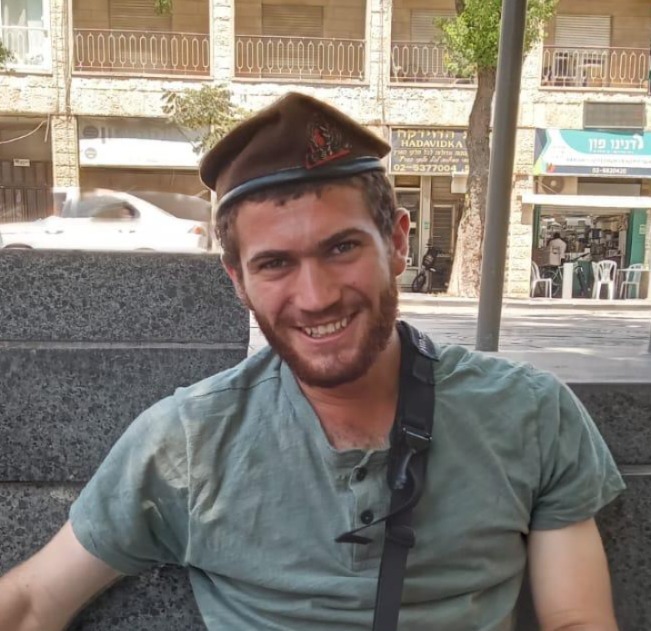
The story
In Jerusalem, a city where countless stories are etched into its ancient stones and bustling streets, the life story of Eliashiv Eitan Wieder began to unfold. He was the fifth of ten children, born on the 7th of Tishrei, 5763, which was September 13, 2002. He burst into the world in an emergency room, in such a hurry, as if even then, in his very first moments, he knew he had a long yet fleeting path to traverse, a journey that would wind through the intricate pathways of heart and soul, concluding at a moment no one could have ever foreseen. The home of Mordechai (Moti) and Yael, his parents, was a warm and loving nest, where Shira, Raya, Haim, Yonatan, Ayala, Yishai, Yair, Talia, and Yehuda all grew up. Eliashiv, quiet and introverted, yet possessed a gentle presence that was impossible to overlook, was at the heart of this vibrant family. The house always resonated with children's laughter, the comforting aroma of home-cooked meals, and the murmur of evening conversations around the Shabbat table, each family member contributing their unique thread to the rich tapestry of their shared life. Eliashiv, with his shy smile and kind eyes, was like a quiet anchor within the sweet storm of a large family, always listening, every present, always ready to lend a helping hand.
Even from his tender childhood, Eliashiv exhibited rare character traits: humility, shyness, a perpetual gentle smile, and a quiet grace that endeared him to everyone he met. He was not a child who clamored for attention or demanded to be heard; he was simply there, present, with a deep, thoughtful gaze, always ready to extend a helping hand. Friends and acquaintances were drawn to his quiet demeanor, to the way he always spoke with kindness and in a low voice, as if every word was carefully weighed before it left his lips. He cherished time spent with his family, and these moments were his entire world. Particularly memorable were the challenging nature hikes, those where the trails were steep and the wind blew fiercely, and he, a small child, would stride forward with quiet determination. He didn't view difficulty as an obstacle but as an opportunity, a challenge that tempered both body and spirit. He loved the feel of the earth beneath his shoes, the scent of pine trees in the forest, the calls of birds accompanying their steps, and most of all, the sense of togetherness – his family walking beside him, breathing the same fresh air, sharing the same profound experience.
From the age of three until the end of eighth grade, Eliashiv found his place at the "Moreshet" Talmud Torah in Jerusalem. There, amidst the pages of the Gemara and lessons in arithmetic and language, his personality was further shaped and refined. His rabbi spoke of him with admiration, describing him as a "beloved and quiet child endowed with steadfast strength in action." This description, "steadfast strength in action," echoed throughout his life, a recurring theme that defined his character. He was not a fervent advocate or a fiery orator, but when action was required, when there was a need to lift, to carry, to march, he was always the first to step forward. During annual school trips, even when he was relatively small, he consistently led his class. Not with boisterous shouts of encouragement, but with quiet, unwavering determination. In one hand, he carried a bag for collecting litter, a common sight for a child who so deeply loved and respected nature, while on his small back, he bore a large, heavy backpack filled with water bottles for the entire class. He never complained, never asked for help; he simply did what was needed. The heavy water, the sensation of the bag pressing down on his shoulders, the sun's heat on his neck – all were part of the experience, part of his way of expressing care and responsibility towards his friends, a quiet and introverted, yet profound and sincere, method.
Upon completing his elementary studies, Eliashiv chose to continue his educational journey at the "Neve" high school yeshiva, located in Moshav Neve within the Eshkol Regional Council. The transition from bustling Jerusalem to the relative tranquility of the Gaza Envelope was a significant change, but Eliashiv, true to his nature, adapted swiftly. Yeshiva Neve emphasized character building rooted in reverence for God, love of Torah, the Jewish people, and the Land of Israel – values that resonated deeply within his quiet soul. There too, his gentle demeanor, kind heart, and shyness stood out, traits that went hand in hand with the "practical and creative strengths" that were now beginning to emerge with greater clarity. He wasn't solely confined to the study hall; he sought ways to express himself through action, through building, through solving practical problems. He loved this combination: the ability to think deeply, to learn and grow spiritually, while simultaneously using his hands to create, to fix, and to be an active part of the physical world around him. His yeshiva friends remember him sitting quietly in a corner, sketching something in his notebook, or gently playing a guitar, his eyes gleaming with deep contemplation.
After completing his studies at Neve, Eliashiv was drawn to the advanced yeshiva "Bnei David" in Eli, a place renowned for its unique integration of Torah study with meaningful military service. This was not a hasty decision; it stemmed from a deep desire to clarify his place and responsibility towards the acquisition of Torah knowledge and the Beit Midrash, alongside his place and responsibility to best express his practical and creative strengths. He deliberated, pondered, consulted with his rabbis, constantly searching for the right path for him, one that would allow him to merge all facets of his personality into a single, cohesive whole. In his personal notebook, which served as a journal for his thoughts and ideas, he articulated this beautifully with words that pierced the heart: "It is clear to me beyond any doubt that I want to be a part, to be connected and bound to Torah, to be among those who act in this world with purpose, with a goal, with faith in what they do, with faith that the world is advancing towards redemption, and with faith in their power to advance it. And to act this way in the world, out of commitment, and with a healthy faith in it." These words reflected his inner world, his profound aspiration not merely to learn, but to apply; not just to believe, but to act – stemming from a deep connection to the essence of the Jewish people and the Land of Israel, and from an understanding that redemption was not merely a theological concept, but a daily mission demanding active engagement.
For two years, Eliashiv studied at Bnei David Yeshiva, as part of its 15th cohort, where he distinguished himself through his diligence and industriousness. His daily routine was rigorous: he made sure to rise very early, even before dawn, for prayer and physical training, only then arriving punctually for his study sessions. The early morning hours, when the cool air still lingered and the sun began to peek over the Samarian hills, were for him moments of inner focus, of building both body and soul. He didn't treat these workouts as a chore, but as an integral part of his preparation for the significant military service he knew awaited him. In the Beit Midrash, he seized every opportunity to clarify his understanding with his rabbis, to ask profound questions, to discuss complex issues, and to seek answers that would illuminate his path. He was not a student who settled for superficial understanding, merely skimming the material; he researched, delved deep, and sought the profound meaning in every single word. Alongside all this, he knew full well that he was destined for full and combat military service, and preparation for it was an inseparable part of his studies and his life in the yeshiva. He viewed this fusion, between the world of Torah and the world of action, as the best way to live his life and fulfill his destiny.
His few hours of leisure, Eliashiv filled with hobbies that revealed even more layers of his rich personality. He loved to play music, and the sounds of sacred hymns and Israeli folk songs frequently resonated from his guitar, accompanying his quiet thoughts. Music was another way for him to connect with his inner and outer worlds, to express emotions and thoughts that were difficult to articulate in words. He was an amateur photographer, and his lens meticulously documented the beauty of nature and landscape – magnificent sunrises in the Judean Hills, colorful sunsets over the desert, tiny flowers sprouting between rocks, and wildlife silently passing by. Each photograph was a story to him, a moment of pure beauty to be preserved. He was also a bookworm, devouring books on nature, history, and literature that chronicled Israel's wars and its heroes. He didn't just read; he internalized, learned, and sought the profound lessons and meanings hidden behind the narratives. Additionally, he greatly enjoyed going out with friends for a "fekel cafe" in nature – gatherings that were far more than just a cup of coffee. They were moments of quiet, of deep conversations, of sharing experiences and insights, set against an open landscape, with the aroma of coffee bubbling on the portable stove filling the air. He loved watching the sunrise and listening to the birds' chirping, moments of profound tranquility where he felt a true connection to the world and to creation, and where things became clear to him.
On December 12, 2022, Eliashiv confidently strode towards the gates of the Bakum (IDF Induction Center) and enlisted in the IDF. He knew exactly where he was headed: to the Golani Reconnaissance Unit, a unit renowned for its toughness and high demands. He deeply loved the unit, the team he was assigned to, and the physical and mental challenges that were placed before him. Despite his shyness and quiet nature, he proved to be a soldier of immense inner strength and numerous capabilities. His outward calm concealed an uncompromising inner resolve, an ability to withstand pressure, and a profound sense of responsibility. He performed his duties with great professionalism, never complaining about the difficulties, the fatigue, or the harsh terrain. He simply did, and in the best way he possibly could. His teammates knew they could always rely on him. He was always the first to offer help, whether it was carrying equipment during grueling marches, when the heavy packs weighed on their shoulders until every bone in their bodies seemed to tremble, or meticulously cleaning complex weapons after long days of training, or organizing gear for the entire team and company. All this he did with humility and modesty, and with that shy smile that no one could resist. He sought neither glory nor recognition; he simply did what was necessary, driven by a profound sense of shared destiny. In his conduct, he embodied the words he had written in his notebook about the value of camaraderie: "Camaraderie means feeling your friend completely and therefore being ready to give everything for him" – words that became a way of life for him.
Eliashiv possessed a rare serenity of spirit. Nothing could disturb his composure – not extreme weather that transformed the landscape in an instant, turning every movement into a struggle; not accumulating fatigue that weighed heavily on body and mind; nor the complaints of his comrades, even when tension ran high and nerves were frayed. He was like a stable pillar, an island of calm amidst a storm, radiating tranquility and confidence to those around him. Because of all this, they saw him as a role model, a "compass" by which they could orient themselves, an exemplary figure of what one could and should aspire to be. He didn't teach with loud words, but through personal example. Even his commanders knew they could trust him implicitly. They knew he would execute every mission, no matter how difficult, with the utmost integrity and dedication. For this reason, they frequently chose him first for any task, knowing he would bring it to a successful completion. Eliashiv Eitan excelled in the courses he attended during his service, yet in his profound humility, he never mentioned these achievements to his parents. He didn't see them as something to boast about, but as a natural part of his journey, another stage in his training and self-development.
One of the things Eliashiv particularly loved about his military service was the navigation exercises. These were not just physical and mental challenges, although he greatly enjoyed being pushed to the limits of his endurance, the need to overcome fatigue, difficulties, and changing terrain conditions. For him, every navigation journey was an opportunity to learn, an enriching and fascinating experience. He wasn't content merely with studying the navigation route, marking points on the map, and orienting himself in the field. He derived deep pleasure from being in the terrain itself, from observing the landscape, from getting to know hidden corners of the land. He learned about the history of the settlements located along the route, about the people who lived in them, about the stories the earth whispered to a listening ear. He saw in every tree, every rock, every ancient path, a testament to the generations that preceded him, to the lives lived here, to the struggles that unfolded. He felt a deep connection to the land, not just as military terrain, but as a living, breathing country, with a past and a present. The long nights under the open sky, with stars twinkling above him and the wind whispering through the trees, were for him moments of transcendence, of connection to the infinite.
Even during his demanding military service, Eliashiv meticulously maintained a life guided by Torah and Mitzvot (commandments). He was a living example of a soldier and fighter who harmoniously integrated his military duties with his deep religious faith. He never relinquished his daily study, even in difficult situations, when fatigue and exhaustion threatened to overwhelm him. He found the time, the quiet corner, the inner strength, to open a book, to learn, to connect. On Fridays, he would share words of Torah with his teammates from the weekly portion, striving to connect the themes of the portion with military service and its purpose. He didn't deliver sermons, but rather shared his thoughts, insights, and connections he had discovered, all with gentleness and quietude, in a way that touched the hearts of his comrades, religious and secular alike. His commander recounted to the family an incident that symbolized his entire world: at the end of the navigation series, when all the soldiers, exhausted and hungry, rushed towards the eagerly awaited breakfast that awaited them in the field, Eliashiv first made sure to don his tefillin and pray. Only after prayer, when his soul felt nourished, did he approach the food. It was a small act, yet it reflected an entire world of priorities, of deep commitment, of an understanding that even amidst chaos and exhaustion, there are anchors that must not be forsaken, moments of sanctity that connect a person to the source of their strength.
And then came that morning, a morning that irrevocably altered the face of the nation. On Shabbat, the 22nd of Tishrei, Simchat Torah 5784, October 7, 2023, at half-past six in the morning, while most residents of the South were still asleep in their beds or preparing for holiday prayers, the Hamas terrorist organization launched a brutal surprise attack on Israel. Under the cover of a massive and relentless barrage of thousands of missiles and rockets from the Gaza Strip into wide areas across the country, thousands of terrorists infiltrated – by land, sea, and air – and began a murderous assault on the communities of the Gaza Envelope, on Sderot, Ofakim, and Netivot. They stormed a nature party near Kibbutzim Re'im and Nir Oz, attacked IDF bases, and targeted passersby on the roads in the area. The terrorists murdered some eight hundred civilians in their homes, in their cars, after committing unspeakable and heinous crimes against them. They abducted hundreds of Israelis – women, children, elderly, men – into the Gaza Strip, and destroyed, looted, and set fire to homes and property. Hundreds of soldiers, police officers, security forces personnel, and members of local rapid response teams fell in battle, blocking the attackers with their own bodies. On this morning, blacker than black, the War of Revival began, a war for the very existence of the state.
The very next day, Sunday, an additional front opened in the northern part of the country, after the Hezbollah terrorist organization joined the conflict and began firing on Israel from Lebanon. For many long months, Israel refrained from a ground entry into Lebanon, contenting itself with low-intensity aerial strikes and targeted operations, attempting to prevent a broader escalation. However, the reality on the ground shifted, and the understanding of the growing threat from the north became increasingly acute. All this changed in September 2024, and on the night between September 30 and October 1, after long months of waiting, IDF forces began to enter Lebanon, with a clear and resolute objective: to destroy infrastructure and weaponry, and to severely degrade Hezbollah's capabilities in a way that would restore security to the northern communities. Eliashiv, with his unit, the Golani Reconnaissance Unit, was there from the very beginning of the fighting, an integral part of the penetrating force, aware of the dangers, yet resolute in his mission. He fought shoulder to shoulder with his comrades, bringing to bear all the skills he had acquired, all the strengths he had accumulated, all the faith that had guided him.
On Wednesday, October 16, close to five o'clock in the afternoon, a force from the Golani Reconnaissance Unit, including Eliashiv, entered a multi-story building in the Lebanese village of Ayta ash-Shab, in the western sector, for a sweep. It was an ordinary-looking structure, yet beneath its surface, it concealed a sophisticated network of underground shafts, a large cache of weapons and ammunition, and terror infrastructure that posed a real threat to IDF soldiers and Israeli civilians. The soldiers moved cautiously, step by step, aware of the danger lurking around every corner, yet determined to carry out their mission. About half an hour after the search of the compound began, just as it seemed the area was clear, four Hezbollah terrorists emerged from within the structure itself, from a hidden corner. They appeared in complete surprise and opened fire at close range on the soldiers. The ensuing moments were chaotic, but the soldiers responded swiftly and decisively. A close-quarters battle erupted, gunfire echoed from all directions, shouts and fragments of walls flew through the air. Eliashiv, a squad commander, fought with immense bravery, defending his comrades, his mission, his home. He was killed instantly in that bloody battle, alongside him fell the company commander, Major Ofek Bachar, team commander Captain Elad Siman Tov, and two other soldiers – Staff Sergeant Yaakov Hillel and Staff Sergeant Yehuda Dror Yahalom. He fell on the 14th of Tishrei, 5785, October 16, 2024, at the tender age of twenty-two.
Eliashiv Eitan Wieder was laid to rest in the military cemetery on Mount Herzl in Jerusalem, the city where he was born and raised, on a day when the sun almost refused to set, as if it too struggled to bid farewell. He left behind grieving parents, five brothers and four sisters, an entire family left with an immense void. His father, Mordechai, eulogized him with words that delved into the depths of his soul, revealing the seeming contradictions that coexisted in perfect harmony within Eliashiv's personality. He noted that, in a symbolic and chilling coincidence, Eliashiv was killed exactly twenty-two years after his entry into the Covenant of Abraham, the day his identity was formally bestowed upon him, and just one day after the memorial for his grandfather, Haim Tzvi Levi Wieder, marking fifty-one years since his fall in the heroic battles on the banks of the Suez Canal during the Yom Kippur War. A multi-generational chain of sacrifice, of profound commitment, was thus interwoven into the story of Eliashiv's fall.
In his eulogy, the father painted a moving picture full of contrasts, where everything connected through Eliashiv's unique personality: "Coffee with friends watching a sunset, rappelling with the whole family, playing with nephews, deliberations over notebooks, a peaceful coffee during candle lighting, donning tefillin facing the sunrise at the end of navigation exercises and journeys. Gentleness, modesty, shyness, and quietude, an assault NCO in the company commander's forward command post in the reconnaissance unit. Seemingly contradictory, yet with Eliashiv Eitan, everything simply fit." He described Eliashiv's rare ability to inhabit different, seemingly opposing worlds, and to unite them into a single, harmonious whole: "Out of faith and balance, through consultation with his rabbis, with much common sense – everything connects... What for many might have appeared as a 'journey between camps' was for Eliashiv natural, serene, and harmonious. I wish for all of us that we learn to embrace something of Eliashiv's balance and harmonious perspective, and live it within ourselves." The father's words expressed a profound understanding that Eliashiv was not forced to choose between the world of Torah and the world of action, between spirit and matter, between calm and storm; rather, he succeeded in seamlessly integrating them with simplicity and naturalness, forging a unique way of life that served as an inspiration to everyone around him.
His mother, Yael, eulogized him with heartbreaking words that revealed the intensity of her loss and her immense pride in her son: "Eliashivi, my son, you were called to the flag. Eliok, we too were called to the flag; we were not asked in advance, we were chosen. And having been chosen – we choose to raise our heads and raise the flag, the flag of our nation that seeks to rise and ascend, our nation, which you loved so dearly, which is entirely beautiful and without blemish." She spoke of his swift birth in the emergency room, and his equally swift fall, as if Eliashiv was always in a hurry, always knew he had an urgent mission to fulfill. "Shibyk, when you were born, we didn't make it to the delivery room; you were born in the emergency room, you were in such a hurry to come out. And now too, with such swiftness, your soul has been taken from us. Even then, when you descended, Eliashivi, you knew you didn't have to play by the rules of the game..." In her words, his mother offered a profound interpretation of his short yet deeply meaningful life, a life in which Eliashiv always strived for his inner truth, for his unique path, never allowing conventions or external expectations to deter him. She concluded with a prayer and a plea: "My son, I stand before you, humble and empty... I ask and pray that you ascend to the Throne of Glory, and from there continue to act with even greater fervor, with strength and steadfastness, alongside all the great souls beside you."
The life story of Eliashiv Eitan Wieder is the story of a man who chose to live a life of meaning, of action, of deep connection to his land and his people. He was a quiet hero, a man of deeds rather than words, whose personal example radiated light to everyone around him. He was a pillar of resilience, of calm, of faith, who succeeded in merging all seeming contradictions within himself and transforming them into perfect harmony. His fall in battle in southern Lebanon, in defense of his home and the security of Israel's citizens, is part of a long journey spanning generations, a commitment without end – a journey in which every detail, every action, every shy smile, is woven into the national narrative of heroism. Eliashiv Eitan Wieder, twenty-two years old at his fall, left behind a legacy of humanity, humility, determination, and profound love – a legacy that will continue to live on and illuminate our path, reminding us of the price of freedom and the tireless strength of the human spirit in Israel, which continues to build, create, and defend, out of hope and faith in a better future. His story, like the stories of many others who fell in the War of Revival, is testament to the fact that heroism is not only found in battle, but in an entire way of life, in a daily choice for good, and in the willingness to sacrifice what is most precious for the sake of the collective. He was an anchor, a compass, and so he will remain in our hearts forever.
Moments of a life

All photographs · 5
In the media
Articles
- Elyashiv Eitan Wieder
ynetglobal ·
- Golani commando Elyashiv Eitan Wieder Hy"d: 'Say little and do much'
Israel National News ·
- 'Among the finest of the country': Friends mourn five soldiers killed in Lebanon
The Jerusalem Post ·
- Las Fuerzas de Defensa de Israel anunciaron que cinco soldados murieron en combates al sur del Líbano
Agencia AJN ·
- Five IDF soldiers killed in southern Lebanon
Dom.co.il ·
- Elyashiv Eitan Wieder
ynet
Videos
- A Film in Memory of Eitan Elyashiv Wieder
מינהל קהילתי חומת שמואל
Memorial sites
- Yizkor — Staff Sergeant Elyashiv Eitan Wieder
יזכור – משרד הביטחון
Memorial projects
According to the English-language article, the Morasha Talmud Torah school dedicated a week of guarding one’s speech in his memory.
The family is publishing writings, songs and nature photographs he left behind, according to a ynet article.
Stories told about them
The English-language article recounts that when the Namer’s track needed to be reassembled, four soldiers tried to repair it. Three went to get another part, and Elyashiv stayed and managed to complete the repair himself.
Life & service
Profile
Service
- Rank
- First sergent
- Unit
- Golani Brigade
- Battle Location
- Southern Lebanon
Family
- Father
- Mordechai
- Mother
- Yael
Burial
Tributes & remembrance
צופה בטקס בהר הרצל וזו הפעם הראשונה שהתוודעתי לסיפור המשפחתי המצמרר
מדליקה באהבה ,בהתרגשות , בצער ובתודה את הנר לזכרך גיבור ישראל - יהי זכרך ברוך
אלישיב היקר, נפעמתי לקרוא את סיפור חייך .
תודה לך על הכל האור שהותרת בעולמנו.
תודה לך שהגנת עלינו , וזאת במחיר ההקרבה הנוראה מכל.
מצדיעה לך!
תנחומים מלב כואב לכל יקיריך.
יהא זכרך ברוך, גיבור ישראל !
הי"ד
זכרך בליבנו מאיר את צעדינו ואת השתיקות שלנו. שנדע לראות טוב ולהיות טובים איש לרעהו.
שנפנים צניעות ומעשיות כמוך ישירות ונאמנות מסרת נפשך שוב ושוב עד היום המר קורבנך קשה מנשוא. מודים על מסירות הנפש למעננו.
תודה על הזכות לשמוע לראות ולהכיר ברגעים הקצרים שנפגשנו. זכרון מנחה לעד
כאב ועצב שלעולם לא יעלם, בליבנו לעד
תהי נשמתו צרורה בצרור החיים.
מרגש לקרוא את הסיפורים עליך. אדם יקר!! תודה לך
השקט הענווה. הדרך ארץ והנעימות במחיצתך בדקות הקצרות שדיברנו שנינו אותם לא אשכח לעולם.
אחרכך שמעתי סיפורים עוד ועוד שלא ישכחו מליבי
כל חיינו נהיה אסירי תודה.
מסירות נפש וחברות אפיינו אותך. כמה מעלות באיש צעיר. השראה לחיים באהבת חינם
אלישיב, חבר אהוב לצוות של בני, איש מיוחד, עם שקט פנימי סוחף, צניעות טוב לב ורגישות לזולת. היה ה״קמע״ של הצוות. יהי זכרו ברוך.
אלישיב גיבור ישראל ת.נ.צ.ב.ה
אלישיב איתן, כמה דברים טובים יש לומר עליו, שמעתי סיפורים נפלאים עליו.
יהי זכרו ברוך
יהי זכרו ברוך, גיבור ישראל!
גיבור ישראל
מצדיעה לך גיבור ישראל
כמו הסב כך הנכד. בזכותם אנחנו פה. זוכרים באהבה ואמונה
לוחם יקר ואהוב
חושבים עליך תמיד.
בליבנו לנצח
יהי זכרך ברוך
בן דוד אהוב! כמה משמעותי הזכרון שלך. צעיר בשנים היית וצעיר תישאר, אך כמה גדול אתה. כמה צניעות וגבורה יחד. כמה עוז, כמה אהבה ואמונה ושמחה פשוטה. כמה קדושה.
סמל דוגמה ומופת לכולנו. זכותך תעמוד לעד בתקומת עם ישראל בארצו ומסירות נפשך על קידוש ה, קדושת עמו וארצו, תרבה חיים וטוב בעולם הנצח ובחיי עם הנצח.
נזכור לעד את גבורתך ואת מסירות הנפש שלך למען המשך קיומנו!
הצבי ישראל על במותיך חלל איך נפלו גיבורים.
מנשרים קלו מאריות גברו!
לא נישכח אותך מאתתלמידי פלך בנים
You could talk to him without feeling judged or criticized
Source:ynetglobal
He always brought some other perspective
Source:ynetglobal
For 22 years we raised him, and this year he is raising us
Source:ערוץ 7
Read the Hebrew original
22 שנה גידלנו אותו והשנה הוא מגדל אותנו
A brother everyone loves, everyone is proud of
Source:ynet
Read the Hebrew original
אח שכולם אוהבים, כולם גאים בו
He would get up early before everyone else, sit facing the sunrise and write
Source:ynet
Read the Hebrew original
הוא היה קם מוקדם לפני כולם, יושב מול הזריחה וכותב
Remembrance Day addresses
יום הזיכרון לחללי מערכות ישראל התשפ"ה – 2025
בכל יום שעובר, אזכור יותר! אזכור, את אלו שיצאו עימי לקרב ולא שבו, ולהם אין מי ידמה ומי ישווה. אזכור, שהכאב לא יעבור לעולם, והזמן, הוא לא מרפה ולא מרפא. אזכור, את שיברון הלב הגובר ואת הבית שבוער. אזכור, את צדקת הדרך, ואשבע שוב, שמה שהיה לא יהיה יותר. אזכור, שיותר מכל דבר אחר – אני חסר! ביום הזה, אני נתקף געגוע לדמותם, לחיתוך דיבורם, לחיוכם, ומדליק נר לזיכרון דרכם ומורשתם!
משרד הביטחון
אגף משפחות, הנצחה ומורשת
יום הזיכרון לחללי מערכות ישראל התשפ"ה – 2025
בכאב, בהצדעה ובתקווה אני מתכבד להדליק נר זיכרון זה. השנה, כשאנו נלחמים במלחמה ארוכה, רב זירתית וצודקת, הזיכרון נושא משמעות עמוקה. ביום זה נעצור ונתייחד עם זכרם של טובי בנינו ובנותינו שנפלו בהגנה על המדינה. מורשתם היא המצפן שמתווה את דרכינו, והיא המעניקה לנו כוח להמשיך ולהגן על מדינת ישראל ותושביה. משפחות יקרות, אנו מרכינים ראשנו ומתחייבים שנעמוד לצידכן תמיד. יהי זכר הנופלים ברוך.
אלוף דדו בר כליפא
ראש אגף כוח האדם, צה"ל
יום הזיכרון לחללי מערכות ישראל התשפ"ה – 2025
בשעה שאנו זוכרים את גודל תרומתם ועומק מסירות נפשם של טובי בנינו ובנותינו, נופלי מערכות ישראל לדורותיהן, ממשיכים צה"ל וכוחות הביטחון במימוש המשימה למענה לחמו ועבורה נפלו: הכרעת אויבינו מדרום, מצפון, ביהודה ובשומרון, וגם בזירות רחוקות יותר. בהערכה רבה ובגאווה אדירה אנו מרכינים ראש בפני הנופלים והנופלות, מאמצים את משפחותיהם אל לבנו, וממשיכים במשימה להבטחת קיומה של ישראל לדורי דורות. יחד נעשה ונצליח.
רב אלוף אייל זמיר
הרמטכ"ל, צה"ל
יום הזיכרון לחללי מערכות ישראל התשפ"ד – 2024
כאשר דגלינו מורדים לחצי התורן וראשינו מורכנים לזכר הנופלים והנופלות במערכות ישראל, ממשיכים לוחמי צה"ל ומפקדיו בלחימה בדרום, בצפון, ביהודה ובשומרון ובזירות נוספות. על כל דור מוטלת המשימה של הגנת העם והארץ – משימה שאף פעם אינה פוסקת. נצדיע בגעגוע ובגאווה לנופלים ולנופלות, נחבק את משפחותיהם, ונמשיך ברוח הציווי שהותירו לנו. עם ישראל חי.
רב ניצב יעקב שבתאי
המפקח הכללי, משטרת ישראל
יום הזיכרון לחללי מערכות ישראל התשפ"ד – 2024
אחיי הנופלים, כל נר הוא זיכרון יחיד ומיוחד, על חיים שהיו ואינם, געגוע שנצרב עמוק בלב, עולם ומלואו. הנרות כולם הם זיכרון של אומה כי לעולם לא עוד, בשורת הציונות וקוממיות ישראל. זיכרון כי הדרך לעם חופשי בארצנו עוברת דרך מסדר הנופלים. אור הנר יזכיר לנו את מסירות נפשכם להציל חיים, להגן על הבית. הנרות מסמנים לנו נתיב גבורה ערכי מחייב שאנו מצווים ללכת לאורו. נמשיך להילחם ולהוסיף אור מתוך אמונה בנצח ישראל.
יואב גלנט
שר הביטחון
יום הזיכרון לחללי מערכות ישראל התשפ"ד – 2024
בהצדעה ובכאב, בשם צה"ל כולו, אני מדליק נר זיכרון. בעיצומה של מלחמה, הזכרון נושא משמעות יום-יומית, שעבר והווה מתלכדים בה. לאורם של הנופלים נמשיך לצעוד, חיילי הסדיר והמילואים. לאורם של הנופלים נמשיך להגן על ארצנו ועל מולדתנו, גם כשהמחיר כבד. להבת-הזכרון תבער בנו בעודנו ממשיכים להלחם ונזכור את הנופלים ואת אומץ ליבם. משפחות יקרות, צה"ל מרכין היום ראש, מצדיע לכן וכואב איתכן. יהי זכר הנופלים ברוך.
אלוף יניב עשור
ראש אגף כוח האדם, צה"ל
יום הזיכרון לחללי מערכות ישראל התשפ"ד – 2024
בהוקרה, בגאווה ובכאב שאין לו סוף, אני מתכבד להדליק נר לזכרם של הנופלים והנופלות במערכות ישראל. סיפור חייהם בארץ הזאת, מסכת שירותם, גבורתם והקרבתם – הם סיפורה של הארץ הזאת, אך גם סיפור המחיר הכבד שהיא תובעת מאוהביה. מחויבותנו לזכר הנופלים ולדרך שהותירו לנו ניצבת תמיד לנגד עינינו. את המשימה שלא זכו להשלים, משלימים כיום, וישלימו, אנשי כוחות הביטחון, הממשיכים בדרכם ולאורם. יהי זכרם של הנופלים ברוך.
משרד הביטחון
אגף משפחות, הנצחה ומורשת
יום הזיכרון לחללי מערכות ישראל התשפ"ד – 2024
בחרדת קודש אני מתכבד להדליק נר לזכרם של חללי מערכות ישראל, חברנו שנפלו, מראשית היציאה מהחומות ולאורך כל שנות עצמאותנו המדינית והציונית, מהווים תמרור זיכרון לדרך חיינו ולמחוייבות הלאומית להנצחת זכרם. דרכם נותרה דרכנו ומורשתם נר להמשך עשייתנו. יהי זכרם ברוך!
בני גנץ
שר הביטחון
יום הזיכרון לחללי מערכות ישראל
נזכור אותם, כולנו יחד. כל אחד ואחת מהם, מדי יום ביומו, והיום ביתר שאת, כך – לנצח. "כי מדי דברי בו זכור אזכרנו עוד"
משרד הביטחון
אגף משפחות, הנצחה ומורשת