
The story
The first days of March, twenty-two years ago, brought the tidings of spring to Alon Shvut, along with the birth of Eitan Dov. He was born on the 23rd of Adar, 5762, March 7, 2002, the firstborn of Hagit Esther and Uziya Yehoshua, and in a short time, he filled their home with a different kind of light, one impossible to define in words. Alon Shvut, a semi-rural community in the heart of Gush Etzion, provided a pastoral backdrop for his childhood, with open vistas of green hills in winter and golden ones in summer, and a warm, embracing community that blended the depth of tradition with modern openness. In the Rosensweig family home, which over the years expanded to include four more sons – Uri, Elad, Naveh, and Amit – Eitan was always the beacon, the older brother everyone looked up to, an endless source of curiosity, creativity, and calm.
From his earliest childhood, Eitan exhibited a gentle and sensitive soul, combining sharp intellect with a wild imagination. He wasn't the type of child who ran and romped incessantly; instead, he tended to observe, question, and explore the world around him with a quiet intensity. The house was always full of books, and Eitan, even before he could read fluently, would cling to them, running his small fingers over the letters and illustrations, as if trying to decipher their secrets. As he grew a little older, books became his best friends. He wasn't content with ordinary children's stories; his world was far broader. He was fascinated by ancient cultures – Greece, Rome, Egypt – and spent long hours with books that presented their mythologies, architecture, and ancient texts. His curiosity knew no bounds, and he didn't just read; he also tried to learn. He taught himself hieroglyphs, sketching complex symbols on pages in his notebooks, trying to understand the logic behind every small drawing, every symbol. His father, Uzi, would watch him from the side, a smile of pride mixed with wonder on his face, as he saw his eldest son so absorbed in distant worlds. "Eitan, what did you find there today?" he would ask, and Eitan would lift his head, his eyes sparkling, and begin to pour out stories about pharaohs and heroes, speaking at two hundred kilometers an hour, words tumbling over each other, his tongue sometimes stumbling in an attempt to keep pace with his thoughts.
His artistic talent burst forth in parallel with his intellectual curiosity. He didn't just draw; he created entire worlds on paper. His illustrations were incredibly complex, full of intricate details, the kind you could get lost in for hours and discover something new each time. His hands were always busy – whether with quick sketches on random scraps of paper or with more complex creative works. He also loved to write, and he was particularly drawn to the "spoken word" style, a spoken poetry that combines rhythm, emotion, and social messages. He would recite his poems to himself, trying to feel the words in his mouth, to control his breathing and intonation. Uri, Elad, and the other brothers would wander around the house and see their Eitan, sometimes absorbed in a thick book, sometimes sketching feverishly, and sometimes talking aloud to himself, practicing a new poem. They were used to seeing him like this, surrounded by his rich inner world, but always open and smiling at them. Uri remembered how, at a young age, Eitan made the news when he found an archaeological artifact on a school trip. It was a small event, but it highlighted Eitan's deep connection to history and the past, and his ability to see beyond the obvious. Uri, a small child in first grade, remembered being jealous of his famous older brother, and on every trip thereafter, he too tried to find archaeological finds, following in Eitan's footsteps. This was typical of Eitan – he didn't just learn, he also inspired, naturally and effortlessly.
When he reached high school, his path led him to the Or Torah Neve Shmuel Yeshiva High School in Efrat, a place where the combination of sacred and advanced secular studies was paramount. There, in the art and literature track, Eitan found the space that allowed him to flourish in his full talent. He wasn't content with just his major studies; his fervent mind was insatiable. He also excelled in the sciences and simultaneously took courses from the Open University in statistics, psychology, and economics – fields that seemed light-years away from the world of art and literature. He could sit in a math class, solving complex problems, while already weaving an idea for a poem or a sketch in his head. His teachers were amazed by his ability to combine such different worlds, and he was often invited by the Ministry of Education to educational conferences, to share how he managed to integrate scientific learning with art, how these two worlds not only coexisted but enriched each other within him.
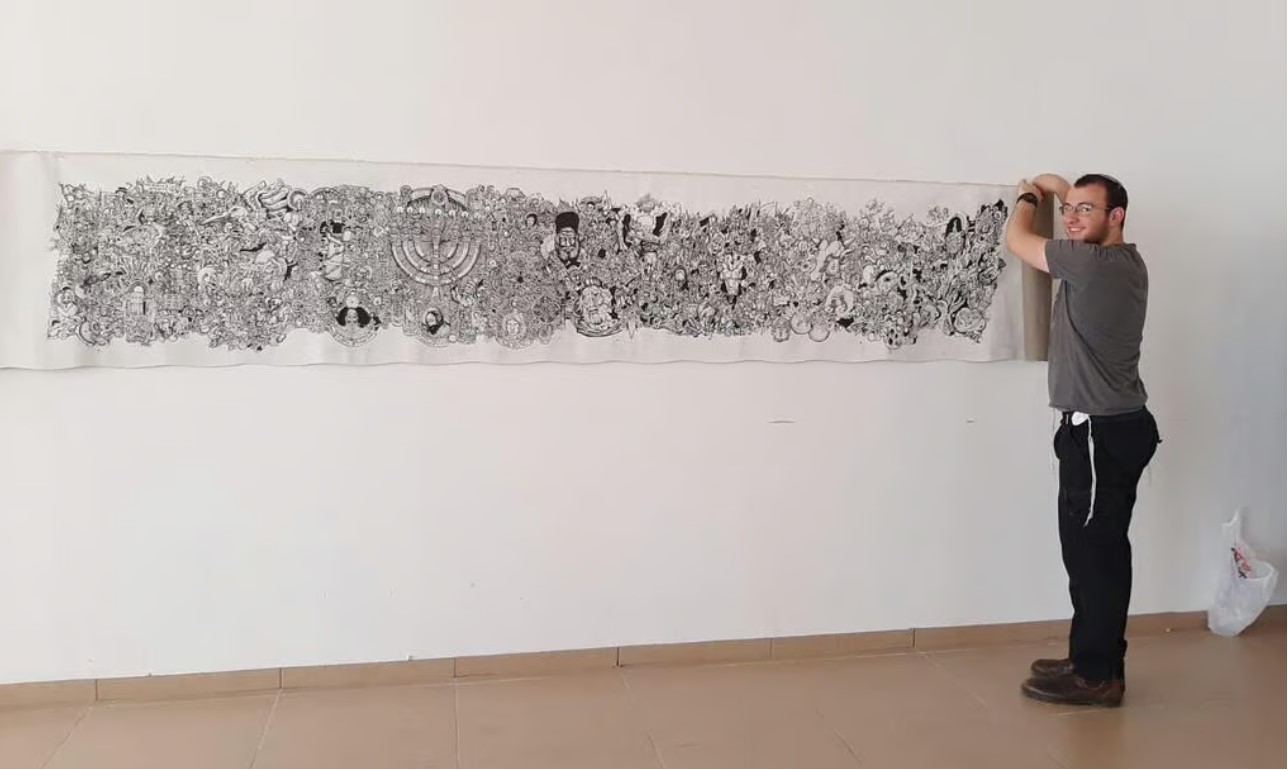
The culmination of his studies in the art program was his final project, a monumental work titled "Kuma, Mi Afatzim V'Kankantum." He explained to his teachers and friends that the name, in Aramaic, referred to the ink components used by scribes to write sacred Jewish texts. The choice of this name was not accidental – it reflected his deep connection to Jewish tradition, alongside his desire to express it through contemporary artistic tools. The work itself was a canvas three meters and sixty centimeters long, on which Eitan created thousands of magnificent, dense, and miniature illustrations depicting the story of the Jewish people throughout the generations. It was a visual journey from destruction to redemption, through exiles and pogroms, portraits of rulers, quotes from Hebrew poetry, and countless symbols and images. He didn't merely paint; Eitan created all the illustrations using ink and a quill, to emulate the appearance of sacred text, ancient handwriting, the painstaking and holy work of the scribe.
His art teacher, Porat Salomon, remembered this work with admiration: "The level of detail and richness of this painting is astonishing; one can look at it for hours," he recounted. "In my opinion, this is a work of immense specific gravity. It's a piece that could quietly sit in the Israel Museum as a Jewish work of art." And indeed, the work won an excellence award at the national exhibition of art departments and earned Eitan a scholarship for art studies. It transcended any measure of age or trend, being monumental, Jewish, and timeless, as one of his teachers described it. Another of his works, in which he illustrated the first part of the piyyut "Lema'an Eitan" (one of the well-known piyyutim of Hoshana Rabbah), was published in 2020 in the journal "Bar," which deals with art and poetry and is intended for yeshiva students. Eitan completed his studies at the yeshiva high school with honors, receiving an award of recognition from the Ministry of Education – an impressive achievement for a young man who combined so many worlds within himself.
Upon graduating high school, Eitan continued his spiritual and intellectual journey and began studying at the Hesder Yeshiva in Yeruham. There, too, amidst the quiet desert landscapes, Eitan found a space for his infinite thirst for learning. He drank thirstily from every piece of Torah, delved deep into the issues, and connected especially to the world of Hasidism, where he likely found an expression for the depth of his soul and his creativity. One day, after a profound lesson in Hasidism, he approached the Rosh Yeshiva, Rabbi Chaim Wolfson, and presented him with an abstract drawing he had created. "This is a summary of the lesson," he said simply. Rabbi Wolfson, who was accustomed to seeing Eitan absorbed in his studies, saw him as a "shining star, an artist with unusual courage to expose people to the depth of the soul." Eitan collected Torah from the Haredi world endlessly, as his childhood friend Uziel Rivkin recounted, and taught his friends about broad worlds they had less touched upon. Such was Eitan – when something touched him, he was in it completely, with unparalleled intensity and depth. His brother Elad remembered that he always held a Gemara or Hasidic book in one hand, and a philosophy book in the other, while his pocket always contained a small notebook for sketches and illustrations, and a pencil. He was a person of humanity, simplicity, and truth, always happy and optimistic, gentle and kind-faced, loving people and God. He excelled in every field he pursued but never boasted about his many talents, doing everything with humility and modesty.
On November 11, 2021, with all his rich and complex worlds, Eitan enlisted in the IDF. He chose to serve as a combat soldier in the "Shaked" Battalion of the "Givati" Brigade, out of a deep belief in the importance of military service and the defense of the people of Israel and its land. The transition from the meticulous world of the Beit Midrash and art to the rigid world of the army was not easy, but Eitan, in his unique way, met the challenges. He trained uncompromisingly, never giving up even when encountering physical and mental difficulties. His commanders saw him as an exceptional fighter – always acting with wisdom, curiosity, and faith, helping and caring for everyone, and never ignoring the needs of others. Yair, his good friend from high school, testified about him: "He was an artist. He loved the world of creation. It didn't suit him at all to have a weapon in his hand. It didn't fit. Of course, he would be in a combat unit and serve with everyone, but on the other hand, he wasn't a person of anger or force, he was a person of humanity, simplicity, truth." And yet, Eitan combined all of these. He was a warrior by day and a scholar by night, preserving his inner world even amidst the combativeness of the army. The image of the Gemara in one hand and the philosophy book in the other, with the pencil and small notebook always in his pocket, remained with him even in uniform.
At the end of September 2023, on the verge of his release from the army, Eitan went on leave. The home in Alon Shvut welcomed him with open arms, full of anticipation and joy. He had big plans: he intended to travel abroad with his parents, experience new worlds, return to study at the yeshiva in Yeruham, continue his path in the art world, and perhaps even become an academic researcher. Everyone who knew him predicted a brilliant future for him in any field he chose to pursue. He was on the cusp of a new and exciting chapter in his life, full of endless possibilities. His parents, Uzi and Hagit, saw him as the pillar of the entire family, the talented and loving eldest son destined for greatness. Elad, his brother, said that Eitan planned to return to the yeshiva and get married after a year. These dreams, these plans, filled the air in their home.
And then came the Black Shabbat. On the morning of Shabbat, the 22nd of Tishrei, Simchat Torah 5784, October 7, 2023, at six-thirty in the morning, the State of Israel awoke to a reality of terror. The Hamas terrorist organization launched a murderous surprise attack. Piercing sirens tore through the morning's quiet, followed by disturbing reports of terrorists infiltrating, indiscriminate shooting, and massacres in the Gaza Envelope communities and at the nature party. Eitan, who was on leave, didn't hesitate for a moment. The phone rang, and the WhatsApp message arrived: "Call-up." The farewell words were short, hurried, full of worry but also determination. He said goodbye to his parents and brothers and rushed back to his regular unit. The operational company of the Shaked Battalion, in which he served, was designated for ground entry into the Gaza Strip, and they had been training relentlessly, feverishly, knowing that every moment counted. The fear of Uri, his brother, who had been so apprehensive about Eitan's enlistment, multiplied tenfold, but the light and joy Eitan brought home each time he returned gave way to a sense of shared destiny. "The last time we met," his father Uzi eulogized, "we talked about you being part of creating the history of the people of Israel, and you said you wanted so much to be a part of it!"
On October 27, after weeks of intensive training and nerve-wracking anticipation, Eitan was part of the first force to enter the ground maneuver in the Gaza Strip. He fought with determination, devotion, and bravery for long days, in impossibly difficult terrain, in narrow alleys, inside residential homes that had become death traps. Gaza, the densely populated and fortified city, became a relentless battlefield. But even amidst this turbulent and harsh reality, Eitan remained steadfast. His friend Yair recounted that Eitan didn't ask for Bamba or cakes for the front, but only textbooks. And his mother, Hagit, sent him a picture of the house, a study notebook, and a small Gemara. "I sent him things he loves," she said. And indeed, every night, even after an exhausting day of fighting, between gunshots and shouts, amidst the noise and dust, Eitan made sure to study his daily page of Gemara. This was his anchor, his way of preserving his humanity, his inner world, his connection to spirit and eternity, within the inferno. He was a hero not only in his military actions but also in his ability to maintain his spirit and soul within the inferno.
On Wednesday, November 22, 2023, the 22nd of Kislev, 5784, Eitan went on an operational mission in the city of Jabalia in the northern Gaza Strip. The target was the Wadi al-Ghradim, a strategic area from which many missiles were launched into Israeli territory. Eitan's company entered to clear the area, damage terrorist infrastructure, and put an end to the incessant firing. The battle was fierce, at close range, urban warfare at its best. During the exchange of fire, in the heat of battle, Eitan was fatally wounded. He was killed on the spot, just twenty-one years old. The battle for Wadi al-Ghradim continued, his comrades kept fighting, but for Eitan, the journey had ended.
The bitter news reached Alon Shvut like a bolt from the blue. Three soldiers knocked on the door of the Rosensweig family home. Elad, his brother, saw them, and "without them saying anything, I knew something bad had happened." The world of Hagit and Uzi, of Uri, Elad, Naveh, and Amit, was turned upside down. The farewell was unbearable. "Eitan, my firstborn son. You made me a mother," his mother Hagit eulogized him. "You were several levels above everyone, several levels above us. You were so smart, you were talented in everything... but most of all, we will remember your love for us, for the family, and for everyone around you. You showed respect to every person from all sectors. To everyone... You were my pride." She recounted that the day before, on the morning of his fall, she told his father she had a feeling Eitan would come for Shabbat. They tidied his room and went to buy all the things he loved most. "Eitan, you came to us, but not in the way we wanted."
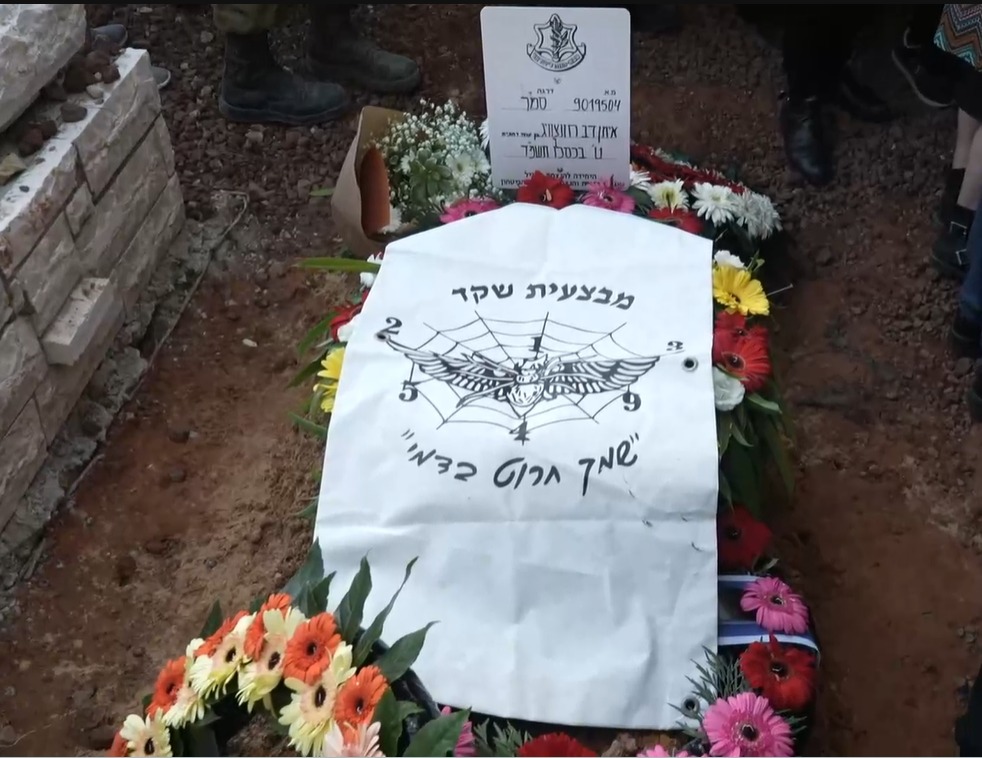
His father, Uzi, stood broken over the fresh grave in the military section of the Kfar Etzion cemetery. "The pillar of the whole family. You are such a special child, impossible to describe. Creative, educated, loving, caring for everyone, kind-hearted, never said 'no' to anyone. You are both my son and my teacher. In everything you touched – you excelled. I am so proud of you, of your potential. I always knew you would go far, but now everything is cut short... I feel torn as if a piece has been ripped from me." He repeated the words Eitan told him in their last conversation: "My hero, you are so heroic. Even in the last battle, we heard that you gave your all." After his fall, Eitan was promoted from the rank of Sergeant to Staff Sergeant.
His brothers, each in their own way, expressed their immense pain. Uri, who remembered Eitan "since I was born," spoke of everything they did together, of computer quarrels, of jealousy over his fame, and of encouragement to write. "Mom and Dad were so proud of you, and even though I was afraid, God forbid, something would happen to you. Every time you advanced in the army, my fear intensified, but every time you came home, you brought light and joy with you, and all my fears disappeared." Elad, his younger brother, said: "How do you eulogize a brother who is also your teacher? Eitan was all Torah, all poetry and literature, and all art... This is my private pain, but you were a hero of all the people of Israel." Uziel Rivkin, a childhood friend, recalled their last WhatsApp conversation, right after Phedaya Mark's funeral: "I told you I had returned from the funeral and added a request: I beg you not to make me eulogize you. Now I'm here and I can't believe it. It's simply incomprehensible." He described Eitan as "the light of the soul, diverse in talents and interests in history, philosophy, painting, and Torah... You were my best friend, with late-night conversations on Shabbat and our own inside jokes."
The Rabbi of Alon Shvut, Rabbi Yosef Tzvi Rimon, struggled to imagine reality without him: "Eitan, who would approach me with a sweet, gentle smile, to ask and clarify one more question, and another? Not from now, but since he was a small child. And at 15, he asked me if he was allowed to write poems during Chol Hamoed. Eitan, who always asked with special gentleness but wouldn't give up until he received a full answer. To know to the end, to understand, to clarify." The head of the Gush Etzion Regional Council, Shlomo Ne'eman, said that the heroism they knew in Eitan was "the heroism of Torah, the heroism of poetry, the heroism of painting. A simple man dwelling in tents. He left the tent and joined another cornerstone."
Eitan's death left a huge void, but also created a rich legacy that is only beginning to unfold. To commemorate his path and unique talent, his family established a website in his memory, centralizing a selection of his works, illustrations, and poems. An entry in his name was opened on "Wikipedia," and additional memorial pages were opened on various websites. In May 2024, a few months after his fall, an exhibition titled "Kuma" opened at the Bible Lands Museum in Jerusalem, dedicated to Eitan's work and particularly to his monumental final project – "Kuma, Mi Afatzim V'Kankantum." The work, which his teacher had envisioned for a museum, indeed reached it, tragically yet movingly. The family decided to continue the exhibition by producing a memorial book that would compile all his works, so that his rich world would continue to illuminate the path of many. A segment from his final project even appears on the cover of the book "Unetaneh Tokef" by the poet Yonadav Kaplan, and at the opening of the final episode of the third season of the television series "Shababnikim."
Eitan Dov Rosensweig, the intelligent child, the sensitive artist, the profound scholar, and the brave warrior, was a rare fusion of worlds. He left behind parents and four brothers, a grieving community, and friends who miss his radiant presence and deep conversations. He fell defending the people of Israel, for our right to live here in security, bringing with him to battle not only his weapon but his entire spiritual and artistic world. His life story is a story of human heroism – the heroism of creation, the heroism of spirit, and the heroism of defending home. He leaves behind an immense void, but also an eternal promise that his fierce spirit, his inexhaustible creativity, and his illuminating modesty will continue to light our way, as another cornerstone in the building of Israeli renewal.
Moments of a life
All photographs · 5
Videos and links
In the media
Articles
- When life and death imitate art
JNS ·
- Des Israéliens endeuillés trouvent l’apaisement dans les montagnes chypriotes
The Times of Israël ·
- Eitan Dov Rosenzweig, of blessed memory, was laid to rest. His father eulogized him: “You are such a hero”
ערוץ 7 ·
- "I had a feeling you would come for Shabbat. You came, but not the way we wanted"
ynet
- Open Knesset
oknesset.org
- Staff Sergeant Eitan Dov Rosenzweig fell during the fighting in the Gaza Strip | Walla! News
www.walla.co.il
Songs
Memorial sites
- Staff Sergeant Eitan Dov Rosenzweig, of Blessed Memory
bneiakiva.gal-ed.co.il
Memorial projects
“Margaliyot,” performed by Yaakov Smilovitz and composed by David Silverberg, is based on lyrics written by Ephraim Yachman after Eitan’s thirty-day memorial service. The performance also commemorates Ephraim, who was killed later.
Elyasaf Amsalem dedicated a cover of “For the Brokenhearted,” with an original hip-hop addition, to his cousin Eitan.
The “Kuma” exhibition at the Bible Lands Museum in May 2024; the family is working to produce a memorial book collecting his works.
Stories told about them
Hagit told JNS that Eitan discovered a roughly 3,000-year-old stone on a class trip in the Elah Valley. The Bronze Age find was included in an exhibition of his artwork at the Bible Lands Museum.
Rabbi Haim Wolfson said that when Eitan arrived at the yeshiva, he considered studying elsewhere, but later grew attached to the study hall. Once, he submitted an abstract drawing to the rabbi as a summary of a lesson on Hasidism.
Hagit said she had tidied his room and bought the foods he loved because she felt he would return for Shabbat. In their last conversation, he promised to share everything he had been through in the Gaza Strip.
Elad said that Eitan held a book of Gemara or Hasidism in one hand, a philosophy book in the other and a sketchbook in his pocket. His final project in the art program won a prize at the national exhibition and a study scholarship.
Life & service
Profile
- Date of birth
- March 7, 2002
- Birthplace
- Alon Shvut
- Date of death
- November 22, 2023
- Age
- 21
- Hometown
- Alon Shvut
Service
- Rank
- Staff sergeant
- Unit
- Givati Brigade
- Honours
- Posthumously Promoted
- Battle Location
- Northern Gaza Strip
Family
- Father
- Uziya Yehoshua
- Mother
- Hagit Esther
Burial
Place of rest
All photographs · 1
Tributes & remembrance
יהי זכרך ברוך.
איתן גיבור ישראל תהה נשמתך צרורה בצרור החיים וזכרך נצור בלב האומה לעד. הצטרפת למגש הכסף הענק . שבזכותם והקרבתם של אמיצים וגיבורים כמוך מדינת ישראל חיה קרועת לב מצער על החללים הרבים שנפלו בשדות הקרב - אך נושמת.
יהי זכרו לנצח ברוך ותהא נשמתו צרורה בצרור החיים. אמן. אמנותו תישאר לנצח.
תודה לך גיבור ישראל. הי״ד
בן ישראל גאון בשכל גאון ברגש גאון מעשר אצבעותיו, מופת עם ישראל, בן למשפחת מופת. 21 שנות נצח זכינו בנר שבלעדיו עם ישראל לא שלם
לזכרו של איתן אני אכתוב משפט שהוא אמרמהות השמחה היא בריאת העולם היא תנועה
· איתן דב רוזנצוויג ז"ל עבודתו המרשימה של איתן, שהיה אמן מוכשר ביותר, מוצגת בתערוכה במוזיאון ארצות המקרא בירושלים. היום ב-12:00 תיערך הדרכה בתערוכה, מפי הוריו, שתימשך כשעה וחצי, וכן ב-9.8 ב-12:00 ביום רביעי הבא, 17.7 בשעה 18:00, יתקיים ערב עיון ושיח בהשראת התערוכה.
יהיה זכרו ברוך,גיבור ישראל
איתן היקר דע לך שאת המאוד דומה לי חיצונית
מיום שנפלת עלה תמונה שלך ויש לי אותה בבית איתי
אין לי איך ליצור קשר אם משפחתך להביע את הערכתי אליך
אוהב אותך המון
תנוח על משכבך בשלום
יהי זכרוך ברוך
גבור ישראל יהי זכרו ברוך
שרית ומאור קשיר
איתן עלם חמודות. חבל שרק אחרי לכתך אני לומדת נדבך ועוד נדבך על אישיותך המיוחדת. הוריך היקרים הופכים עולמות כדי להנציח את אותות הגאונות שהשארת אחריך.
תנצב"ה ומורשתך תהא נחמתנו.
הסיפורים עליך היוו השראה עבורינו
תודה על ההקרבה הבלתי נתפסת שלך ושל המשפחה היקרה שלך עבורינו ועבור כל עם ישראל!
איתן
במעט שנים הספיק לעשות הרבה בכל תחומי החיים
לומד ושומע אודותייך
לנכד אחי היקר והגיבור האמן הפילוסוף והתלמיד חכםחסיד ה יקום דמו ויהי זכרו ברוך לעד
היינו אצל אביך לקראת יום הזיכרון והוא חיזק אותנו מאוד עם סיפורים על דמותך הנאצלת. אשריך מה טוב חלקך!
יהי זכרו ברוך, שנהיה ראויים.
נזכור ולא נשכח
אור גדול גיבור עם עדינות של דוד המלך.דור של גאולה ומעורר רחמים לפני כסא הכבוד.הי"ד
תודה לך,איתן דב היקר, ששמרת עלינו ונלחמת למעננו במחיר הנורא והיקר מכל!
תנחומים מלב כואב לכל אהוביך.
יהא זכרך ברוך,גיבור ישראל.
ט בכסליו.
לימוד הדף היומי היום מוקדש לזכרו.
התרגשתי לראות את היצירה היום במוזיאון ולגלות איתה את הגדלות היחודית של איתן היקר ואת גורל העם היהודי בצורה שלא זכיתי לראות עד היום. איתן יקר- אבידה ומתנה גדולה לעולם ולעם היהודי. כל כך צעיר עם כישרון נדיר שלא נראה כמותו לפניו. הלב כואב הכל עוד טרי, משפחה יקרה תנוחמו מהשמיים.
יהי זכרו ברוך
נחשפתי לסיפורו של איתן ז״ל גיבור ישראל,
עילוי ואמן נדיר.
אבדה גדולה לעם ישראל כולו !
יהי זכרו ברוך
אותך לא זכיתי להכיר אך ראיתי את העבודות שלך גאון ברוח ובאומנות
בס"ד
לא הכרתי את איתן הי"ד
נחשפתי לדמותו היחודית והמרתקת דרך "הגורל היהודי" והאומנות המופלאה שיצר .
יהי זכרו ברוך
הַמָּקוֹם יְנַחֵם אֶתְכֶם בְּתוֹךְ שְׁאַר אֲבֵלֵי צִיּוֹן וִירוּשָׁלַיִם וְלֹא תּוֹסִיפוּ לַדְּאָבָה עוֹד
לא הכרתי אותך לפני המלחמה.
נחשפתי דרך מוזיאון ארצות המקרא לאומנות הכל כך מיוחדת שלך. היצירות שלך פלאיות.
אני מחכה בשקיקה לראות את הציור קומא במו עיניי. כבר מתרגשת. בוכה על לכתך. תנוח על משכבך בשלום. יהי זכרך ברוך.
ערב יום הזיכרון התשפ״ד - 2024
לוחמי ומפקדי חטיבה 401, זוכרים ומזכירים את נופלי החטיבה, לומדים את סיפור חייהם והולכים לאורם.
״הַצְּבִי, יִשְׂרָאֵל, עַל-בָּמוֹתֶיךָ חָלָל אֵיךְ נָפְלוּ גִבּוֹרִים״
לוחם גבעתי נפל הגנה לארץ ישראל הוא גיבור יהיה זכרו ברוך
יהי זכרו ברוך
תשוקת הרוח לחול וחוזר חלילה / איתן רוזנצוויג
תְּשׁוּקַת הָרוּחַ לַחוֹל וְחוֹזֵר חָלִילָה.
רוּחוֹת חַמּוֹת שֶׁל מִזְרָח מְנַשְּׁבוֹת,
וּמְדוּרוֹת שֶׁל פּוֹרְעִים מְאִירוֹת לַיְלָה.
זֶה כָּל מָה שֶׁעֵינַי רוֹאוֹת.
שָׁמַיִם כְּחֻלִּים אֲטוּמִים לְלֹא עָנָן,
וְגַלְגַּל הַחַמָּה מִתְגַּלְגֵּל, וְחוֹזֵר חָלִילָה.
דְּיוּנוֹת גְּבוֹהוֹת צְחִיחוֹת, לְלֹא סִימָן.
נִצְנוּצֵי כּוֹכָבִים כּוֹזְבִים בְּרֶדֶת הַלַּיְלָה.
אַךְ קוֹל קוֹרֵא, קוֹרֵא וְאוֹמֵר:
'צֵא צֵא!' וְחוֹזֵר חָלִילָה
הַקּוֹל קוֹרֵא קוֹרֵא וְחוֹזֵר.
לֹא יִדֹּם עַד לֶכֶת הַלַּיְלָה.
'פַּנֵּה דֶּרֶךְ לֵאלֹקִים, יָשָׁר בָּעֲרָבָה מְסִלָּה לֵאלֹקֵינוּ'
שׁוֹמֵעַ, מַקְשִׁיב וְהוֹלֵךְ.
וְחוֹזֵר חָלִילָה...
הקורונה נחתה עלינו דווקא כשהתלמידים הגיעו לפרויקט הגמר. להרבה חבר'ה זה עצר את התנופה, ואצל איתן זה היה הפוך", הוא נזכר. "הזמן הזה של הבידוד בבית אִפשר לו להתכנס בבית ליצירת חייו. הוא אמר לי שהוא הולך לשפוך על קנבס את כל התת-מודע היהודי. הוא אמר - 'אני לוקח קנבס ארוך, ונראה לאן אגיע'.
כך, בדיו על קנבס, נולדה יצירת הגמר של איתן רוזנצוויג במגמה. הוא קרא לה "קומא, מי-עפעצים, וקנקנתום", על שם שלושת המרכיבים שמהם לפי המסורת מכינים דיו סת"ם - דיו לכתיבת ספרי תורה, תפילין ומזוזות. היצירה, שמתפרשת על פני שלושה מטרים ו-60 סנטימטרים, זכתה בפרס הצטיינות בתערוכה הארצית של מגמות אמנות.
רמת הפירוט והעושר של הציור הזה מדהימה, אפשר להסתכל עליו שעות", אומר סלומון. "על כל פרט הוא ידע להסביר - 'זה מהגדה של פסח מהמאה ה-12', ו'זה דיוקן של הרודן הזה' ו'זה מהפרעות האלו והאלו'. זו יצירה שהיא על-אישית - בדרך כלל בפרויקט אמנות בגיל הזה ובשלב הזה, עסוקים מאוד ב'אני', בחוויה שלי וברגשות שלי, וכאן הסיפור שונה.
תמיד הסתכלתי עליו כתלמיד צעיר ומבטיח שאני לא יכול לחכות לראות לאן הוא יגיע עם האמנות שלו בהמשך. פתאום כשהדבר עומד בפני עצמו, בעיניי זו יצירה שיש לה משקל סגולי אדיר. זו יצירה שבשקט יכולה לשבת במוזיאון ישראל, כיצירה יהודית", הוא מציין. "הייתי אומר שהוא הפך לאחת הדמויות בציור שלו. הוא צייר את הגורל היהודי, יש שם את הפרעות ואת מסעות הצלב, והוא הפך לעוד דמות בתוך הסיפור הגדול הזה.
יצירת הגמר הייחודית גדושה בסמלים ובדימויים, וקצרה היריעה מלתאר את כולם. בולטת במיוחד מנורת שבעת הקנים שבמרכזה, שמעליה ציטוט מהגמרא. במספר הזדמנויות שתועדו בווידאו, הסביר רוזנצוויג על פרטים מתוך היצירה. כך למשל מופיעה בחלקה התחתון של היצירה מחווה לאיור של האמן החרדי גדי פולק מתוך הגדה של פסח שאייר, המתאר את הסבל של בני ישראל כשהיו עבדים במצרים. חלקו השמאלי של הציור, החל מהמנורה, מוקדש לזהות היהודית ולתשובה היהודית למאורעות שקרו לעם. הוא הסביר כי טכניקת העבודה של שימוש בדיו וציפורן על פני מגילת קנבס נועדה לתת את האשליה של טקסט מקודש.
באחד המקרים הסביר רוזנצוויג: "ציירתי כאן נרטיב יהודי. כשהייתי בסוף כיתה י"ב, עברתי תהליך מסוים ועמדתי בפני משהו חדש. בחרתי להמשיך ללמוד בישיבה ורציתי לחפש את המקום היהודי שלי, ולבטא את הסיפור היהודי דרך אמנות. במקרה באותה שנה התחיל הסגר הראשון, ומה שהיה אמור להיות שבוע של עבודה נמשך לכמה חודשים של עבודה. פרסתי את זה על השולחן הגדול בסלון ופשוט ציירתי, כמה שעות בכל יום. בעבודה יש סיפור מתמשך, אולי שלי - ואולי של כל העם היהודי".
איתן דב רוזנצוויג למד בישיבת ההסדר ירוחם והתגייס לגדוד שקד בחטיבת גבעתי. איתן היה אמן בכל נשמתו, יצירותיו שהתפרסמו לאחר נפילתו עוררו הדים בקרב אמנים מן השורה הראשונה, שראו ביצירותיו ראויות לבמות אמנותיות מהנחשבות ביותר. מלבד עיסוקו בציור היה איתן גם משורר, התעניין במוסיקה, בפילוסופיה, בפסיכולוגיה ובעצם בכל תחום. בקיאותו הרבה בעולמות הנפש והאמנות לא גרעו בכהוא זה משקיעותו היוקדת בעולמות של תורה ושל קודש, ודמותו מיזגה בין העולמות.
כתלמיד צעיר בישיבה התעקש להצטרך לשיעור חסידות הנמסר לתלמידים הבוגרים בלבד, שיעור זה הגביר את תשוקתו אל העולם החסידי, הוא השתתף בטישים והגיע בקביעות לשיעוריו של רבי שאול אלתר מגור, ר' שאול אהב את איתן וראה בו אחד מבני החבורה, תלמידיו מספרים כי אמר עליו שהוא: "זך וטהור".
בתחילת המלחמה היה עם הכח הראשון שנכנס לעזה ולאחר שבוע וחצי של לחימה התקלקל המזגן בנמר של איתן וחבריו, 40 מעלות החום ששררו בנמר לא אפשרו לחבר'ה להמשיך והם יצאו לתקן את המזגן, כשהם מחכים בחוץ מצא איתן שלוש גמרות שוטנשטיין על המסכת הנלמדת בדף היומי, הוא שמח מאד ולקח כרך אחד כשאת השניים הנוספים הוא מחלק לחבריו בנמרים אחרים. לאחר המלחמה סיפר חברו כי בלילות כשכולם נפלו שדודים נשאר איתן ער ולאור הפנסים הכחולים הקטנים של הנמר למד את הדף היומי בלי לפספס אף יום!
לפני כשלוש שנים שלח איתן רוזנצוויג לכתב העת ״בר״, לאמנות ושירה לבני ישיבות, עבודה שצייר בעקבות ״למען איתן״, אחד הפיוטים המוכרים של הושענא רבה, ערב שמחת תורה. הוא אייר את החלק הראשון של הפיוט:
לְמַֽעַן אֵיתָֽן ﬣַנִּזְרָֽק בְּלַֽהַב אֵֽשׁ׃
לְמַֽעַן בֵּֽן ﬣַנֶּֽעֱקַֽד עַל־עֵצִֽים וָאֵֽשׁ׃
לְמַֽעַן גִּבּֽוֹר ﬣַנֶּֽאֱבַֽק עִם־שַׂר־אֵֽשׁ:
לְמַֽעַן דְּגָלִֽיﬦ נָחִֽיתָ בְאֽוֹר וַֽעֲנַן־אֵֽשׁ׃
לְמַֽעַן הֹֽעֲלָֽה לַמָּרֽוֹﬦ וְנִתְעַלָּֽﬣ כְּמַלְאֲכֵי־אֵֽשׁ
שלוש שנים לאחר מכן, נהרג במלחמה שפרצה בשמחת תורה, והיצירה קיבלה רובד נוסף של משמעות וכאב. בעבודה נראה יהודי עוטה טלית ואוחז בכוח בארבעת המינים המסתירים את פניו. מאחוריו יצורים ומפלצות בתוך החושך, ובצד מופיע השעיר לעזאזל עם החוט האדום, שעומד לצאת מהתמונה.
עולמות הרוח של איתן היו מפותחים מאד. כילד שלט בתרבות היוונית, הרומית והמצרית, לימד את עצמו כתב חרטומים והירוגליפים, הוא היה סקרן בצורה בלתי רגילה, והעמיק בכל מה שגירה את האינטליגנציה שלו. גם כשבגר הוא דקלם את שושלות החסידות מצד אחד, והיה יכול לתקן אותי באיזו אנקדוטה היסטורית על מלחמת העולם הראשונה״.
הקריאה העשירה את עולמו הייתה לו שפה גבוהה, אפילו בוואטסאפים שכתב לנו. אני עומדת עכשיו מול הספריה בחדר שלו וזו לא ספריה רגילה של נער מתבגר. יש פה ספרים מעולמות האמונה, החסידות, הפילוסופיה, והרבה ספרות יפה – טולסטוי, עגנון, ביאליק, שלום עליכם. גם לצבא ביקש שנשלח לו ספרים של אהרון מגד ומאיר שלו, מה שכבר לא יגיע אליו.
איתן לקח קורסים באוניברסיטה הפתוחה, בסטטיסטיקה, מתמטיקה וכלכלה, בתיכון למד במקצועות ריאליים מוגברים והצטיין בהם, אבל הנפש שלו נמשכה לעולמות הספרות, ההיסטוריה, והאמנות. משרד החינוך הזמין אותו לכנסים שיספר איך הוא משלב למידה ריאלית לצד אמנות.
הוא כל הזמן הסתובב עם הפנקסים שלו ורשם. הסתובב איתם במוזיאונים, בקונצרטים של הפילהרמונית, בפעילויות בית ספר. וברישומים האלה אפשר להיחשף לעולמות השונים כל כך מהמציאות, שעסק בהם.
מבט ברישומים של איתן מראה עולם של דימויים בדיו ובעט, בהם מוטיבים מהיהדות, אלמנטים נורדיים, דרקונים ויצורים מעולמות רחוקים, עתיקים ובעיקר לא מוכרים.
איתן דיבר שפה פנימית ייחודית, שנראה שמהדהדת את הציטוט של חוקר המיתולוגיה ג׳וזף קמפבל: ״לדבר את הדברים לפני שהיו המילים, ומעבר להם״. ללא ביטוי מוכר בעולם, הוא המציא את השפה שלו דרך הרישומים, השירים, השימוש בכתבים העתיקים. בבסיס השפה היה ניסיון לחבר את ערכי עולם האמנות לערכי היהדות והתורה.
You were an artist with unusual courage, exposing people to the depths of the soul.
Source:ערוץ 7
Read the Hebrew original
היית אומן עם אומץ לא שגרתי, לחשוף אנשים לעומק הנפש.
Eitan was a scholar and a man of knowledge, an extraordinary artist whose works will be talked about for a long time to come, and above all, modest and a lover of Israel.
Source:oknesset.org
Read the Hebrew original
איתן היה למדן וידען, אומן בלתי רגיל, שעל יצירותיו עוד ידברו רבות, ומעל הכול צנוע ואוהב ישראל.
We embrace the family in their time of hardship
Source:www.walla.co.il
Read the Hebrew original
אנו מחבקים את המשפחה בשעתה הקשה
Eitan, our hero, you fell in the war to defend our people and our land.
Source:www.walla.co.il
Read the Hebrew original
איתן גיבורנו, נפלת במלחמה על הגנת העם והארץ.
Eitan, you have come to us, but not in the way we wanted
Source:ynet
Read the Hebrew original
איתן, אתה באת אלינו, אבל לא בצורה שרצינו
My son, my firstborn, the pillar of the whole family.
Source:ynet
Read the Hebrew original
בן שלי, בכורי, המשענת של כל המשפחה.
He devoured every book and encyclopedia that came his way,
Source:JNS
Remembrance Day addresses
יום הזיכרון לחללי מערכות ישראל התשפ"ה – 2025
בכל יום שעובר, אזכור יותר! אזכור, את אלו שיצאו עימי לקרב ולא שבו, ולהם אין מי ידמה ומי ישווה. אזכור, שהכאב לא יעבור לעולם, והזמן, הוא לא מרפה ולא מרפא. אזכור, את שיברון הלב הגובר ואת הבית שבוער. אזכור, את צדקת הדרך, ואשבע שוב, שמה שהיה לא יהיה יותר. אזכור, שיותר מכל דבר אחר – אני חסר! ביום הזה, אני נתקף געגוע לדמותם, לחיתוך דיבורם, לחיוכם, ומדליק נר לזיכרון דרכם ומורשתם!
משרד הביטחון
אגף משפחות, הנצחה ומורשת
יום הזיכרון לחללי מערכות ישראל התשפ"ה – 2025
בכאב, בהצדעה ובתקווה אני מתכבד להדליק נר זיכרון זה. השנה, כשאנו נלחמים במלחמה ארוכה, רב זירתית וצודקת, הזיכרון נושא משמעות עמוקה. ביום זה נעצור ונתייחד עם זכרם של טובי בנינו ובנותינו שנפלו בהגנה על המדינה. מורשתם היא המצפן שמתווה את דרכינו, והיא המעניקה לנו כוח להמשיך ולהגן על מדינת ישראל ותושביה. משפחות יקרות, אנו מרכינים ראשנו ומתחייבים שנעמוד לצידכן תמיד. יהי זכר הנופלים ברוך.
אלוף דדו בר כליפא
ראש אגף כוח האדם, צה"ל
יום הזיכרון לחללי מערכות ישראל התשפ"ה – 2025
בשעה שאנו זוכרים את גודל תרומתם ועומק מסירות נפשם של טובי בנינו ובנותינו, נופלי מערכות ישראל לדורותיהן, ממשיכים צה"ל וכוחות הביטחון במימוש המשימה למענה לחמו ועבורה נפלו: הכרעת אויבינו מדרום, מצפון, ביהודה ובשומרון, וגם בזירות רחוקות יותר. בהערכה רבה ובגאווה אדירה אנו מרכינים ראש בפני הנופלים והנופלות, מאמצים את משפחותיהם אל לבנו, וממשיכים במשימה להבטחת קיומה של ישראל לדורי דורות. יחד נעשה ונצליח.
רב אלוף אייל זמיר
הרמטכ"ל, צה"ל
יום הזיכרון לחללי מערכות ישראל התשפ"ד – 2024
כאשר דגלינו מורדים לחצי התורן וראשינו מורכנים לזכר הנופלים והנופלות במערכות ישראל, ממשיכים לוחמי צה"ל ומפקדיו בלחימה בדרום, בצפון, ביהודה ובשומרון ובזירות נוספות. על כל דור מוטלת המשימה של הגנת העם והארץ – משימה שאף פעם אינה פוסקת. נצדיע בגעגוע ובגאווה לנופלים ולנופלות, נחבק את משפחותיהם, ונמשיך ברוח הציווי שהותירו לנו. עם ישראל חי.
רב ניצב יעקב שבתאי
המפקח הכללי, משטרת ישראל
יום הזיכרון לחללי מערכות ישראל התשפ"ד – 2024
אחיי הנופלים, כל נר הוא זיכרון יחיד ומיוחד, על חיים שהיו ואינם, געגוע שנצרב עמוק בלב, עולם ומלואו. הנרות כולם הם זיכרון של אומה כי לעולם לא עוד, בשורת הציונות וקוממיות ישראל. זיכרון כי הדרך לעם חופשי בארצנו עוברת דרך מסדר הנופלים. אור הנר יזכיר לנו את מסירות נפשכם להציל חיים, להגן על הבית. הנרות מסמנים לנו נתיב גבורה ערכי מחייב שאנו מצווים ללכת לאורו. נמשיך להילחם ולהוסיף אור מתוך אמונה בנצח ישראל.
יואב גלנט
שר הביטחון
יום הזיכרון לחללי מערכות ישראל התשפ"ד – 2024
בהצדעה ובכאב, בשם צה"ל כולו, אני מדליק נר זיכרון. בעיצומה של מלחמה, הזכרון נושא משמעות יום-יומית, שעבר והווה מתלכדים בה. לאורם של הנופלים נמשיך לצעוד, חיילי הסדיר והמילואים. לאורם של הנופלים נמשיך להגן על ארצנו ועל מולדתנו, גם כשהמחיר כבד. להבת-הזכרון תבער בנו בעודנו ממשיכים להלחם ונזכור את הנופלים ואת אומץ ליבם. משפחות יקרות, צה"ל מרכין היום ראש, מצדיע לכן וכואב איתכן. יהי זכר הנופלים ברוך.
אלוף יניב עשור
ראש אגף כוח האדם, צה"ל
יום הזיכרון לחללי מערכות ישראל התשפ"ד – 2024
בהוקרה, בגאווה ובכאב שאין לו סוף, אני מתכבד להדליק נר לזכרם של הנופלים והנופלות במערכות ישראל. סיפור חייהם בארץ הזאת, מסכת שירותם, גבורתם והקרבתם – הם סיפורה של הארץ הזאת, אך גם סיפור המחיר הכבד שהיא תובעת מאוהביה. מחויבותנו לזכר הנופלים ולדרך שהותירו לנו ניצבת תמיד לנגד עינינו. את המשימה שלא זכו להשלים, משלימים כיום, וישלימו, אנשי כוחות הביטחון, הממשיכים בדרכם ולאורם. יהי זכרם של הנופלים ברוך.
משרד הביטחון
אגף משפחות, הנצחה ומורשת
יום הזיכרון לחללי מערכות ישראל התשפ"ד – 2024
בחרדת קודש אני מתכבד להדליק נר לזכרם של חללי מערכות ישראל, חברנו שנפלו, מראשית היציאה מהחומות ולאורך כל שנות עצמאותנו המדינית והציונית, מהווים תמרור זיכרון לדרך חיינו ולמחוייבות הלאומית להנצחת זכרם. דרכם נותרה דרכנו ומורשתם נר להמשך עשייתנו. יהי זכרם ברוך!
בני גנץ
שר הביטחון
יום הזיכרון לחללי מערכות ישראל
נזכור אותם, כולנו יחד. כל אחד ואחת מהם, מדי יום ביומו, והיום ביתר שאת, כך – לנצח. "כי מדי דברי בו זכור אזכרנו עוד"
משרד הביטחון
אגף משפחות, הנצחה ומורשת