
The story
In the Hula Valley, nestled between the Galilee and Golan mountain ranges, within the small moshav of Yesod HaMa’ala, where the very earth breathes stories spanning generations, Ephraim was born on the first day of Tishrei 5759, September 21, 1998. The home of Lilach Hannah and Yosef Chaim, a house always brimming with life and laughter, expanded a little further to welcome its fifth son, a brother to Yonah, Nehemia, Aharon, and Shulamit, who preceded him, and a harbinger for those who would follow—Yonatan, Shemaya, Menachem, Shimon, Yaela, and Yehuda. Ten siblings, a vibrant human mosaic who raised and learned from one another, forming a small world within the larger one. Ephraim was born into a family whose roots were deeply embedded in this land, a fifth generation of farmers, and the rhythm of his life was set from the moment of his birth by the pulse of the sun, the rain, the changing seasons, and the scent of the moist earth wafting from the nearby fields. The house itself was always open, its doors wide, and the sounds of games and conversations filled the space from morning till night. The aroma of his mother’s cooking mingled with the scent of earth and flowers from the garden, creating a feeling of warmth, security, and deep belonging. Ephraim grew up a relatively quiet child among his many brothers and sisters, but his smile was always there, a small, bright light that illuminated his face and instantly made him beloved by all. He quickly learned the code of mutual respect, the importance of helping one another, and the supreme value of family.
In his early childhood, even before he could read or write, Ephraim already knew how to identify the sound of the family tractor’s engine arriving from the fields at dawn, and he recognized the smell of freshly cut hay. He would accompany his father and older brothers to the fields, sitting on their laps in the spacious tractor cabin, feeling the deep vibrations of the engine and the sweet-bitter scent of diesel. His small hands would touch the black, moist earth, raking soil particles into his palm, examining its rich texture. He learned to distinguish between different types of crops—the characteristic smell of corn, the rough feel of cotton leaves, the vibrant green color of pecan trees. For him, the earth was not merely agricultural land, but an entire universe of life, growth, hard work, and reward. He would sit at the edge of the field, observing the work, absorbing the rhythm, the seriousness, the satisfaction of creation. He saw how a drop of water became a stream, how a tiny seed grew into a tall plant, and how weeks of labor yielded fruits and vegetables that graced the family table. Even then, the love of the land and the love of the country were sown within him, a quiet, deep love that needed no grand words, only touch, smell, and a sense of belonging. He was a curious child, observing the world with wide-open eyes and absorbing every detail. When he returned home after a full day in the fields, he would bring back pieces of grass, special stones, or small flowers he had found, sharing his discoveries with his younger siblings, speaking softly but with sparkling eyes.
When it was time for him to attend elementary school, Ephraim traveled daily to Safed, to the “Or Menachem” Chabad school. The journey from Safed to Yesod HaMa’ala, through the winding landscapes of the Upper Galilee, became an integral part of his daily routine. He would wake at dawn, when dew still covered the pecan leaves and the fields were shrouded in a light mist, boarding the school transport with the other children of the moshav. Along the way, he would gaze out the window, observing the changing scenery—from the open plains of the Hula Valley to the mountainous climb towards ancient Safed. At school, he proved to be a diligent and quiet student, one who sat in the front row and listened attentively to the teacher. He was not one of the children who stood out with shouts or boisterous behavior, but rather with his willingness to help, his illuminating smile, and his exceptional patience. His friends loved him for his kindness and fairness. If someone forgot a pencil, Ephraim would already have handed one over, without words, just with a look of understanding. If someone struggled with a task, he would gently approach and offer help. He was a child who sought to connect, not to dismantle, to build bridges, not to destroy. After school hours, upon returning to Yesod HaMa’ala, he would rush to the fields, spending his afternoons helping with the family farm. He learned the names of the tools, the cycle of crops, the importance of timing. He did not view work as a burden, but as a natural and essential part of his existence, a way of self-expression and genuine contribution. His hands began to strengthen and toughen from work, a sign of a young man growing from the earth.
In adolescence, when Ephraim transitioned to Branco Weiss - Magshimim High School in Kiryat Shmona, he was already a well-formed young man with clear principles. The move to Kiryat Shmona, a slightly larger city with a different pace, did not change his essence. He remained the same modest and pleasant student, loved by his friends and teachers. In high school, he was exposed to a wider variety of people and opinions, but he managed to maintain his inner equilibrium. As his teacher, Lilach, described him, he was "uniquely admired and loved by people, always with a smile on his face. Full of pleasantness and humility, he showed extraordinary respect for adults." He was not one to be insolent, nor did he argue loudly; instead, he always listened, internalized, and only then responded gently and softly. He was naturally shy, but this shyness did not prevent him from forming deep and meaningful connections with his friends. He was the attentive one in the group, the one to whom secrets could be told, the one who would always offer good advice without judgment. He learned to play the guitar, and his evening classes at high school often ended around a small bonfire with friends, playing quiet songs and connecting everyone through the sounds and shared silence.
His hobbies reflected his love for nature and freedom. At sixteen, Ephraim obtained licenses to drive an ATV and a motorcycle, and immediately began exploring the dirt trails of the Golan and Galilee with his friends. He loved the feeling of the wind on his face, the adrenaline of off-road riding, the challenges of the changing terrain—steep climbs, sharp descents, winding dirt roads between trees and rocks. He knew every trail, every hidden corner, every tiny spring in the area. Sometimes, they would go out with packed lunches in their backpacks, stopping at a lookout point overlooking the Hula Valley spread out like a green carpet, or the distant blue Sea of Galilee, and simply sit in silence, gazing at the landscape, breathing the fresh air. In these moments, Ephraim felt most connected to himself, to the land, and to the friends around him. He was the one who always looked out for everyone, ensuring every vehicle was in good working order, that everyone felt comfortable. He would guide the younger friends, explaining safety, responsibility, and the right way to handle obstacles. He didn't like unnecessary risks but sought the balance between challenge and safety, out of respect for nature and life. His love for off-road trips was not just a hobby, but a deeper expression of his love for freedom, the sense of space, and an immediate connection with the land. Concurrently, he continued to be his father's right-hand man on the farm. He was no longer just a child helping out, but a true partner, understanding the complexity of crops, the needs of the livestock, the importance of planning and execution. He always strived to "add help and give of himself in every field and way, to anyone he encountered"—this was not just a cliché, but a way of life for him.
In 2016, when it was time for him to enlist in the IDF, there was no doubt in Ephraim's heart. His love for the country, instilled in him since childhood through the touch of his hands on the earth, now translated into a deep desire to contribute significantly. He chose the Armored Corps, Battalion 53, the "Barak" (188) Brigade, a significant combat unit. The transition from the open fields and free off-road trips to the organized, disciplined, and demanding military world was sharp and clear. But Ephraim, with his modesty and high work ethic, adapted quickly. He dedicated himself to training, learning the tank—a complex and powerful war machine—inside and out. He learned iron discipline, the importance of teamwork, the heavy responsibility resting on every soldier's shoulders. Inside the tank, in the confined and stressful space, he found a way to apply his natural traits: he was the one who calmed tensions, who connected the different soldiers, who found the right word even in difficult moments. The battalion commander described him as "a hands-on man, diligent and vital for every mission, who did everything with a smile and a genuine desire to contribute." Ephraim's smile was not one of lightheartedness, but a smile of determination, optimism, and a deep understanding of the mission. He saw the greater goal, the need to defend home, family, community, the land he loved so much, and he was willing to give his all for this cause.
Upon completing his combat training, Ephraim went on to a commanders' course. This was a natural progression for him. His leadership qualities, stemming from modesty and genuine concern for others, came to the fore. He was not a commander who shouted or was arrogant, but one who led by personal example, who understood the difficulties of his subordinates, who spoke to them at eye level. He knew how to connect everyone, to instill a spirit of teamwork, of family, even in a tough military unit. His commanders saw great potential in him, not only because of his technical and professional abilities, but because of who he was as a person. He was the one who would ensure that a soldier who forgot equipment received help, that a soldier struggling with a task received support, that a soldier feeling lonely received a warm shoulder. He returned to the battalion and served as a squad sergeant, a role requiring great responsibility, empathy, and instructional talent. He was an admired commander, who earned the absolute trust of his soldiers. He taught them not only the operational aspect, but also the values—the importance of camaraderie, mutual concern, and responsibility to the country. He always put the common good before his personal good, a principle that had guided him since his childhood in the family home in Yesod HaMa’ala. He was a role model for his soldiers, not only in carrying out missions but also in his conduct as a human being.
After his release from regular service, Ephraim returned to Yesod HaMa’ala, to the warm home, to the familiar fields. He continued to work on the family farm, again, not just as a helping son, but as a full partner, with accumulated experience and knowledge. He reconnected with the calmer pace of life, but did not forget his army friends, who remained an integral part of his life. He would meet with them on weekends, sharing experiences, laughing over shared memories. His wide smile and joy for life were infectious, and he was always surrounded by people who loved him. He was "a man of peace" as his father, Yosef Chaim, described him, a person who radiated calm and tranquility, always ready to listen, advise, and help. He was not a man who chased after honor or fame, but a man of quiet action, who acted out of love and faith. He loved the simple life, the quiet of the moshav, the gatherings with his extended family. He would visit his grandparents, sitting for long hours and listening to their stories, absorbing their wisdom and life experience. He understood the importance of preserving tradition, of connecting to the past, as part of building the future. For his younger siblings, he was always "an object of admiration," as his teacher Lilach noted. He would show them how to operate small tools, how to tend the garden, how to ride bicycles, always with patience and a smile. He was their role model, the good older brother they could always count on.
And then, the morning of Saturday, Simchat Torah 5784 arrived, the morning of October 7, 2023. Six-thirty AM in Yesod HaMa’ala was still enveloped in the quiet of the holiday, in the smells of coffee and cooking food. Ephraim, like many in Israel, woke to the sounds of distant sirens, sounds that were not supposed to be heard in the north. Soon, the first news began to spread, frantic WhatsApp messages, reports of terrorist infiltration, of a massacre in the Gaza envelope communities. The holiday's quiet shattered into fragments, replaced by a sense of dread and uncertainty. Ephraim's phone rang. It was a call-up. Without hesitation, without a second thought, he said goodbye to his parents and siblings, promising to take care of himself, and hurried out. He needed no further explanations. He knew his role, knew what was required of him. The last words he might have written in the family or friends' WhatsApp group were short, reassuring, perhaps with a heart or smile emoji, in an attempt to ease the tension, to say that everything was fine, that he was on his way. The look in his eyes was determined, but also concerned. He set out into the unknown, into a war whose intensity and cruelty no one could have imagined.
Ephraim was called up for reserve duty and served for many months in the Golan Heights region. He returned to his uniform, to the tank, to his unit friends. This was no longer a training period, but a reality of daily warfare, constant readiness, a real and tangible threat. He and his friends were deployed in various positions, monitoring enemy movements, defending the northern border which had become an active front. The long days of reserve duty were exhausting, physically and mentally. The smell of smoke, the sounds of distant gunfire, the frequent sirens, the need to sleep in tents or bunkers, far from home, from family, from the fields he loved so much. But even in this complex reality, Ephraim remained Ephraim. He was the quiet anchor for his friends, the one who always had a kind word, a small joke to break the tension, or just a shoulder to lean on. He looked out for everyone, making sure everyone ate, drank, slept enough. He would talk to them about home, about family, about the small things in life waiting for them when all this was over. He strengthened their spirits, maintained morale, and even when fatigue was visible on his face, his smile never completely disappeared. He saw his role not only as a fighter, but also as someone responsible for the human fabric of the unit, for camaraderie and cohesion.
On Sunday, June 30, 2024, on a seemingly routine morning in the northern Golan Heights, everything changed. The day began like many other days in the war, with a light fog covering the peaks, and bird calls mingling with the distant hum of drones. Ephraim and his friends were on alert, performing their duties, preparing for another day of guarding and defending. Suddenly, without any prior warning, a sharp whistle was heard, followed by a powerful explosion that tore through the air. An attacking drone, sent by Hezbollah terrorists from Lebanon, struck their base. Shrapnel and blast fragments flew everywhere. Ephraim was severely wounded, suffering a serious head injury. Chaos reigned for a moment, but military medical teams responded quickly. He was rushed by helicopter to Rambam Hospital in Haifa, in a race against time. The first reports reached the family in utter shock. Night turned into day, and the entire family gathered in Haifa, accompanying Ephraim on his journey into the unknown. The doctors did everything in their power; he underwent a very complex surgery in an attempt to save his life.
Nineteen long, nerve-wracking days, Ephraim fought for his life. In the intensive care unit, surrounded by machines breathing for him, by devices monitoring every heartbeat, he lay, and outside, around his bed, sat his parents, brothers and sisters, army friends, friends from Yesod HaMa’ala, searching for every sign, every spark of hope. Every glance from a nurse, every word from a doctor, was analyzed under a magnifying glass. They spoke to him softly, telling him stories about home, about the fields, about off-road trips, about his friends, about the tractor, about all the things he loved so much. They held his hand, felt the last warmth remaining in it, hoping he would hear them, that he would respond. The days stretched into weeks, and hope wrestled with despair. The family, accustomed to manual labor, to action, found themselves helpless, dependent on wires and machinery. The house in Yesod HaMa’ala remained empty, quiet, in stark contrast to the bustle that had always characterized it. Everyone was in Haifa, around Ephraim, trying to cling to every piece of life.
On Thursday, 12th of Tammuz 5784, July 18, 2024, Ephraim’s heart stopped beating. Twenty-five years old at his fall, so young, his life cut short abruptly. The news struck the family, friends, and the entire community like a bolt from the blue, despite the long struggle. The silence that settled was unbearable. Ephraim’s smile, which illuminated every corner, was extinguished. He was laid to rest in the military cemetery in Rosh Pina, surrounded by thousands of people who came to pay their last respects. The fields of the Hula Valley, which he loved so much, seemed sadder than usual. The mountains, where he rode his ATV and motorcycle, appeared quiet and pained. His father, Yosef Chaim, eulogized him with heartbreaking words that reflected everything Ephraim was: "Our dear child, a child of love, a child of freedom. Ephraim, a child who loved everyone and everyone loved him. A principled child, a good guy and a good friend. Everyone who knew Ephraim knew he was a man of peace." These words were not just a lament, but an accurate description of a person who was a great light in everyone's lives. Lilach, his high school teacher, added to the eulogy, describing his modesty, his humility, his respect for adults, and his devotion to his family: "The heart aches and refuses to believe." After his fall, Ephraim was posthumously promoted from Staff Sergeant (Res.) to Sergeant First Class (Res.), a token of appreciation and recognition for his service and dedication.
Ephraim Ben Amram, Sergeant First Class (Res.), left behind parents and ten siblings, a large and extensive family whose lives will never be complete without him. He left a huge void, not only in his immediate family, but in the entire community, among his friends from the moshav, high school, and the army. He was a pillar, a unifying figure, a figure of quiet action and great love. His legacy is not just a memory of a smile or a kind word, but an entire way of life—a deep connection to the land and roots, a true love for the country, devotion to family and friends, modesty, humility, and a high work ethic. He was a hero not because of grand words or ostentatious deeds, but because of his simple humanity, his choice to defend his home, his people, the land where he grew up, and because of the daily acts of giving and helping that shaped his life. He fell in the war for the revival of the State of Israel, a war that began on a dark day of massacre and fear, but continues with determination, hope, and a deep understanding of the values for which we fight. Ephraim's memory will continue to light the way, like the sun rising over the fields of the Hula Valley, reminding us all of the price of freedom, the importance of camaraderie, and the immense power of love for humanity and love for homeland. His name is forever etched in the national memory, as one who gave the most precious of all for our lives here. May his memory be a blessing.
Moments of a life
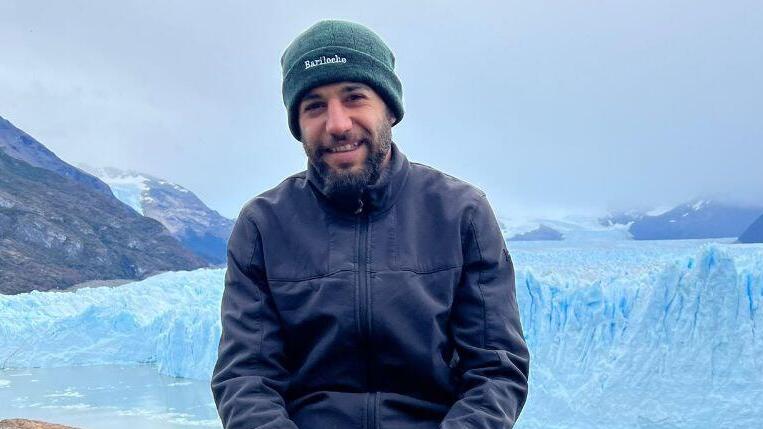
All photographs · 1
In the media
Articles
- We Marched Together with Hundreds of Teenagers and Soldiers to Mark 105 Years Since the Battle of Tel Hai
עיריית קריית שמונה ·
- Hommage: À la mémoire des 124 morts et assassinés dans le Nord
Tribune Juive ·
- Once they had to look for people to make a minyan, and today everyone is there
כיפה ·
- The funeral of Sergeant First Class (res.) Efraim Ben Amram is taking place now
ישראל היום ·
- IDF soldier Efraim Ben Amram succumbs to wounds from UAV impact
The Jerusalem Post ·
- Soldier Wounded in Drone Attack on the Golan Heights Dies in Hospital
Dom.co.il / NEWSru ·
Social posts
- WE MOURN IDF reservist Efraim Ben Amram
Dov Lipman / LinkedIn
Memorial sites
Memorial projects
The school dedicated its 11 Adar march marking 105 years since the Battle of Tel Hai to the memory of its graduate Efraim Ben Amram; participants wore distinctive clothing in his memory.
Stories told about them
The battalion commander said that Ephraim reported for reserve duty even though he was exempt. He was wounded by a drone strike on June 30 and fought for his life for 19 days.
Menachem Ben Amram said he initially participated in a trip for bereaved siblings and later served as a kashrut supervisor on a trip for bereaved parents to Zanzibar. His parents participated, and he described his emotion at seeing them open up and enjoy themselves following the loss.
Life & service
Profile
- Date of birth
- September 21, 1998
- Birthplace
- Yesod HaMa'ala
- Date of death
- July 18, 2024
- Age
- 25
- Hometown
- Yesod HaMa'ala
Service
- Rank
- Sergeant first class (res.)
- Service Type
- Reserve Forces
- Honours
- Posthumously Promoted
- Battle Location
- In the Northern Golan Heights area
Family
- Father
- Yosef Chaim
- Mother
- Lilach Chana
Burial
Tributes & remembrance
אהוב שלנו יהי זכרו ברוך והי"ד
תהא נשמתם צרורה בצרור החיים
גיבור ישראל
תודה על המסירות, תודה על ההקרבה הגדולה.
מקווה שאנחנו ראויים.
שנה לנפילתו. יהי זכרו ברוך.
אני אוהב אותך אחי.
עדיין לא נתפס ועם זאת געגועים
ממשיכים לשמר את הטוב שלך
את אפרים פגשנו בבית חב״ד בגואטמלה בתקופה שהתנדב שם. בן אדם טוב, חייכן ומאיר. עזר לי לארגן בשמחה וברצון את הצעת הנישואין שלי באחד הטיולים המאורגנים שהוביל דרך חב״ד. לא נשכח לעולם איזה יהודי יקר היית וכמה טוב עשית לנו ולסובבים אותך.
הכרתי את אפי היקר בקוסטה ריקה שהייתי לבד, ואיתו לרגע אחד לא הרגשתי לבד.
יהיה זכרך ברוך אפי
הכרתי את אפי בגוומאלה טיילנו יחד שבוע, כולו אור חיוך עוטף וטהור מתגעגעת!
אזכור אותך תמיד
אח יא אפי כמה געגועים אח שלי
גיבור ישראל,בן יסוד המעלה, למשפחת בן עמרם היקרה,יהי זכרו ברוך לעד
אוהבים אותך ומתגעגעים
נזכור לעד את גבורתך ואת מסירות הנפש שלך למען המשך קיומנו!
הצבי ישראל על במותיך חלל איך נפלו גיבורים.
מנשרים קלו מאריות גברו!
אפריים כבר חודש וחצי שאתה לא פה מתגעגעים ברמות לא מעקלת עדין, אוהבת אותך הכי בעולם ותודה שעזרת לי שמחה שהכרתי בן אדם כמוך, יהי נשמתך בגן עדן
Our dear boy, a child of love, a child of freedom, Efraim, a boy who loved everyone and whom everyone loved.
Source:ישראל היום
Read the Hebrew original
ילד יקר שלנו, ילד של אהבה, ילד של חופש, אפרים ילד שאהב את כולם וכולם אהבו אותו.
The good of everyone was always before your eyes, ahead of your own personal good.
Source:ישראל היום
Read the Hebrew original
טובת הכלל תמיד עמדה נגד עיניך, לפני טובתך האישית.
A welcoming person who helped and supported everyone.
Source:ישראל היום
Read the Hebrew original
אדם מסביר פנים אשר עזר וסייע לכולם.
We announce with great sadness and sorrow the death of Efraim Ben Amram
Source:The Jerusalem Post
Efraim, uniquely admired and loved by people, always with a smile on his face.
Source:יזכור
Read the Hebrew original
אפרים, נערץ ואהוב בצורה ייחודית על הבריות, תמיד עם חיוך על פניו.
May God comfort the Ben Amram family among the mourners of Zion and Jerusalem.
Source:Dov Lipman / LinkedIn
Remembrance Day addresses
יום הזיכרון לחללי מערכות ישראל התשפ"ה – 2025
בכל יום שעובר, אזכור יותר! אזכור, את אלו שיצאו עימי לקרב ולא שבו, ולהם אין מי ידמה ומי ישווה. אזכור, שהכאב לא יעבור לעולם, והזמן, הוא לא מרפה ולא מרפא. אזכור, את שיברון הלב הגובר ואת הבית שבוער. אזכור, את צדקת הדרך, ואשבע שוב, שמה שהיה לא יהיה יותר. אזכור, שיותר מכל דבר אחר – אני חסר! ביום הזה, אני נתקף געגוע לדמותם, לחיתוך דיבורם, לחיוכם, ומדליק נר לזיכרון דרכם ומורשתם!
משרד הביטחון
אגף משפחות, הנצחה ומורשת
יום הזיכרון לחללי מערכות ישראל התשפ"ה – 2025
בכאב, בהצדעה ובתקווה אני מתכבד להדליק נר זיכרון זה. השנה, כשאנו נלחמים במלחמה ארוכה, רב זירתית וצודקת, הזיכרון נושא משמעות עמוקה. ביום זה נעצור ונתייחד עם זכרם של טובי בנינו ובנותינו שנפלו בהגנה על המדינה. מורשתם היא המצפן שמתווה את דרכינו, והיא המעניקה לנו כוח להמשיך ולהגן על מדינת ישראל ותושביה. משפחות יקרות, אנו מרכינים ראשנו ומתחייבים שנעמוד לצידכן תמיד. יהי זכר הנופלים ברוך.
אלוף דדו בר כליפא
ראש אגף כוח האדם, צה"ל
יום הזיכרון לחללי מערכות ישראל התשפ"ה – 2025
בשעה שאנו זוכרים את גודל תרומתם ועומק מסירות נפשם של טובי בנינו ובנותינו, נופלי מערכות ישראל לדורותיהן, ממשיכים צה"ל וכוחות הביטחון במימוש המשימה למענה לחמו ועבורה נפלו: הכרעת אויבינו מדרום, מצפון, ביהודה ובשומרון, וגם בזירות רחוקות יותר. בהערכה רבה ובגאווה אדירה אנו מרכינים ראש בפני הנופלים והנופלות, מאמצים את משפחותיהם אל לבנו, וממשיכים במשימה להבטחת קיומה של ישראל לדורי דורות. יחד נעשה ונצליח.
רב אלוף אייל זמיר
הרמטכ"ל, צה"ל
יום הזיכרון לחללי מערכות ישראל התשפ"ד – 2024
כאשר דגלינו מורדים לחצי התורן וראשינו מורכנים לזכר הנופלים והנופלות במערכות ישראל, ממשיכים לוחמי צה"ל ומפקדיו בלחימה בדרום, בצפון, ביהודה ובשומרון ובזירות נוספות. על כל דור מוטלת המשימה של הגנת העם והארץ – משימה שאף פעם אינה פוסקת. נצדיע בגעגוע ובגאווה לנופלים ולנופלות, נחבק את משפחותיהם, ונמשיך ברוח הציווי שהותירו לנו. עם ישראל חי.
רב ניצב יעקב שבתאי
המפקח הכללי, משטרת ישראל
יום הזיכרון לחללי מערכות ישראל התשפ"ד – 2024
אחיי הנופלים, כל נר הוא זיכרון יחיד ומיוחד, על חיים שהיו ואינם, געגוע שנצרב עמוק בלב, עולם ומלואו. הנרות כולם הם זיכרון של אומה כי לעולם לא עוד, בשורת הציונות וקוממיות ישראל. זיכרון כי הדרך לעם חופשי בארצנו עוברת דרך מסדר הנופלים. אור הנר יזכיר לנו את מסירות נפשכם להציל חיים, להגן על הבית. הנרות מסמנים לנו נתיב גבורה ערכי מחייב שאנו מצווים ללכת לאורו. נמשיך להילחם ולהוסיף אור מתוך אמונה בנצח ישראל.
יואב גלנט
שר הביטחון
יום הזיכרון לחללי מערכות ישראל התשפ"ד – 2024
בהצדעה ובכאב, בשם צה"ל כולו, אני מדליק נר זיכרון. בעיצומה של מלחמה, הזכרון נושא משמעות יום-יומית, שעבר והווה מתלכדים בה. לאורם של הנופלים נמשיך לצעוד, חיילי הסדיר והמילואים. לאורם של הנופלים נמשיך להגן על ארצנו ועל מולדתנו, גם כשהמחיר כבד. להבת-הזכרון תבער בנו בעודנו ממשיכים להלחם ונזכור את הנופלים ואת אומץ ליבם. משפחות יקרות, צה"ל מרכין היום ראש, מצדיע לכן וכואב איתכן. יהי זכר הנופלים ברוך.
אלוף יניב עשור
ראש אגף כוח האדם, צה"ל
יום הזיכרון לחללי מערכות ישראל התשפ"ד – 2024
בהוקרה, בגאווה ובכאב שאין לו סוף, אני מתכבד להדליק נר לזכרם של הנופלים והנופלות במערכות ישראל. סיפור חייהם בארץ הזאת, מסכת שירותם, גבורתם והקרבתם – הם סיפורה של הארץ הזאת, אך גם סיפור המחיר הכבד שהיא תובעת מאוהביה. מחויבותנו לזכר הנופלים ולדרך שהותירו לנו ניצבת תמיד לנגד עינינו. את המשימה שלא זכו להשלים, משלימים כיום, וישלימו, אנשי כוחות הביטחון, הממשיכים בדרכם ולאורם. יהי זכרם של הנופלים ברוך.
משרד הביטחון
אגף משפחות, הנצחה ומורשת
יום הזיכרון לחללי מערכות ישראל התשפ"ד – 2024
בחרדת קודש אני מתכבד להדליק נר לזכרם של חללי מערכות ישראל, חברנו שנפלו, מראשית היציאה מהחומות ולאורך כל שנות עצמאותנו המדינית והציונית, מהווים תמרור זיכרון לדרך חיינו ולמחוייבות הלאומית להנצחת זכרם. דרכם נותרה דרכנו ומורשתם נר להמשך עשייתנו. יהי זכרם ברוך!
בני גנץ
שר הביטחון
יום הזיכרון לחללי מערכות ישראל
נזכור אותם, כולנו יחד. כל אחד ואחת מהם, מדי יום ביומו, והיום ביתר שאת, כך – לנצח. "כי מדי דברי בו זכור אזכרנו עוד"
משרד הביטחון
אגף משפחות, הנצחה ומורשת