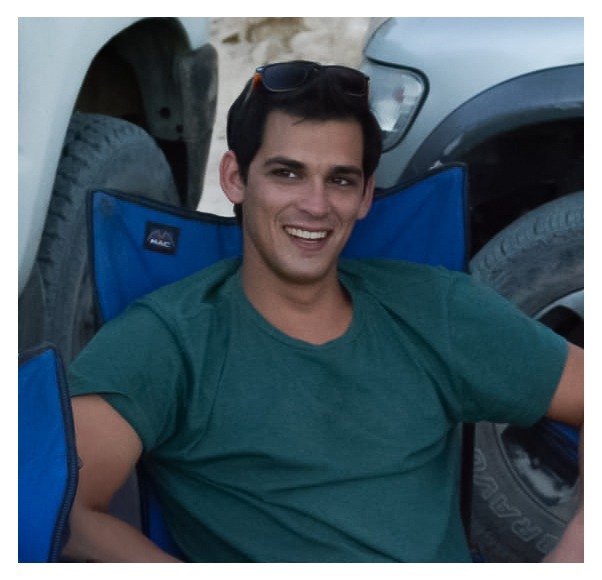
The story
The sun of Nir Oz, that scorching sun of the Gaza envelope, was already caressing the kibbutz fields on the morning of March 12, 1988, the 24th of Adar, 5748, when Dolev Yehud was born. It wasn't an ordinary day, for the birth of a child is always a pivotal event, and in the small, close-knit kibbutz, every new baby was like another bud in the large family flower. Yael and Yehiel, his parents, received him with open arms, wrapped in love and hope, and he joined his older siblings, Neta and Arbel, who awaited him in their small home, filled with the aromas of home-cooked meals and the sounds of children's laughter. Their home was more than just four walls; it was a center of warmth, values, and long conversations late into the night around the kitchen table, with a steaming teapot at its heart. Dolev grew into this fabric, absorbing his father Yehiel’s thoughtful quietude and his mother Yael’s silent wisdom, for she saw far and understood deep things without uttering a word.
Dolev's childhood was interwoven with the open landscape of the kibbutz. The green fields in winter, which turned yellow and golden in summer, were his natural playground. He would run barefoot on the earth, feeling the soil between his toes, breathing the scent of the ground after rain and the dust of harvest on hot days. The sounds of tractors were a constant soundtrack in the background, and the chirping of birds in the tall eucalyptus trees was his lullaby. He quickly learned to identify the different sounds of the kibbutz: the engine of the branch truck, the work calls of the laborers in the orchard, the hubbub of children in the children's house. Already at a young age, his kind eyes, which were his hallmark throughout his life, examined the world with curiosity and gentleness. He was not a rash or boisterous child, but rather observed, listened, internalized. He loved to sit aside and watch people, to grasp the small nuances in their interactions, to try to understand the world around him through life's little secrets.
The bond with his siblings was deep and significant. Neta, his older brother, was a role model for him, and they often found themselves sharing small secrets or helping each other with tasks assigned by their parents or kibbutz instructors. Arbel, his younger sister, was an endless source of laughter and play. They would spend long hours together, building secret camps among the bushes, climbing trees, or inventing role-playing games where Dolev was often the quiet and wise hero, the one who found the most creative solutions. Within this family fabric, Dolev learned the importance of community, mutual responsibility, and the natural desire to help others. He saw his parents, Yael and Yehiel, taking an active part in kibbutz life, contributing their time and talents, and understood that this was an inseparable part of life.
When he turned twelve, a figure entered his life who would change it forever—Sigal. She was his age, a smiling girl with sparkling eyes, who also grew up in the kibbutz corridors. Their first meeting might have been a casual encounter at school or in the playground, but something immediately sparked between them. An innocent childhood friendship, which developed over the years, almost without them noticing. They would sit together on a bench in the dining hall, chew gum in class, ride bicycles on the kibbutz paths, sharing secret dreams and small worries. She was the love of his heart even then, before the words "love" or "relationship" took on deep meaning in their lives. Their connection was natural and simple, like breathing, and it was built on foundations of deep familiarity, mutual respect, and a quiet understanding that needed no words. Sigal was the driving force behind many of his smiles, and Dolev was her safe place, the quiet and stable anchor where she could lean and share her entire world.
Adolescence brought new challenges and new opportunities. Dolev was a level-headed young man who loved to learn and understand how things worked. He excelled in the sciences, fascinated by the ability to design, build, and solve complex problems. This love for structures, for stability, for creation—naturally connected with his quiet and thorough character. He was not the type of person who would be content with theory; he wanted to see things take shape, built brick by brick. Alongside his studies, he continued to cultivate his love for lighter things, those that relieved stress and brought joy. He was an enthusiastic fan of stand-up comedy and funny podcasts, finding comfort and release in good laughter, in the ability to look at reality from a humorous perspective. He often shared jokes or clips he heard with Sigal and his friends, and his kind eyes would twinkle along with theirs. This laughter was an integral part of his identity, a way to cope with the complexities of life, to stay lighthearted, and always remember the importance of joy.
His friendship with Sigal deepened. They were no longer just children playing together; they were a young couple, building their shared world step by step. They dreamed together of the future, of their own home, of a family. The discussions about studies, military service, and the endless possibilities opening before them were always accompanied by quiet glances and smiles, promising each other that they would stay together, no matter what tomorrow brought. The decision to study civil engineering was natural for Dolev. He saw it not just as a profession, but as a way to contribute, to build, to create stability. The idea of designing structures, seeing them rise from the ground, was magical to him. He imagined himself standing on construction sites, looking at plans, supervising work, ensuring that every single detail was executed with precision and thoroughness.
Military service was another station in his life's journey, shaping him and strengthening his qualities. Dolev served as a paramedic, a role not chosen by chance. His desire to help, to care, to reach out, found significant expression in this field. He learned to cope with extreme pressure situations, make critical decisions in real-time, provide first aid, and save lives. The studies and training were intensive, requiring concentration, composure, and deep listening skills. He absorbed every word, practiced every action, understanding the immense significance of each decision. In uniform, with his paramedic kit on his back, he became a skilled professional, but above all – a person willing to sacrifice himself for others. He proudly wore his sergeant major (res.) insignia, a symbol of his ongoing commitment to the state and its security, even years after his discharge.
After his discharge from the army, Dolev returned to Nir Oz, with Sigal, his beloved since the age of twelve, who had by then become his wife. Their wedding was a joyful and moving event, uniting two deeply rooted kibbutz families, and testifying to the deep and unshakeable bond between them. They established their home in the kibbutz, a home that quickly became a center of warmth, love, and laughter. Dolev began working as a civil engineer, fascinated by the ability to turn ideas and plans into physical reality. He loved the construction process, the smell of fresh cement, the sounds of machines, the feeling of creation. He was the kind of engineer who didn't just sit in an office, but went out to the field, talked to the workers, saw the progress with his own eyes, ensuring that every detail was executed to his satisfaction, with precision and quality. His work was an inseparable part of his identity, an expression of his desire to build, stabilize, and leave a mark.
But above all, Dolev was a family man. He and Sigal built a warm nest together, which quickly filled with the sounds of children. Raz, Yotam, and Ron came into the world, one after another, filling the house with light and joy. Dolev was a loving, present, involved father. He loved to play with his children, teach them, listen to them. He found time for each of them, playing soccer with Raz in the yard, building Lego towers with Yotam in the living room, reading stories to Ron before bedtime. He gave them the same boundless love and sense of security he received from his parents. Their home was always open to friends, family, and spontaneous gatherings. On the kitchen table, there was always room for another cup of tea, for another conversation. He was a devoted husband to Sigal, a full partner in every decision, a listening ear for every worry, and a supportive shoulder at all times. They were a couple who grew together, from childhood to adulthood, and their bond was deep and rooted.
Dolev was a beloved member of the Nir Oz community. He didn't just live in the kibbutz; he lived it, breathed it. He was involved in community life, always ready to help, to contribute, to be a part. As a man with technical abilities and a desire to help, he naturally joined the kibbutz's standby squad. This role, of guardian of the home, of one who is ready to protect his community members, was significant to him. He took it very seriously, participated in training, was alert and ready. Life in the Gaza envelope, despite the blessed routine, always carried a certain tension, a feeling of a border line. Dolev, as a paramedic and a member of the standby squad, was part of the system designed to maintain peace, security, and the ability for everyone to live as normal a life as possible. He saw it as a mission, a personal and communal responsibility. He was the anchor, the rock, the one everyone could rely on.
Dolev Yehoud, from Nir Oz, was a member of the local standby squad and fell at age 35.
But that quiet was shattered in an instant. At precisely 06:29, the first siren sounded. Not another regular "Code Red" siren, the kind followed by a few rockets and a quick return to routine. This time, the sound was different, more piercing, immediately accompanied by heavy gunfire, explosions, and roars unlike anything they had heard before. The entire house shook. Dolev sprang from his bed, his sixth sense immediately activated. He knew this was no ordinary event. He pushed the pregnant Sigal and the children into the safe room, instructing them to go inside and stay there, not to come out under any circumstances. "I have to go," he told her, "I'm part of the standby squad, and I'm a paramedic. I have to help." His kind eyes were determined, expressing deep concern but also unwavering resolve.
Messages in the standby squad's WhatsApp group began to flow at dizzying speed: "Assemble at the rendezvous point!" "Terrorists have infiltrated!" "Massive gunfire throughout the kibbutz!" Dolev didn't hesitate for a moment. He put on his uniform, grabbed his weapon and his paramedic kit, and ran out. He left behind Sigal, who was tucked away in the safe room with their three small children, terrified but trusting him, her heart contracting with immense fear and quiet pride. She knew he had to go, that he couldn't stay when his people needed him. This was his essence, everything he believed in.
Outside was hell. The quiet, green kibbutz had turned into a battlefield. Gunfire from all directions, screams, explosions. Dolev, with his paramedic training and military experience, acted on instinct. He ran between the houses, searching for the wounded, trying to grasp the magnitude of the disaster. He was one of the few in the standby squad, a handful against many, as he tried to protect his home and his people. As a paramedic, he knew every second was critical. He would run towards the sounds of gunfire, towards people calling for help, risking his life again and again. He treated the wounded, bandaged them, tried to stabilize their condition under hellish fire. He didn't think of himself, only of those who needed him. The battle was lost from the outset in terms of the balance of forces, but Dolev's spirit, the spirit of the standby squad members, was not broken. They fought for every house, for every corner, for every friend.
Amidst the inferno, Dolev continued to communicate, likely in short messages, with Sigal, trying to reassure her, to ensure they were safe in the safe room. His last words, if there were any, were surely words of love, a promise to return, as he had promised her throughout their shared lives. But the battle in Kibbutz Nir Oz was brutal. The terrorists moved between the houses, shooting indiscriminately, slaughtering people mercilessly. Dolev, a hero in spirit and in deed, fought until his last breath. He fell in battle, in the kibbutz he loved so much, so close to his home, his children, Sigal, yet also so far away.
The hours and days that followed were a hell of uncertainty for the Yehud family. Sigal and the children were rescued from the safe room, but their home was burned and looted. They lost everything, except their lives. At the same time, the extent of the horror became clear: Dolev's sister, Arbel, and her partner Ariel Cunio, along with Ariel's brother, David Cunio, were kidnapped to Gaza. The grief and anxiety for Dolev mingled with the terrible fear for the safety of their kidnapped loved ones. Days turned into weeks of nerve-wracking anticipation, of desperate searching for any scrap of information. Sigal, despite her advanced pregnancy, despite the pain and anxiety, showed indomitable strength. She was a lioness, protecting her children, trying to maintain sanity amidst the chaos.
Just nine days after that black Saturday, amidst the chaos and immense sorrow, Sigal gave birth to their fourth daughter, Dor. Dor's birth was a small ray of light in the great darkness, a symbol of rebirth, continuity, of life insisting on triumph. Dor was born into a huge void left by her father, but also into a loving and strong family, who promised to tell her about a heroic father, a father with kind eyes, who fought for her and for her future.
Dolev's body was located within the kibbutz grounds, where he had bravely fought. The news of his death was a severe blow, but also a kind of closure, a cruel certainty. The family received notification of his murder, which added a sense of rage and frustration to the pain. Many long months passed until Dolev was laid to rest in the civilian cemetery of Nir Oz, on June 4, 2024, the 27th of Iyar, 5784. Months of mourning, searching, coping with an incomprehensible reality. He returned home, to the land where he grew up, where he built his life, where he fought and gave his soul. Above his grave, the kibbutz fields looked green again, and the sun of the Gaza envelope once again caressed the soil, warming the aching hearts.
Dolev Yehud, a First Sergeant (res.), thirty-five years old at his fall, left behind a beloved wife, Sigal, four young children – Raz, Yotam, Ron, and the tender Dor, strong parents – Yael and Yehiel, and a brother – Neta. His sister Arbel and the Cunio family members are still in captivity, and there is no way to describe the double and triple pain of the family. But Dolev left not only a void. He left a legacy. A legacy of deep love for family and community, of endless devotion, of quiet courage and unwavering determination. He was an engineer who built bridges of trust, a paramedic who saved lives, and a father who instilled in his children a love for humanity and a love for his homeland.
Dolev's story is a story of a full life dedicated to building, creating, loving, and giving. It is the story of a man who chose to live a full and meaningful life, who grew from the soil of the kibbutz and taught us all what true heroism is: not in shouts and rhetoric, but in actions, in the daily choice to care for others, to protect the weak, and to stand up for the values he believed in. He fell as a hero, defending his home, his family, his community, and the entire nation. His memory, like the memory of many good people who fell on that black Saturday, will be a burning torch of resurgence, illuminating our way forward. The quiet of Nir Oz will never be the same quiet, but Dolev's voice, the voice of laughter and love, the voice of giving and courage, will continue to echo through the kibbutz paths, in the hearts of his family, and in the soul of the entire nation, forever and ever.
Moments of a life
All photographs · 2
In the media
Articles
- United Hatzalah Dedicates Wish Ambulance in Memory of Bibas Family, Dolev Yehoud
VINnews ·
- Dolev Yehoud, 35: Engineer and volunteer medic who jumped into action
The Times of Israel ·
- Sacred Remains: The Remains of Dolev Yehud, Who Had Been Believed to Be a Hostage, Have Been Identified
9tv ·
- The heroism of Dolev Yehud, whose body was identified in Nir Oz
ynet
Memorial sites
- Dolev Yehud z»l
Magen David Adom
Memorial projects
United Hatzalah inaugurated a Wish Ambulance and emergency vehicles in Nir Oz in memory of members of the Bibas family and Dolev Yehud; his widow Sigal took part in the ceremony.
A Magen David Adom page in Spanish confirms that a Magen David Adom ambulance bearing Dolev’s name was dedicated in his memory. This is separate from the United Hatzalah ambulance documented in the first pass; the page does not state a dedication date.
Stories told about them
Dolev left the safe room where his pregnant wife and their three children were sheltering to treat the wounded in Nir Oz. Two weeks before the attack, he had been named an outstanding volunteer at the United Hatzalah branch.
Life & service
Service
- Rank
- Master sergeant (res.)
- Service Type
- Reserve Forces
- MDA service
- MDA volunteer paramedic
Family
- Father
- Yechiel
- Mother
- Yael
Burial
Cemetery
Nir Oz
Tributes & remembrance
סליחה לך ולמשפחה
בזמן שארבל יהוד הייתה בשבי, אסור היה לספר שאחיה, דולב, שנפל ב 7.10 היה חבר בכיתת הכוננות של ניר עוז. פחדו שזה יפגע בה. לכן סופר שהוא יצא לטפל בפצועים כי הוא היה חובש באיחוד הצלה. אז היום, ביום הזכרון הממלכתי ל-7.10, אני רוצה לספר על גבורתו. מעטים מול רבים. ב 6:45 מוקפצת כיתת הכוננות של ניר עוז, לוקחים נשקים ויוצאים להילחם. דולב יוצא מהממד, עוזב את סיגל אשתו ושלושת ילדיהם כשהיא בהריון בחודש תשיעי ויוצא. סיגל ילדה 9 ימים אחרי הטבח. דולב וחבריו נתקלים במחבלים, מחסלים אותם עד שבשעה 8:52, דולב, תמיר אדר (שגופתו עדיין בשבי החמאס) ואביב אצילי נתקלים בכ-40 מחבלים. שלושה מול 40. דולב שולח לאשתו סיגל ווטסאפ : ״אני אוהב אותך״ ונופל. גופתו נמצאה רק ביוני, כשמונה חודשים אחרי נפילתו ומהבדיקות היה ברור שהמחבלים הארורים ירו בו וביצעו וידוא הריגה. דולב היה גיבור שיצא לטפל בפצועים, להילחם על משפחתו ועל היישוב שכל כך אהב. שתפו את הסיפור על גבורתו. בהיסטוריה היהודית היו קרבות של מעטים מול רבים, הקרב על ניר עוז הוא כזה.
נזכה לראות את כולם בתחיית המתים אישה של לומד תורה רצינו לומר לך תודה ולמשפחתך תודה על הזכות שבזכותכם אנחנו יכולים לשבת וללמוד את תורת ה מאמינה שהוא שם ליד בורא עולם שמח וטוב לו נזכור אותו ולא נשכח אמן שנשמע ונתבשר בבשורות טובות הוא חלק מאיתנו וכל המעשים הטובים שיהיו לעילוי נשמתו אמן שנזכה לראות את כולם בתחיית המתים בורא עולם יגיד לצרותינו די שנזכה לבניין ה אמן שלא יחרב עוד לעולם
דולבי
זוכרת אותך כילד מתוק , יפיוף יוצא דופן , חכם וטוב.
ילד בגן תות בניר עוז.
כואבת את מותך. יהי זכרך אהוב ומבורך כפי שראוי למישהו כמוך
סליחה, יהי זכרו ברוך
יזכור עם ישראל את חיילי חרבות ברזל. יהי זכרם ברוך."
Your courage and bravery will not be forgotten.
ליחי ויעל ההורים הנהדרים וארבל האמיצה זוכרים את דולב אהובכם.
יהי זכר דולב ברוך, משפחת יהוד אהובת הלב שלא תדעו עוד צער לעולם , איתכם ולצידכם תמיד
נשמתו עדן
יהי זכרך ברוך ילד אהוב
זכרונות לברכה, אמן
דולב היקר,
תודה לך מסירותך,על נאמנותך,על עוז רוחך
ועל הקרבתך הנוראה מכל!
תנחומים מלב כואב לכל יקיריך.
יהא זכרך ברוך, גיבור ישראל!
יהיה זכרו ברוך
כאן לצידכם
משפחת בהל״ג
Dolev, may God avenge his blood, always acted for others, offering assistance and help even to people he did not know at all.
Source:ערוץ 14
Read the Hebrew original
דולב הי״ד עשה תמיד למען האחר, הגיש סיוע ועזרה גם למי שלא הכיר כלל.
At all three previous births, Dolev was with me, held my hand and was present
Source:וואלה
Read the Hebrew original
בכל שלוש הלידות הקודמות דולב היה איתי, החזיק לי את היד והיה נוכח
He went to help his people.
Source:October 7 Memorial
Among the thousands who came to pay their last respects, there were people who had not known him at all, who had only heard stories about him
Source:מקור ראשון
Read the Hebrew original
מתוך האלפים שבאו לחלוק לו כבוד אחרון, היו מי שלא הכירו אותו בכלל, רק שמעו עליו סיפורים
He always made sure his bag was fully stocked with equipment, lest, God forbid, he need to treat someone and not have what he needed.
Source:ynet
Read the Hebrew original
הוא תמיד דאג למלא את התיק שלו מבחינת ציוד, שמא חלילה יצטרך לטפל ולא יהיה לו את מה שהוא צריך.
They were considered the school's legendary couple, and she is like a daughter to me
Source:את
Read the Hebrew original
הם נחשבו לזוג המיתולוגי של בית הספר והיא כמו בת שלי
Endless longing and sadness
Source:את
Read the Hebrew original
געגועים ועצב שלא נגמרים
There will always be a hole in my heart in the shape of you.
Source:The Times of Israel
Remembrance Day addresses
יום הזיכרון לחללי מערכות ישראל התשפ"ה – 2025
בכל יום שעובר, אזכור יותר! אזכור, את אלו שיצאו עימי לקרב ולא שבו, ולהם אין מי ידמה ומי ישווה. אזכור, שהכאב לא יעבור לעולם, והזמן, הוא לא מרפה ולא מרפא. אזכור, את שיברון הלב הגובר ואת הבית שבוער. אזכור, את צדקת הדרך, ואשבע שוב, שמה שהיה לא יהיה יותר. אזכור, שיותר מכל דבר אחר – אני חסר! ביום הזה, אני נתקף געגוע לדמותם, לחיתוך דיבורם, לחיוכם, ומדליק נר לזיכרון דרכם ומורשתם!
משרד הביטחון
אגף משפחות, הנצחה ומורשת
יום הזיכרון לחללי מערכות ישראל התשפ"ה – 2025
בכאב, בהצדעה ובתקווה אני מתכבד להדליק נר זיכרון זה. השנה, כשאנו נלחמים במלחמה ארוכה, רב זירתית וצודקת, הזיכרון נושא משמעות עמוקה. ביום זה נעצור ונתייחד עם זכרם של טובי בנינו ובנותינו שנפלו בהגנה על המדינה. מורשתם היא המצפן שמתווה את דרכינו, והיא המעניקה לנו כוח להמשיך ולהגן על מדינת ישראל ותושביה. משפחות יקרות, אנו מרכינים ראשנו ומתחייבים שנעמוד לצידכן תמיד. יהי זכר הנופלים ברוך.
אלוף דדו בר כליפא
ראש אגף כוח האדם, צה"ל
יום הזיכרון לחללי מערכות ישראל התשפ"ה – 2025
בשעה שאנו זוכרים את גודל תרומתם ועומק מסירות נפשם של טובי בנינו ובנותינו, נופלי מערכות ישראל לדורותיהן, ממשיכים צה"ל וכוחות הביטחון במימוש המשימה למענה לחמו ועבורה נפלו: הכרעת אויבינו מדרום, מצפון, ביהודה ובשומרון, וגם בזירות רחוקות יותר. בהערכה רבה ובגאווה אדירה אנו מרכינים ראש בפני הנופלים והנופלות, מאמצים את משפחותיהם אל לבנו, וממשיכים במשימה להבטחת קיומה של ישראל לדורי דורות. יחד נעשה ונצליח.
רב אלוף אייל זמיר
הרמטכ"ל, צה"ל
יום הזיכרון לחללי מערכות ישראל התשפ"ד – 2024
כאשר דגלינו מורדים לחצי התורן וראשינו מורכנים לזכר הנופלים והנופלות במערכות ישראל, ממשיכים לוחמי צה"ל ומפקדיו בלחימה בדרום, בצפון, ביהודה ובשומרון ובזירות נוספות. על כל דור מוטלת המשימה של הגנת העם והארץ – משימה שאף פעם אינה פוסקת. נצדיע בגעגוע ובגאווה לנופלים ולנופלות, נחבק את משפחותיהם, ונמשיך ברוח הציווי שהותירו לנו. עם ישראל חי.
רב ניצב יעקב שבתאי
המפקח הכללי, משטרת ישראל
יום הזיכרון לחללי מערכות ישראל התשפ"ד – 2024
אחיי הנופלים, כל נר הוא זיכרון יחיד ומיוחד, על חיים שהיו ואינם, געגוע שנצרב עמוק בלב, עולם ומלואו. הנרות כולם הם זיכרון של אומה כי לעולם לא עוד, בשורת הציונות וקוממיות ישראל. זיכרון כי הדרך לעם חופשי בארצנו עוברת דרך מסדר הנופלים. אור הנר יזכיר לנו את מסירות נפשכם להציל חיים, להגן על הבית. הנרות מסמנים לנו נתיב גבורה ערכי מחייב שאנו מצווים ללכת לאורו. נמשיך להילחם ולהוסיף אור מתוך אמונה בנצח ישראל.
יואב גלנט
שר הביטחון
יום הזיכרון לחללי מערכות ישראל התשפ"ד – 2024
בהצדעה ובכאב, בשם צה"ל כולו, אני מדליק נר זיכרון. בעיצומה של מלחמה, הזכרון נושא משמעות יום-יומית, שעבר והווה מתלכדים בה. לאורם של הנופלים נמשיך לצעוד, חיילי הסדיר והמילואים. לאורם של הנופלים נמשיך להגן על ארצנו ועל מולדתנו, גם כשהמחיר כבד. להבת-הזכרון תבער בנו בעודנו ממשיכים להלחם ונזכור את הנופלים ואת אומץ ליבם. משפחות יקרות, צה"ל מרכין היום ראש, מצדיע לכן וכואב איתכן. יהי זכר הנופלים ברוך.
אלוף יניב עשור
ראש אגף כוח האדם, צה"ל
יום הזיכרון לחללי מערכות ישראל התשפ"ד – 2024
בהוקרה, בגאווה ובכאב שאין לו סוף, אני מתכבד להדליק נר לזכרם של הנופלים והנופלות במערכות ישראל. סיפור חייהם בארץ הזאת, מסכת שירותם, גבורתם והקרבתם – הם סיפורה של הארץ הזאת, אך גם סיפור המחיר הכבד שהיא תובעת מאוהביה. מחויבותנו לזכר הנופלים ולדרך שהותירו לנו ניצבת תמיד לנגד עינינו. את המשימה שלא זכו להשלים, משלימים כיום, וישלימו, אנשי כוחות הביטחון, הממשיכים בדרכם ולאורם. יהי זכרם של הנופלים ברוך.
משרד הביטחון
אגף משפחות, הנצחה ומורשת
יום הזיכרון לחללי מערכות ישראל התשפ"ד – 2024
בחרדת קודש אני מתכבד להדליק נר לזכרם של חללי מערכות ישראל, חברנו שנפלו, מראשית היציאה מהחומות ולאורך כל שנות עצמאותנו המדינית והציונית, מהווים תמרור זיכרון לדרך חיינו ולמחוייבות הלאומית להנצחת זכרם. דרכם נותרה דרכנו ומורשתם נר להמשך עשייתנו. יהי זכרם ברוך!
בני גנץ
שר הביטחון
יום הזיכרון לחללי מערכות ישראל
נזכור אותם, כולנו יחד. כל אחד ואחת מהם, מדי יום ביומו, והיום ביתר שאת, כך – לנצח. "כי מדי דברי בו זכור אזכרנו עוד"
משרד הביטחון
אגף משפחות, הנצחה ומורשת