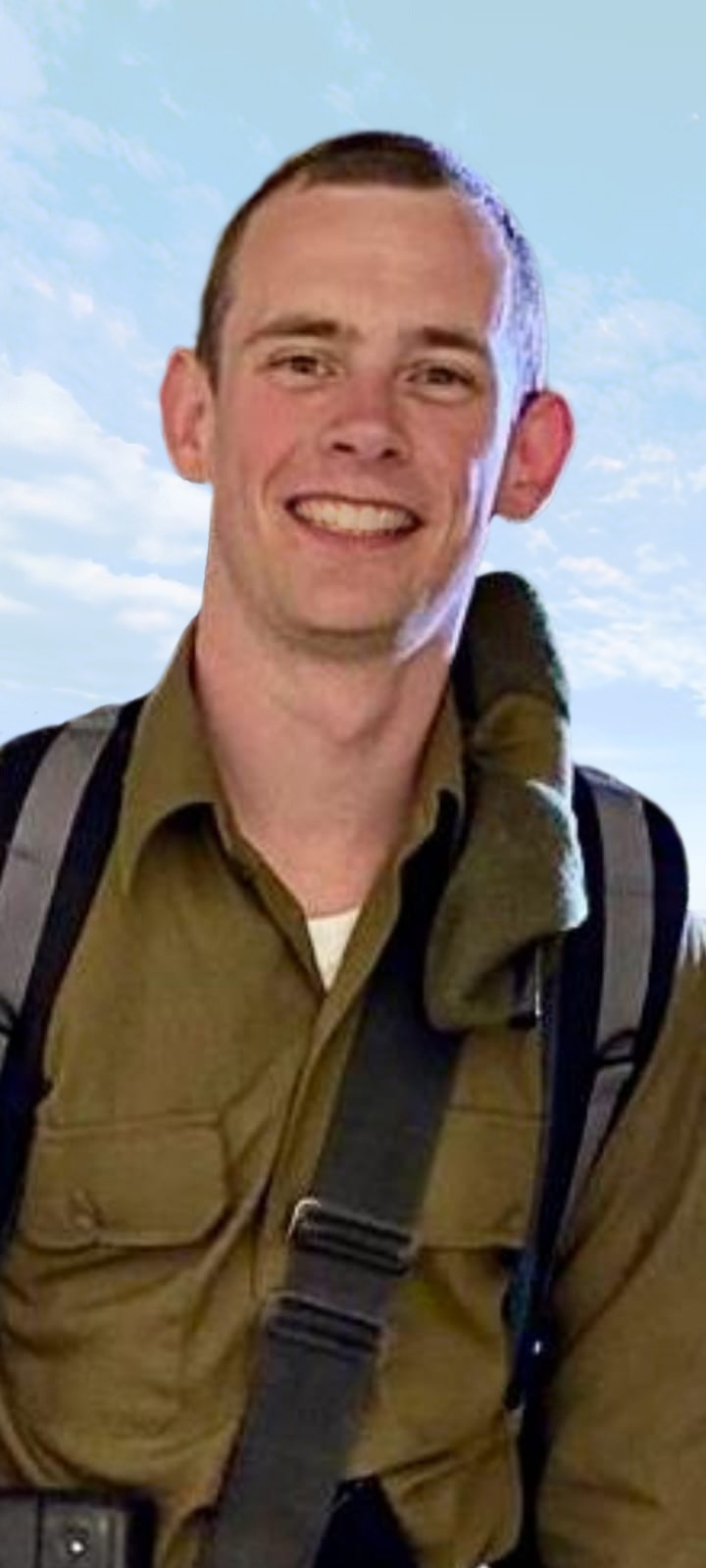
The story
The air in Fergana, Uzbekistan, was often thick with desert dust and scorching sun, but inside the Pechaniuk family home, on the 23rd of Tevet 5758, which was January 21st, 1998, a tense anticipation cut through the silence. Olga, the mother, breathed deeply as Danil’s first cries filled the room, a soft, sweet sound that promised life. Yosef, the father, stood beside her, proud and excited, gently stroking her hand. Danil was their second son, a younger brother to Maxim, and later, Dima, their youngest brother, would join them. The house was always full of life—rolling laughter, small squabbles over toys that were never quite enough for three, and the aromas of traditional Uzbek dishes that Olga would patiently prepare. Danil grew up in a world of ancient tradition and rapid change, a childhood where long summer days stretched across improvised street football games with friends on dirt roads, and cooler evenings were dedicated to stories told around the dinner table. His father, Yosef, often spoke of their family history, its roots deeply embedded in the Bukharian Jewish community, a community that had preserved its enduring identity despite the vicissitudes of time and distance. He spoke of a distant land, small and sun-drenched, where the Jewish people had re-gathered, a land called Israel. Little Danil would sit and listen intently, his large eyes sparkling with curiosity, imagining the golden deserts and ancient cities he heard about. He particularly remembered one story Yosef told about how Yosef’s grandfather, Danil’s great-grandfather, always said that "the Jewish heart beats in the East, even when the body is in the West," and how each generation carried within it the memory of Jerusalem, even if they had never seen it with their own eyes. The family lived a simple life, yet rich in values. They were not materially wealthy, but their true richness lay in their close bonds, mutual support, and love for stories of the past. Olga took care of all their needs, a devoted homemaker who raised her sons to work hard, to be honest, and to show respect. "Danil," she would say to him when he tried to avoid a chore, "only those who work with their hands understand the value of things. There are no shortcuts in life." And he, a good and attentive child, would put down his book or leave his game and join in the household tasks, learning to clean, to fix, to help. He learned to recognize the sharp scent of soap and the feel of wet fabric in his hands, the satisfaction of a completed task. His love for order and efficiency, two traits that would accompany him throughout his life, he absorbed even then, within the small courtyard of their home in Fergana.
As Danil grew older, his desire to understand the world beyond his city's walls intensified. He was a curious boy, not the type to sit quietly in a corner, but one who always sought challenges. At school, he wasn't the most brilliant student in all subjects, but he had a special talent for problem-solving, and he particularly loved lessons that required logical and practical thinking. He enjoyed taking things apart and putting them back together, understanding how they worked. He disassembled and reassembled his older brother Maxim's old bicycle dozens of times, finding ways to improve its performance, even though the bike itself had seen better days. He loved the feel of oil on his hands, the metallic smell, the precise click of the wrench connecting parts. His friends would come to him when they had problems with their toys or simple devices, and Danil would sit patiently, examining, fixing, until he found the solution. He discovered then the power of practical talent, the joy of turning theory into working reality.
But beyond daily pursuits, reading about Israel and the stories told at home created in him a vivid image of another place, a place where he felt he belonged. He saw pictures of vibrant Tel Aviv, ancient Jerusalem, and the open Negev, and felt a deep sense of attraction. He began to learn Hebrew on his own, first with the help of dictionaries and old textbooks his father found, then through conversations with older community members who maintained secret circles of language and culture. He practiced the new words, pronouncing them carefully, imagining the moment he would be able to speak them fluently. "Shalom," he would say to his reflection in the mirror, "Ma shlomcha?" (How are you?), and laugh to himself. When he was sixteen, he began to speak more seriously about his desire to immigrate to Israel. At first, his parents were worried. "You're too young, Danil," Olga said, her voice trembling slightly, "Life there isn't easy. You'll be alone." Yosef, though he understood the pull, also had fears. "Israel is an expensive country, Danil. How will you cope with all the difficulties by yourself?" But Danil was determined. He explained to them that it wasn't just an adventure, but a calling, something that burned within him. "I want to build my life there," he told them with surprising maturity, "I want to be a part of it." He showed them all the information he had gathered about Aliyah programs, assistance for lone soldiers, and the various options. He demonstrated maturity and responsibility, and they, despite the heartache of the impending separation from their son, understood there was no way to stop him. They knew that this spirit, this spirit of determination and independence, was also part of who they had raised him to be.
When 2017 arrived, Danil was nineteen. The moment of farewell came, heavy and tearful. Olga hugged him tightly, almost suffocatingly, as if trying to pack all her maternal warmth into him. "Take care of yourself, my son," she whispered, tears streaming down her cheeks. "Eat well, dress warmly." Yosef patted his shoulder, his gaze full of pride mixed with sadness. "Be strong, Danil. Remember who you are and where you come from." Maxim and Dima, who were already young teenagers, also said goodbye with excitement, promising to visit. The plane took off from Tashkent airport, and Danil looked down from the window, watching the landscapes of his childhood shrink. He felt a pang in his heart, a deep longing for his family he left behind, but also a sense of a new beginning, of a great adventure. He knew he was doing the right thing, that he was following a path his grandfather and great-grandfather could only have imagined.
His landing at Ben Gurion Airport was an experience of culture shock and immense excitement. The air was different, full of humidity and sea smells, the sounds of Hebrew boomed around him everywhere, fast and rhythmic, so different from the hesitant Hebrew he had learned. He arrived with a small suitcase, a few clothes, some old books, and a pocket full of notes with phone numbers of Aliyah representatives and distant relatives he had never met. He settled in Bat Yam, a vibrant and crowded coastal city, and began his new life as a new immigrant and a potential lone soldier. The first days were difficult. He felt lonely, despite the efforts of the Jewish Agency representatives to help him. The language was a barrier, Israeli bureaucracy was complex and exhausting, and everything felt foreign. He remembered evenings when he wandered the streets of Bat Yam, watching couples and families dining in cafes, and felt a stab of longing for his parents' warm home. He called his parents almost every day, telling them about his experiences, trying to sound optimistic and strong, but inside he knew he was facing immense challenges. However, Danil was not one to despair. He drew strength from his inner determination and the goal he had set for himself. He enrolled in a Hebrew Ulpan (language school) and took on learning the language with profound seriousness. He repeated words and phrases again and again, reading every sign he encountered, trying to understand random conversations on the street. He wasn't afraid to make mistakes, wasn't ashamed to ask for help. "Sliha," he would say to people, "Ani oleh hadash. Efshar lish'ol mashehu?" (Excuse me, I'm a new immigrant. Can I ask something?) Most people responded with a smile and patience, and he collected pieces of language and culture, gradually building a new world for himself.
Alongside his language studies, Danil began working odd jobs to support himself. He worked physically demanding, difficult jobs, the kind no one else wanted. He woke up early in the morning, before sunrise, to get to his shift at a local bakery, where he kneaded heavy dough, inhaling the smell of yeast and fresh bread. He didn't complain, even though his hands ached and his back stiffened. He saw every job as an opportunity to learn, to connect with people, and most importantly – to feel that he was building himself, brick by brick, in his new country. The money he saved, he used not only for living expenses but also to send a small portion to his family in Uzbekistan, a gesture of love and support despite the distance. He knew they worried about him and wanted to show them he was succeeding, that he wasn't completely alone. He lived in a small, modest shared apartment, often with other new immigrants like himself, each carrying their own story. They became an alternative family, supporting each other, sharing experiences, preparing communal meals. In the evenings, after a grueling day of work and studies, they would sit together, drink tea, and talk about their dreams, their difficulties, and their hope for a better future in Israel. Danil would listen, and also tell his stories, about home, about family, and about his anticipation for military service.
The moment he received his draft notice was a moment of supreme excitement. It was the fulfillment of a dream, the most significant step in his transformation into a true Israeli. He remembered the day he reported to the recruitment office, dressed in his best clothes, tense and ready. He passed the tests and interviews, explaining to the interviewers why he wanted to serve in a combat unit, even though he could have chosen easier options as a lone soldier. "I am here to defend this home," he said with a determined gaze, "This is my home now." He didn't speak of "holy land" or "defending the chosen people," but of a simple feeling of belonging and responsibility. He enlisted in the infantry and quickly found his place. Boot camp was tough, physically and mentally. He had to contend with challenges he hadn't known – long marches under a scorching sun, grueling training, little sleep. But Danil, with his background of hard physical labor and his uncompromising determination, excelled. He was always the first to volunteer for difficult tasks, the last to give up. He learned quickly, absorbed the professional material, and became a valued soldier. His comrades in the unit, many of whom were native-born Israelis, were impressed by him. They saw him as an example and a model of practical Zionism. "Danil, how do you do it?" one of his friends would ask him after a grueling march, as they sat wiping their sweat. "You look like you were born in uniform." Danil would smile, "I enjoy it," he would answer simply, "I feel I'm in the right place." He found in the unit not just friends, but family. They shared difficulties and successes together, laughter in the dining hall and tension during operational activities. They were there for each other, and this strengthened Danil's sense of belonging to the land and the people. He advanced through the ranks, reaching the rank of Staff Sergeant, and was a significant figure in his unit, Reconnaissance Battalion 6310 of the Jerusalem Brigade (16), a reconnaissance unit that demands high capabilities, excellent physical fitness, and quick thinking. He loved the challenge, the precision, the prior planning required for every action. He loved teamwork, mutual reliance, the feeling that everyone was a vital cog in the system.
After his release from regular service, Danil returned to Bat Yam, but not to a completely normal routine. He entered the world of work, seeking direction, building his civilian future. He started working in maintenance and repairs, a role that allowed him to use the practical talent he had discovered in his childhood. He loved the dirty hands, the smell of metal and oil, the satisfaction of solving complex technical problems. He became an expert in his field, a dedicated and thorough worker, the kind everyone wanted to fix their malfunction. "Look, Danil," an elderly client would tell him, "I don't know what I'd do without you. You're simply magic." Danil would smile, a slight blush rising to his cheeks, and always answer humbly, "It's my job, sir. The main thing is that you're satisfied." He built a reputation as a reliable, honest, and professional person. He continued to live in Bat Yam, and was no longer "the lonely new immigrant." He created a strong social network for himself, close friends, neighbors who became almost like family. He loved the city, the sea, the relative quiet of the morning and the vibrant noise of the evening. He found his place.
But above all, Danil never forgot his duty to the state. He continued to serve in the reserves with boundless dedication. He saw it not just as an obligation, but as a right. Every emergency call-up order ("Tzav 8") that arrived, he answered immediately. He would leave his work, quickly get organized, and drive to the base. His unit comrades were always happy to see him. "Hey Danil, you're back!" an old friend, Eli, would call out, giving him a warm hug. "How's civilian life?" And Danil would smile, "It's perfectly fine, but there's nothing like it here. Here we really do something important." He continued to be an outstanding fighter, highly knowledgeable and experienced, a mentor to younger soldiers who had just finished their regular service. He would teach them the small tricks of the field, the importance of every detail, the importance of maintaining constant vigilance. He was the one who always took care of the equipment, ensuring every rifle was clean, every vest ready, that everyone knew their place and their role. He was a professional, uncompromising, and at the same time – a loyal friend, a listening ear, a supportive shoulder. He knew how difficult it was to be a lone soldier, and so he always approached newer soldiers, offering help, inviting them for Shabbat dinner at his home in Bat Yam when he was on leave. "You are not alone," he would tell them warmly, "You have us. This is your family now."
And then came that morning of Simchat Torah, October 7th, 2023. Danil woke up to the sound of piercing sirens that tore through the morning's quiet. He jumped out of bed, his heart pounding strongly. His phone vibrated incessantly. WhatsApp messages streamed into the unit's group, short, urgent, full of worry. "Everyone report!" "General Tzav 8!" "Emergency!" He didn't hesitate for a moment. Within minutes, he was dressed, packing a small bag with basic equipment, some food, water, and everything he knew he would need. He said a hasty goodbye to his roommates, who didn't fully grasp the severity of the situation, but saw the determination in his eyes. "I'm going," he told them, "Take care of yourselves." He walked out the door, hurrying to the assembly point. The road to the base was fraught with traffic jams and anxiety. Everyone was on the phone, trying to understand what was happening. The first news began to stream in, unbearable – massacre, kidnappings, invasion. His heart constricted. When he entered the base gates, the air was thick with tension. The faces of his unit comrades were grim, but determined. There was no laughter, only strong handshakes and looks of deep understanding. They were all there, ready for any mission. Danil felt the strong bond between them, a bond built over years of training and operations. He knew he was in the right place, with the right people. He was a fighter in Reconnaissance Battalion 6310, Jerusalem Brigade, and he knew what was expected of him.
The first days and weeks of the "Swords of Iron" war were chaotic and complex. Danil's unit immediately went into action, first defending the Gaza Envelope communities, then preparing for a ground entry into the Gaza Strip. Danil, despite his relatively young age, was one of the most experienced fighters in the unit. He was calm under fire, focused on the mission, and a personal example to everyone. He knew how to reassure the younger soldiers, give them confidence, remind them of the basic rules of combat. "Always keep your head up," he would tell them, "Look around. Don't be complacent for a moment." He was responsible for the equipment, the weapons, the communication, every small detail that could save lives. He insisted on rigorous checks, full coordination, flawless execution. He was a model of professionalism, not only because of his physical abilities, but also because of his quick thinking and ability to solve problems under pressure. He wouldn't say "I'm a hero"; he simply did what was necessary, out of a deep understanding of the mission's importance and the responsibility placed upon him.
As the fighting progressed, it became more complex and intense. The Jerusalem Brigade, along with the other forces, entered deep into the Strip. Danil and his comrades from Reconnaissance Battalion 6310 operated in the central Gaza Strip, in dense urban areas, facing a stubborn and hidden enemy. Every day was a new challenge – engagements, improvised explosive devices, anti-tank fire, tunnel warfare. He witnessed difficult sights, lost friends, but never lost his spirit. He continued to function with professionalism and determination, driven by a deep belief in the justice of his path. He would go to sleep in uniform, wake up in uniform, almost without breaks. He cared for his friends, shared the little food and water they had, tried to maintain high morale even in the most difficult moments. He was the one who told small jokes to relieve the tension, the one who asked about everyone's well-being, the one who always offered help. "How are you feeling, Eli?" he would ask his friend, seeing the fatigue in his eyes. "Rest a bit, I'll keep watch." He was the protector, the guardian, the pillar of support. He knew that each of them was a link in a chain, and that if one link weakened, the entire chain was in danger.
The 19th of Av 5784, August 23rd, 2024, was a hot and humid day in the central Gaza Strip. Danil’s unit was on a complex operational mission, deep in enemy territory, advancing through ruined buildings. The tension was palpable in the air, tangible and heavy. Every step was calculated, every glance scanned the surroundings in search of danger. Danil was at the head of the force, as he always loved to be, leading, identifying threats, navigating with determination through the ruined alleys. They encountered fierce resistance; a firefight erupted suddenly. Bursts of gunfire were fired from all directions, grenades were thrown, and the air filled with dust and the smell of burning. Danil acted instinctively, identifying the source of fire, returning accurate fire, protecting his comrades. He lunged forward, shouting orders to his soldiers, trying to clear the area. In the chaos of the battle, lethal shrapnel struck him. He fell, his rifle in his hand, protecting his comrades until the very last moment. The next moments were blurred for his friends, but clearly remembered. They tried to save him, but it was too late. Danil Pechaniuk, twenty-six years old at his fall, died in battle, defending the home he chose for himself.
The news of his fall struck everyone with shock. In Bat Yam, the city where he had built his life, the streets felt emptier, quieter. His friends, his roommates, his neighbors – all struggled to process the loss. He was a pillar, a symbol of determination and dedication. His family in Uzbekistan received the hardest news parents could ever get. Olga and Yosef, Maxim and Dima – their hearts shattered into pieces. The son, the brother, who had left their home to build a new life in a distant land, had fallen defending it. The separation was difficult then, and it was many times harder now. Danil was laid to rest in the military cemetery in Rehovot, a city he had not known well in his life, but which became his final resting place. He was buried among the other heroes of Israel, a lone soldier who became one of its greatest heroes. The funeral ceremony was moving and painful. Thousands came to pay their last respects – friends, commanders, soldiers, new immigrants, residents of Bat Yam. All stood in silence, grieving, but also full of pride for the path he had chosen. Before the fresh gravestone, with the Israeli flag draped over his coffin, stood the family representative sent from Uzbekistan, his heart aching. He saw the crowds of people, the pained looks, the waving flag, and understood how truly Danil was not alone. He was part of a vast community, a nation that embraced him.
Danil Pechaniuk left behind an immense void, but also a glorious legacy. A legacy of choice, of dedication, of deep love for the land. He was not born here, but he chose to be Israeli with every fiber of his being. He chose to defend his home, the life he built, the future he dreamed of. Danil's story is the story of Israel's revival, the story of immigrants who chose to come here, to build lives, and to defend them at the dearest price of all. He is a symbol of quiet heroism, deep humanity, and uncompromising commitment. His memory will not be forgotten; his voice will continue to echo in the stories of his friends, in the eyes of his family, and in the hearts of all who hear his story. He fell as a hero, lived as a hero, and will remain in our hearts forever, a pillar of fire before the camp, illuminating the path for generations to come. May his memory be a blessing.
In the media
Articles
- Hadassah Academic College News — Saying Goodbye to Danil Pechenyuk
המכללה האקדמית הדסה ·
- Wounded — and returned to reserve duty: Hundreds accompanied Danil, a lone soldier who fell in Gaza, to his final rest
ynet ·
- “A rare combination of a wise man with the silliest jokes”: Thousands accompanied Sergeant First Class Danil Pechenyuk to his final rest
ישראל היום ·
- Daniil Pechenyuk, who was killed in Gaza, will be buried today in Rehovot
NEWSru.co.il ·
- A difficult weekend: Daniil, Nitai and Yaniv killed in the Gaza Strip
9tv ·
- Three IDF soldiers killed in combat in Gaza Strip
Israel Hayom ·
Memorial sites
- Yizkor — Master Sergeant Danil Pechenyuk
משרד הביטחון - יזכור
- Danil Pecheniuk, of blessed memory — In Their Memory and for Their Sake
לובי המיליון — אחוות עולים
- Memorial Wall — Danil Pechenyuk
עמותת אח גדול
Memorial projects
The Big Brother association includes Danil on a memorial wall for lone soldiers who have fallen since October 7 and tells of his immigration from Uzbekistan and reserve service in the Jerusalem Brigade.
Stories told about them
Danil was a 2019 graduate of a pre-academic program for new immigrants at Hadassah College. The director of the preparatory programs remembered him as a quiet, smiling and well-liked student.
His neighbor Tzvi El Gantz accompanied Danil through the conversion process and hosted him for Shabbat and the Passover Seder. Danil said he hoped to hold a Seder like that in the future with a large family.
Yoav Ringy described an introductory activity in the battalion in which Danil hardly spoke about himself and preferred to listen. He said they had hoped to continue their conversations on future guard shifts that never came.
Life & service
Profile
Service
- Rank
- Sergeant first class (res.)
- Service Type
- Reserve Forces
- Battle Location
- Central Gaza Strip
Family
- Father
- Yosef
- Mother
- Olga
Burial
Tributes & remembrance
כואבים את נפילתו של חברנו רס״ל במיל׳ דניל פצ׳ניוק ז״ל. דניל היה מאבטח ביחידת האבטחה בקמפוס מפעל האם ולוחם בחטיבת הנח"ל, ונפל בקרבות הקשים במרכז רצועת עזה ביום שישי. חבריו לעבודה מספרים על אישיות מעוררת השראה ודוגמא אישית. הוא בחר לעלות לארץ לבד, שרת כחייל בודד, ומאז ה-7/10 נקרא לשלושה סבבי מילואים. בן 26 בנופלו. אנו משתתפים בצער המשפחה. יהי זכרו ברוך.
תודה לך,דניל היקר,על שהגנת עלינו ונלחמת למעננו, במחיר ההקרבה הנוראה והיקרה מכל ! תנחומים מלב כואב לכל יקיריך . יהא זכרך ברוך,גיבור ישראל
הבוקר פגשתי בבית העלמין הצבאי ברחובות את משפחתו של רס”ל (במיל’) דניל פצ’ניוק ז”ל, חייל בודד מאוזבקיסטן, חובש קרבי בגדס”ר 6310 של חטיבת ירושלים, שנהרג ב-23 באוגוסט 2024 מפיצוץ מטען בעזה. דניל ז״ל נפצע בסבב הראשון של המילואים אך חזר לקרב חדור תחושת שליחות. הוא נלחם כתף אל כתף עם חבריו ודאג להם עד הרגע האחרון. משפחתו סיפרה כמה מעט ידעו על גבורתו עד אחרי שנפל. בן 26 היה בנופלו. גבורתו תיזכר לעד. יהי זכרו ברוך.
יהי זכרם ברוך
היית כל כולנו משפחת קלינה ומורנו
אדם מיוחד וטוב לב מתגעגע אילך חבר יקר גן עדן מנוחתך
איש מדהים, שקט עם נפש מיוחדת.
איבדנו אותך דניל היקר
חבר לעבודה,אדם יקר ואהוב
יהיה זכרו ברוך
חבר לעבודה,אדם יקר ואהוב
יהי זכרו ברוך
מתגעגעת אליך חבר יקר.
תשמור עלינו מלמעלה
דניל שלי,
תודה על הזכות שהייתה לי להכיר אותך, להצחיק אותך ולהיות לצידך תודה שהייתה לצידי ברגעים הקשים שלי, אני אוהבת אותך בכל ליבי ומתגעגעת אלייך.
תמיד אזכור אותך והנציח אותך לאן שלא אלך !
דנילו אהוב שלנו
אני עדיין לא מעכלת שאתה לא כאן
לפעמים אני נזכרת ברגעים מהעבודה כמה חן יופי ושלווה היו בך
כמה אני מתגעגעת לדבר איתך
להסתכל עלייך ולראות את הרוגע שבך
תודה ששמרת עלינו מלאך
היית בן אדם כל כך מיוחד והפצת כל כל הרבה אור
זכיתי להכיר אותך
יהיה זכרך ברוך
מהמחנה קיץ בטשקנט ועד ישראל
תודה על ההקדשה שלך למענינו
תמיד תישאר בליבינו
היית אדם מיוחד, מלא אור וחוכמה.
למדתי ממך כל כך הרבה תודה על כל רגע.
לב ענק שאי אפשר לשכוח.
זכרונך לברכה.
לעולם לא נשכח אותך, אחינו האהוב
חבר יקר שלי
דניל לא נשכח אותך לעולמי עד, היית מלאך.
יהיה זכרך ברוך
חיל הרפואה מתייחד עם זכרם של נופליו.
אנו מדליקים נר לזכר כוחות הרפואה שנפלו בעת מילוי תפקידם, במסירות אין קץ ובאהבת האדם.
אנו מרכינים ראש לזכרם, מוקירים את תרומתם ומתחייבים לשאת את מורשתם עמנו, בכל אשר נלך.
כי מדי דברי בו, זכור אזכרנו עוד. (ירמיהו לא)
דניל אין מילים בפי, אני לא מאמינה שאתה לא תהיה איתנו יותר.. אנחנו אוהבים אותך ונורא מתגעגעים
We all salute his bravery and embrace his family and friends.
Source:Israel Hayom
Three friends who became brothers.
Source:ישראל היום
Read the Hebrew original
שלושה חברים שהפכו לאחים.
Thank you for being who you were, and I hope we will be worthy.
Source:ישראל היום
Read the Hebrew original
תודה שהיית מי שאתה ואני מקווה שנהיה ראויים.
A heroic soldier, an exceptionally gifted medic, a quiet and highly motivated man.
Source:ישראל היום
Read the Hebrew original
חייל גיבור, חובש בחסד עליון, איש שקט וחדור מוטיבציה.
Although he was wounded during his first stint of reserve duty, he came back for the second and third.
Source:ynet
Read the Hebrew original
למרות שנפצע בסבב המילואים הראשון, הוא הגיע לסבבים השני והשלישי.
He was always kindhearted and modest, a good guy.
Source:ynet
Read the Hebrew original
הוא תמיד היה טוב לב וצנוע, בחור טוב.
You are the strongest person I know.
Source:ynet
Read the Hebrew original
אתה הבן אדם הכי חזק שאני מכיר.
A man of deeds rather than words
Source:ynet
Read the Hebrew original
אדם של מעשים ולא של דיבורים
He was courteous and intelligent
Source:ynet
Read the Hebrew original
הוא היה נעים הליכות ואינטליגנט
Danil taught us professionalism and resilience
Source:ישראל היום
Read the Hebrew original
דניל לימד אותנו מקצועיות ואיתנות
A quiet, smiling, kindhearted young man, loved by his friends, full of values
Source:המכללה האקדמית הדסה
Read the Hebrew original
בחור שקט, חייכן וטוב לב, אהוב על חבריו, מלא בערכים
Remembrance Day addresses
יום הזיכרון לחללי מערכות ישראל התשפ"ה – 2025
בכל יום שעובר, אזכור יותר! אזכור, את אלו שיצאו עימי לקרב ולא שבו, ולהם אין מי ידמה ומי ישווה. אזכור, שהכאב לא יעבור לעולם, והזמן, הוא לא מרפה ולא מרפא. אזכור, את שיברון הלב הגובר ואת הבית שבוער. אזכור, את צדקת הדרך, ואשבע שוב, שמה שהיה לא יהיה יותר. אזכור, שיותר מכל דבר אחר – אני חסר! ביום הזה, אני נתקף געגוע לדמותם, לחיתוך דיבורם, לחיוכם, ומדליק נר לזיכרון דרכם ומורשתם!
משרד הביטחון
אגף משפחות, הנצחה ומורשת
יום הזיכרון לחללי מערכות ישראל התשפ"ה – 2025
בכאב, בהצדעה ובתקווה אני מתכבד להדליק נר זיכרון זה. השנה, כשאנו נלחמים במלחמה ארוכה, רב זירתית וצודקת, הזיכרון נושא משמעות עמוקה. ביום זה נעצור ונתייחד עם זכרם של טובי בנינו ובנותינו שנפלו בהגנה על המדינה. מורשתם היא המצפן שמתווה את דרכינו, והיא המעניקה לנו כוח להמשיך ולהגן על מדינת ישראל ותושביה. משפחות יקרות, אנו מרכינים ראשנו ומתחייבים שנעמוד לצידכן תמיד. יהי זכר הנופלים ברוך.
אלוף דדו בר כליפא
ראש אגף כוח האדם, צה"ל
יום הזיכרון לחללי מערכות ישראל התשפ"ה – 2025
בשעה שאנו זוכרים את גודל תרומתם ועומק מסירות נפשם של טובי בנינו ובנותינו, נופלי מערכות ישראל לדורותיהן, ממשיכים צה"ל וכוחות הביטחון במימוש המשימה למענה לחמו ועבורה נפלו: הכרעת אויבינו מדרום, מצפון, ביהודה ובשומרון, וגם בזירות רחוקות יותר. בהערכה רבה ובגאווה אדירה אנו מרכינים ראש בפני הנופלים והנופלות, מאמצים את משפחותיהם אל לבנו, וממשיכים במשימה להבטחת קיומה של ישראל לדורי דורות. יחד נעשה ונצליח.
רב אלוף אייל זמיר
הרמטכ"ל, צה"ל
יום הזיכרון לחללי מערכות ישראל התשפ"ד – 2024
כאשר דגלינו מורדים לחצי התורן וראשינו מורכנים לזכר הנופלים והנופלות במערכות ישראל, ממשיכים לוחמי צה"ל ומפקדיו בלחימה בדרום, בצפון, ביהודה ובשומרון ובזירות נוספות. על כל דור מוטלת המשימה של הגנת העם והארץ – משימה שאף פעם אינה פוסקת. נצדיע בגעגוע ובגאווה לנופלים ולנופלות, נחבק את משפחותיהם, ונמשיך ברוח הציווי שהותירו לנו. עם ישראל חי.
רב ניצב יעקב שבתאי
המפקח הכללי, משטרת ישראל
יום הזיכרון לחללי מערכות ישראל התשפ"ד – 2024
אחיי הנופלים, כל נר הוא זיכרון יחיד ומיוחד, על חיים שהיו ואינם, געגוע שנצרב עמוק בלב, עולם ומלואו. הנרות כולם הם זיכרון של אומה כי לעולם לא עוד, בשורת הציונות וקוממיות ישראל. זיכרון כי הדרך לעם חופשי בארצנו עוברת דרך מסדר הנופלים. אור הנר יזכיר לנו את מסירות נפשכם להציל חיים, להגן על הבית. הנרות מסמנים לנו נתיב גבורה ערכי מחייב שאנו מצווים ללכת לאורו. נמשיך להילחם ולהוסיף אור מתוך אמונה בנצח ישראל.
יואב גלנט
שר הביטחון
יום הזיכרון לחללי מערכות ישראל התשפ"ד – 2024
בהצדעה ובכאב, בשם צה"ל כולו, אני מדליק נר זיכרון. בעיצומה של מלחמה, הזכרון נושא משמעות יום-יומית, שעבר והווה מתלכדים בה. לאורם של הנופלים נמשיך לצעוד, חיילי הסדיר והמילואים. לאורם של הנופלים נמשיך להגן על ארצנו ועל מולדתנו, גם כשהמחיר כבד. להבת-הזכרון תבער בנו בעודנו ממשיכים להלחם ונזכור את הנופלים ואת אומץ ליבם. משפחות יקרות, צה"ל מרכין היום ראש, מצדיע לכן וכואב איתכן. יהי זכר הנופלים ברוך.
אלוף יניב עשור
ראש אגף כוח האדם, צה"ל
יום הזיכרון לחללי מערכות ישראל התשפ"ד – 2024
בהוקרה, בגאווה ובכאב שאין לו סוף, אני מתכבד להדליק נר לזכרם של הנופלים והנופלות במערכות ישראל. סיפור חייהם בארץ הזאת, מסכת שירותם, גבורתם והקרבתם – הם סיפורה של הארץ הזאת, אך גם סיפור המחיר הכבד שהיא תובעת מאוהביה. מחויבותנו לזכר הנופלים ולדרך שהותירו לנו ניצבת תמיד לנגד עינינו. את המשימה שלא זכו להשלים, משלימים כיום, וישלימו, אנשי כוחות הביטחון, הממשיכים בדרכם ולאורם. יהי זכרם של הנופלים ברוך.
משרד הביטחון
אגף משפחות, הנצחה ומורשת
יום הזיכרון לחללי מערכות ישראל התשפ"ד – 2024
בחרדת קודש אני מתכבד להדליק נר לזכרם של חללי מערכות ישראל, חברנו שנפלו, מראשית היציאה מהחומות ולאורך כל שנות עצמאותנו המדינית והציונית, מהווים תמרור זיכרון לדרך חיינו ולמחוייבות הלאומית להנצחת זכרם. דרכם נותרה דרכנו ומורשתם נר להמשך עשייתנו. יהי זכרם ברוך!
בני גנץ
שר הביטחון
יום הזיכרון לחללי מערכות ישראל
נזכור אותם, כולנו יחד. כל אחד ואחת מהם, מדי יום ביומו, והיום ביתר שאת, כך – לנצח. "כי מדי דברי בו זכור אזכרנו עוד"
משרד הביטחון
אגף משפחות, הנצחה ומורשת