- Date of death
- Age
- 21
- Hometown
- Beersheba
Light a candle
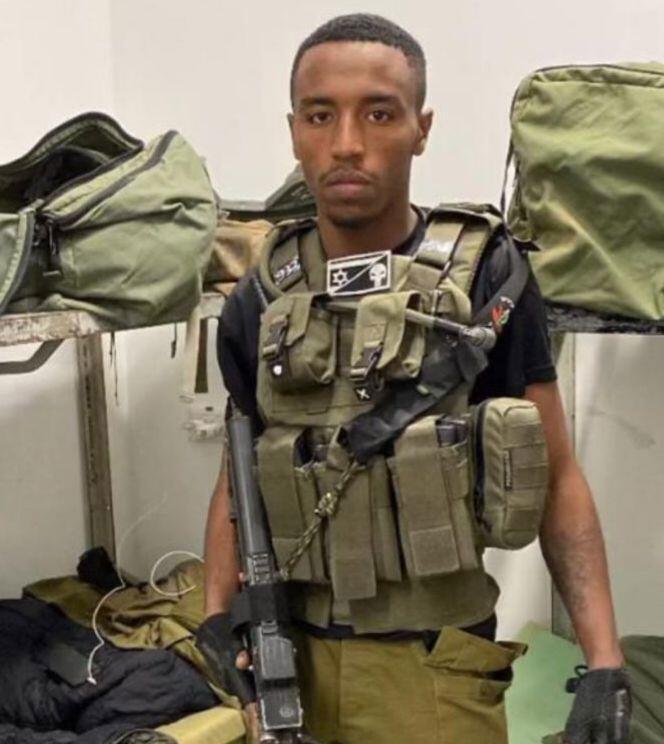
Ynet News · IDF
The story
The reddish dust of Be'er Sheva was the first thing Chalchao Shimon Demlash truly remembered, dust that clung to his skin, to his clothes, that entered his nostrils with every deep breath of clean desert air, yet also dust that was an inseparable part of his home, his life, and the landscape unfolding from the third-floor window of their old building in the bustling Neighborhood D. He was born into a family that had immigrated from Ethiopia years earlier, a family that carried within it the scents of roasted coffee, the rolling sounds of Amharic, and the stories of a long, arduous, yet hope-filled journey to Jerusalem, to the Land of Israel. His parents, traditional and quiet, raised him and his brothers and sisters within a supportive community where every neighbor was a bit of a relative, and every holiday was a reason for a large gathering, for laughter, for the potent aromas of spices, and for stories that repeated themselves again and again, like a familiar lullaby. In their small home, Shimon grew into a world of clear values – respect for elders, helping others, unwavering diligence, and a deep love for family and tradition.
In his childhood, Shimon was a curious boy, with large, dark eyes that absorbed every detail of his surroundings. He loved to wander the neighborhood alleys, discovering hidden corners between the buildings, climbing solitary pecan trees in neglected yards, and dreaming. The heat of Be'er Sheva, often unbearable, did not deter him. He learned to love the light afternoon breeze, the long shadows cast by the buildings on the sidewalks, and the unique quiet of the desert as the city fell asleep. One of his strongest childhood memories was the sound of his father, who would sit in the evenings on the faded living room sofa, telling stories about the village in Ethiopia, about the green fields, the rushing rivers, and the unwavering faith that had guided them all the way. Shimon would sit mesmerized, imagining himself running through those fields, breathing that air, even though he had never set foot on Ethiopian soil. These stories instilled in him a deep sense of belonging, a long history, and a journey shared with his people. He didn't speak much, but he listened intently, absorbing every word and phrase. His mother, a gentle yet strong woman, was usually in the kitchen, preparing the traditional Ethiopian bread, injera, and the smells of fermenting dough and fresh coffee filled the house, becoming for Shimon the scent of home, the scent of security and love.
At elementary school, Shimon excelled in his ability to learn and absorb knowledge, but also in his kindness and willingness to help his friends. He wasn't a natural leader, but he was a central and respected figure in his group, someone you could rely on, who kept secrets, and who would always lend a hand. On the neighborhood football pitch, amidst broken concrete blocks and faded graffiti walls, he would run tirelessly, sweating his soul out, but always with a small smile at the corner of his mouth, even when his team lost. He quickly learned that nothing came easily, that you had to work hard for every achievement, and that perseverance was the key to every door. During these years, he developed a great love for computer games, an entire world that opened up to him, offering an escape into complex virtual realities, but also a way to develop quick thinking, strategic planning, and teamwork – qualities that would serve him in entirely different contexts later in life. He would spend long hours in front of the screen, analyzing situations, refining tactics, and communicating with friends through headphones, laughing and planning the next move. School wasn't always easy, but Shimon always found a way to overcome difficulties, whether with the help of dedicated teachers who saw his potential, or with the encouragement of his older brothers who pushed him forward and served as role models.
As he moved on to junior high and high school, Shimon's world expanded further. He began to take an interest in Israeli politics and society, to understand the complexity of the country in which he was born and raised. He would sit for hours with friends in small cafes in the city center, debating current affairs, expressing his thoughtful and reasoned opinions. He developed a strong sense of justice and detested injustice and discrimination. His friends loved his quiet yet profound presence, his ability to truly listen, and to offer sincere and honest advice. He wasn't the loudest in the group, but rather the quiet anchor, the one who calmed tensions and offered a different perspective. During these years, he also began to train regularly at the gym, developing his body, feeling his strength grow. The rigorous workouts taught him self-discipline, perseverance, and the ability to push himself to the limit, even when it hurt. He loved the feeling of satisfaction after an intense workout, the aching muscles that spoke of hard work, the slow but sure progress. He dreamed of the army, of meaningful service, of contributing to the country that had welcomed his family with open arms. This dream burned within him, and he knew it was the next step in his life's journey, the step that would turn him from a boy into a man.
The preparations for his enlistment were filled with excitement and anticipation. Shimon dedicated all his energy to fitness training, reading military history books, and consulting with former commanders from the neighborhood. He wanted to be a combat soldier; he wanted to contribute his part in the most significant way possible. When he received his call-up order to serve in Battalion 932 of the Nahal Brigade, his heart swelled with pride. The Nahal, an elite infantry brigade, was considered the spearhead of the IDF, and he knew it was precisely the framework in which he could realize his potential. He said goodbye to his parents with a long embrace, soaked in his mother's quiet tears and his father's proud gaze. "Take care of yourself, my son," his mother whispered, stroking his cheek. His father simply placed a heavy hand on his shoulder and said, "Be a man, Shimon. Be strong. Be honest." These words accompanied him every step of the way throughout his military service.
Basic training in the Nahal was intense, physically and mentally exhausting, yet Shimon found challenge and satisfaction in it. He learned to strip and assemble his weapon with his eyes closed, to crawl through mud and thorns, to run with heavy weights on his back, and to sleep two hours a night in cold, wet terrain. He discovered strengths within himself he never knew existed. The desert, which had been his home in Be'er Sheva, now became a vast training ground, where every rock and every bush was part of his learning journey. He quickly bonded with his teammates, guys from all corners of the country, with different stories, different accents, but with a common goal. They became a second family, a true blood bond forged under scorching sun and freezing cold, through laughter and tears, hardship and camaraderie. Shimon, with his quiet and inclusive nature, quickly became a pillar in the team. He was the one who always looked out for the weaker ones, who always offered help, who was always ready to listen. "Chalchao," his friends called him, a shortening of his long name, and the nickname stuck, a sign of closeness and affection. He loved that name, which reminded him of his roots and his family heritage.
In his combat path, Shimon excelled in tactical drills, shooting, and navigation. He possessed an excellent sense of orientation and composure under pressure, qualities that were essential for an infantry soldier. His commanders quickly recognized his potential and saw him as a future commander. He himself didn't think about ranks, but only about fulfilling the mission in the best possible way, about protecting his friends, about protecting home. He learned to know every screw in his weapon, every stitch in his combat uniform. He understood that the small details were what made the difference between life and death. When he returned home for short leaves, Be'er Sheva looked different to him. The quiet and routine were in stark contrast to the adrenaline and constant alertness of the army, but he loved returning, tasting his mother's food, sitting with his parents in the living room, and telling them about his experiences, carefully of course, without worrying them too much. His friends from the neighborhood would welcome him warmly, interested, proud. He would sit with them for hours, talking about life, about future plans, about wanting to start a family, to study at university, to continue contributing to society.
Upon completing their training, Shimon and the rest of his team were assigned to Battalion 932, where they began their operational activities. They underwent specialized training for urban warfare, guerrilla combat, and guarding the country's borders. Shimon was a professional, thorough, and meticulous soldier. He left nothing to chance, always checking his equipment three times, always ensuring his friends were ready. He saw the big picture, the heavy responsibility resting on his shoulders and those of his comrades. He understood that they were the wall protecting home, protecting families, protecting the people who lived in peace and quiet, thanks to their hard work. He loved the sense of belonging, the meaning of being part of something larger than himself. He matured quickly; operational experience taught him important lessons about life, about death, and about the value of human existence.
October 7, 2023, shook the entire country, and Shimon, like every soldier in the IDF, felt that tremor deep in his gut. He remembered the harsh images, the cries, the incomprehensible need to defend. He was then in the midst of an operational deployment in another sector, and already in those first days of the war, his battalion was quickly diverted to the Gaza sector. He fought with determination, day after day, week after week, month after month. He saw friends wounded, saw friends fall. He felt the pain of bereavement, the sense of loss, but also the unwavering resolve to continue, to win. The WhatsApp messages from home were short, filled with worry and love. "Shimon, eat well, sleep, take care of yourself, we love you," his mother wrote. "Brother, be strong, we're waiting for you home," his older brother wrote. He would reply with "Everything's fine, don't worry," accompanied by a heart or strength emoji, trying to reassure them, even though he too knew that the situation was far from "fine."
Operational service under constant fire, facing a cruel and sometimes invisible enemy, hardened Shimon even further. He became an experienced, professional, quiet, and focused fighter. He learned to read the terrain, to understand enemy movement, to identify traps and explosive devices. He was part of a team that operated extensively in the northern Gaza Strip, an area that served as a terror stronghold, where many tunnels and complex combat zones were hidden. They entered and exited the Strip many times, conducting raids, clearings, preventing attacks, and searching for terror infrastructure. With each entry, his heart pounded fiercely, the tension was palpable in the air, but his determination was stronger than any fear. He knew why he was there, knew their objective, and knew they were doing the right thing, the necessary thing.
In the days leading up to his fall, Shimon was in the midst of an intense operational period. Battalion 932 was operating in the northern Strip, in areas where fighting had reignited with great intensity. They entered complex territories where every house, every alley, could have been an ambush. The tension was constant, fatigue accumulated, but the fighting spirit remained firm. On the evening of September 23, 2025, the day before he fell, he sent a short message to his brother: "We're going in again. Be strong. Love you." This was his last message. He sat with his teammates in a final briefing before the entry, checking his equipment repeatedly: combat vest, helmet, loaded weapon, extra magazines, radio, water. He felt the familiar weight of the equipment on his body, a weight that had become an inseparable part of him. His eyes scanned the faces of his friends, searching for that same determination, that same faith. He found it. They were a team, and they trusted each other wholeheartedly.
At dawn on September 24, 2025, the 2nd of Tishrei 5786, Shimon's force set out for an operational activity in the northern Gaza Strip. The objective was to clear suspicious buildings from which fire and rockets had been launched in recent days. The air was thick with dust and the smell of gunpowder; the silence before the storm was tense, almost noisy. They advanced cautiously, house after house, alley after alley. Shimon was at the front of the force, his eyes scanning every corner, every shadow. They entered a multi-story building, which, according to intelligence, served as an observation point and launch area. The soldiers advanced carefully up the stairs, every step measured. Suddenly, intense gunfire erupted from one of the rooms. The force engaged in battle. Shimon, with incredible composure, returned fire, covering his friends, identifying the source of the shooting and directing his comrades towards it. He leaped forward to gain a better position, to allow the force to advance and neutralize the threat. In those critical moments, he did not think of himself, but only of the mission, of his friends, of the need to protect them. He fired, advanced, fired again, and it was a moment of supreme heroism, of pure self-sacrifice. He succeeded in neutralizing one of the terrorists, but then, from a blind corner, additional fire was directed at him. He was hit.
His teammates rushed to him, calling his name, trying to provide him with initial medical treatment, but the injury was fatal. Shimon's eyes closed, and he fell in battle, just 21 years old, a heroic fighter in Battalion 932 of the Nahal Brigade. He fell while protecting his friends, while defending his homeland, while fulfilling the oath he had carried in his heart since he was a small boy in Be'er Sheva, dreaming of a better future. The sounds of gunfire did not immediately cease, but for his friends, that moment seared their souls. They continued to fight, determined to avenge his blood, to complete the mission Shimon had begun. They extracted him under fire, and brought him home, to his grieving family, to the city that knew and loved him.
The news of Staff Sergeant Chalchao Shimon Demlash's fall struck Be'er Sheva like a bolt from the blue. His family, who were his entire world, gathered in their home, broken and in pain, but also proud. His parents, brothers, and sisters received the difficult news, and immediately the house filled with people – relatives, friends, neighbors, commanders, and soldiers, all came to pay their last respects to the son of the city, to the young fighter who gave his life. The grief was deep and painful, but within the pain, there also arose immense pride for the son, for the brother, for the friend, who was a true hero. He was a role model, a symbol of determination, courage, and love of the land.
Chalchao Shimon Demlash, of blessed memory, left behind a huge void, but also a glorious legacy. A legacy of a humble and powerful man, who saw his path clearly, who followed it courageously, and who was willing to sacrifice everything for the people he loved and for the country he believed in. He was the son of Be'er Sheva, the fighter of the Nahal, the hero of the War of Revival. His memory and deeds will continue to live on in the hearts of all who knew him, and in the story of heroism of the entire people of Israel. His name will be written in the annals of the state, alongside those who fell for its freedom and security, a living, breathing memory of a man who was a great light, even when extinguished prematurely, leaving behind a trail of light and hope.
In the media
Articles
- Friends of the Fallen Soldier from Be’er Sheva Are Raising Money for His Family: “A Legacy of Brotherhood”
וואלה שבע דרום ·
- “He Kept Fighting for His Close Friend Who Had Been Killed”: Staff Sergeant Chalchao Shimon Demelash’s Funeral Held
וואלה ·
- IDF soldier killed in Hamas sniper attack on Gaza City guard post
The Times of Israel ·
- IDF combat soldier Chalachew Shimon Demalash killed by sniper fire in Gaza City fighting
The Jerusalem Post ·
- Sniper Tragedy: Final Promise of Fallen Soldier Revealed at Heartbreakin - JFeed
jfeed.com
- Staff Sergeant Chalchao Shimon Demelash, Who Fell to Sniper Fire in Gaza, Laid to Rest in Beersheba | Israel Hayom
ישראל היום
Memorial sites
- Yizkor — Staff Sergeant Chalchao Demelash
משרד הביטחון - יזכור
- Chalchao Shimon Demelash | IDF
אתר צה״ל
Memorial projects
His friends in the Granite Battalion initiated a campaign to support the Demelash family as part of a support framework for the battalion’s bereaved families. One million shekels was the fundraising target in the article, not a verified amount raised.
Stories told about them
Yarden, his former counselor at the youth center in Beersheba, said that he loved cooking and baking and would make dabo, traditional Ethiopian bread, for his friends. She said he prepared for combat service with training and determination.
Life & service
Service
- Rank
- Staff sergeant
- Unit
- Nahal Brigade
- Battle Location
- In the northern Gaza Strip
Family
- Father
- Mulat
- Mother
- Shashto
Burial
Cemetery
Beersheba Military Cemetery
Tributes & remembrance
יהי זכרך ברוך.
גיבור ישראל.
תודה על המסירות וההקרבה הגדולה.
מעדה קטנה שקנתה בדם מקום של כבוד בהיכל הגבורה של ישראל.
מקווה מאוד שאנחנו ראויים.
A brave boy with a captivating smile, a good friend you could not ignore. He would make you laugh.
Source:וואלה
Read the Hebrew original
ילד אמיץ, עם חיוך כובש, חבר טוב שאי אפשר היה להתעלם ממנו. הוא היה מצחיק אותך.
Chelchao Demelash, of blessed memory, was a beloved son, brother and friend, who always radiated warmth, camaraderie and courage
Source:sheva7.walla.co.il
Read the Hebrew original
צ'לצ'או דמלאש ז"ל היה בן, אח וחבר אהוב, שתמיד הקרין חום, רעות ואומץ לב
You were our sergeant, our platoon's sergeant.
Source:ישראל היום
Read the Hebrew original
היית הסמל שלנו, של המחלקה.
You were quiet and modest
Source:ישראל היום
Read the Hebrew original
היית שקט וצנוע
He was an anchor for his group of friends.
Source:וואלה
Read the Hebrew original
הוא היה עוגן לחבורה שלו.
a brave, modest soldier with a big smile and a huge heart.
Source:The Times of Israel
Remembrance Day addresses
יום הזיכרון לחללי מערכות ישראל התשפ"ה – 2025
בכל יום שעובר, אזכור יותר! אזכור, את אלו שיצאו עימי לקרב ולא שבו, ולהם אין מי ידמה ומי ישווה. אזכור, שהכאב לא יעבור לעולם, והזמן, הוא לא מרפה ולא מרפא. אזכור, את שיברון הלב הגובר ואת הבית שבוער. אזכור, את צדקת הדרך, ואשבע שוב, שמה שהיה לא יהיה יותר. אזכור, שיותר מכל דבר אחר – אני חסר! ביום הזה, אני נתקף געגוע לדמותם, לחיתוך דיבורם, לחיוכם, ומדליק נר לזיכרון דרכם ומורשתם!
משרד הביטחון
אגף משפחות, הנצחה ומורשת
יום הזיכרון לחללי מערכות ישראל התשפ"ה – 2025
בכאב, בהצדעה ובתקווה אני מתכבד להדליק נר זיכרון זה. השנה, כשאנו נלחמים במלחמה ארוכה, רב זירתית וצודקת, הזיכרון נושא משמעות עמוקה. ביום זה נעצור ונתייחד עם זכרם של טובי בנינו ובנותינו שנפלו בהגנה על המדינה. מורשתם היא המצפן שמתווה את דרכינו, והיא המעניקה לנו כוח להמשיך ולהגן על מדינת ישראל ותושביה. משפחות יקרות, אנו מרכינים ראשנו ומתחייבים שנעמוד לצידכן תמיד. יהי זכר הנופלים ברוך.
אלוף דדו בר כליפא
ראש אגף כוח האדם, צה"ל
יום הזיכרון לחללי מערכות ישראל התשפ"ה – 2025
בשעה שאנו זוכרים את גודל תרומתם ועומק מסירות נפשם של טובי בנינו ובנותינו, נופלי מערכות ישראל לדורותיהן, ממשיכים צה"ל וכוחות הביטחון במימוש המשימה למענה לחמו ועבורה נפלו: הכרעת אויבינו מדרום, מצפון, ביהודה ובשומרון, וגם בזירות רחוקות יותר. בהערכה רבה ובגאווה אדירה אנו מרכינים ראש בפני הנופלים והנופלות, מאמצים את משפחותיהם אל לבנו, וממשיכים במשימה להבטחת קיומה של ישראל לדורי דורות. יחד נעשה ונצליח.
רב אלוף אייל זמיר
הרמטכ"ל, צה"ל
יום הזיכרון לחללי מערכות ישראל התשפ"ד – 2024
כאשר דגלינו מורדים לחצי התורן וראשינו מורכנים לזכר הנופלים והנופלות במערכות ישראל, ממשיכים לוחמי צה"ל ומפקדיו בלחימה בדרום, בצפון, ביהודה ובשומרון ובזירות נוספות. על כל דור מוטלת המשימה של הגנת העם והארץ – משימה שאף פעם אינה פוסקת. נצדיע בגעגוע ובגאווה לנופלים ולנופלות, נחבק את משפחותיהם, ונמשיך ברוח הציווי שהותירו לנו. עם ישראל חי.
רב ניצב יעקב שבתאי
המפקח הכללי, משטרת ישראל
יום הזיכרון לחללי מערכות ישראל התשפ"ד – 2024
אחיי הנופלים, כל נר הוא זיכרון יחיד ומיוחד, על חיים שהיו ואינם, געגוע שנצרב עמוק בלב, עולם ומלואו. הנרות כולם הם זיכרון של אומה כי לעולם לא עוד, בשורת הציונות וקוממיות ישראל. זיכרון כי הדרך לעם חופשי בארצנו עוברת דרך מסדר הנופלים. אור הנר יזכיר לנו את מסירות נפשכם להציל חיים, להגן על הבית. הנרות מסמנים לנו נתיב גבורה ערכי מחייב שאנו מצווים ללכת לאורו. נמשיך להילחם ולהוסיף אור מתוך אמונה בנצח ישראל.
יואב גלנט
שר הביטחון
יום הזיכרון לחללי מערכות ישראל התשפ"ד – 2024
בהצדעה ובכאב, בשם צה"ל כולו, אני מדליק נר זיכרון. בעיצומה של מלחמה, הזכרון נושא משמעות יום-יומית, שעבר והווה מתלכדים בה. לאורם של הנופלים נמשיך לצעוד, חיילי הסדיר והמילואים. לאורם של הנופלים נמשיך להגן על ארצנו ועל מולדתנו, גם כשהמחיר כבד. להבת-הזכרון תבער בנו בעודנו ממשיכים להלחם ונזכור את הנופלים ואת אומץ ליבם. משפחות יקרות, צה"ל מרכין היום ראש, מצדיע לכן וכואב איתכן. יהי זכר הנופלים ברוך.
אלוף יניב עשור
ראש אגף כוח האדם, צה"ל
יום הזיכרון לחללי מערכות ישראל התשפ"ד – 2024
בהוקרה, בגאווה ובכאב שאין לו סוף, אני מתכבד להדליק נר לזכרם של הנופלים והנופלות במערכות ישראל. סיפור חייהם בארץ הזאת, מסכת שירותם, גבורתם והקרבתם – הם סיפורה של הארץ הזאת, אך גם סיפור המחיר הכבד שהיא תובעת מאוהביה. מחויבותנו לזכר הנופלים ולדרך שהותירו לנו ניצבת תמיד לנגד עינינו. את המשימה שלא זכו להשלים, משלימים כיום, וישלימו, אנשי כוחות הביטחון, הממשיכים בדרכם ולאורם. יהי זכרם של הנופלים ברוך.
משרד הביטחון
אגף משפחות, הנצחה ומורשת
יום הזיכרון לחללי מערכות ישראל התשפ"ד – 2024
בחרדת קודש אני מתכבד להדליק נר לזכרם של חללי מערכות ישראל, חברנו שנפלו, מראשית היציאה מהחומות ולאורך כל שנות עצמאותנו המדינית והציונית, מהווים תמרור זיכרון לדרך חיינו ולמחוייבות הלאומית להנצחת זכרם. דרכם נותרה דרכנו ומורשתם נר להמשך עשייתנו. יהי זכרם ברוך!
בני גנץ
שר הביטחון
יום הזיכרון לחללי מערכות ישראל
נזכור אותם, כולנו יחד. כל אחד ואחת מהם, מדי יום ביומו, והיום ביתר שאת, כך – לנצח. "כי מדי דברי בו זכור אזכרנו עוד"
משרד הביטחון
אגף משפחות, הנצחה ומורשת