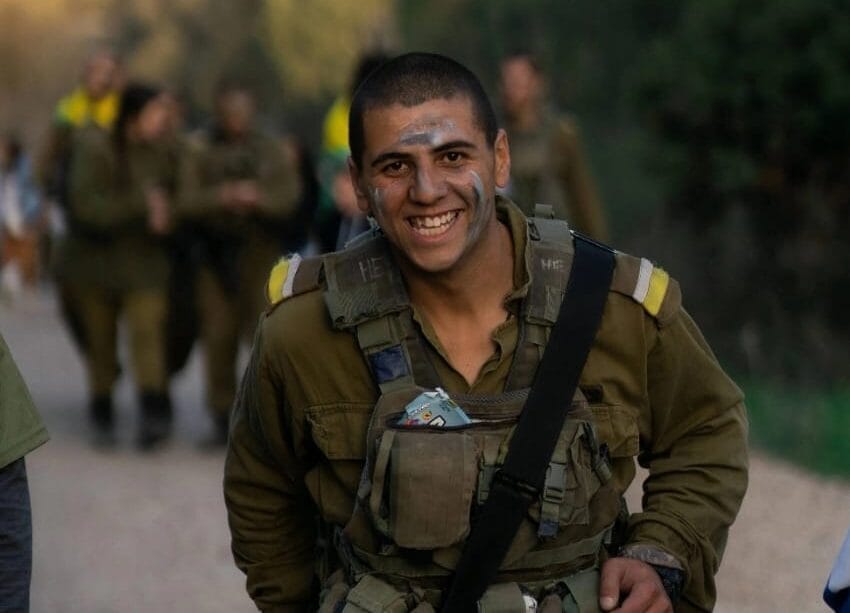
The story
In the bustling, vibrant streets of Rehovot in the early 2000s, nestled within the quieter alleys of Kiryat Kretshnif, where the constant aroma of freshly baked challah and Friday night roasts mingled with the sounds of Torah study emanating from synagogue windows and study halls, the story of Haim Meir Ady began to unfold. Into the warm, lively home of Inbal and Shalom Ady, a deeply rooted family who built their world on the foundations of profound faith in the land and its people, a son was born on the 23rd of Cheshvan, 5764, November 18, 2003. The moment Shalom laid his hand on his infant son during the Brit Milah, whispering the name “Haim Meir,” was accompanied by a powerful sense of continuity, blessing, and anticipation—for a life full of light, a life that shines brightly. He was not an only child, but part of a joyful band of siblings that grew and expanded over the years: Noam, Dvora, Yisrael, Elazar, and Hedva—six children who together formed a small, boisterous collective, each with a defined and unique place within the delicate family tapestry.
The home in Rehovot was the heart of an entire world. In the morning, as the first rays of sun peeked through the blinds, the kitchen filled with the scents of freshly ground coffee and simmering oatmeal. Inbal, a diligent and devoted woman, always made sure each child had what they needed, accompanied by a kind word and an encouraging smile. Shalom, for his part, was the quiet pillar, providing security and direction, with a deep gaze that told many stories even without words. Haim Meir grew up amidst all this, absorbing the home atmosphere, the relative quiet of Torah study alongside the sweet chaos of children’s games. He was a curious child, who loved to sit on a colorful rug in the living room, listening to stories his grandmother told about days gone by, about the journeys their families made in this land and the generations that preceded them. He learned from them about the importance of community, mutual aid, and the deep connection to the earth they walked on, not as an abstract idea, but as a living, breathing reality. When he was six, as was the family’s custom, he began his studies at the "Talmud Torah Bnei Moshe" in Kiryat Kretshnif. He stood at the classroom door with an oversized satchel on his back, his shy eyes scanning the full study hall, heavy wooden tables laden with ancient Gemara books, the smell of ink and old paper in the air. The melamed, a gentle rabbi, greeted him with a warm smile. Haim Meir, despite his initial shyness, quickly found his place. He would sit at the back tables at first, listening attentively to the melamed, trying to grasp the intricacies of the letters and words, and gradually, as he connected with the material, his shy smile would break through, slowly spreading across his face, and soon—a loud, rolling laugh, a laugh that bespoke inner joy and a good soul, a laugh that infected his classmates and became his hallmark.
His childhood years were a journey of discovery. Haim Meir was not just a diligent student; he was also a child who loved the open spaces, the small garden behind the house, where he would try to grow tomatoes or cucumbers, his small fingers getting dirty in the damp soil, under the warm Rehovot sun. He didn't call it "love of the land" in grand words, but felt it in his hands, in the direct connection to the earth, in the fresh scent that rose from it after watering. He loved to run with his brothers Noam and Yisrael, and his sisters Dvora and Hedva, in the neighborhood playground, imagining himself a brave knight or a daring explorer. In these games, even then, his inclination for excellence was evident. He wouldn't give up easily, always striving to be better, faster, smarter. But no less, he was the first to offer a hand to a friend who fell, to share the last candy, to offer help with homework. "Haim Meir," his mother would tell him one Friday evening, as he sat before the set table awaiting Kiddush, "your joy is the light of our home. Don't forget to bring it with you every day." And he did. He made sure to greet everyone he met with a cheerful face, to ensure that even the most reserved person felt seen, heard. He was the one who remembered a distant uncle's birthday, the one who asked after the elderly neighbor, the one who noticed small details others missed. He didn't do it out of obligation, but out of an inner naturalness, out of a genuine desire to spread goodness.
As he grew, his unique personality solidified. His teenage years brought new challenges, big questions about the future, about his path. Haim Meir saw his friends continuing on the familiar paths of the Torah world, some marrying young, others deepening their studies in advanced yeshivas. He loved the world of Torah, appreciated it from the depths of his heart, but within him burned another fire, a sense of purpose that connected him not only to the written words in books, but also to the land itself, to the borders, to the daily reality of the nation's existence in its land. "Father," he once said to his father, as they sat together on a Shabbat night after the meal, his voice low and thoughtful, "I feel I need to contribute in a different way. Not just through study. I want to protect what we have here, this home." Shalom Ady listened, his eyes scrutinizing his son. He saw the seriousness, the determination. "Haim Meir," Shalom replied, "our family believes in the Land of Israel. We believe in the need to fight for it. If this is your path, we are with you. We will support you in any path you choose, as long as it is a path of truth." This simple yet powerful statement was an enormous tailwind. His family, a Haredi family with a deep connection to the land and religious Zionism, saw no contradiction between the world of Torah and military service. On the contrary, they saw it as another way to fulfill the mitzvah of loving the land and defending it.
The decision to enlist in the IDF, especially as a combat soldier, was for him a path of mission, sacrifice, and love of the land. He didn't want easy service, didn't want to shy away from the challenge. He wanted to be on the front lines, to feel an integral part of those who protect the home. The path there was not simple. He fought with all his might to serve as a combat soldier. Initially, his enlistment date was postponed, and his medical profile did not allow him to serve in a combat unit. Many others might have given up, accepted their fate, but not Haim Meir. He saw it as a challenge, not an insurmountable obstacle. He embarked on a long and exhausting personal and bureaucratic journey. Intensive fitness training, visits to specialist doctors, endless conversations with the recruitment office. He worked hard to improve his physical condition, to adapt himself to the high demands of field units. "There's no way I'm giving up," he told his sister Dvora, returning from one of his grueling runs, his face flushed with effort but his eyes gleaming with determination, "I will be a combat soldier. That's what I feel I need to be." His parents, Inbal and Shalom, were by his side every step of the way. They helped him in his struggle, accompanied him to meetings, encouraged him in moments of frustration. They understood the depth of his desire, the burning passion within him to serve meaningfully. They saw the sparkle in his eyes when he spoke of Golani, of the famed infantry brigade, the "Spearhead" brigade. He wanted to be part of the legacy, the ethos of Golani fighters—a brigade identified with courage, determination, and a deep connection to the land. His struggle succeeded. After much effort, repeated examinations, and especially thanks to uncompromising perseverance, his medical profile was raised, and the dream of serving in Golani became a reality.
On Thursday, March 31, 2022, Haim Meir bid an emotional farewell to his family. The morning was cool, but the sun had already begun to climb above the buildings of Rehovot, promising a warm day. He wore his new uniform, feeling the weight of the fabric on his body, the new Golani patch his mother had carefully sewn on. "Take care of yourself, Haim Meir," Inbal said, her eyes moist but proud, as she hugged him tightly, "always remember where you came from, and always greet everyone with a smile." Shalom patted his shoulder, "Go your way, my son. Be a true fighter, in every sense of the word." He boarded the first bus to basic training, and at that moment, the boy from Rehovot with the shy smile and rolling laugh, became an IDF soldier, a combatant in the Golani Brigade, Battalion 13. Basic training was tough, grueling, but Haim Meir thrived in it. He quickly found his place among his company mates, a group of young men from all walks of Israeli society, all sharing the same goal: to become fighters. He stood out not only for his physical abilities and determination, but also for the same character traits that accompanied him from childhood: the ability to be cheerful even in difficult moments, to pay attention to others, to maintain a good mood even when the body was tired and the spirit exhausted. "Haim Meir, how do you always smile?" a teammate once asked him, after a particularly long and exhausting march, as they sat on the ground with heavy equipment. Haim Meir smiled his shy smile, then burst into his rolling laugh. "Because there's no point in crying over what already hurts," he answered simply, "it's better to smile and think about how to move forward. And also, you know, if I don't smile, who will smile for you?"
He loved military life. He loved the structure, the discipline, the deep sense of belonging. He became a regular combat soldier, absorbing the spirit of the battalion, the glorious history of the Golani Brigade. He participated in grueling training, exercises in firing zones, long marches, observations on the borders. Every drop of sweat, every sore muscle, every sleepless night, was part of his journey to become a better fighter, a more effective defender of the people and the land he loved so much. He served on the line, among other places, at "Paga" outpost, also known as "Magen Be'eri," a strategic outpost located south of Nahal Oz, in the heart of the Gaza envelope. There, between the green fields of the kibbutzim and the tense security fence, his routine passed in the weeks leading up to the day of reckoning. The routine at the outpost was a blend of operational alertness and relative tranquility. Days of endless guard duty, observations of the fence, foot and vehicle patrols, alongside moments of respite in the dining hall, card games, deep heart-to-heart conversations with friends. He loved the atmosphere, the sense of a small family that formed among the fighters. He was the one who made sure to lift morale, tell a joke, offer help. "Haim Meir, you have kitchen duty today," his commander would tell him, "but first, check position 3, we heard noises." And he would perform every task diligently, efficiently, with the same attention to small details, understanding that every such detail could be decisive. He learned to love the desert landscape, the echoing silence of the Negev nights, the stars shining above the Gaza sky, the feeling that he was guarding something precious, something worth all the effort and risk.
And then came the morning of Shabbat, the 22nd of Tishrei, Simchat Torah 5784 – October 7, 2023. The morning began like any other Shabbat morning at the outpost. The quiet of the holiday, the fresh morning air, the sun slowly rising above the horizon, painting the sky in shades of pink and gold. Haim Meir and his company mates prepared for Shacharit prayers, some still tired from night watch, others already active, making coffee. Suddenly, at 6:30 AM, muffled explosions were heard, rapidly intensifying. Not a single shot, not a regular Qassam rocket – but a massive, relentless barrage of thousands of missiles and rockets fired from the Gaza Strip towards all areas of the country. Simultaneously, initial, disconnected, and incomprehensible reports began to arrive about a mass infiltration of terrorists. "Jump!" a command echoed through the outpost corridors. "Everyone to their positions!" Haim Meir, without a moment's hesitation, grabbed his weapon. The training, the drills, everything he had learned over the past year and a half, converged on this moment. He heard the shouts, the sounds of gunfire drawing closer, the explosions shaking the ground of the outpost. WhatsApp messages began to flood phones, some panicked, some desperate, from friends and family in the nearby kibbutzim. "Terrorists in our house!" "They're shooting at us from all directions!" "No one is helping!" His heart pounded fiercely, but he remained focused.
They went out to fight—a handful of soldiers against thousands of armed and trained terrorists who flooded the Gaza envelope, the kibbutzim, the outposts. The battle for "Paga" outpost was bloody, a fierce fight under heavy fire unlike anything seen before. Haim Meir and his comrades fought with supreme bravery, defending their positions, engaging dozens of terrorists, despite the overwhelming numerical advantage of the enemy. Bursts of gunfire came from every direction, grenades exploded, and the sounds of shouts and shots filled the air. He saw his friends falling, getting wounded, but continued to fight, to return fire, to defend every inch of ground. At a critical stage of the battle, as the terrorists pressed from all sides, and several of his comrades were severely wounded and needed urgent evacuation, Haim Meir made a split-second decision, a decision that reflected the essence of his personality: to sacrifice himself for others. He emerged from cover, exposed to enemy fire, to provide cover for the evacuation of the wounded. He fired long bursts at the terrorists, drawing their attention, allowing his friends to drag the wounded to safety. At that moment, completely exposed, he was hit by a terrorist's bullet. He was severely wounded. The pain was intense, sharp, but he did not lose consciousness. He knew he had to continue, to survive, not to give up.
Despite his severe injury, despite the blood loss, Haim Meir did not break. He gathered all his strength, the remnants of energy left in him, and struggled to evacuate himself. His goal was the outpost's dining hall, which was supposed to serve as a protected area and a collection point for the wounded. He crawled, meter after meter, leaving a trail of blood, clinging to every shred of hope. The path was long and agonizing, every movement brought indescribable suffering, but the thought of his family, his friends, the desire to live, propelled him forward. When he finally reached the dining hall, he found chaos and many wounded, a small medical team struggling to provide first aid under fire. He collapsed, but he was alive. He was quickly evacuated to the hospital, in critical condition, fighting for his life every moment.
Sixty-four days. Sixty-four long, tense days, full of hope and fear, during which Haim Meir fought for his life in the hospital. The entire family rallied for him. His parents, Inbal and Shalom, did not leave his bedside. They sat by him for long hours, days and nights, whispering words of love, telling him stories about home, about childhood, about Rehovot, about everything that awaited him when he recovered. His siblings came to visit him, each in their own way trying to give him strength. Noam whispered to him about soccer games, Dvora sang him childhood songs, Yisrael promised him that eventually they would build a big sukkah together, Elazar told him jokes, and little Hedva drew colorful pictures for him and hung them around his bed. They prayed, pleaded, watched every movement, every small change on the monitors. Every day that passed was a miracle, every breath a gift. The doctors did everything in their power, complex surgeries, intensive treatments, but the injury was unbearable. The shy smile, the rolling laugh, were now gone, replaced by a quiet, heroic struggle for every moment of life. Sixty-four days of prayer, of anticipation, of unending love.
But on the 26th of Kislev, 5784, December 9, 2023, after a stubborn and desperate struggle, the soul of Haim Meir Ady ascended to the heavens. He was twenty years old when he fell. The difficult news struck the family like a bolt from the blue, despite the long mental preparation. The grief was deep and painful, incomprehensible. He fell in battle, a hero of Israel, a hero of the family. After his fall, Haim Meir was promoted to the rank of Staff Sergeant, in recognition of his bravery and courage. He was laid to rest in the military cemetery in Rehovot, the land he loved so much and on which he grew up, the soil of the city where he was born and where he will rest forever. The funeral procession was a moving and powerful event, reflecting Haim Meir's unique character and the community from which he emerged. At the request of his father, Shalom, the funeral procession passed through the plaza of the great study hall of the Kretshnif Hasidim, the place where Haim Meir was educated and spent many hours studying Torah and praying. The sight was unforgettable: thousands of Hasidim, family members, friends, soldiers and officers from the IDF, stood side by side, paying their last respects to the young soldier. The Rebbe of Kretshnif himself accompanied Haim Meir on his last journey, accompanied by prayers and eulogies delivered with voices choked with tears. Near the study hall, the immense crowd stood for the recitation of "Kaddish," the voices of the mourners and escorts mingled, an ancient prayer carrying deep pain and also hope.
The family, broken and hurting, found strength to eulogize their son. "Our dear Haim Meir, hero of Israel, hero of the family," the family members said with trembling voices, tears streaming down their cheeks. "So many prayers, supplications, and anticipation for two whole months, every day, every moment, every second we thought that now you would open your eyes and smile your shy smile and we would hear your rolling laugh. We thought we would hear from you firsthand how you fought valiantly, how you stood with great courage against evil, but unfortunately, the Holy One, Blessed Be He, decided otherwise. Watch over us from above, be an advocate in prayer before the Creator of the World, that we may say enough to our troubles. We miss you very much." These words, spoken from the depths of the heart, expressed the depth of pain and the intensity of longing, but also the immense pride in their son, in his path, in his heroism. "We are very proud of our son Haim Meir," the family wrote in pain, "and love him boundlessly. His absence is felt in our home at all times, an absence that grows with each passing day." The home, once filled with Haim Meir's rolling laughter, his quietness during study, his illuminating presence, was now empty. This emptiness was not just a physical void, but a void in the soul, in the heart, a void that nothing could fill.
Yet, even from the brokenness, renewal emerged. The Ady family, despite their pain, decided to commemorate Haim Meir not only in their hearts, but through actions that would continue his path, his love for Torah, for the people, and for the land. They knew that Haim Meir would not want them to wallow in sorrow, but rather to continue to build, to create, to illuminate. In this spirit, a series of moving and meaningful commemorative projects were decided upon, reflecting the depth of his faith and his unique life journey. In the community synagogue in Rehovot, it was decided to place a magnificent Holy Ark in memory of Haim Meir, a place where Torah scrolls would be housed, a place of sanctity and prayer. This Holy Ark, built with love and dedication, will be a symbol of his spiritual presence, his deep connection to the world of Torah and tradition. Additionally, the family decided to build a Kollel in his name – a study hall where Torah would be learned and prayers offered, thereby allowing Haim Meir's soul to continue to shine through the learning of others. They also initiated the construction of a men's mikvah, to be called "Maayanot Haim" (Springs of Haim), as a source of purity and spiritual renewal for the community. And perhaps the most moving of all, it was decided to write a Sefer Torah in his memory, a Torah scroll that would contain all five books of the Torah, the backbone of the Jewish people. This Sefer Torah will be brought into a new synagogue, to be named "Heichal Haim Meir" (Haim Meir's Sanctuary), and will serve as a spiritual and Torah center that will perpetuate his name and legacy for generations.
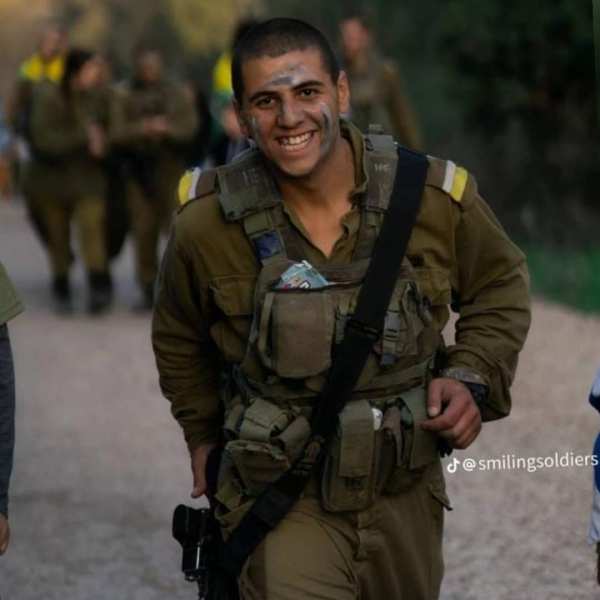
Alongside these commemorative projects, which were so dear to Haim Meir and his family, the city of Rehovot also remembered its heroic son. A poster in memory of Staff Sergeant Haim Meir Ady, with his smiling picture and the story of his heroism, was placed in a memorial installation in the Founders Park in the city. Thus, Haim Meir, the boy from Rehovot who loved the land, who became a Golani fighter with a shy smile and a rolling laugh, who loved his people and his land and gave his life for them, continues to live. He lives in the hearts of his family and friends, he lives in the stories of heroism whispered at his grave and in the words written about him. He lives in the Holy Ark, in the Kollel, in the Mikvah, and in the Sefer Torah written in his memory, which will illuminate the synagogue named after him. He lives in his legacy, a legacy of courage, endless devotion, love of humanity, and love of homeland. The story of Haim Meir Ady is the story of Israeli revival, a story of heroism stemming from the reality and humanity of one person who chose to defend his home, his people, and everything that was dear to him. And it will continue to echo, like a loud, rolling laugh, in the hearts of those who remain, in the memory of an entire nation, for generations to come.
Moments of a life
All photographs · 1
In the media
Articles
- Staff Sgt. Haim Meir Eden, 20: Golani soldier was ‘glue of the family’
The Times of Israel ·
- The bereaved father against Eretz Nehederet: I'm ultra-Orthodox; they need to apologize
ערוץ 14 ·
- The IDF announced the deaths of five soldiers
NEWSru.co.il ·
- 10 Hours of Fighting: The Battle for the Paga Outpost
ynet
- Thousands accompany Staff Sergeant Haim Meir Eden to his final resting place after he died following severe injuries sustained on October 7
ynet
- At a Moving Ceremony: A Community Mikveh in Rehovot Inaugurated in Memory of the Soldier, May God Avenge His Blood
COL
Memorial sites
- Yizkor — Staff Sergeant Haim Meir Eden
יזכור
- Staff Sergeant Haim Meir Eden, of blessed memory
בית״ר ירושלים
- Chaim Meir Eden — Memorial page
כאן 7.10.360
Memorial projects
A poster in his memory in the memorial installation at Founders’ Park in Rehovot.
The family decided to place a Torah ark for the elevation of his soul in the community synagogue in Rehovot, and to build a kollel named after him and a men’s mikveh called Ma’ayanot Chaim; the page does not confirm that all the plans have been completed.
A Torah scroll was written in his memory, intended for the Heichal Chaim Meir synagogue.
An article about the battle at the Paga outpost documents the completion of a Torah scroll in memory of the Golani soldiers who fell at the outpost, and Haim Meir Eden is explicitly included in the list of the fallen. This is a group commemoration; there is no assumption that this is the family’s Torah scroll.
Stories told about them
According to the family, Haim was wounded at the Paga outpost on October 7 and evacuated hours later to Assaf Harofeh Hospital. He fought for his life for about two months and died of his wounds on December 9.
Haim Meir postponed his enlistment and worked to raise his medical profile so that he could serve as a combat soldier. His parents supported his efforts, and he eventually enlisted in Golani's 13th Battalion on March 31, 2022.
Life & service
Profile
Service
- Rank
- Sergeant
- Unit
- Golani Brigade
- Honours
- Posthumously Promoted
Family
- Father
- Shalom Adi
- Mother
- Inbal
Burial
Tributes & remembrance
Hey Chaim, you were a nice guy, I loved you so very much!
Source:בית״ר ירושלים
Read the Hebrew original
היי חיים היית בחור נחמד אהבתי אותך עד מאוד!
I am an ultra-Orthodox father, I am a bereaved father. This bit was completely out of place
Source:ערוץ 14
Read the Hebrew original
אני אבא חרדי, אני אבא שכול. הקטע הזה לא היה במקום בכלל
A huge heart, an ever-present smile, you always put others before yourself
Source:בית״ר ירושלים
Read the Hebrew original
לב ענק חיוך תמידי ראית תמיד את האחר לפניך
I was privileged to be the father of a hero.
Source:The Times of Israel
Every day, every moment, every second, we thought that now you would open your eyes and smile your shy smile, and we would hear your rolling laughter.
Source:יזכור
Read the Hebrew original
כל יום, כל רגע כל שנייה חשבנו שהנה עכשיו תפקח את עינך ותחייך את חיוכך הביישן ונשמע את צחוקך המתגלגל.
Remembrance Day addresses
יום הזיכרון לחללי מערכות ישראל התשפ"ה – 2025
בכל יום שעובר, אזכור יותר! אזכור, את אלו שיצאו עימי לקרב ולא שבו, ולהם אין מי ידמה ומי ישווה. אזכור, שהכאב לא יעבור לעולם, והזמן, הוא לא מרפה ולא מרפא. אזכור, את שיברון הלב הגובר ואת הבית שבוער. אזכור, את צדקת הדרך, ואשבע שוב, שמה שהיה לא יהיה יותר. אזכור, שיותר מכל דבר אחר – אני חסר! ביום הזה, אני נתקף געגוע לדמותם, לחיתוך דיבורם, לחיוכם, ומדליק נר לזיכרון דרכם ומורשתם!
משרד הביטחון
אגף משפחות, הנצחה ומורשת
יום הזיכרון לחללי מערכות ישראל התשפ"ה – 2025
בכאב, בהצדעה ובתקווה אני מתכבד להדליק נר זיכרון זה. השנה, כשאנו נלחמים במלחמה ארוכה, רב זירתית וצודקת, הזיכרון נושא משמעות עמוקה. ביום זה נעצור ונתייחד עם זכרם של טובי בנינו ובנותינו שנפלו בהגנה על המדינה. מורשתם היא המצפן שמתווה את דרכינו, והיא המעניקה לנו כוח להמשיך ולהגן על מדינת ישראל ותושביה. משפחות יקרות, אנו מרכינים ראשנו ומתחייבים שנעמוד לצידכן תמיד. יהי זכר הנופלים ברוך.
אלוף דדו בר כליפא
ראש אגף כוח האדם, צה"ל
יום הזיכרון לחללי מערכות ישראל התשפ"ה – 2025
בשעה שאנו זוכרים את גודל תרומתם ועומק מסירות נפשם של טובי בנינו ובנותינו, נופלי מערכות ישראל לדורותיהן, ממשיכים צה"ל וכוחות הביטחון במימוש המשימה למענה לחמו ועבורה נפלו: הכרעת אויבינו מדרום, מצפון, ביהודה ובשומרון, וגם בזירות רחוקות יותר. בהערכה רבה ובגאווה אדירה אנו מרכינים ראש בפני הנופלים והנופלות, מאמצים את משפחותיהם אל לבנו, וממשיכים במשימה להבטחת קיומה של ישראל לדורי דורות. יחד נעשה ונצליח.
רב אלוף אייל זמיר
הרמטכ"ל, צה"ל
יום הזיכרון לחללי מערכות ישראל התשפ"ד – 2024
כאשר דגלינו מורדים לחצי התורן וראשינו מורכנים לזכר הנופלים והנופלות במערכות ישראל, ממשיכים לוחמי צה"ל ומפקדיו בלחימה בדרום, בצפון, ביהודה ובשומרון ובזירות נוספות. על כל דור מוטלת המשימה של הגנת העם והארץ – משימה שאף פעם אינה פוסקת. נצדיע בגעגוע ובגאווה לנופלים ולנופלות, נחבק את משפחותיהם, ונמשיך ברוח הציווי שהותירו לנו. עם ישראל חי.
רב ניצב יעקב שבתאי
המפקח הכללי, משטרת ישראל
יום הזיכרון לחללי מערכות ישראל התשפ"ד – 2024
אחיי הנופלים, כל נר הוא זיכרון יחיד ומיוחד, על חיים שהיו ואינם, געגוע שנצרב עמוק בלב, עולם ומלואו. הנרות כולם הם זיכרון של אומה כי לעולם לא עוד, בשורת הציונות וקוממיות ישראל. זיכרון כי הדרך לעם חופשי בארצנו עוברת דרך מסדר הנופלים. אור הנר יזכיר לנו את מסירות נפשכם להציל חיים, להגן על הבית. הנרות מסמנים לנו נתיב גבורה ערכי מחייב שאנו מצווים ללכת לאורו. נמשיך להילחם ולהוסיף אור מתוך אמונה בנצח ישראל.
יואב גלנט
שר הביטחון
יום הזיכרון לחללי מערכות ישראל התשפ"ד – 2024
בהצדעה ובכאב, בשם צה"ל כולו, אני מדליק נר זיכרון. בעיצומה של מלחמה, הזכרון נושא משמעות יום-יומית, שעבר והווה מתלכדים בה. לאורם של הנופלים נמשיך לצעוד, חיילי הסדיר והמילואים. לאורם של הנופלים נמשיך להגן על ארצנו ועל מולדתנו, גם כשהמחיר כבד. להבת-הזכרון תבער בנו בעודנו ממשיכים להלחם ונזכור את הנופלים ואת אומץ ליבם. משפחות יקרות, צה"ל מרכין היום ראש, מצדיע לכן וכואב איתכן. יהי זכר הנופלים ברוך.
אלוף יניב עשור
ראש אגף כוח האדם, צה"ל
יום הזיכרון לחללי מערכות ישראל התשפ"ד – 2024
בהוקרה, בגאווה ובכאב שאין לו סוף, אני מתכבד להדליק נר לזכרם של הנופלים והנופלות במערכות ישראל. סיפור חייהם בארץ הזאת, מסכת שירותם, גבורתם והקרבתם – הם סיפורה של הארץ הזאת, אך גם סיפור המחיר הכבד שהיא תובעת מאוהביה. מחויבותנו לזכר הנופלים ולדרך שהותירו לנו ניצבת תמיד לנגד עינינו. את המשימה שלא זכו להשלים, משלימים כיום, וישלימו, אנשי כוחות הביטחון, הממשיכים בדרכם ולאורם. יהי זכרם של הנופלים ברוך.
משרד הביטחון
אגף משפחות, הנצחה ומורשת
יום הזיכרון לחללי מערכות ישראל התשפ"ד – 2024
בחרדת קודש אני מתכבד להדליק נר לזכרם של חללי מערכות ישראל, חברנו שנפלו, מראשית היציאה מהחומות ולאורך כל שנות עצמאותנו המדינית והציונית, מהווים תמרור זיכרון לדרך חיינו ולמחוייבות הלאומית להנצחת זכרם. דרכם נותרה דרכנו ומורשתם נר להמשך עשייתנו. יהי זכרם ברוך!
בני גנץ
שר הביטחון
יום הזיכרון לחללי מערכות ישראל
נזכור אותם, כולנו יחד. כל אחד ואחת מהם, מדי יום ביומו, והיום ביתר שאת, כך – לנצח. "כי מדי דברי בו זכור אזכרנו עוד"
משרד הביטחון
אגף משפחות, הנצחה ומורשת