
The story
At eleven in the morning, as the July sunbeams flooded the children’s room window in the city of Samara, Russia, Boris Donetsky came into the world. It was the 29th of Tammuz 5762, July 9, 2002, and the world that received him was one of enveloping family warmth, rolling laughter, and endless curiosity. Yelena and Michael, his parents, saw in him from the very beginning a special spark, a little brother for Konstantin who was already waiting for him at home. Boris wasn't just any child; he was an inexhaustible wellspring of questions and ponderings, of ideas that flooded his small head, and of energy that seemed boundless. Even in his youth, the same determination that colored his entire life stood out—if he decided to learn to ride a bicycle, he wouldn't give up until he pedaled alone, without training wheels, even if his knees were scraped and tiny tears momentarily welled in his eyes. He yearned to succeed in all his endeavors, to pave his own way with courage and persistence, and this was a trait that captivated the hearts of those around him. His school friends, the neighbors in the building, his extended family—everyone loved Boris, his wide smile, his sparkling eyes when he grasped a new idea, and his readiness to dive into any adventure. The house in Samara was always full of music, the sounds of Russian conversations mingling with cooking smells from the kitchen, and Boris absorbed it all, imbibing the sense of belonging and warmth that shaped his character, both sensitive and strong. He loved the stories his grandparents told him on cold winter evenings, when snow covered the streets in pristine white, and the melodies that played in the background, connecting deeply with his soul without words.
As he grew older, Boris's connection to something beyond the borders of Samara, beyond the borders of Russia, strengthened. It was a connection planted by his great-grandfather, Michael, through his tales of heroism as a tank crewman in World War II, but also through conversations he overheard, perhaps from a film he watched, or a book he read—something about Israel, about Zionism, began to beckon him, to touch the strings of his soul. The desire to immigrate to Israel awakened in him with increasing intensity, and it wasn't just a child's wish, but a deep, considered decision of a young man determined to follow his heart. When he turned sixteen, in 2018, he made the fateful decision: he would move to Israel, alone, as part of the "Na'aleh – Youth Aliyah Before Parents" program. This program was designed to cater precisely to teenagers like him, who dared to abandon the familiar and secure and embark on a new life journey in a foreign land, without their parents by their side. The departure was difficult, entire nights of farewells where he hugged his parents and his brother Konstantin, promises of frequent phone calls and visits. The suitcase he packed was relatively light in possessions, but heavy with expectations, hopes, and the slight natural apprehension that gripped such a young man venturing alone into the unknown. The flight over the sea, over foreign continents, was long, but cushioned by excitement. When the plane landed at Ben Gurion Airport, the warm air, the dazzling sun, and the Hebrew language that surrounded him from all sides—all were a clear sign: he had arrived home. His heart pounded fiercely, and he knew this was just the beginning of a fascinating journey.
The first stop on his journey in Israel was the "Aloney Yitzhak" Youth Village, a place that combined a school, a boarding school, and an agricultural farm. For Boris, it was an entirely new world, and he plunged into it headfirst. He learned Hebrew with astonishing speed, as if it had been waiting for him around the corner. New words connected into sentences, his thick Russian accent softened little by little, and he found himself participating in conversations, telling jokes, and listening to stories, until his friends in the village testified that he had "become an Israeli." He thoroughly enjoyed the village life, the new friends he easily made, the trips through the green fields, and the family atmosphere created by the educational staff. At school, Boris excelled in his studies, especially in the sciences. He was drawn to the challenges of physics and mathematics, to solving complex problems, as if every formula or equation were a fascinating riddle waiting only for him to decipher. He loved the precision, the logic, the ability to understand the world through numbers and laws. Beyond his studies, he was a true friend, the kind who was always there, always ready to listen, to offer good advice, or simply to be a sympathetic ear for any distress or joy. Upright and fair, pleasant-mannered and kind, many sought his company, knowing they could rely on him. Alongside the seriousness and responsibility he displayed, he also possessed a sharp sense of humor, and often found himself making those around him laugh, diffusing tension with a small joke or a witty remark. He loved music and would play the drums for pleasure, rhythms that echoed through the dormitory corridors, freeing the soul and filling the space with rhythmic sounds. Through all these pursuits, he maintained close ties with his family in Russia, long phone calls with his parents and brother, in which he recounted his experiences and progress. Simultaneously, he made sure to meet with his uncle and grandmother, residents of Ariel, encounters that provided him with a warm family anchor within the new and exciting reality.
June 2021 arrived, and with the completion of his high school studies, Boris moved to the next stage of his Israeli journey: the "Harel" pre-military academy in Jerusalem. It was a sharp transition from the rural tranquility of Aloney Yitzhak to the vibrant and intense atmosphere of Israel's capital. At the academy, amidst strenuous hikes through the country's landscapes and in-depth discussions about Israeli society, values, and the meaning of military service, Boris's final decision regarding his military future crystallized. The stories of his great-grandfather Michael, a tank crewman in World War II, gained new significance there. The family legacy, which seemed to have been lost somewhere in the mists of the past, came to life and ignited a spark within him. He saw this not just as military service, but as a closing of a circle, a continuation of a path, and thus, with a full heart and great excitement, he decided to become a combat soldier in the Armored Corps. The decision was not easy; it required him to face physical and mental challenges, but he was determined, as he always had been. He imagined himself inside the tank, part of a combat team, defending the land he loved and chose as his home.
On March 28, 2022, on a clear spring day, Boris enlisted in the IDF. It was a moment of immense pride, for him and for his distant family. He was assigned to the Armored Corps, a childhood dream come true, and began the arduous training path. The training was tough, physically and mentally, but Boris endured it with courage and determination. The smells of diesel and dust, the constant roar of tank engines, the cold nights in the field, and the sweat that poured with effort—all became an inseparable part of his life. He learned to know the tank, its technical complexity, every bolt and every mechanism. At the beret march ceremony, a moving event marking the completion of basic training, held in Latrun Park, Boris received the coveted black beret from his company commander as a token of appreciation. It was a peak moment, a symbol that he had become a full-fledged armored combat soldier, an integral part of the tank crew family. He served in Battalion 46 of the 401st Armored Brigade, the "Iron Tracks" formation, in Company C. In the tank crew, he served as a loader, the soldier responsible for loading shells—a role requiring precision, speed, and composure under pressure. He loved military service, he loved the sense of purpose, and he especially loved the opportunity to meet many new people through it. "I enjoy the army," he told his friends and family in phone calls, his voice full of enthusiasm. "Many experiences. Really good people, truly great people. Before enlisting, everyone told me that the Armored Corps has golden people, and that's the truth. Yes, sometimes it's hard, but it's easier to cope when there are good people around. I'm really happy I'm serving in the Armored Corps." These words reflected his spirit, his ability to find the good even amidst difficulty, and the deep love he developed for his comrades in arms. His friends and commanders described him as a reliable, dedicated, and highly professional combat soldier who always strived for excellence. He performed his duties to the best of his ability, leaving his mark on every mission, whether it was target practice, refueling a tank, or assisting a friend. He was loved by all the soldiers, earning the nicknames "Boris the Man" and "Super Loader," epithets that testified to a deep appreciation for his abilities and personality.
As a lone soldier, Boris also found his place outside the base. He lived in a shared apartment in Kiryat Bialik, along with two other lone soldiers, Yaroslav being one of them. The small apartment, where they shared rooms and dreams, became a kind of home for them. During army leaves, when military fatigue gave way to a strong desire for civilian life, they went out together, watched movies, talked about life and the future. Boris found great comfort in cooking, loved experimenting with different cuisines, and the smells of shakshuka in the morning or pasta in the evening filled the apartment. He specialized particularly in preparing Thai and Japanese food, investing his whole soul in each dish, as if it were a culinary work of art. Beyond social life and cooking, during his leaves, Boris made a special effort to visit the "Aloney Yitzhak" Youth Village, the place where he grew up and was shaped. He missed the educational staff and teachers, and everyone who accompanied him in his first steps in Israel. He sat and talked with new students, told them about life in Israel, about his path in the army, and tried to encourage them in their absorption in the country, to share his experience, to show them that it is possible to succeed, to integrate, to fulfill dreams. He was a living example for them, a role model, a young man who came alone and became a combat soldier serving at the heart of the country.
After about a year and a half in the army, Boris began to plan his path after discharge. He didn't see himself stopping for a moment, always looking forward to the next challenge. His first dream was to take a big trip to the United States, to see the world, to experience new cultures, with San Francisco as his main destination—the city where he perhaps saw a symbol of freedom, innovation, and beauty. He imagined himself standing on the Golden Gate Bridge, breathing the cool ocean breeze, experiencing the city's unique culture. Afterward, he planned to return to Israel and study engineering at the Technion, the esteemed institution, to dedicate himself again to the world of exact sciences that he loved so much. He envisioned building his life in Israel, establishing a home, perhaps a family, integrating deeply into Israeli society. These were not just plans on paper, but dreams deeply etched in his soul, a roadmap for a bright and meaningful future in the country he had warmly embraced. He did not know, of course, that fate held entirely different plans, that his short life would conclude at a different, dramatic, and painful point.
The Sabbath of the 22nd of Tishrei, Simchat Torah 5784, October 7, 2023, began with Boris and his comrades training in northern Israel. It was six-thirty in the morning, and a magical calm still enveloped the world, a calm that was suddenly and violently shattered by an incomprehensible brutality. The Hamas terrorist organization launched a murderous surprise attack on Israel. Massive barrages of missiles and rockets from the Gaza Strip covered wide areas of the country, and under their cover, thousands of terrorists infiltrated—by land, sea, and air. They swept through the communities surrounding Gaza, through Sderot, Ofakim, and Netivot, massacred partygoers at nature festivals near Kibbutzim Re'im and Nir Oz, attacked IDF bases, and targeted travelers on the roads. The terrorists murdered some eight hundred civilians in their homes, in their cars, committed horrific crimes against them, abducted hundreds of Israelis to the Gaza Strip, and destroyed, looted, and set fire to homes and property. Hundreds of soldiers, police officers, security forces personnel, and members of local rapid response teams fell in battle. On that terrible morning, a war began. Boris and his company, who moments before were engaged in routine exercises, were immediately scrambled. WhatsApp messages flew through groups, phones rang incessantly, and tension hung heavy in the air. Within a few hours, they were transferred to combat in the Gaza Strip. The sense of urgency and the gravity of the situation were palpable. There were no superfluous words, only quick preparations, equipment checks, and boarding the tanks. With the start of the ground maneuver, the 401st Brigade, in which Boris served, was the first to enter the northern part of the Strip, already by the end of October.
His uncle, Alik, spoke about his meetings with his nephew after the war broke out, meetings laden with moving insights. "We saw a different person," Alik said, his voice breaking slightly, "very calm and self-assured. He was focused, knew where he was going, and what he was going to do." Boris, the smiling and funny teenager, had become a young man whose eyes reflected profound determination and seriousness. In their last meeting with him, they already saw a person who had not only been taught where he was going and what he was about to do, but "a person who had already been there, and knew exactly where he was returning." He went to a place he knew held real danger, yet he remained self-assured, and performed his job in the best possible way, with a professionalism and composure that surprised even his relatives. "This is an act of heroes," Alik concluded, his voice resonating with deep pride mixed with sorrow. In his conversations with Yaroslav, his friend and roommate, Boris did not elaborate on the fighting in Gaza. He knew Yaroslav was worried and tried to reassure him. "The IDF is working hard," he said briefly, and to ease the tension, added, "I'm not scared, it will be fine, we will definitely win." Such was Boris—always putting the mission first, before his personal well-being, never giving up, and continuing to do his job even at the risk of his life. He knew the magnitude of the responsibility resting on his shoulders, the meaning of being a combat soldier on the front lines.
Throughout the long and grueling days of fighting, Boris served as a loader at the head of the battalion's force, on the front line. He was the critical link in the tank crew, responsible for loading shells quickly and efficiently, under fire and while on the move. The tank in which he fought was hit twice by anti-tank missiles, impacts that could have been catastrophic. The first time, the deafening roar of the explosion filled the tank's interior, a burnt smell permeated inside, and the entire tank shook. The second time, it was almost identical, only this time the realization of what had happened was quicker, sharper. Fortunately, in both hits, there were no casualties, but hearts skipped a beat. After each hit, the crew quickly returned to the battlefield, largely thanks to Boris's developed technical sense, who knew how to fix some of the tank's malfunctions himself, allowing the crew to continue fighting without unnecessary delays. He was the right-hand man of the commander and driver, his eyes on the gauges, his hands swift and skilled. He knew that every second counted, that the lives of his comrades depended on his ability to function under immense pressure, and he performed the mission with bravery and uncompromising professionalism.
In early December 2023, a small moment of respite from the intense fighting allowed Boris to be filmed for a short video published on Battalion 46's Instagram page. In the video, with a small, tired but genuine smile, he wished a happy Hanukkah to all the people of Israel. "My name is Boris," he said in his quiet but clear voice, "I immigrated to Israel five years ago from Russia. Currently, I am a combat soldier in the 46th Armored Battalion. I wish everyone a happy Hanukkah." These simple words carried deep meaning—a young man who left everything, immigrated to Israel, and became a combat soldier defending the country. On that same occasion, he was filmed proudly describing the role of the Armored Corps in the fighting, the significance of being part of the breaching force. "There in Gaza, you see how it actually happens when you are the one conquering the territory," he described, "when infantrymen want you, and even commandos want you. For example, when we were in Shati [a refugee camp in the northern Strip], when we would go out to resupply for two, three hours, they wouldn't advance without us, and we were a significant part." He spoke of the immense feeling of impact, of being the backbone of the advancing force. "I felt the significance from the moment we crossed the fence. That we, essentially our brigade, are the first tanks, the first people, advancing there. Am Yisrael Chai!" His voice resonated with a sense of mission and pride, in words that expressed everything he believed in.
On the morning of December 17, 2023, in the early hours, Boris was called for another critical and complex mission: the rescue of hostages in the northern Gaza Strip. As usual, his tank was at the head of the force, leading the convoy, breaking through enemy territory. The tension was palpable, even if quiet. The combat soldiers knew the risk, but also the immense importance of the mission. During an encounter with terrorists, a fierce battle erupted. Suddenly, an IDF D-9 bulldozer, operating as part of the force, was hit, and the entire convoy stopped. Chaos ensued, gunfire was heard from all sides, and the battle flared to its full intensity. Boris, as the loader, acted swiftly and decisively inside the tank, loading shell after shell, trying to provide covering fire and protect the force. And then, at the height of the battle, the terrible explosion occurred. An explosive device and anti-tank fire struck the force. Boris was critically wounded. The explosion caused devastation, and several of his unit comrades were injured. At that moment, Boris Donetsky, Sergeant, fell in battle, only twenty-one years old at his passing. It happened on the 5th of Tevet 5784, on the cruel battlefield of the northern Gaza Strip, entirely dedicated to the mission, to the defense of the people of Israel.
The news of his fall struck all who knew him with shock. After his passing, he was posthumously promoted to Staff Sergeant, a tribute to his actions and bravery. He was laid to rest in the Kiryat Shaul military cemetery in Tel Aviv. His parents, Yelena and Michael, and his brother Konstantin, made their way from Russia, on a painful and arduous journey, to accompany their son and brother on his final path. The funeral was a heartbreaking event, but also a moving testament to the man he was. Hundreds came to pay their last respects—friends he had made in his five years in Israel, educators who had accompanied him at the "Aloney Yitzhak" Youth Village and the "Harel" pre-military academy, commanders and soldiers from the battalion, and also his crewmates who were wounded in that same battle and made every effort to attend, some on crutches, some with fresh physical and emotional wounds, all with immense pain in their hearts.
The eulogies delivered over his fresh grave were a testament to a full and meaningful life, a life cut short prematurely but leaving a deep imprint. His friends from the "Lotus" group at the "Aloney Yitzhak" Youth Village spoke with voices choked with tears: "Our dear friend, our brother. We can't grasp that we are writing these words for you. You will always be a ray of sunshine for us, the nicest person we knew. The most genuine and fairest person, who always supported and listened. We want you to know that you will always remain in the heart of each and every one of us. We will never forget you. We will meet and cook food and put our whole soul into it just like you would. Every time we see drums, we will go and hit them. Every time we hear a song you loved, we will remember how much you loved music. We will fulfill all our dreams just as you fulfilled yours—to immigrate to Israel and be an armored combat soldier. We will not look for easy ways in life, because you never did. You are our hero, you always were and always will be." Their words expressed the deep connection, the love, and the promise to continue his path.
Zohar, a coordinator from the "Harel" pre-military academy, eulogized him with a trembling but hopeful voice: "I want you to know that we will not forget you, that your path in life will continue to guide us. Now it is our mission to be a little more like Boris: to love, to smile, to truly rejoice, to lower our ego, to accept one another, to respect, to see the good, to live with humility and to say thank you for the small things." She described the moral legacy he left behind, the simple and pure humanity that was in him.
Boris's commander, with a cracked but steady voice, saluted him for the last time: "Throughout all the long days of fighting, you served as a loader in a combat team at the head of the battalion's force. Twice you were already shot at, but you did not give up and bravely charged the enemy. It is difficult to describe the magnitude of the void Boris left behind in his fall. In this difficult hour, on behalf of the IDF, on behalf of the commanders and soldiers of the 401st Armored Brigade, the commanders of Battalion 46 who are currently fighting, and also the past combat soldiers, I wish to share in the heavy grief and stand by the family. Boris, thank you for your actions, for the man you were. I salute you for the last time as a true combat soldier in the Armored Corps and the IDF." In these words resonated a deep appreciation not only for the combat soldier, but for the man, the spirit, and the choice that led him to the end of his path.
In the hearts of his parents and relatives, Boris will forever remain that young man who sometimes laughed and complained simultaneously, the one who loved to cook Thai food, played the drums, dreamed of San Francisco and the Technion, the one who loved life in every fiber of his being, and yearned to live it to the fullest. But he did not get to live it enough. He left behind a huge void, but also a legacy of courage, determination, devotion, and love of humanity and homeland. The story of Boris Donetsky, the boy from Samara who became an armored combat soldier in Israel, is a story of profound choice, of fulfilling a dream, and of supreme sacrifice. He is a symbol for an entire generation of new and veteran immigrants, of brave soldiers, who chose to defend their home at all costs. Boris's memory is cherished in hearts, inspiring, and charting a path of eternal Israeli resurgence and pride. He lives within us, in his stories, in his laughter, in his determination, and above all—in his unforgettable legacy.
Moments of a life
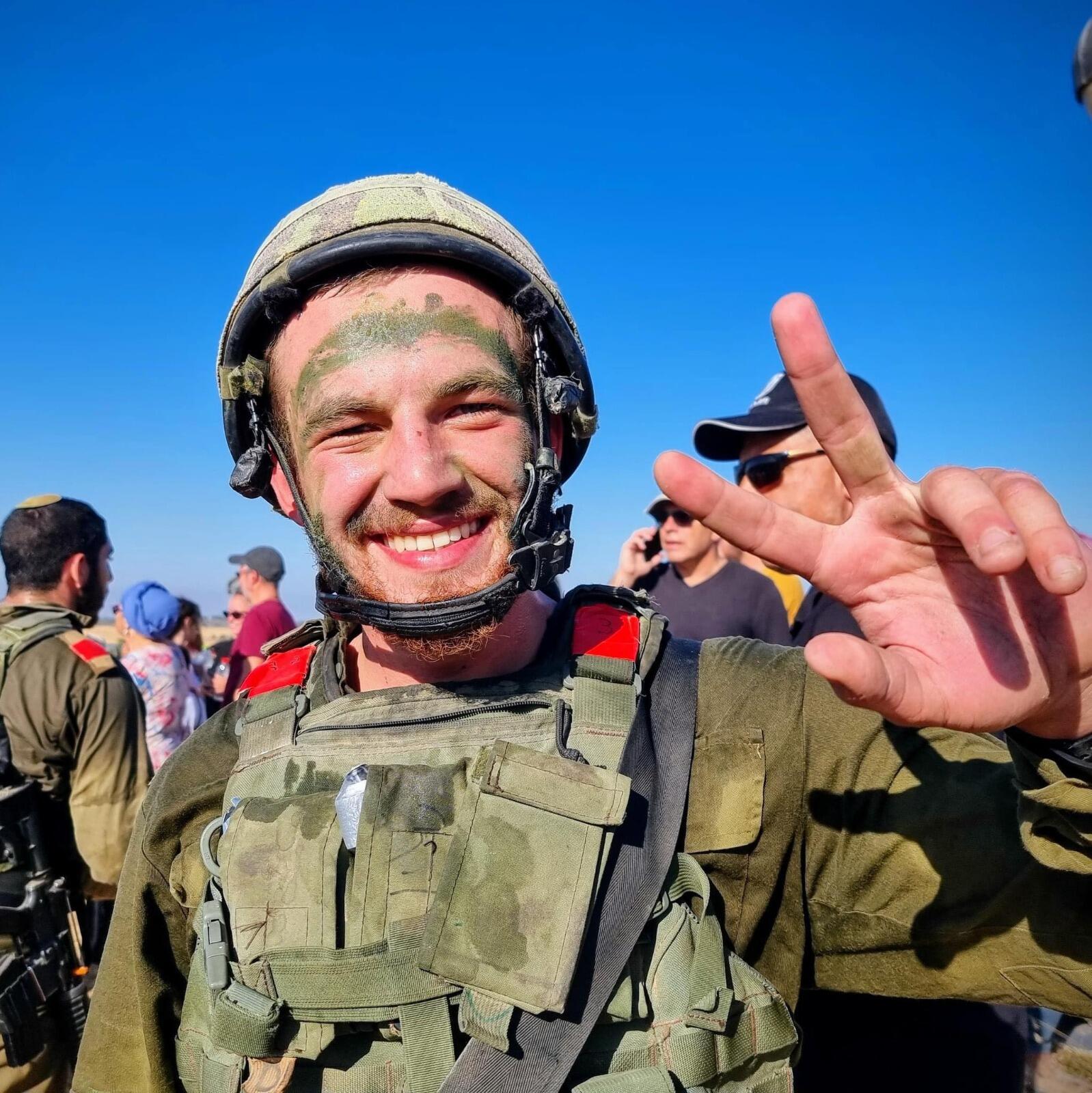
All photographs · 2
In the media
Articles
- Remembering One Fallen Soldier at a Time
The Times of Israel Blogs ·
- About a Thousand People Attended the Funeral of Lone Soldier Boris Dunavetsky: "You Never Stopped Dreaming, and You Knew How to Make Those Dreams Come True" - Davar News Website
דבר ·
- Boris Dunavetsky from Samara Killed in Gaza
TV Samara ·
Memorial sites
Memorial projects
The Anshe Chesed community in Linden, New Jersey, received a memorial plaque for Boris through B’yachad Lanetzach, dedicated Torah study and a mitzvah day to his memory, and kept in touch with his father. Rabbi Yossi and Emma Katz named their son Binyamin Yehuda after Binyamin Airley and Boris, according to the entry.
Employees of Gornitzky’s Corporate and Capital Markets department took part in establishing a memorial corner for Boris at Aloney Yitzhak Youth Village, which had welcomed him as a teenage immigrant.
Stories told about them
Boris immigrated alone from Russia through the Naale program and studied at Aloney Yitzhak and the Harel pre-military academy. According to his commander and the village director, he wanted to serve in the Armored Corps, inspired by his grandfather, who fought against the Nazis.
Life & service
Profile
- Date of birth
- July 9, 2002
- Birthplace
- Kiryat Bialik
- Date of death
- December 17, 2023
- Age
- 21
- Hometown
- Kiryat Bialik
Service
- Rank
- Staff sergeant
- Honours
- Posthumously Promoted
- Battle Location
- In northern Gaza Strip
Family
- Father
- Michael
- Mother
- Yelena
Burial
Tributes & remembrance
יהי זכרו ברוך.
יהי זכרו ברוך
יהי זכרו ברוך
אני לא יוקרתי אותך אבל סיפרו לנו בבית ספר שהוא היה איש טוב
זוכרת אותך איך הגעת לכפר, איך גדלת שם. היית אהוב, מצחיק, קרן שמש.
תודה ששמרת עלינו ועכשיו תשמור גם מלמעלה.
יהי זכרך ברוך
מתלמידי כיתה ב1 והמחנכת בית ספר מוריה חדרה
בוריס היקר האדם המיוחד אזכור אותך תמיד לעולם בליבי
גיבור ישראל
הי"ד
בוריס היית חבר טוב ולוחם מצויין מתגעגע אליך אחי היקר אוהב אותך לנצח
אנחנו מתגעגעים אליך מלך שלנו תשמור אותנו מלמעלה
יהי זכרו ברוך, שנהיה ראויים.
כמה חסר לנו החיוך שלך, טוב הלב שלך הקול הנעים, האהבה שפיזרת סביבך. תהיי נשמתך עדן.
מתגעגעים
בית אלוני יצחק
אחי היקר
מתגעגע
נזכור אותך לעד
בית אלוני יצחק
עם ישראל ,מדינת ישראל וצבא ההגנה לישראל
זכו בך, בוריס היקר,עם עלייתך ארצה.
תודה לך על שהיית שם בשביל כולנו .
כמה כואבת הקרבתך הנוראה מכל.
תנחומים לכולנו על ההפסד שנחלנו עם לכתך .
יהא זכרך ברוך,גיבור ישראל.
וואלה מתגעגע אליך אחי, כל פעם שאני רואה תמונה שלך או פוסט שעשית עליו לייק אני מקבל צביטה בלב עדיין לא תופס. אוהב המון ומקווה עוד לפגוש אותך בגלגול הבא.
תודה לך , בוריס היקר, על אהבת העם והארץ.
תודה לך ששמרת עלינו,במחיר היקר והנורא מכל.
תנחומים לכל מכריך.
יהא זכרך ברוך,גיבור ישראל.
הלב בוכה
תודה רבה לך שהייתה חלק מהחיים שלי ! תישאר בלב לנצח!!!
יהי זכרו ברוך
ערב יום הזיכרון התשפ״ד - 2024
לוחמי ומפקדי חטיבה 401, זוכרים ומזכירים את נופלי החטיבה, לומדים את סיפור חייהם והולכים לאורם.
״הַצְּבִי, יִשְׂרָאֵל, עַל-בָּמוֹתֶיךָ חָלָל אֵיךְ נָפְלוּ גִבּוֹרִים״
בוריס, למדנו באותו הכפר, לא הכרנו כי סיימתי כמה שנים לפניך. כמה חבל שלא הכרנו, חבר אמת, ילד מאיר, עמוק וחבר טוב. נכנסת ללב לתמיד.
יהי זכרך ברוך אמן
היה לי הזכות להכיר בן אדם כמוך ולשרת לצידך
בוריס זל פעל מתוך ציונות, הגיע לבדו לארץ והתגייס ליחידה קרבית. חבריך לפלוגה יזכרו איתך לעד! גיבור ישראל. יהי זכרך ברוך.
בוריה, אתה אלוף ותהיה לנצח בלב שלי אפילו אם לא היינו הכי קרובים
בוריס תמיד היה ותמיד יהיה בלב שלנו
יהי זכרו ברוך!
יהי זכרו ברוך
בוריס גיבור ישראל, חבר אמת לכל סובביו, אהוב ונערץ, אופטימי ונבון נכון לכל משימה, אמיץ ונחוש, מקצוען ומהיר תפיסה.
עלה ארצה לבדו והשתלב בצורה מהירה במסגרות ובחברה, מוזיקאי, היה נחוש להתגייס לשריון, ללכת בדרכי סבו. חייל מצטיין, אדם כשרוני, אבדה ענקית
יהיה זכרו ברוך. גיבור.
He never said anything was hard for him, and he had a heart of gold
Source:רדיו חיפה
Read the Hebrew original
הוא אף פעם לא אמר שמשהו קשה לו והוא היה בנאדם זהב
With your quiet confidence, you knew how to lift others up alongside you. People looked up to you, to your composure.
Source:דבר
Read the Hebrew original
בשקט ובביטחון שלך ידעת להרים אחרים יחד איתך. עיניים היו נשואות אליך, לקור הרוח שלך.
We saw a different person.
Source:וואלה
Read the Hebrew original
ראינו בן אדם אחר.
Boris had a strong connection to the village
Source:וואלה
Read the Hebrew original
בוריס היה מחובר לכפר
He died a hero’s death in battle in the Gaza Strip. May his memory be a blessing!
Source:TV Samara
You will always be a ray of sunshine for us
Source:יזכור
Read the Hebrew original
אתה תמיד תהיה עבורנו קרן שמש
Now it is our mission to be a little more like Boris
Source:יזכור
Read the Hebrew original
עכשיו זאת המשימה שלנו להיות קצת יותר בוריס
Through our volunteer work, we came to know the life story of Boris, of blessed memory, his legacy, his hobbies and the story of his death in battle
Source:Gornitzky GNY — LinkedIn
Read the Hebrew original
במסגרת פעילות ההתנדבות למדנו להכיר את סיפור חייו של בוריס ז"ל, מורשתו, תחביביו וסיפור נפילתו בקרב
Remembrance Day addresses
יום הזיכרון לחללי מערכות ישראל התשפ"ה – 2025
בכל יום שעובר, אזכור יותר! אזכור, את אלו שיצאו עימי לקרב ולא שבו, ולהם אין מי ידמה ומי ישווה. אזכור, שהכאב לא יעבור לעולם, והזמן, הוא לא מרפה ולא מרפא. אזכור, את שיברון הלב הגובר ואת הבית שבוער. אזכור, את צדקת הדרך, ואשבע שוב, שמה שהיה לא יהיה יותר. אזכור, שיותר מכל דבר אחר – אני חסר! ביום הזה, אני נתקף געגוע לדמותם, לחיתוך דיבורם, לחיוכם, ומדליק נר לזיכרון דרכם ומורשתם!
משרד הביטחון
אגף משפחות, הנצחה ומורשת
יום הזיכרון לחללי מערכות ישראל התשפ"ה – 2025
בכאב, בהצדעה ובתקווה אני מתכבד להדליק נר זיכרון זה. השנה, כשאנו נלחמים במלחמה ארוכה, רב זירתית וצודקת, הזיכרון נושא משמעות עמוקה. ביום זה נעצור ונתייחד עם זכרם של טובי בנינו ובנותינו שנפלו בהגנה על המדינה. מורשתם היא המצפן שמתווה את דרכינו, והיא המעניקה לנו כוח להמשיך ולהגן על מדינת ישראל ותושביה. משפחות יקרות, אנו מרכינים ראשנו ומתחייבים שנעמוד לצידכן תמיד. יהי זכר הנופלים ברוך.
אלוף דדו בר כליפא
ראש אגף כוח האדם, צה"ל
יום הזיכרון לחללי מערכות ישראל התשפ"ה – 2025
בשעה שאנו זוכרים את גודל תרומתם ועומק מסירות נפשם של טובי בנינו ובנותינו, נופלי מערכות ישראל לדורותיהן, ממשיכים צה"ל וכוחות הביטחון במימוש המשימה למענה לחמו ועבורה נפלו: הכרעת אויבינו מדרום, מצפון, ביהודה ובשומרון, וגם בזירות רחוקות יותר. בהערכה רבה ובגאווה אדירה אנו מרכינים ראש בפני הנופלים והנופלות, מאמצים את משפחותיהם אל לבנו, וממשיכים במשימה להבטחת קיומה של ישראל לדורי דורות. יחד נעשה ונצליח.
רב אלוף אייל זמיר
הרמטכ"ל, צה"ל
יום הזיכרון לחללי מערכות ישראל התשפ"ד – 2024
כאשר דגלינו מורדים לחצי התורן וראשינו מורכנים לזכר הנופלים והנופלות במערכות ישראל, ממשיכים לוחמי צה"ל ומפקדיו בלחימה בדרום, בצפון, ביהודה ובשומרון ובזירות נוספות. על כל דור מוטלת המשימה של הגנת העם והארץ – משימה שאף פעם אינה פוסקת. נצדיע בגעגוע ובגאווה לנופלים ולנופלות, נחבק את משפחותיהם, ונמשיך ברוח הציווי שהותירו לנו. עם ישראל חי.
רב ניצב יעקב שבתאי
המפקח הכללי, משטרת ישראל
יום הזיכרון לחללי מערכות ישראל התשפ"ד – 2024
אחיי הנופלים, כל נר הוא זיכרון יחיד ומיוחד, על חיים שהיו ואינם, געגוע שנצרב עמוק בלב, עולם ומלואו. הנרות כולם הם זיכרון של אומה כי לעולם לא עוד, בשורת הציונות וקוממיות ישראל. זיכרון כי הדרך לעם חופשי בארצנו עוברת דרך מסדר הנופלים. אור הנר יזכיר לנו את מסירות נפשכם להציל חיים, להגן על הבית. הנרות מסמנים לנו נתיב גבורה ערכי מחייב שאנו מצווים ללכת לאורו. נמשיך להילחם ולהוסיף אור מתוך אמונה בנצח ישראל.
יואב גלנט
שר הביטחון
יום הזיכרון לחללי מערכות ישראל התשפ"ד – 2024
בהצדעה ובכאב, בשם צה"ל כולו, אני מדליק נר זיכרון. בעיצומה של מלחמה, הזכרון נושא משמעות יום-יומית, שעבר והווה מתלכדים בה. לאורם של הנופלים נמשיך לצעוד, חיילי הסדיר והמילואים. לאורם של הנופלים נמשיך להגן על ארצנו ועל מולדתנו, גם כשהמחיר כבד. להבת-הזכרון תבער בנו בעודנו ממשיכים להלחם ונזכור את הנופלים ואת אומץ ליבם. משפחות יקרות, צה"ל מרכין היום ראש, מצדיע לכן וכואב איתכן. יהי זכר הנופלים ברוך.
אלוף יניב עשור
ראש אגף כוח האדם, צה"ל
יום הזיכרון לחללי מערכות ישראל התשפ"ד – 2024
בהוקרה, בגאווה ובכאב שאין לו סוף, אני מתכבד להדליק נר לזכרם של הנופלים והנופלות במערכות ישראל. סיפור חייהם בארץ הזאת, מסכת שירותם, גבורתם והקרבתם – הם סיפורה של הארץ הזאת, אך גם סיפור המחיר הכבד שהיא תובעת מאוהביה. מחויבותנו לזכר הנופלים ולדרך שהותירו לנו ניצבת תמיד לנגד עינינו. את המשימה שלא זכו להשלים, משלימים כיום, וישלימו, אנשי כוחות הביטחון, הממשיכים בדרכם ולאורם. יהי זכרם של הנופלים ברוך.
משרד הביטחון
אגף משפחות, הנצחה ומורשת
יום הזיכרון לחללי מערכות ישראל התשפ"ד – 2024
בחרדת קודש אני מתכבד להדליק נר לזכרם של חללי מערכות ישראל, חברנו שנפלו, מראשית היציאה מהחומות ולאורך כל שנות עצמאותנו המדינית והציונית, מהווים תמרור זיכרון לדרך חיינו ולמחוייבות הלאומית להנצחת זכרם. דרכם נותרה דרכנו ומורשתם נר להמשך עשייתנו. יהי זכרם ברוך!
בני גנץ
שר הביטחון
יום הזיכרון לחללי מערכות ישראל
נזכור אותם, כולנו יחד. כל אחד ואחת מהם, מדי יום ביומו, והיום ביתר שאת, כך – לנצח. "כי מדי דברי בו זכור אזכרנו עוד"
משרד הביטחון
אגף משפחות, הנצחה ומורשת