
The story
Barak Kalfon was born into the mingled scent of wet earth and road dust, characteristic of the Lower Galilee, to the sounds of songbirds that accompanied every new morning in the communal settlement of Adi, which was then young and still finding its way among ancient olive trees and untamed landscapes. His parents' home, an anchor within the nascent community, absorbed the bright sunlight that poured through its large windows, windows that faced the vast expanses of the Galilee and taught him from childhood that there were no limits to the horizon. He grew up as a child whose feet were deeply rooted in the soil, his hands always seeking contact with matter—garden earth, stream stones, tree branches. His earliest memories were surely of long days of freedom, when the children of Adi ran barefoot along the paths, plucking fruit directly from the trees, and playing hide-and-seek in the young orchards that were just beginning to bear fruit. The clear morning air, laden with the scents of dew and grass, filled his lungs and instilled in him a love for the place, that special quiet that only the Galilee can bestow.
In their home, an atmosphere of openness and warmth, of listening and clear values, prevailed. His parents, who were among Adi's founders or first residents, were imbued with the pioneering spirit of building and realization, and they passed this on to Barak and his siblings. Family dinners were sacred moments, when everyone gathered around the large wooden table, enjoying familiar home-cooked meals and sharing experiences from the day that had passed. Here, amidst steaming plates and laughter, Barak learned the importance of community, mutual responsibility, and the ability to dream and act for a common goal. He heard stories about the establishment of the settlement, about the difficulties and the small victories, and absorbed the feeling that nothing stood in the way of will, and that there was immense power in people connecting around a vision. He was not a quiet child, but one who asked questions, who was interested in every detail, and who was willing to take on small tasks around the house or in the garden, always with a smile and full of a desire to help. His small hands, which quickly became strong hands, were not afraid of work, and he found deep satisfaction in tasks that involved creation and direct contact with material. He loved the feel of dirt between his fingers, the smell of cut grass, the sight of a small seedling that grew into a fruit tree under his care.
Barak's teenage years were a natural continuation of his active and curious childhood. The regional school was for him not just a place to learn, but also a vibrant social arena where he forged deep connections with his friends, many of whom accompanied him throughout his life. He was not the type of student who sat quietly in the back corner of the classroom, but one who was involved, who contributed to discussions, and who was always ready to lead or participate in group projects. Teachers already recognized in him sparks of natural leadership—not through forcefulness, but through inner calm and the ability to listen, understand, and bridge differences. He was the one his friends turned to when they needed advice, or when they needed to find a creative solution to a problem. On weekends and holidays, when other teenagers sought entertainment in city centers, Barak preferred to spend his time in the expanses of the Galilee. He went on long hikes, knew every hidden path and every secluded corner, learned the names of plants and the signs of animals. He accumulated a great deal of practical knowledge, knowledge not learned from books, but acquired in the field, through quiet observations and direct contact with nature. He loved the physical challenge of long hikes, the feeling of good fatigue at the end of the day, and the satisfaction of reaching a summit, from which breathtaking views unfolded. These experiences strengthened his sense of belonging to the place, the understanding that this was his home, and that he must protect and defend it.
When it was time for him to enlist in the IDF, the choice was clear for him. He knew he would perform meaningful service, one that would contribute directly to the security of the country and the protection of the home he so loved. There was no question of a rear-echelon or easy role; Barak aspired to the combat units, to the place where the challenges were great and the contribution tangible. His perseverance, his uncompromising determination, and his outstanding physical and mental abilities led him to an intensive combat path. He underwent grueling basic training, where his limits were tested, and where he learned the fundamentals of combat, iron discipline, and the importance of teamwork. Step by step, training after training, he grew stronger, not only physically but also mentally. He absorbed the army's values—camaraderie, dedication to the mission, and the pursuit of engagement—and made them an integral part of his identity. The combat path he chose, likely in an elite infantry unit, was demanding, filled with long marches under heavy loads, complex night exercises, and incessant practice of combat skills. He stood out for his initiative, his ability to identify problems and find solutions, and his ability to calm spirits even in tense moments. Commanders recognized his prominent leadership potential, and he advanced through the ranks, taking on increasing responsibility. He served as a personal example to his comrades, not only in his excellent performance, but also in the positive spirit he brought to every mission, and in the genuine concern he showed for those around him. He knew that sometimes a kind word or a small joke could change the entire atmosphere, and he used this ability wisely.
After his release from the IDF, his rank testifying to years of significant service in command roles, Barak returned to his home in Adi, but did not rest on his laurels. He knew that military service was only one part of his commitment. He began to build his civilian life, but always maintained close contact with his unit comrades and the military framework. He started his family in Adi, built his home, which was a direct continuation of his parents' home—open, inviting, and deeply rooted in the Galilean landscape. He found a life partner, a woman who understood his world, his love for the land, and his unwavering commitment. Together they built a warm and loving nest, where they raised their children, instilling in them the same values Barak absorbed in his childhood: love of the land, personal and communal responsibility, integrity, and hard work. He was a present, involved father, one who would come home from work and quickly change into sports clothes to go on a bike ride with the children, or play soccer with them on the community field. He made sure to teach them, not just with words but also through his actions, the importance of giving, the ability to stand by principles, and the courage to do the right thing even when it was difficult. His smile was infectious, and his presence filled the house with light and joy.
Beyond his nuclear family, Barak was a pillar in the Adi community. He was actively involved in the life of the settlement, in the same spirit of action and volunteering he absorbed from his parents' home. He participated in committees, helped organize community events, and was always there to lend a hand, whether it was fixing something in a neighbor's house, organizing an activity for children, or assisting a family in need. He did not seek fame or recognition; he simply did what was necessary, out of a deep sense of belonging and responsibility. He was the address people turned to when things needed to get done, when a reliable person was needed to take on a task and ensure it was carried out to the best of their ability. He knew that a strong community was built on the shoulders of people like him—quiet, dedicated, workers of the land and soul, who saw the bigger picture and understood the importance of human connection. When he spoke of Adi, his eyes sparkled, and he would describe the place not just as a settlement, but as an idea, a realization of an Israeli dream. He loved the community holidays, the spontaneous encounters at the grocery store or playground, the smell of barbecues on Friday evenings, the sounds of children echoing between the houses.
Alongside his full and productive civilian life, Barak never for a moment neglected his commitment to the IDF. He continued to serve in the reserves with unparalleled dedication, reaching the rank of Senior Master Sergeant (Rav-Samal Bachir, RSB). This rank, not easily attained, testifies to decades of active service, frequent training, and significant command responsibility. He was a combat soldier in Infantry Battalion 7056, part of Brigade 226—a reserve paratrooper brigade. This was not just another standard reserve battalion; it was an elite combat unit, which demanded high physical fitness from its soldiers, uncompromising technical skill in mechanized infantry capabilities, and above all, an unyielding fighting spirit. Barak, at 48, was certainly one of the most veteran and experienced in the group, a pillar of knowledge, experience, and composure. He knew every bolt in the armored vehicle, every detail of the weapon system, every path in the field. He was the commander whom younger soldiers approached for advice, to learn tactics, or simply to hear stories from his long years of service. He was the one who would lift morale when fatigue set in, the one who would ensure that every soldier felt safe and supported. Reserve duty was not a burden for him, but a supreme calling, a way to continue contributing, to maintain operational readiness, and to be part of something greater and more important than himself. He saw it as a privilege, a right to defend the country and the family he had built with his own hands. He returned from every period of reserve duty tired but satisfied, with stories of camaraderie and challenges, and always with the feeling that "we got the job done."
And then came October 7th. An autumnal Saturday morning, which began with the familiar quiet of the Galilee, instantly turned into a national nightmare. News began to trickle in, first in whispers and then like a thunderclap—invasion, massacre, kidnappings. Barak, like every Israeli citizen, was exposed to the horrifying sights and stories. His heart sank, but his mind immediately began to work. He knew what he had to do. The phone call was not long in coming, or perhaps he anticipated it. The call to reserve duty was swift, urgent, unlike any previous call. Not an exercise, not routine training, but an emergency call to war. Barak did not hesitate for a moment. He informed his family, with his characteristic composure, that he had been called to duty. Amidst the surrounding chaos, he was a beacon of calm and determination. His children, his wife—they all looked at him, understanding the gravity of the hour, anxious yet proud. He packed his bag quickly, almost automatically, every item in its familiar place, preparing himself for the journey into the unknown. Before leaving the house, he surely embraced his wife and children with an especially strong hug, one that contained so much love, concern, and hope. He promised he would return, and they believed him, because Barak always kept his word. He got into his car, leaving behind the familiar quiet of Adi, and the worried hearts of his family, and drove to the assembly point, to his unit comrades, to the war that had begun.
The first days were days of madness. The chaos of October 7th gave way to rapid organization, a massive mobilization of reserve forces, and a clear sense of "together we will win." Barak quickly found himself within his battalion's framework, surrounded by familiar friends and new faces, all driven by a single purpose. Veteran commanders like him were the backbone of the force, those who instilled a spirit of confidence and experience in the younger soldiers, and those who knew how to turn the initial disarray into a well-oiled war machine. He was busy checking equipment, briefing, preparing armored vehicles, his hands working with the speed and precision of someone who had seen it all before. He didn't speak much, but every word he uttered was measured and meaningful. He was there for everyone—for the young men whose eyes reflected anxiety, and for his peers who shared with him their fatigue and worry. The last WhatsApp messages he sent to his family or friends were surely concise, reassuring, yet conveying a sense of determination and mission: "Everything's fine, we're doing what needs to be done. Take care of yourselves." Or "Love you, we'll be back soon." Simple words, yet laden with the full weight of the situation. They set out for the northern border, facing the escalating threat from Lebanon. The air there was charged with tension, anticipation, and the knowledge that any moment could be the moment when everything began.
The fighting in the north, in southern Lebanon, was different from the fighting in Gaza. It was characterized by targeted operations, high friction, and incessant threats from the Hezbollah terrorist organization. Infantry Battalion 7056, as part of Paratroopers Brigade 226, was sent on complex missions, requiring a combination of foot infantry capabilities with rapid mobility and protection of armored vehicles. Barak, inside the armored vehicle, was part of a well-oiled combat system. He was there, in the fighting compartment, likely in charge of a specific position or as a driver, perhaps as a team commander. He felt the vibration of the engine, the smell of fuel, the tension in the air. All his senses were alert, analyzing the terrain, searching for signs of the enemy, ready for any scenario. He moved from incident to incident, from activity to activity, his composure and mental resilience serving as an anchor for the soldiers around him. He knew that every action had meaning, and that every step forward was a step in defending home.
The battle in which Barak was wounded took place in southern Lebanon, on one of those tense days when forces were required to operate deep in enemy territory, neutralize threats, and protect northern communities. The specific details of the battle remain classified, but one can imagine the scenario: the battalion force moving through hostile terrain, among orchard trees and rocks, on narrow and winding roads, under constant threat of ambushes, anti-tank fire, or roadside bombs. Barak, inside the armored vehicle, was focused on his mission. He was surely alert to every movement, every unusual sound, communicating with his team members and ensuring everyone was ready. And then, a boom. A violent explosion, perhaps from a roadside bomb, perhaps a volley of fire. The vehicle sustained a direct hit, or was very close to one. Thick smoke filled the space, shrapnel flew everywhere, and a deafening noise overwhelmed the surroundings. Amidst the chaos, Barak, despite being wounded himself, surely acted instinctively to help his comrades, ensure their safety, and report the hit. He did not think of himself, but of the mission, the team, his friends. He was a Senior Master Sergeant, a leader even in the most difficult moments, and his spirit was unbroken.
He was evacuated from the battlefield under fire, under pressure, with severe wounds. Medical teams fought for his life, trying to stabilize his condition and save him. He was rushed to a hospital in Israel, and there, for long days or weeks, he fought for his life. His family, his wife and children, sat by his bedside, accompanying him every moment, holding his hand, whispering words of love and support. They hoped, they prayed, they refused to give up. They spoke to him about home, about Adi, about the shared future that awaited them. But despite all efforts, despite his strength and uncompromising spirit, Barak's body failed him. His wounds were unbearable, and he succumbed to them, falling at the age of 48. The bitter news reached his family in a horrifying silence, shattering their hearts and tearing apart their world. The IDF, which lost one of its finest sons, accompanied the family in their grief, understanding the magnitude of the loss. Barak Kalfon, Senior Master Sergeant in the reserves, a fighter in Infantry Battalion 7056, Brigade 226, fell in battle in southern Lebanon, defending with his body his home, his family, and the country he loved above all else.
Barak's death left a huge void in the hearts of all who knew and loved him. In the Adi community, the usual quiet was replaced by deep mourning. He was one of the pillars of the settlement, a person whose presence was taken for granted, a man of action who contributed in every possible way. Now, the playground where he played with his children is empty, the hiking trail he walked is silent, and his chair at community meals remains vacant. But despite the deep pain, Barak's legacy will live on. He left behind a strong family, children who absorbed from him the values of giving, love of the land, and courage. He left behind friends and fellow soldiers who remember his quiet leadership, his composure, and his unwavering dedication. He left behind a community that remembers his smile, his willingness to help, and his tireless contribution.
Barak Kalfon was a man who lived a full and meaningful life. He was an exemplary son, a loving father, a supportive husband, a loyal friend, and a natural leader. He was a fighter with every fiber of his being, not only on the battlefield, but also in everyday life, fighting for good, for justice, for the community. He was an integral part of the story of the State of Israel, a second and third generation of those who realized the Zionist dream, continuing the path of those who built the land, and now also of those who defend it with fierce devotion. His fall in battle in southern Lebanon, as part of Israel's "War of Revival," is a painful reminder of the heavy price we pay for our independence and security. But Barak's life and death story is also a story of supreme heroism, of unconditional love for his homeland, and of deep commitment. He did not fall in vain; he fell so that our children can continue to run barefoot on the paths of Adi, so that we can continue to build and prosper in this land. His memory will be etched forever in the hearts of all who knew him, and his legacy will continue to light our way, as a beacon of courage, dedication, and uncompromising love for the land and its people. May his memory be a blessing.
Moments of a life
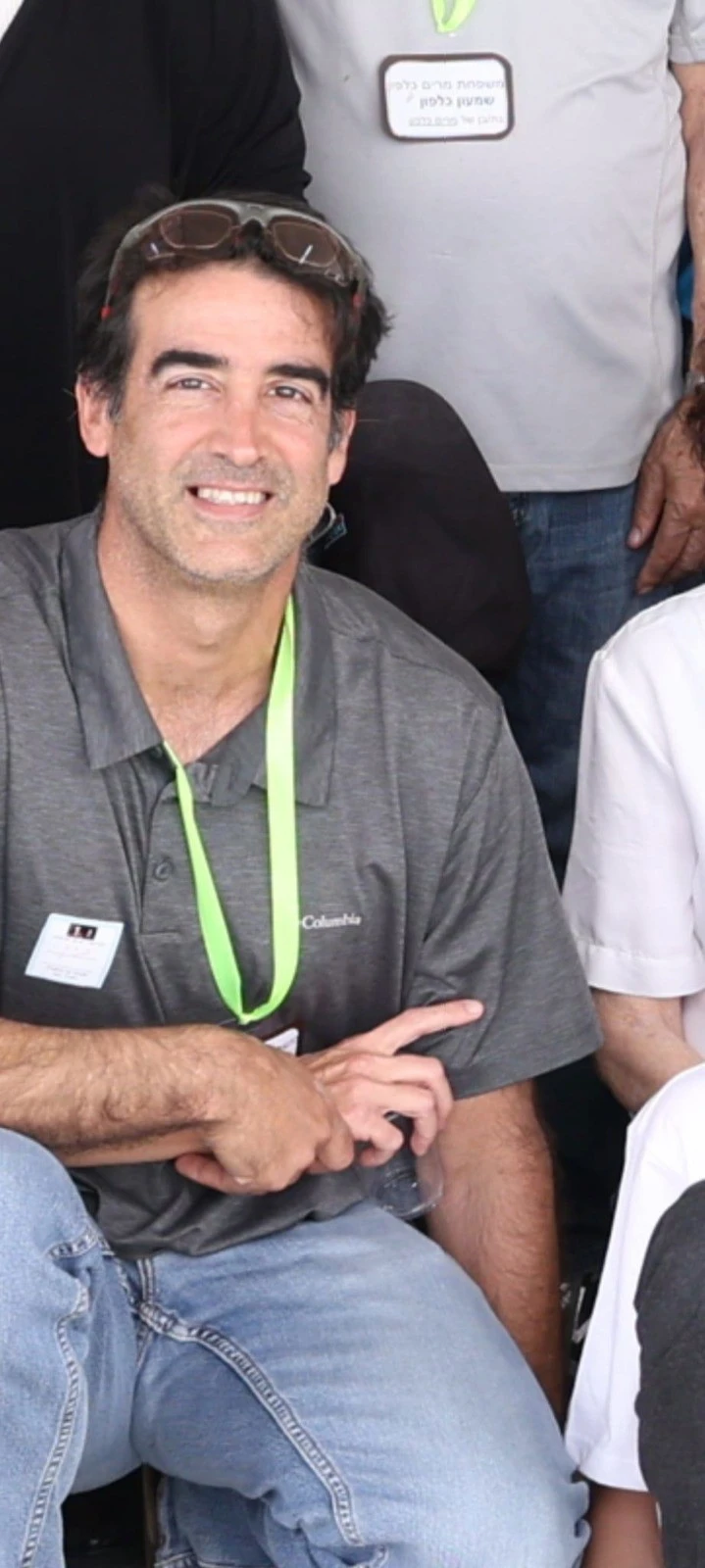
All photographs · 2
In the media
Articles
- Staff Sergeant Lidor Porat killed in southern Lebanon
NEWSru.co.il ·
- Barak was due to turn 49 next month; his mother: “He told me, I have to serve, there aren’t enough soldiers”
ynet
- Cleared for Publication: Sgt. Maj. Barak Halfon, from Adi, Fell in Battle in Southern Lebanon | Walla News
וואלה
- Barak Kalfon, killed in southern Lebanon, laid to rest. His mother said: “He told the soldiers to move away and took the blast” | Walla News
וואלה
- Barak Calfon, a 48-Year-Old Reserve Paratrooper, Fell in Lebanon: “An Israeli Hero”
ynet
- “I lost something precious, a treasure”: Barak Halfon’s mother bids a painful farewell to him, of blessed memory – Kipa
kipa.co.il
Show all (10)
- The Technion family mourns the death of Technion graduate Senior Warrant Officer Barak Halfon, of blessed memory — Technion–Israel Institute of Technology
technion.ac.il
- They left families behind, never got to fulfill their dreams: "Suddenly I received a message that I no longer had a child"
ynet
- Rabbi Or Shvaka, Wounded in Lebanon, Named His Son After the Fallen Soldier | Arutz Sheva
ערוץ 7
- Command Sgt.-Maj. (Res.) Barak Kalfon killed in southern Lebanon | The Jerusalem Post
jpost.com
Podcasts
- “My son came to me and said, ‘Mom, it's over’” | April 19, 2026
103fm / בן וינון, בקיצור / Omny ·
Social posts
- The Technion family mourns the fall of Technion alumnus Warrant Officer (res.) Barak Kalfon
Technion - Israel Institute of Technology
Memorial projects
The company commander, Rabbi Or Shvaka, who was wounded in the incident in which Barak fell, named his son Yehuda Barak. The name Barak was explicitly given in memory of the combat soldier who had served in his company.
Stories told about them
His mother said that despite his age, he continued reporting for reserve duty and saw it as a national mission. She said he would leave his work at Rafael to relieve soldiers, even at a personal cost at work.
Barak completed a bachelor's degree in mechanical engineering and a master's degree in systems engineering at the Technion. He played on the Technion's water polo team and was also an outstanding basketball player.
Life & service
Profile
- Date of death
- April 17, 2026
- Age
- 48
- Hometown
- Adi
Service
- Rank
- Warrant Officer (res.)
- Unit
- Brigade 226
- Service Type
- Reserve Forces
- Battle Location
- South Lebanon
Tributes & remembrance
I lost a son, I lost someone invaluable, a treasure to everyone
Source:kipa.co.il
Read the Hebrew original
איבדתי בן, איבדתי נכס, אוצר לכולם
We share in the family's profound grief.
Source:technion.ac.il
Read the Hebrew original
אנו משתתפים בצערה הכבד של המשפחה.
He saved the soldiers by telling them to move away, and he took the full force of the blast
Source:וואלה
Read the Hebrew original
הוא הציל את החיילים בכך שאמר להם להתרחק, והוא קיבל את כל ההדף
Barak chose to serve and contribute to the country out of a sense of purpose and love of the land.
Source:וואלה
Read the Hebrew original
ברק בחר לשרת ולתרום למדינה מתוך שליחות ואהבת הארץ.
Whenever they called him, he showed up. He never refused. He saw it as a national mission.
Source:ynet
Read the Hebrew original
כל פעם שקראו לו הוא התייצב. אף פעם לא סירב. הוא ראה את זה כמשימה לאומית.
Always welcoming, always smiling, always embracing and accepting.
Source:ynet
Read the Hebrew original
תמיד מאיר פנים, תמיד מחייך, תמיד מחבק ומכיל.
May his memory be a blessing and be cherished forever
Source:ynet
Read the Hebrew original
יהי זכרו ברוך ונצור לעד
Barak was a brave and dedicated soldier and an exemplary family man.
Source:ynet
Read the Hebrew original
ברק היה לוחם אמיץ ומסור ואיש משפחה למופת.
An outstanding soldier in the Paratroopers Brigade.
Source:ynet
Read the Hebrew original
לוחם מצטיין בחטיבת הצנחנים.
He was always the one who looked after everyone
Source:ynet
Read the Hebrew original
הוא תמיד היה זה שדואג לכולם