- Date of death
- Age
- 43
- Hometown
- Ein HaNatziv
Light a candle

The story
In Safed, a city of ancient holiness and dramatic landscape that spills into deep wadis, Avraham Tzvi, whom everyone called Tzika, was born on the 8th of Tammuz 5741, July 10, 1981. He was the sixth of eight children, born to Miriam and Moshe Yosef, a veteran Chabad couple who had made their home in the quiet and cohesive Kiryat Chabad neighborhood. In their vibrant home, where the scent of spices and Gemara pages hung in the air, Tzika learned the values of family, community, and tradition. Yet, even from his earliest childhood, a strong, almost inexplicable pull towards the world outside his window was evident – to the wild and mysterious nature that lay just beneath their house. The steep wadi that descended from Safed was for him not merely a green slope, but a gateway to a hidden kingdom, an endless playground of discovery.
In his childhood, even before he could articulate his passion in words, Tzika would descend into the wadi almost daily, a small bag on his back and a curious gaze in his eyes. He wasn't searching for toys or sweets; he sought nature's treasures. His small fingers would dig in the damp earth, unearthing twisted roots, smooth stones shaped by water over time, or a branch broken in a previous storm. He would sit quietly among the bushes, attuned to the rustling of leaves, the chirping of hidden birds, the hum of diligent bees. Nature was his second home, a place where he felt free, connected to something vast and profound. Often he would return home with small treasures in his pockets – a colorful beetle, a hairy caterpillar, a glistening stone. But even more often, he would appear at the doorstep with a living creature: a fledgling fallen from its nest, a trapped lizard, or even a tiny turtle. His mother would sigh with a smile, but his father, who understood the child's soul, would help him find a spot in the house, in the small garden, or on the balcony, for each new "foundling." Thus, between the synagogue walls and the ancient olive trees of the wadi, his deep love for animals was forged, an intuitive understanding of their lives and their fragility. He learned to speak their language, without words, only through patience, observation, and a gentle touch.
Tzika's educational journey began at the Chabad yeshiva in his hometown, where he absorbed the world of Torah and Mitzvot. However, even then, amidst the pages of Gemara and Halakha, a fervent desire to broaden his horizons beyond the conventional was evident. In junior high, he transferred to the "Noam Menachem" yeshiva, where he perhaps found a slightly different environment, but even there, his path was clear: he was determined to chart his own life course. While many of his friends focused solely on religious studies, Tzika chose a unique path. On his own, in the late evenings, between Talmud lessons and prayers, he completed the core curriculum. He acquired textbooks, asked questions, spent hours grappling with unfamiliar material, and eventually took the matriculation exams, earning a full high school diploma. This was by no means self-evident, reflecting extraordinary diligence, iron determination, and an ability to set and achieve goals that many others had abandoned. He knew that to fully comprehend the world, to serve it in the optimal way, he had to acquire broad knowledge, both in the realm of spirit and in the realm of practical action.
Even before he reached conscription age, as a young man, his father, Moshe Yosef, recognized his son's deep need for open spaces, for physical work that combined intellectual thought with direct contact with the earth. He discerned the spark in Tzika's eyes when he returned from the wadi, and his need for challenges beyond the walls of the study hall. On his own initiative, he connected him with a land surveyor who lived in Safed. The work was not easy; it demanded coordination, mathematical understanding, the ability to navigate shifting terrain, and above all, long hours under the scorching sun or in the freezing cold. Tzika, who was never afraid of hard work, plunged into the field with all his might. He learned the intricacies of the profession on the job, measuring distances, drawing maps, understanding the topography of the land. It was love at first sight. He loved the required precision, the ability to translate wild terrain into accurate data, the sense of satisfaction at the end of a workday when his body was tired but his soul was full. He loved the wind on his face in an open field, the scent of dry grass, the quiet in which only the measuring instruments spoke to him in a subtle language. This profession, which combined his love for nature with his need for precision and practical action, filled him with a sense of purpose.
In 2000, at the age of 19, Tzika was conscripted into the IDF. He didn't hesitate for a moment about his path; he wanted to be a combat soldier. He was assigned to the Nahal Brigade, a unit that combined security operations with agricultural pioneering, which suited his character perfectly. Basic training was challenging, physically and mentally, but Tzika, who grew up in a household with eight children and learned to manage on his own, quickly found his place. He bonded with his unit comrades, learning the terrain, training in marksmanship, navigation, and Krav Maga. He loved the long marches, the nights in the field under the open sky, the camaraderie that formed among the soldiers in times of hardship. He viewed his military service not merely as an obligation, but as a privilege. A privilege to defend the land whose paths he had learned to measure as a boy, its people, and the values he believed in. He was a quiet, focused combat soldier, one who could be relied upon in any situation, and his presence in the team instilled confidence.
Six years later, in 2006, Tzika's life took another turn, no less profound. He met Gal. Their acquaintance was brief, just four months, yet it was intense and unequivocal. From the very first moment, it was clear to both of them that this was a genuine connection, one destined to last forever. There were no doubts, no hesitations. There was a deep understanding, a soulful connection, a feeling of coming home. They married that same year and built their shared home. Their joint journey began in Givat Shmuel, from there they moved to Yakir, and then to Be'erot Yitzhak. In each place, they built a warm nest, filled with love and laughter. And in 2014, they found the place where they would establish their true home, their calling: Kibbutz Ein HaNatziv, nestled in the Valley of Springs, near Beit She'an.
Ein HaNatziv, with its open natural spaces, rural quiet, and warm community, was the realization of Tzika's dreams. It was the place where he could combine all his loves: nature, family, and working for the community. On the kibbutz, Tzika and Gal raised a magnificent family. Six children were born to them: Daniel the eldest, Maayan, Talia, Noam, Hila, and Liron. Their home was always full of life, laughter, lively discussions, and warm, inviting spaces. Tzika was an exemplary father, present, involved, one who truly saw and listened to his children. He loved the natural expanses where he would hike with the children, the simplicity and quiet of the kibbutz, and the pulsating sense of purpose and giving within him. He was not a father who merely instructed, but one who experienced life alongside his children, teaching them through personal example. They would go together on walks or rides in the area; Tzika would explain the plants, the animals, the history of the place. He taught them to lift their heads, to look around, to see the beauty in the landscape and in people. "Be good people," he would say in his calm voice, simple words that contained a whole world of values.
One of Tzika's great loves, besides his family and nature, was basketball. He was an ardent fan of the "Hapoel Gilboa Galil" team, a local premier league club. He would travel with his children to games, experiencing with them the thrill of the match, the tension of the final moments, the joy of victory, and the disappointment of defeat. The court was for him a place of connection, of release, of shared experience with his children. The sounds of cheering, the shouts, the smell of popcorn – all were an inseparable part of the experience. In those moments, Tzika was simply an enthusiastic fan, a father sharing a passion with his children, educating them also through the world of sport on values of teamwork, perseverance, and winning and losing with dignity. He knew that even through such moments, shared memories were built that would accompany his children throughout their lives.
Tzika, who never stopped learning and striving for knowledge, successfully completed a bachelor's degree at university. He wasn't content with that, and planned to pursue a master's degree, further proof of his diligence and insatiable thirst for knowledge. He worked at the Israel Electric Corporation, where he specialized in surveying, the profession he had fallen in love with as a young man. There, he applied his skills, his precision, and his deep understanding of the land and its spaces, contributing significantly to the nation's infrastructure. Working at the Israel Electric Corporation was not just a livelihood for him; it was a natural continuation of his love for the land, his ability to serve it in a practical and beneficial way. He loved the feeling of being outdoors, traveling across the country, meeting different people, and knowing that his work was part of a larger system, essential for daily existence.
But beyond his professional pursuits, Tzika was a man of boundless giving. He volunteered many hours in various bodies and organizations active in the Valley of Springs region. He served as a volunteer police officer, wearing the blue uniform with a sense of mission and responsibility. He was present in the field, assisting, securing, and providing a listening ear to residents. He was also an energetic activist in the Valley of Springs Jeep Unit, where he could combine his love for off-road terrain and driving with helping others. They would go out on rescue missions, providing assistance on difficult-to-pass roads, and patrolling the open expanses of the valley. The roar of the jeep engine, the dust rising behind it, the challenge of navigating unmarked trails – all these were part of the experience that nourished his soul.
But perhaps the area where his greatest love for nature and animals shone brightest was in his volunteering with "Haibulance." This is a volunteer network of the Israel Nature and Parks Authority, which cares for injured protected wild animals from all over the country. Tzika would ensure the transfer of injured animals – broken-winged birds, deer hit in accidents, sick foxes – to the Safari Hospital in Ramat Gan. He would drive with infinite care, with gentle, compassionate hands, speaking softly to the injured creature, trying to calm it in his unique way. He saw in every living creature a soul, a right to exist, and a duty to assist it. The scent of fur and feathers, the slight movement of the weak body in the special crate, the look in the frightened animal's eyes – all these were part of a profound experience that nourished his soul.
This love for animals also led him to a unique professional pursuit: snake catching. What began as a childhood hobby and deep curiosity evolved into a full-fledged profession. He was a certified, skilled, and cautious snake catcher. Phone calls would come in at all hours – "There's a snake in the garden!", "We found a snake inside the house!" – and Tzika would arrive quickly, dressed in work clothes, equipped with a special pole and a bucket. He would approach the snake calmly, without fear, but with reverence. He didn't view snakes as threatening creatures to be killed, but as an integral part of the ecosystem, beautiful and complex beings. He strove with all his might to prevent people from killing snakes, even venomous ones, out of a deep understanding of their importance to nature. "'A snake is an amazing animal,' he would say in his quiet voice, 'and if you approach it correctly, you can see that beauty, and it's less frightening.'" He transformed snake catching into an educational opportunity – to teach his children, other children, and adults how to behave around animals, how to respect them, how to understand their place in the world. He would patiently explain the different snake species, their importance, and the safe way to conduct oneself in their presence. His children would watch him with admiration, seeing the confidence and serenity with which he approached creatures that many feared.
Even in the realm of reserve duty, Tzika continued to serve with full volunteerism, far beyond his obligation. He was already exempt from reserve service, both due to his age and the number of his children, but for him, this service was non-negotiable. He viewed it as a supreme and meaningful value, an inseparable part of being a citizen of the state. He reported for every reserve call-up without hesitation, setting a personal example for the younger soldiers in his company and battalion. His reserve comrades remember him as a quiet, focused man, whose dedication was unquestionable. He didn't speak much, but his actions spoke for themselves. He was there for his friends, listening, advising, and always ready to execute any task, big or small, to the best of his ability.
Tzika's myriad pursuits – his work at the Israel Electric Corporation, his volunteering with the police, the jeep unit, Haibulance, and snake catching – were all filled with interest and profound meaning for him. They didn't just fill his schedule, but also enriched his family's life with extraordinary experiences. His children had the privilege of seeing their father in action, learning from him about giving, about love for the land and nature, about courage and responsibility. Tzika, with his simple yet profound wisdom, used to tell his children: "Lift your heads, look around at the landscape and the people, be good people." He believed in the power of observation, of presence, of being. In a message he wrote to Daniel, his eldest son, before he embarked on a trip, he summarized his worldview in such a touching way: "Take this trip as an opportunity to disconnect from dependence on the small screen. Look around more, get to know the land, listen to what people say and internalize it, ask questions and delve deep, research and understand. I'm sure it will be interesting and educational. And most importantly, understand that values are not a dirty word." These words, written in his own hand, were a spiritual testament, a legacy from a father to his son, an entire way of life.
Tzika was a loving and beloved family man. He was a devoted son and brother who cared for his parents and siblings, an exemplary husband and father, a stable and steadfast pillar in his home and in the hearts of his loved ones. He was an honest, moral, and principled person, who loved his surroundings and breathed in nature with every fiber of his being. A complete and good man, an amazing father and husband, a person who believed with all his heart in "Say little and do much." He was simple, modest, deeply sensitive, and also wise. A man of the people, a man of truth, whose words and heart were aligned. He didn't seek honor or glory, but acted from deep internal principles, from a genuine love for humanity, for the land, and for all creation. His presence was quiet yet powerful, and his influence on those around him was profound and far-reaching.
On Saturday, the 22nd of Tishrei, Simchat Torah 5784, October 7, 2023, the morning quiet was shattered by a deafening roar. At six-thirty in the morning, the Hamas terrorist organization launched a brutal and unprecedented surprise attack on Israel. Massive barrages of missiles and rockets from the Gaza Strip covered extensive areas of the country, and under their cover, thousands of terrorists – by land, sea, and air – infiltrated and began a murderous assault on the Gaza envelope communities, on Sderot, Ofakim, and Netivot, on innocent nature partygoers, on IDF bases, and on those traveling on the roads. Within a few hours, approximately eight hundred civilians were murdered in their homes, in their cars, after severe crimes had been committed against them. Hundreds of Israelis were abducted to the Gaza Strip, and homes and property were destroyed, looted, and set ablaze. Hundreds of soldiers, police officers, security personnel, and members of local standby squads fell in battle. On this terrible morning, a war began.
Tzika, as a man of the field and a reservist, immediately grasped the gravity of the hour. Even on the morning of that Shabbat, in the initial hours of the massacre, as shock and terror gripped the entire country, he was called up to the Jeep Unit, which provided the first response in defending the Valley of Springs area. Without hesitation, with a burning sense of urgency, he parted from Gal and the children. The last hug was especially strong, imbued with worry yet resolute determination. He knew every second was critical, that human lives depended on a swift response. He got into the jeep, engine smoke billowing into the air, and drove off into the unknown, into the chaos. By midday, as the grim picture began to clarify, he was conscripted into his reserve unit – Battalion 8103 of the 'Etzioni' Brigade. He rushed home, gathered his uniform and equipment, and once again parted from his family, this time with the clear knowledge that he was going to war. "I love you," he whispered to Gal, his gaze deep and serious. He drove north, towards the unfolding front, ready to do his part in defending home.
Tzika served for several months in two intensive rounds during 2024, throughout the war that was forced upon Israel. He was there, present, an example and a role model. Despite his age and the number of his children, he viewed service as a supreme duty, a mission. He didn't complain, didn't evade; he simply acted. He was an integral part of the fighting force, a source of inspiration for his younger comrades, a symbol of dedication and responsibility. The nights in the field, the long watches, the complex missions – none of these broke his spirit. He knew that every action had meaning, that every small step contributed to the security of the state.
Subsequently, he transferred to serve in Palhad Magav – the Border Police spearhead company. In his new role, he provided support by reinforcing police forces tasked with addressing terrorism within Israeli territory. This was different, complex work, demanding high vigilance, an understanding of civilian environments, and the ability to act quickly and precisely. Tzika, with his extensive experience as a combat soldier and volunteer police officer, was perfectly suited for the role. He was there, within the cities and communities, protecting residents, fighting terror, and serving as a human barrier against those who sought to inflict harm.
In October 2024, with the war's continuation and the growing need for combat forces, Tzika once again volunteered. This time, he volunteered to serve as an infantry soldier in Battalion 8211, of the Ephraim Brigade. This was yet another decision, among dozens of small and large ones in his life, that reflected his deep values: to be at the front, to defend, to lead by personal example. He could have remained at home, turned to his family, enjoyed the exemption he had received. But Tzika was not such a man. He felt the nation's pain, the need for service, and was determined to do his part. He joined his fellow combatants, sharing with them the burden, the dangers, and the unique camaraderie that forms only in such a reality. He was stationed at checkpoints, in open areas, knowing full well the dangers lurking around every corner.
On February 4, 2025, a Friday, the 6th of Shvat 5785, the final battle arrived. Tzika's battalion was stationed at the Tayasir checkpoint, one of the checkpoints controlling passage between the northern West Bank and the Jordan Valley. This is a strategic checkpoint, a constant point of friction, where tension is always in the air, even in routine times. The sun had begun to set, painting the sky in orange-purple hues above the Samarian mountains. Tzika stood at his post, his eyes scanning the area, his ears attuned to every sound. Suddenly, shots rang out. Bursts of fire erupted from a hiding place, shattering the quiet of the approaching evening. A despicable terrorist had opened fire. Tzika, an experienced and skilled soldier, reacted immediately, but it was too late. Master Sergeant (res.) Avraham Tzvi Tzika Friedman, forty-three years old at his death, fell in battle, defending his comrades, his people, his land. Another soldier from the battalion fell with him, sharing the same fate and heroism. He fell as he lived – in defense, in giving, with quiet courage.
The news of Tzika's fall struck Kibbutz Ein HaNatziv, his family, and everyone who knew him with profound shock. A man of love and life, a man of nature and truth, was taken suddenly and cruelly. He was laid to rest in the cemetery of his beloved kibbutz, Ein HaNatziv, beneath the skies of the valley he so cherished. He left behind his beloved wife, Gal, six precious children – Daniel, Maayan, Talia, Noam, Hila, and Liron – a bereaved mother, and seven stunned siblings.
Gal, his wife, eulogized him with heartbreaking words, yet full of hope and faith in the strength of their family: "My love. We have amazing children, full of life force and energy, and this joy will not cease. I gathered the children at home and we spoke about how difficult and sad and painful it is, but we will continue to find joy, and you will forever remain in our hearts... This is an immense brokenness, and from within it, we will grow and live full lives together. A loving and warm family. We will continue to find joy, and you will always remain in our hearts. There are sweet longings and memories in which you will always be present for each and every one of us. Thank you for our beautiful years together. For the joy and happiness, for the arguments and disagreements from which we built ourselves, and for the children. Go and rest in peace, I love you."
Gal's words reflected Tzika's own spirit. He would not have wanted them to sink into sadness, but to continue living, growing, finding joy, and seeing the good in the world. His legacy is not merely the memory of a fallen soldier, but the life story of a complete, principled man who loved his land, his family, and every living creature. He was the bridge between the world of spirit and the world of action, between man and nature, between the individual and the community. In his death, he left behind an immense void, but also a seed of renewal, a promise of continuity, a light that will continue to shine through his children, through his deeds, and through his memory, cherished in the hearts of all he touched. Tzika lived his life as a continuous story of giving, love, and deep connection to the land and to all that lives within it. His fall is a painful chapter in the nation's story, but it is also a testament to human heroism, simple and profound, that springs from an uncompromising love for life and for others. May his memory be a blessing.
Moments of a life
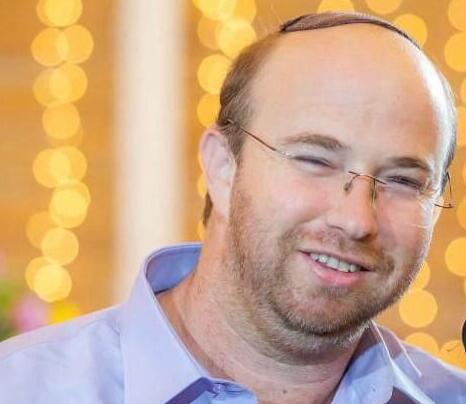
All photographs · 1
In the media
Articles
- “Gracias, héroes” – Los homenajes para dos soldados caídos de las FDI llegan en masa
Enlace Judío ·
- Tzvika Friedman, 43, HYD
COLlive ·
- Avraham Tzvi’s widow eulogized him at his grave: I gathered the children in a home full of sadness and pain, but we will continue to find joy
ישראל היום ·
- Tzvika Was A Man Of Goodness: Family And Friends Eulogize Slain Reservist
VINnews ·
- He only did good: Tributes for two fallen IDF soldiers flood in
Jerusalem Post ·
- Name released of second serviceman killed by terrorist at base in eastern Samaria
NEWSru.co.il ·
Show all (9)
- The sister of Avraham Zvi Friedman, of blessed memory: “Tzvika embodied everything that is good in this people”
ערוץ 7 ·
- An interview with the family of Tzvika Friedman, killed in a terrorist attack in Samaria
ynet
- You leaped into live fire, but what about us: Reserve soldiers killed in the attack in Samaria laid to rest
ynet
Memorial sites
- Master Sergeant Avraham Tzvi “Tzvika” Friedman, of blessed memory
נופלים
- Yizkor — Avraham Tzvi Tzvika Friedman
משרד הביטחון — יזכור
Stories told about them
Talia said that her father gave his children nicknames and took them to catch snakes and then release them in the wild. She remembered the smile and humor that accompanied these outings.
His wife Gal, a social worker who supports bereaved families, said she waited for the IDF notification officers in her office in Tiberias after fearing for his fate. She said he continued to insist on serving in the reserves despite being exempt because of his age and six children.
Tzvika volunteered with the Hai-Bulance and transported injured wildlife for treatment at the Safari’s hospital. He also volunteered with the police and the jeep unit in Emek HaMaayanot, and worked to prevent the killing of snakes as part of his work as a certified snake catcher.
Life & service
Profile
- Date of birth
- July 10, 1981
- Birthplace
- Ein HaNatziv
- Date of death
- February 4, 2025
- Age
- 43
- Hometown
- Ein HaNatziv
Service
- Rank
- Sergeant major (res.)
- Service Type
- Reserve Forces
- Battle Location
- Menashe Brigade Sector
Family
- Father
- Moshe Yosef
- Mother
- Miriam
Burial
Cemetery
Ein HaNetziv
Tributes & remembrance
טופלת במשמרת שלי והלוואי שעל הצד הטוב ביותר
הי"ד !!!!!
בגן העדן מנוחתו עד תחיית המתים!
תנצב"ה
צביקה בן אהוב שלי!
קשה לי להאמין שזה לא חלום רע!
איך הלכת בחטף... והשארת אותנו המומים וכואבים...אתה כ"כ חסר אין לנו נחמה.
מחכים שתרעיש שערי שמים ונזכה לגאולה השלמה ולתחיית המתים.
גדלי ושירה
משתתפים כל כך בצערכם
לא נשכח לא נסלח לעולם. שנזכה לראותו במיידי בתחיית המתים בגאולה האמיתית והשלימה במהרה בימינו אמן
חבר אתה ממש חסר
צביקה, איש נעים הליכות ובעל דרך ארץ, ישר וטוב לב.
יהי זכרו ברוך.
אדם עניו עם חיוך כובש ולב ענק.
יהי זכרו ברוך
למדנו יחד בגמול השתלמות.
צנוע, בעל מידות טובות, תודה על הערכים שנטמעו בך, תודה על הגנת המולדת ועל שירותך.
השאר הלם וצער עמק בלכתך, הייתה לי הזכות להכיר אותך. הי"ד
מִדַּם חֲלָלִים, מֵחֵלֶב גִּבּוֹרִים...
צַר-לִי עָלֶיךָ, אָחִי... נָעַמְתָּ לִּי מְאֹד נִפְלְאַתָה אַהֲבָתְךָ לִי...
לזכר ידידי הטוב צביקה פרידמן.
חבר אתה חסר
לכר ידידי הטוב צביקה פרידמן .
חבר אתה חסר .
צביקה הזמן לא מרפא את הכאב בליבנו תישאר לעד
נזכור לעד את גבורתך ואת מסירות הנפש שלך למען המשך קיומנו!
הצבי ישראל על במותיך חלל איך נפלו גיבורים.
מנשרים קלו מאריות גברו!
He was an amazing father and husband,
Source:VINnews
Tzvika was a man of goodness. Wherever he went, he just did good.
Source:VINnews
Thank you for our beautiful years together. For the joy and happiness, for the arguments and differences of opinion through which we shaped ourselves and our children.
Source:ישראל היום
Read the Hebrew original
תודה על השנים היפות שלנו ביחד. על השמחה והאושר, על הוויכוחים וחילוקי הדעות שמהם בנינו את עצמנו והילדים.
He was very happy to see me, and in general he was always optimistic and smiling
Source:ynet
Read the Hebrew original
הוא מאוד שמח לראות אותי ובכלל תמיד היה אופטימי וחייכן
I really loved it when Dad used to take us to catch snakes.
Source:ynet
Read the Hebrew original
מאוד אהבתי שאבא נהג לקחת אותנו ללכידת נחשים.
He never grumbled or complained about his service
Source:ynet
Read the Hebrew original
הוא מעולם לא קיטר ולא התלונן על השירות
Remembrance Day addresses
יום הזיכרון לחללי מערכות ישראל התשפ"ה – 2025
בכל יום שעובר, אזכור יותר! אזכור, את אלו שיצאו עימי לקרב ולא שבו, ולהם אין מי ידמה ומי ישווה. אזכור, שהכאב לא יעבור לעולם, והזמן, הוא לא מרפה ולא מרפא. אזכור, את שיברון הלב הגובר ואת הבית שבוער. אזכור, את צדקת הדרך, ואשבע שוב, שמה שהיה לא יהיה יותר. אזכור, שיותר מכל דבר אחר – אני חסר! ביום הזה, אני נתקף געגוע לדמותם, לחיתוך דיבורם, לחיוכם, ומדליק נר לזיכרון דרכם ומורשתם!
משרד הביטחון
אגף משפחות, הנצחה ומורשת
יום הזיכרון לחללי מערכות ישראל התשפ"ה – 2025
בכאב, בהצדעה ובתקווה אני מתכבד להדליק נר זיכרון זה. השנה, כשאנו נלחמים במלחמה ארוכה, רב זירתית וצודקת, הזיכרון נושא משמעות עמוקה. ביום זה נעצור ונתייחד עם זכרם של טובי בנינו ובנותינו שנפלו בהגנה על המדינה. מורשתם היא המצפן שמתווה את דרכינו, והיא המעניקה לנו כוח להמשיך ולהגן על מדינת ישראל ותושביה. משפחות יקרות, אנו מרכינים ראשנו ומתחייבים שנעמוד לצידכן תמיד. יהי זכר הנופלים ברוך.
אלוף דדו בר כליפא
ראש אגף כוח האדם, צה"ל
יום הזיכרון לחללי מערכות ישראל התשפ"ה – 2025
בשעה שאנו זוכרים את גודל תרומתם ועומק מסירות נפשם של טובי בנינו ובנותינו, נופלי מערכות ישראל לדורותיהן, ממשיכים צה"ל וכוחות הביטחון במימוש המשימה למענה לחמו ועבורה נפלו: הכרעת אויבינו מדרום, מצפון, ביהודה ובשומרון, וגם בזירות רחוקות יותר. בהערכה רבה ובגאווה אדירה אנו מרכינים ראש בפני הנופלים והנופלות, מאמצים את משפחותיהם אל לבנו, וממשיכים במשימה להבטחת קיומה של ישראל לדורי דורות. יחד נעשה ונצליח.
רב אלוף אייל זמיר
הרמטכ"ל, צה"ל
יום הזיכרון לחללי מערכות ישראל התשפ"ד – 2024
כאשר דגלינו מורדים לחצי התורן וראשינו מורכנים לזכר הנופלים והנופלות במערכות ישראל, ממשיכים לוחמי צה"ל ומפקדיו בלחימה בדרום, בצפון, ביהודה ובשומרון ובזירות נוספות. על כל דור מוטלת המשימה של הגנת העם והארץ – משימה שאף פעם אינה פוסקת. נצדיע בגעגוע ובגאווה לנופלים ולנופלות, נחבק את משפחותיהם, ונמשיך ברוח הציווי שהותירו לנו. עם ישראל חי.
רב ניצב יעקב שבתאי
המפקח הכללי, משטרת ישראל
יום הזיכרון לחללי מערכות ישראל התשפ"ד – 2024
אחיי הנופלים, כל נר הוא זיכרון יחיד ומיוחד, על חיים שהיו ואינם, געגוע שנצרב עמוק בלב, עולם ומלואו. הנרות כולם הם זיכרון של אומה כי לעולם לא עוד, בשורת הציונות וקוממיות ישראל. זיכרון כי הדרך לעם חופשי בארצנו עוברת דרך מסדר הנופלים. אור הנר יזכיר לנו את מסירות נפשכם להציל חיים, להגן על הבית. הנרות מסמנים לנו נתיב גבורה ערכי מחייב שאנו מצווים ללכת לאורו. נמשיך להילחם ולהוסיף אור מתוך אמונה בנצח ישראל.
יואב גלנט
שר הביטחון
יום הזיכרון לחללי מערכות ישראל התשפ"ד – 2024
בהצדעה ובכאב, בשם צה"ל כולו, אני מדליק נר זיכרון. בעיצומה של מלחמה, הזכרון נושא משמעות יום-יומית, שעבר והווה מתלכדים בה. לאורם של הנופלים נמשיך לצעוד, חיילי הסדיר והמילואים. לאורם של הנופלים נמשיך להגן על ארצנו ועל מולדתנו, גם כשהמחיר כבד. להבת-הזכרון תבער בנו בעודנו ממשיכים להלחם ונזכור את הנופלים ואת אומץ ליבם. משפחות יקרות, צה"ל מרכין היום ראש, מצדיע לכן וכואב איתכן. יהי זכר הנופלים ברוך.
אלוף יניב עשור
ראש אגף כוח האדם, צה"ל
יום הזיכרון לחללי מערכות ישראל התשפ"ד – 2024
בהוקרה, בגאווה ובכאב שאין לו סוף, אני מתכבד להדליק נר לזכרם של הנופלים והנופלות במערכות ישראל. סיפור חייהם בארץ הזאת, מסכת שירותם, גבורתם והקרבתם – הם סיפורה של הארץ הזאת, אך גם סיפור המחיר הכבד שהיא תובעת מאוהביה. מחויבותנו לזכר הנופלים ולדרך שהותירו לנו ניצבת תמיד לנגד עינינו. את המשימה שלא זכו להשלים, משלימים כיום, וישלימו, אנשי כוחות הביטחון, הממשיכים בדרכם ולאורם. יהי זכרם של הנופלים ברוך.
משרד הביטחון
אגף משפחות, הנצחה ומורשת
יום הזיכרון לחללי מערכות ישראל התשפ"ד – 2024
בחרדת קודש אני מתכבד להדליק נר לזכרם של חללי מערכות ישראל, חברנו שנפלו, מראשית היציאה מהחומות ולאורך כל שנות עצמאותנו המדינית והציונית, מהווים תמרור זיכרון לדרך חיינו ולמחוייבות הלאומית להנצחת זכרם. דרכם נותרה דרכנו ומורשתם נר להמשך עשייתנו. יהי זכרם ברוך!
בני גנץ
שר הביטחון
יום הזיכרון לחללי מערכות ישראל
נזכור אותם, כולנו יחד. כל אחד ואחת מהם, מדי יום ביומו, והיום ביתר שאת, כך – לנצח. "כי מדי דברי בו זכור אזכרנו עוד"
משרד הביטחון
אגף משפחות, הנצחה ומורשת