
The story
The air in Rosh HaAyin during the early 1980s still carried the scent of wet earth after rain, of seasonal blossoms, and distant memories of quieter lives. Into these fragrances, on the 16th of Kislev, 5743 (December 2, 1982), Assaf was born. He was the second child of Clara and Ilan, a younger brother to Eitan. Their home, a warm and vibrant Israeli household, was filled with children's laughter and endless conversations—over dinner or around the Shabbat table—discussions that shaped a clear and sharp world of values. Assaf grew into an inquisitive child with keen eyes, missing no detail in his surroundings. He would climb trees in the yard, build surprisingly tall block towers in the living room, and lead boisterous neighborhood games, naturally assuming the role of "the leader" even before he truly understood the word. Even then, that unique blend of humility and quiet determination was evident in him, bursting forth when he needed to defend a smaller friend or complete a task he had undertaken. Ilan and Clara saw him as the child who asked "why?" about everything, not out of stubbornness, but from a deep desire to fully comprehend the world, to dismantle it into its parts and reassemble it. They taught him the value of hard work, respect for others, and love for this land—not as slogans, but as a way of life. Assaf, with small, diligent hands, would help his father with minor repairs around the house, feeling the texture of wood and metal, understanding that every screw in its place created wholeness. He would accompany his mother to the market, absorbing the hubbub of voices and colors, learning to recognize faces and stories, and developing the love for humanity that poured from him in all directions.
His teenage years brought the crystallization of this unique personality. Assaf was a serious student, yet unconventional. He wasn't content with just learning the material; he sought to understand the broader contexts, the deeper meanings behind every fact or historical event. His classmates and neighborhood friends always saw him as an anchor of stability, someone reliable, who would offer honest advice, even if it wasn't always easy to hear, and who always led by example. He often found himself mediating disputes between friends or leading work groups at school, combining genuine listening to all sides with the ability to set clear goals and demand their achievement. Assaf was not a man of empty words; he was a man of action. If he committed to something, he carried it out with full seriousness and dedication. His love for the land was expressed not only in long hikes where he traversed its paths but also in deep involvement in community life, volunteering, listening to the stories of older generations, and understanding that this place, in all its complexity, was home. He was interested in politics, history, and social processes—an interest that would later find expression in his undergraduate and graduate studies in political science, which he completed out of a desire to deepen his understanding of the mechanisms of the state and society he loved so much.
On March 29, 2001, at the age of eighteen and a half, Assaf enlisted in the IDF. As everyone expected, he chose infantry—the branch where contact with the ground is direct, where the individual is the most crucial component. He underwent the tough basic training, the grueling exercises, the beret marches with their physical and mental pains, but he never gave up. He was the kind of person who kept pushing forward even when every muscle in his body screamed "enough," because he knew there was a greater purpose. His commanders quickly recognized his leadership potential—that rare combination of ability to execute orders with exemplary efficiency, coupled with initiative, independent thinking, and, most importantly, the ability to rally people around him. He was not a commander who shouted or ranted, but one whose soldiers followed him because of the absolute trust they placed in him. He spoke to them at eye level, explained the logic behind each mission, and cared for their well-being, but also knew how to demand the maximum from them. He quickly advanced through the ranks and roles, with each stage being another opportunity to learn, improve, and influence.
After progressing through junior command roles, Assaf found his place as a company commander in the "Tzabar" Battalion, one of the elite battalions in the Givati Brigade. He entered the role with the same spirit of humility and determination. Mornings in the battalion began with the smell of mud and sweat on the parade ground, the sound of military boots on the wet asphalt, and the shouts of commanders. Assaf, however, would first and foremost listen. He would go down to the field, talk to the soldiers about their experiences, their fears, and their expectations. He knew how to identify the shy soldier in the corner, the one struggling, just as he recognized outstanding talents. "Hamami," as everyone called him, "was the kind of commander who, on one hand, when you talked to him, you felt like you were the center of his world," one of his soldiers recounted, "and on the other hand, when he gave an order, you knew there was no other way but to execute it to the best of your ability. He simply instilled in you the desire to meet his standards, because you knew he met them himself, and even exceeded them." He forged the battalion into a solid fist, a unit that would execute any mission flawlessly. He did this not only through grueling physical training and brilliant tactics but primarily by fostering a fighting spirit, camaraderie, and values. In the briefing rooms, when Assaf entered, a silence would fall. Everyone was ready to listen to his words, knowing that what he said would be sharp, clear, and full of meaning. He didn't speak idly; every word was weighed and uttered with deep thought.
At some point in his life, amidst his demanding military service, Assaf met Sapir. She entered his life like a fresh breeze, and he found in her a true life partner, one who understood his military world but also knew how to set boundaries of love and shared life. Their love story was built on foundations of mutual respect, deep appreciation, and shared laughter. He, the man who was a tough commander on the battlefield, was at home a gentle and loving husband, a full partner in all household and family matters. They built their home in Kiryat Ono, turning it into a stronghold of warmth, love, and values. Over the years, they had three children—Ella, Alon, and Arbel. The house filled with the children's laughter, the smells of home cooking, and Assaf's stories about his military experiences, adapted to the children's age, always with a message of love for people and love for the land. He was an involved father, one who made sure to take the children to kindergarten and school whenever he could, played soccer with them in the yard, read them bedtime stories, and taught them the importance of giving and responsibility. He would share his dilemmas with Sapir, consult her on important decisions, and valued her wisdom. Together, they created a strong family unit, a "solid fist" as one acquaintance described it, one that gave him the strength to face the demanding challenges of his military service.
Assaf's command trajectory continued to develop, as he moved through various roles that refined his abilities as a commander and educator. After commanding the Tzabar Battalion, he was appointed commander of Bahad Oz, the Givati Brigade's training base. This is where the fighting spirit of the next generation of soldiers is forged, and it was a role where "Hamami" found his true calling as an educator. He not only trained them for combat but educated them for life. At Bahad Oz, he stood before hundreds of young recruits, eyes gleaming, and managed to impart to them not only the fundamentals of battle but the deep values of responsibility, comradeship, and dedication to the state. "He knew how to demand effort and investment with toughness," a friend recounted, "but in the same breath be a gentle and pleasant man. He saw the person behind the uniform, the child who had just arrived from home yesterday, and found the right way to approach him, to pick him up when he fell, and to strengthen him." He was the one who would walk among the tents at night, checking that everything was alright, talking to the soldiers about their worries, their homesickness, and convincing them that they were part of something bigger. Under his command, Bahad Oz became a place where one not only learned to shoot and run but also learned to be better human beings, future leaders.
During his service, while at the Tactical Command College, Assaf took part in a special initiative to encourage meaningful service among youth. This project connected him with Lt. Col. Eli Ginzburg z"l, who fell in battle in Be'eri. Together, with several other friends, they met with teenagers, told them about military service, its challenges and satisfactions, and tried to inspire them. Assaf, with his sparkle in his eyes and captivating smile, was able to captivate the young people. He didn't speak to them in slogans but from his heart, about the importance of contribution, about the responsibility each of us has towards society and the state. He was "a factory for producing leaders, fighters, producing personalities," as described by one of his soldiers. He saw the potential in every boy and girl and pushed them to realize it. "You were a father and mentor to me, a guide and a personal example," wrote Dean Golan Cohen, one of his former soldiers, "in the shadow of your values, I looked at every problem I faced, every decision, every mistake and every success, and they were my compass." Assaf, in many ways, was an educator at heart, and always dreamed that "the next chapter in his life would be to run a school"—a dream that more than anything testifies to how deep within him was the desire to influence the future generation, to educate for leadership and values.
His command career continued to soar. He commanded the Negev Brigade, a territorial brigade with unique challenges of guarding the vast desert borders, dealing with smuggling and hostile activity. This role required not only military knowledge but also a deep understanding of the region, its inhabitants, and its complex relationships. He would patrol the area, knowing every path and grain of sand, talking to Bedouins and farmers, and understanding the unique pulse of the Negev. He saw before him the mission to protect the residents of the area, the farmers, the small kibbutzim and moshavim, and took it with profound seriousness. In every role, he displayed that rare ability to combine humility with assertiveness, kindness with captivating charisma. "The precise combination you possessed—humility, humanity and kindness, charisma and assertiveness—is so rare in people," wrote Aviv Tzabari, his friend and former commander, "and caused all your soldiers to be captivated by you. We would laugh and say among ourselves, 'If it's me and Hamami, I'm willing to follow him into battle even with bare hands.' But I think we weren't really joking; we knew that if it was behind you, it was to victory, come what may."
Finally, he reached the position of commander of the Southern Brigade in the Gaza Division – a role of unparalleled complexity and sensitivity, in the very heart of a sector where tension is daily, and the threat is constant. He was the brigade commander responsible for the defense of the Gaza Envelope communities, for securing the border, and for readiness for any scenario. He lived and breathed the sector, knowing every detail, every procedure, and especially, every person – his commanders, his soldiers, and the residents of the communities. He was a commander who absorbed the immense pressure of the role, but never allowed it to penetrate the inner armor of his composure and clarity of thought. "A man who looked every situation in the eye, difficult or easy, like a Rottweiler," Dean Golan Cohen described him. "Nothing too hard, no mountain too high." He was for his soldiers "a walking shield," a role model and object of admiration, not because he was free of mistakes, but because of the way he dealt with them, with integrity and honesty. He knew how to approach his soldiers, to convey the toughest messages in a positive and professional manner, and always with a smile and a calming look in his eyes, "bright eyes, truly one who lights up the room," as Hila Shayish recounted.
Saturday, October 7, 2023, the 22nd of Tishrei, 5784, began like a normal, quiet, and pleasant Saturday morning, but quickly turned into the greatest nightmare the State of Israel had ever known. That morning, Colonel Assaf Hamami, 40 years old, was at the Gaza Division base. Beside him, unusually, was his five-year-old son, Alon, who had accompanied him for a day at the base, perhaps to experience a little of his heroic father, to see the world in which he operated. The silence was shattered all at once, with a massive barrage of rockets covering the sky, and simultaneously, initial reports of terrorist infiltration. These were moments of insane uncertainty, of trying to grasp the magnitude of the event, but Assaf, as he always was, remained calm and focused. He knew exactly what he had to do.
The first decision, and the hardest of all, was to ensure his son's safety. He hugged Alon tightly, a hug meant to contain all a father's love and concern, and entrusted him to other soldiers on the base, with a clear request: "Take him to a safe place. Protect him." Little Alon's confused and frightened eyes must have been seared into Assaf's memory. There was no time for a leisurely farewell, no time for long explanations. There was only time to act. This was the moment when Assaf, the senior commander, transitioned from commanding a base to fighting for his home, for his country.
He grabbed the radio. His voice, amidst the escalating chaos, was sharp and clear. "This is Qodqod," he said, "declaring war." Three words that echoed in the ears of all who heard them, words that quickly became a symbol of determination and heroism. He did not wait for orders; he did not hesitate. He knew his role, his responsibility. He jumped directly into the field, leading the brigade's fight, not from the command center, but from within the fire, alongside his command post soldiers – Staff Sergeant Tomer Yaakov Achimas and Sergeant Kiril Brodski. Three fighters, a commander and his command post team, ventured into the unknown, into the maelstrom of the surprise attack.
They drove quickly towards Kibbutz Nirim, one of the attacked communities in the Gaza Envelope. The road, which Assaf knew so well, had become a battlefield. Black smoke rose from all directions; gunfire echoed from every side. As they approached the kibbutz, they encountered dozens of terrorists, heavily armed, filled with hatred, advancing towards the communities. It was a battle of few against many, an seemingly impossible fight. But Assaf, Tomer, and Kiril did not hesitate. They dismounted from the vehicle and entered the fray. The sounds of their weapons mingled with the bursts of the terrorists. Assaf, with his vast experience, with his famous composure, managed the battle, identifying targets, giving orders, and simultaneously firing himself, eliminating terrorists one after another. He fought with supreme bravery, not only out of military duty but out of a deep love for his home, his family, his people. He knew that every terrorist he eliminated, every second he delayed the attack, saved the lives of families in the kibbutz.
The battle was bloody, unbearable. Assaf, Tomer, and Kiril fought like wounded animals, fiercely defending every inch of land. They eliminated a large number of terrorists, but eventually, facing the overwhelming enemy force, all three fell in battle. Their bodies, along with the bodies of other soldiers and civilians, were abducted to Gaza by Hamas terrorists. The world fell silent. The ensuing quiet was heavy and ominous, the silence of a void that had been torn open.
The days and weeks that followed were a period of terrible uncertainty for the Hamami family. Sapir, his children Ella, Alon, and Arbel, his parents Clara and Ilan, and his brother Eitan, lived with hope mixed with dread, praying for a miracle. The news of his fall was cleared for publication only on his 41st birthday, December 2, 2023, after final verification, two months after the battle. It was a severe blow, but also a painful form of closure. Since then, the IDF worked to recover the bodies of Tomer and Kiril, and after some time, Assaf's body was also recovered and brought home for proper burial in the country for which he fell.
Colonel Assaf Hamami was laid to rest in the Kiryat Shaul military cemetery, where he rests alongside other heroes of Israel. He left behind an immense void, not only in the hearts of his family and friends but in the heart of the entire nation. He was "a hero of Israel," the man who was the commander of the Southern Brigade and fought bravely against evil, a commander who was "an example and a role model, a legend in his life and now in his death," as Aviv Tzabari wrote about him. He was the father, the husband, the son, the brother, the friend, the commander – a man who performed every role he undertook with his whole soul.
The legacy Assaf Hamami left behind is not etched in stone alone, but in the spirit of thousands of soldiers and commanders he educated, in the values he instilled, and in the living memory of his family. His children, Ella, Alon, and Arbel, will grow up with the story of their father's heroism, with the knowledge that their father was a giant among men, "the smartest, bravest, most honest and sincere man I knew," as Dean Golan Cohen described him. They will remember his smile, his bright gaze, the warmth he radiated, and his unwavering dedication. Sapir, his wife, will continue to carry the torch of their love, raising their children in the spirit of the values Assaf so deeply believed in. His parents, Clara and Ilan, will continue to tell his story, keeping his memory alive and breathing.
Assaf Hamami, may his memory be a blessing, was a symbol of courage, of quiet yet powerful leadership, and of a love for humanity and for the land that led him to his final moments. He did not fight for glory or honor, but for his home, for his children, for the neighbors in Kibbutz Nirim, for this country he loved so much. His fall in battle, alongside his soldiers Tomer and Kiril, is a painful reminder of the heavy price of our existence here, but also a testament to human bravery, to the uncompromising spirit of the people of Israel. His memory will be cherished in the heart of the nation, a source of inspiration and hope, a pillar of fire before the camp, illuminating the way even in difficult times, on the path to revival and the victory of the Israeli spirit. May his memory be blessed.
Moments of a life
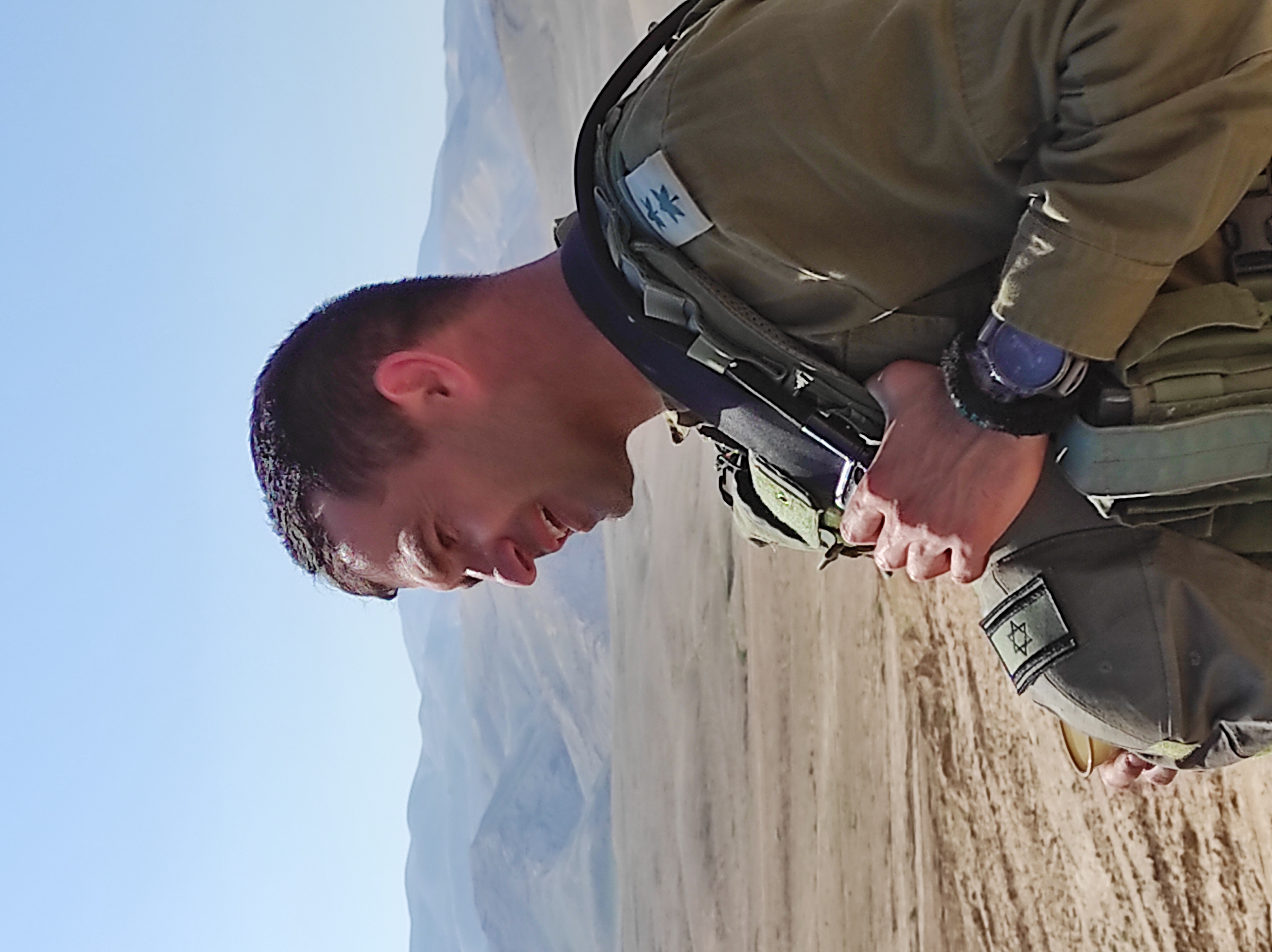
All photographs · 1
In the media
Articles
- ‘Good commanders take the threat seriously’: Maj. Gen. Bar Kalifa pays tribute to slain Col. Asaf Hamami
The Times of Israel ·
- ‘Three years without my Asaf’: Mother of soldier killed on Oct. 7 pleads for truth - opinion
The Jerusalem Post ·
- The funeral of Colonel Asaf Hamami, of blessed memory: “We will carry from here the imperative to be good — to be Hamami, for eternity”
צה״ל - אתר צה״ל ·
- “I won’t be taken captive alive; don’t make deals for me”: Colonel Asaf Hamami laid to rest
ישראל היום ·
- The Invading Terrorists Carried Photographs of Colonel Asaf Hamami: "They Searched for Him on the Base"
ynet ·
- Asaf Hamami’s Mother at His Funeral: "You Raised the Alarm and Warned Them; They Said You Were Seeing the Worst" | Israel Hayom
ישראל היום ·
Songs
- A Song, a Psalm for Asaf
יהודה שמעה ·
- In My Own Way | In memory of Colonel Asaf Hamami
סהר טויטו ·
Memorial sites
- Assaf Hamami - Memorial Page
כאן 7.10.360
Memorial projects
Yehuda Shamaa created the song “A Psalm for Assaf” in memory of Colonel Assaf Hamami, arranged and produced by Avshalom Driks. The description on the creator’s channel explains why he wrote the song.
Sahar Twito dedicated his performance of “My Way” to Asaf Hamami’s memory; the written dedication is explicit in the video description.
Stories told about them
His mother Clara describes his photograph on the refrigerator and at the entrance to the house, and her feeling that she meets him anew every morning and every time she comes home. In the column, she connects keeping his memory alive with choosing generosity, unity and action.
At the funeral, the chief of staff spoke of a commander who used to go between posts in Hebron with hot tea and practice defense with the soldiers. His wife spoke about his concern for bringing back hostages and their children Ella, Alon and Arbel, who continue his path.
His aunt said his son Alon was with him at the base that holiday. Before leaving to fight, he left him in the command center, stroked his head and promised to try to return quickly.
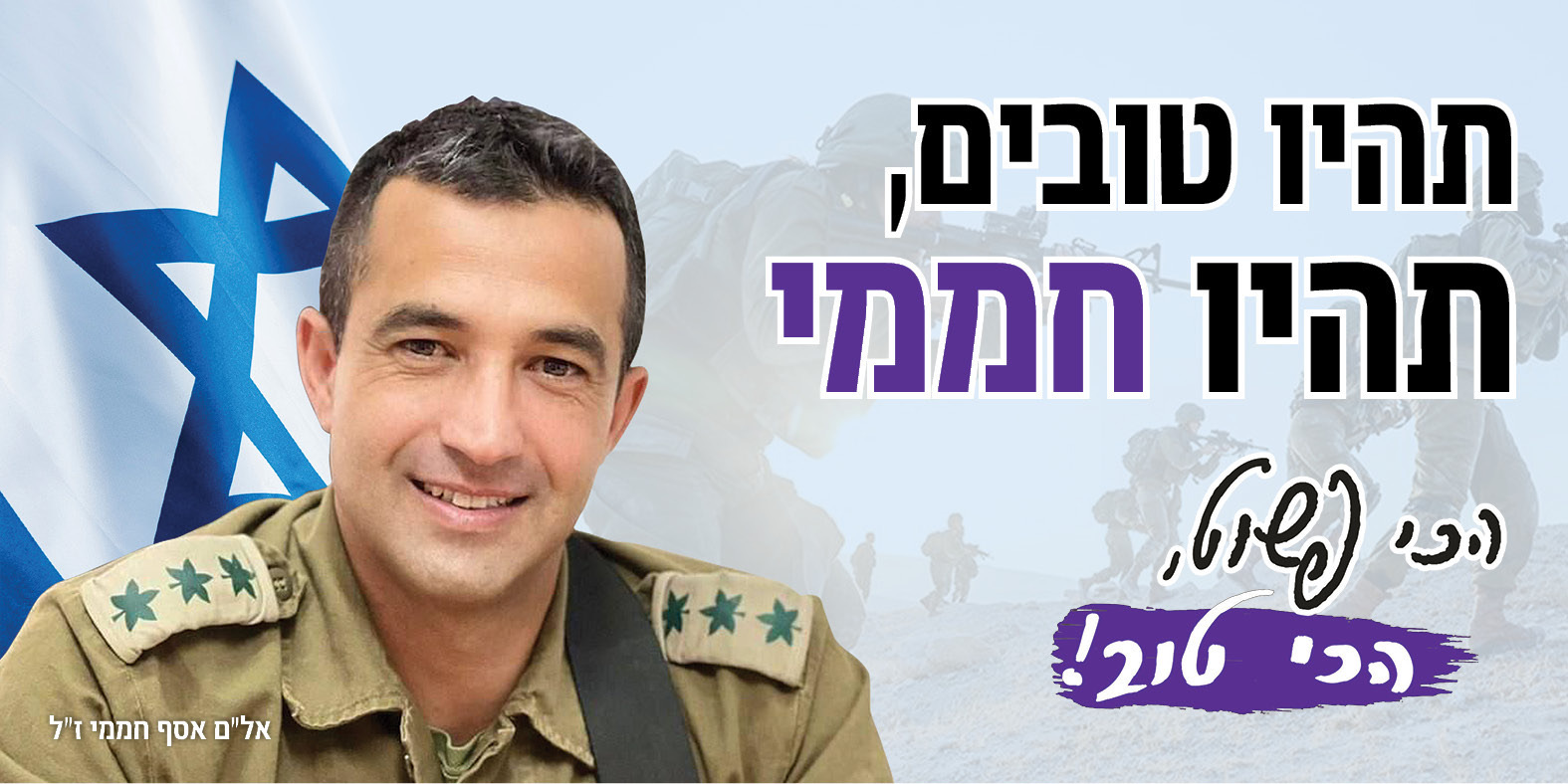
“Be good, be Hamami.”
Life & service
Profile
- Date of birth
- December 2, 1982
- Birthplace
- Kiryat Ono
- Date of death
- October 7, 2023
- Age
- 40
- Hometown
- Kiryat Ono
Service
- Rank
- Colonel
- Unit
- Southern Brigade
Family
- Father
- Ilan
- Mother
- Klara
Burial
Tributes & remembrance
שכב על משכבתך יהי זכרך ברוך
השבוע אגור בקריית אסף. במשך השבוע הקרוב אספר שאני גר בקריית אסף, כדי שכשישאלו אותי איפה זה, אומר: "היכן שאסף חממי גר". השבוע אגור בקריית אסף, כדי שבכל פעם שאכנס לעיר, אומר לעצמי שהגעתי לעיר של אסף חממי ושהוא ראש וראשון לאנשים שארצה להיות חבר בקהילה שבה הם חיים. אזכור שהגעתי לקריית אסף כדי שאהיה גאה במקום שממנו אני בא, כדי שארצה שילדיי יספגו מהערכים שאסף חממי בן עירם מייצג, כדי שבזמן שאהיה עצוב על לכתו של גיבור ישראל, אהיה גאה על כך שהוא ואני באנו מאותו המקום. השבוע אעבור לגור בקריית אסף כדי להוקיר תודה לחייל, אוהב ישראל ששם את המדינה והעם לפניו. בשבוע הבא אחזור לגור בקריית אונו, בתקווה שתהיה קרייה נאמנה לערכים, המוסר והדוגמה שהשאיר אחריו אסף חממי. השבוע אגור בקריית אסף.
איפה ישנם עוד אנשים כמו האיש ההוא
מלח הארץ
בזכותך אנחנו חיים פה
תודה ששמרת והגנת עלינו
מלאך יפה
יהי זכרו ברוך
תהא נשמתם צרורה בצרור החיים
נזכור אתכם תמיד
נזכור אתכם תמיד
אל"מ אסף חממי הי"ד, אדם יקר ומפקד דגול שעפ"י כל מה שסופר עליו נועד לגדולות, נכנס ללב ולנשמה לנצח, גיבור ישראל!
יהי זכרו ברוך, ת.נ.צ.ב.ה.
גיבור ישראל היקר ; תהי נשמתו צרורה בצרור החיים ,יקום השם דמו ז"ל ; אמן ואמן.
אסף מפקד וקצין עם עוז ותעוזה , נלחם למען מדינת ישראל, מדינה יהודית , נלחם בעוז במלחמת תקומה ..ת.נ.צ,ב.ה לא נשכח אותך לעד ..
בזמן הלוויה ההראשונה קיבלתי טלפון מאגודת "קדיש לכל קדוש" שאליה התנדבתי אם אני מוכן להגיד קדיש לעילוי נשמתו של אסף הי"ד וכמובן שהסכמתי ובמשך 11 חודש אמרתי קדיש לזיכרו, הכבוד היה כולו שלי - אני רוצה ליצור קשר עם המשפחה - אם יש לך הקורא את בקשתי לעזור לי אודה לך מאוד.
עשה למען המדינה השם ישתבח מגן ויגן
אסף חממי עליו השלום גן עדן בן עולם הבא.
יוצא עכשיו משבעה אצל הוריו של אל"מ אסף חממי הי"ד. אביו אילן ביקש ממני להעביר מסר אחד: המשימה הכי חשובה של ההנהגה כעת היא לאחד את העם. רק הנהגה כזו תהיה ראויה לקורבן של טובי בנינו ובנותינו. רק הנהגה כזו תהיה ראויה לעם שלנו. תהי נשמתו צרורה בצרור החיים.
יהי זכרו ברוך
יהיה זכרו ברוך
תהא נשמתו צרורה בצרור החיים אמן
סליחה שזלזלתי בך באותו יום שעליתי מולך למשפט. הסבל הזה מלווה אותי לכל מקום אליו אני הולך. סליחה חממי, אני מתקשה למצוא מילים ונחנק כרגע מדמעות.
יהי זכרו ברוך
אל"מ אסף חממי ז"ל, גיבור ישראלי! בבוקר השבת השחורה, אסף ז"ל מח"ט החטיבה הדרומית, נזעק יחד עם צוות החפ"ק שלו להגן על קיבוץ נירים. בנירים, התחולל קרב הרואי של כיתת הכוננות שהצליחה למנוע מהמחבלים לבצע טבח בקיבוץ, כפי שעשו בקיבוץ ניר-עוז הסמוך. הלחימה של מעטים מול רבים התאפשרה בזכות קרב הגבורה וההקרבה של אל"מ חממי והחפ"ק שלו, אשר הגנו בגופם על היישוב וריתקו אליהם חלק ניכר מהמחבלים, עד אשר כל הצוות נפל בקרב, או נפצע בו והפצועים וההרוגים, בהם גופתו של אל"מ חממי ז"ל, נחטפו לעזה. השבת השחורה חשפה את גדולתו של העם ושל לוחמיו, שלא היססו להגן בגופם על התושבים, כנגד נחשולי הרוע ששטפו את הדרום. גבורתו של אל"מ אסף חממי, היא מהסיפורים המופלאים של ההקרבה הזאת. ביום שני, תתקיים הלווייתו של אל"מ חממי ז"ל, תושב העיר. אנחנו נהיה שם על מנת ללוות את הגיבור שלנו, בדרכו האחרונה, לצד משפחתו, משפחה משלנו!
יהי זיכרו ברוך
יהי זכרו ברוך
יהי זכרו ברוך.
הצבי ישראל על במותיך חלל. קדושי עליון
למשפחה היקרה אין לי הכרות איתכם
אבל חממי פילח לי את הלב
לא יודעת להסביר למה אני כל כך אוהבת את האדם הזה שלא הכרתי זה לא קרה לי מעולם
ככה שלוחם שנפל נחרט לי בנשמה
משהו באישיות בעיניים אני לא יודעת להסביר בדיוק מה
אני משתתפת בצערכם האובדן שלכם כל כך גדול והוא חממי גם אובדן של כולנו
הדמעות יורדות בלי סוף
שהשם ינחם אותכם ושנזכה להביא אותו לקבר ישראל
מתפללים בכל הכח
בשורות טובות במהרה
אמן
יהי זכרו ברוך, גיבור
היה אחלה גבר בנאדם מכובד משמעת יהי זכרו ברוך
גיבור ישראל השם יקום דמו ואת דמם של כל נופלי מערכות ישראל
השם יקום דמך גיבור שלנו
יהי זכרך ברוך
יהי זכרו ברוך. גיבור ישראל! עצוב וכואב
אבדה גדולה לעולם !
היה רק מה ללמוד ממנו.
ללמוד על איך להתנהג לאחר, על איך מפקד יכול להיות דמות עם סמכות גם בלי צורך לצעוק, בלי להתבלט בכוח על חשבון מישהו אחר פשוט עם הכריזמה והטוב שלו היה סוחף אחרים.
איש יקר הלוואי שהעולם היה מובל ע״י אנשים כמוך.
ת.נ.צ.ב.ה
בליבנו לעד
תודה רבה שהעיקר הבאת את החיים שלך למען המדינה שלנו ואני בטוח שתהיה בגן עדן ותודה רבה שאמרת עלינו כל הזמן בזכותם בזכותך המדינה שלנו קיימת תודה רבה
יהי זכרך ברוך. היום לימדתי בכיתה את התלמידים שלי על עשרת הערכים של אסף ז"ל.הקמנו פינת זיכרון עם תמונות של אסף וגם הכנו קופסה ובה כל מיני סיטואציות חברתיות וכיצד ניתן לפתור אותן לפי הערכים של אסף. הילדים התרגשו מאוד וגם אני.זכינו להזכיר ולהנציח.
גיבור אמיתי בחייו ובמותו
You always believed in people and their abilities.
Source:ישראל היום
Read the Hebrew original
האמנת תמיד באדם וביכולותיו.
I didn't ask you to be a hero, I wanted you to be my brother.
Source:ישראל היום
Read the Hebrew original
אני לא ביקשתי שתהיה גיבור אלא רציתי שתהיה אחי.
You were the miracle for all of us
Source:ישראל היום
Read the Hebrew original
אתה היית הנס של כולנו
A model of professionalism and humanity.
Source:ynet
Read the Hebrew original
מופת של מקצוענות ואנושיות.
You were the perfect partner
Source:ynet
Read the Hebrew original
היית הפרטנר המושלם
We weren't worried because we knew he would come out at the head of his soldiers.
Source:ynet
Read the Hebrew original
לא דאגנו כי ידענו שהוא ייצא בראש החיילים שלו.
I wanted a different ending. It is so hard when you have no control over the outcome.
Source:ישראל היום
Read the Hebrew original
רציתי סוף אחר. כמה זה קשה כשאין שליטה על התוצאה.
Hamami, I see you all the time.
Source:צה״ל - אתר צה״ל
Read the Hebrew original
חממי, אני רואה אותך כל הזמן.
Today, I no longer ask how one goes on living without you. I know.
Source:The Jerusalem Post
He was humble, the most modest of men.
Source:The Times of Israel
Remembrance Day addresses
יום הזיכרון לחללי מערכות ישראל התשפ"ה – 2025
בכל יום שעובר, אזכור יותר! אזכור, את אלו שיצאו עימי לקרב ולא שבו, ולהם אין מי ידמה ומי ישווה. אזכור, שהכאב לא יעבור לעולם, והזמן, הוא לא מרפה ולא מרפא. אזכור, את שיברון הלב הגובר ואת הבית שבוער. אזכור, את צדקת הדרך, ואשבע שוב, שמה שהיה לא יהיה יותר. אזכור, שיותר מכל דבר אחר – אני חסר! ביום הזה, אני נתקף געגוע לדמותם, לחיתוך דיבורם, לחיוכם, ומדליק נר לזיכרון דרכם ומורשתם!
משרד הביטחון
אגף משפחות, הנצחה ומורשת
יום הזיכרון לחללי מערכות ישראל התשפ"ה – 2025
בכאב, בהצדעה ובתקווה אני מתכבד להדליק נר זיכרון זה. השנה, כשאנו נלחמים במלחמה ארוכה, רב זירתית וצודקת, הזיכרון נושא משמעות עמוקה. ביום זה נעצור ונתייחד עם זכרם של טובי בנינו ובנותינו שנפלו בהגנה על המדינה. מורשתם היא המצפן שמתווה את דרכינו, והיא המעניקה לנו כוח להמשיך ולהגן על מדינת ישראל ותושביה. משפחות יקרות, אנו מרכינים ראשנו ומתחייבים שנעמוד לצידכן תמיד. יהי זכר הנופלים ברוך.
אלוף דדו בר כליפא
ראש אגף כוח האדם, צה"ל
יום הזיכרון לחללי מערכות ישראל התשפ"ה – 2025
בשעה שאנו זוכרים את גודל תרומתם ועומק מסירות נפשם של טובי בנינו ובנותינו, נופלי מערכות ישראל לדורותיהן, ממשיכים צה"ל וכוחות הביטחון במימוש המשימה למענה לחמו ועבורה נפלו: הכרעת אויבינו מדרום, מצפון, ביהודה ובשומרון, וגם בזירות רחוקות יותר. בהערכה רבה ובגאווה אדירה אנו מרכינים ראש בפני הנופלים והנופלות, מאמצים את משפחותיהם אל לבנו, וממשיכים במשימה להבטחת קיומה של ישראל לדורי דורות. יחד נעשה ונצליח.
רב אלוף אייל זמיר
הרמטכ"ל, צה"ל
יום הזיכרון לחללי מערכות ישראל התשפ"ד – 2024
כאשר דגלינו מורדים לחצי התורן וראשינו מורכנים לזכר הנופלים והנופלות במערכות ישראל, ממשיכים לוחמי צה"ל ומפקדיו בלחימה בדרום, בצפון, ביהודה ובשומרון ובזירות נוספות. על כל דור מוטלת המשימה של הגנת העם והארץ – משימה שאף פעם אינה פוסקת. נצדיע בגעגוע ובגאווה לנופלים ולנופלות, נחבק את משפחותיהם, ונמשיך ברוח הציווי שהותירו לנו. עם ישראל חי.
רב ניצב יעקב שבתאי
המפקח הכללי, משטרת ישראל
יום הזיכרון לחללי מערכות ישראל התשפ"ד – 2024
אחיי הנופלים, כל נר הוא זיכרון יחיד ומיוחד, על חיים שהיו ואינם, געגוע שנצרב עמוק בלב, עולם ומלואו. הנרות כולם הם זיכרון של אומה כי לעולם לא עוד, בשורת הציונות וקוממיות ישראל. זיכרון כי הדרך לעם חופשי בארצנו עוברת דרך מסדר הנופלים. אור הנר יזכיר לנו את מסירות נפשכם להציל חיים, להגן על הבית. הנרות מסמנים לנו נתיב גבורה ערכי מחייב שאנו מצווים ללכת לאורו. נמשיך להילחם ולהוסיף אור מתוך אמונה בנצח ישראל.
יואב גלנט
שר הביטחון
יום הזיכרון לחללי מערכות ישראל התשפ"ד – 2024
בהצדעה ובכאב, בשם צה"ל כולו, אני מדליק נר זיכרון. בעיצומה של מלחמה, הזכרון נושא משמעות יום-יומית, שעבר והווה מתלכדים בה. לאורם של הנופלים נמשיך לצעוד, חיילי הסדיר והמילואים. לאורם של הנופלים נמשיך להגן על ארצנו ועל מולדתנו, גם כשהמחיר כבד. להבת-הזכרון תבער בנו בעודנו ממשיכים להלחם ונזכור את הנופלים ואת אומץ ליבם. משפחות יקרות, צה"ל מרכין היום ראש, מצדיע לכן וכואב איתכן. יהי זכר הנופלים ברוך.
אלוף יניב עשור
ראש אגף כוח האדם, צה"ל
יום הזיכרון לחללי מערכות ישראל התשפ"ד – 2024
בהוקרה, בגאווה ובכאב שאין לו סוף, אני מתכבד להדליק נר לזכרם של הנופלים והנופלות במערכות ישראל. סיפור חייהם בארץ הזאת, מסכת שירותם, גבורתם והקרבתם – הם סיפורה של הארץ הזאת, אך גם סיפור המחיר הכבד שהיא תובעת מאוהביה. מחויבותנו לזכר הנופלים ולדרך שהותירו לנו ניצבת תמיד לנגד עינינו. את המשימה שלא זכו להשלים, משלימים כיום, וישלימו, אנשי כוחות הביטחון, הממשיכים בדרכם ולאורם. יהי זכרם של הנופלים ברוך.
משרד הביטחון
אגף משפחות, הנצחה ומורשת
יום הזיכרון לחללי מערכות ישראל התשפ"ד – 2024
בחרדת קודש אני מתכבד להדליק נר לזכרם של חללי מערכות ישראל, חברנו שנפלו, מראשית היציאה מהחומות ולאורך כל שנות עצמאותנו המדינית והציונית, מהווים תמרור זיכרון לדרך חיינו ולמחוייבות הלאומית להנצחת זכרם. דרכם נותרה דרכנו ומורשתם נר להמשך עשייתנו. יהי זכרם ברוך!
בני גנץ
שר הביטחון
יום הזיכרון לחללי מערכות ישראל
נזכור אותם, כולנו יחד. כל אחד ואחת מהם, מדי יום ביומו, והיום ביתר שאת, כך – לנצח. "כי מדי דברי בו זכור אזכרנו עוד"
משרד הביטחון
אגף משפחות, הנצחה ומורשת