
The story
In Mitzpe Yericho, a small settlement whose name hints at the view of Jericho it overlooks, a child destined to leave his mark was born on the 24th of Cheshvan, 5764, which is November 19, 2003. They named him Ariel. He was the eldest son of Idit Bruria and Achia, and from his earliest days in the family home at the edge of the cliff, it was clear he brought a special light with him. The house, where the scent of fresh spices and old holy books always lingered in the air, was perpetually filled with children's laughter and the sounds of deep conversations. Ariel grew up there as a pillar, the elder brother who would lead the procession of siblings who came after him: T’chiya-Yehudit, Atara, Malachi, Shilo, Noam, and Uri. He carried on his narrow shoulders, even before they broadened, the weight of responsibility and example, a role he fulfilled with natural grace. Even as a small child, he walked through the settlement in East Jerusalem, a captivating smile on his face, his blond hair falling over long sidelocks that became his trademark. They would flutter in the cold desert wind as he chased a ball down the path or sat beneath an ancient olive tree, engrossed in a book.
His parents, Idit and Achia, already saw in him a pure joy for life, a sparkle in his eyes that turned every moment into a small celebration. He was naturally curious, asking incisive questions, never letting go until he understood every matter in depth. When he first walked to the elementary school in Mitzpe Yericho, with an oversized backpack on his back, he was already an outstanding student, devoted to his studies, showing genuine interest in every subject. He wasn't content merely to memorize but sought to understand the rationale behind everything, the cause and effect. His love for reading was profound, and in every corner of the house, under a blanket in bed or on the living room sofa, he could be found immersed in worlds of words. The hours between school and the special Torah lessons his parents gave him were filled with endless reading, absorbing knowledge like a sponge. He particularly dedicated himself to Torah study, not as an obligation but as a way of life, an intellectual and spiritual journey that captivated him. He would sit for long hours, fluent in ancient Hebrew words, trying to decipher their secrets, their deep meanings.
When he was a child, his family went on a mission to the United States, to the vibrant Jewish community of Brooklyn, New York. This was a formative period, during which young Ariel was exposed to a broad human and cultural diversity. The bustling streets, the skyscrapers touching the sky, the many languages heard from all directions – all these broadened his horizons. He learned to know a different world, to live within a Jewish community different from the one he knew in Mitzpe Yericho, and this gave him intellectual openness and sensitivity to people from all corners of the earth. But even far from Israel, in the heart of the urban commotion, he maintained his roots. He continued to be a devoted son to his parents, helping them at all times, and especially – a loving and supportive brother to his younger siblings. When they returned from school, he was the first to hear their stories, to offer help with homework, or simply to play board games with them until the sun set over the rooftops of Brooklyn. His parents recounted how the light he radiated did not remain only within the walls of their home but spilled outwards, reaching the entire extended family, to uncles and aunts, grandparents, who were always happy to host the smiling child, full of grace and kindness.
In 2016, when he was thirteen, the family returned to Israel. Landing in the country, after years abroad, was for Ariel an experience of renewal and deep connection. He began his studies at the "Orot HaZore’im" high school yeshiva, located near Tiberias, against the breathtaking backdrop of the Sea of Galilee and the Galilee landscape. The yeshiva advocated a combination of in-depth study, one that delved into the intricacies of ancient texts, together with long hikes and a love for the land in all its nuances. This combination suited Ariel perfectly. He quickly found himself immersed in the study of Gemara and Tanakh, developing his intellectual skills, but no less, he ventured out into the open spaces. During the many yeshiva trips, among the green paths of the Galilee, facing the blue landscapes of the Kinneret, and especially when he reached the desert, to the endless quiet and the wild landscapes of the Judean Mountains, Ariel fell in love with the country's scenery. He felt a deep connection to nature, to the feel of the earth under his feet, to the scent of dry bushes in the sun, to the echoing silence the desert offered. He would hike for long hours, with his friends or alone, gazing at the horizon, absorbing the beauty and power.
His academic journey at the yeshiva was no less fascinating. At his Bar Mitzvah age, when others were just beginning to taste the flavor of Gemara study, he had already completed the entire Mishnayot – an extraordinary achievement testifying to his perseverance and brilliant abilities. In twelfth grade, when he was in the midst of recruitment to the IDF, he completed the entire Gemara, an even rarer achievement, requiring years of dedication and delving into complex texts. Every year he made sure to study the entire Tanakh, not just as a reading but as an in-depth study, trying to decipher the messages, the stories, the history, and the morality within it. He would sit for long hours in the study hall, engrossed in the large Gemarot, his quiet voice sometimes heard among the studying voices of his friends. It was clear that this was not just an obligation, but a true passion, a strong desire to understand, to know, to connect to the ancient sources.
After completing his high school studies, Ariel continued his path at the Hesder Yeshiva in Yeruham, where he deepened his Torah studies even further. Yeruham, a small desert town in the Negev, offered him a quiet and suitable environment for his spiritual and intellectual journey. His yeshiva friends remember him as a particularly sociable young man, always surrounded by people, yet maintaining modesty and inner sensitivity. He did not seek honor or fame but was simply there, listening, smiling, supporting. He loved intellectual challenges, and in classes and discussions, he would ask profound questions, ones that made everyone stop and think again, opening new perspectives. He was not afraid to challenge conventions or examine complex ideas, always with respect and attentiveness.
His generosity and kindness were legendary. His radiant smile captivated everyone, students and teachers alike. He was the kind of person who always saw the good in others, always ready to lend a hand. One of the famous stories about him from his days at the Yeruham Yeshiva is related to the yeshiva kitchen. On Thursdays, in preparation for Shabbat, Ariel would join his friends in baking cakes and cookies for all the yeshiva students. A sweet scent of vanilla and chocolate would fill the kitchen rooms, and Ariel, with an apron tied around his waist, would mix dough, spread frosting, and always smile. He used to say: "My cookie tastes better when my friend eats from it." This sentence, so simple and so true, reflected his essence – his deep desire to share, to give, to see happiness in the eyes of others. It wasn't just a phrase, but an entire philosophy of life, where true joy comes not from accumulating for oneself, but from giving to others.
But Ariel was not just a man of books and spirit. He also possessed a diverse artistic talent that manifested in various fields. He studied violin at the Yeruham Conservatory, and would play for long hours, the sounds of the strings filling his room, expressing deep emotions. He wrote poetry, words that flowed from him naturally, describing his thoughts, his feelings, his love for the land and its people. He studied photography and photo editing in Tel Aviv, and was captivated by the magic of the lens. For him, the camera was not just a technical tool, but a way to look at the world from a different angle, to capture fleeting moments, to immortalize hidden beauty. He would wander the streets of Yeruham or Jerusalem, searching for the special light, the interesting facial expression, the small detail that most people simply pass by. His photos were not just aesthetically beautiful, but told a story, conveyed emotion, revealed his sensitive soul.
His family called him "a man of connections." He was the kind of person who knew how to connect different worlds, different people, conflicting ideas. Giving, simplicity, and modesty radiated from him at all times. He didn't need attention, but simply did what he thought was right, out of a deep belief in the value of the individual and the power of community. He was a member of many WhatsApp groups, not to keep up with news or gossip, but to help. He helped teenagers with their studies, patiently explaining complex topics, guiding them in preparing assignments. He held deep discussions on philosophy and faith, listening to every opinion, offering his perspective with humility and respect. He organized music gatherings throughout Jerusalem, inviting friends to come with instruments and play together, creating a harmony of sounds and voices.
One group that was especially important to him was called "Good Points." The idea was simple: every member of the group would write down one point of light they experienced that day, a small moment of joy, of gratitude, of beauty. Ariel was consistent in writing in the group, always bringing his point of light, often related to a human encounter or the beauty in nature. And when someone didn't write for a few days, he was the first to notice. Not with accusation, but with genuine concern. He would make personal contact, ask how they were, listen, support, and strengthen. He wouldn't give up until he felt the person on the other end of the line felt better, had found their point of light again. The motto he lived by, "I live to help others around me," was not just a slogan for him, but a daily, concrete way of life, where every small act of giving became meaningful.
The path to combat service was clear to Ariel from a young age. With all his love for studies, art, and the spiritual world, he understood that he had an important role in defending his home, his land, his people. On January 12, 2023, he enlisted in the IDF. He chose to serve in the Armored Corps, a tough corps, requiring physical and mental strength, precision, and teamwork. This was a natural choice for someone who saw himself as an integral part of defending the homeland, someone who lived the love of the land in every fiber of his being. He underwent grueling training, long days and nights in the field, learning the secrets of the tank, the complexity of its systems, the heavy responsibility placed on the shoulders of the tank crew. In September 2023, just one month before his fall, he completed his training as a tank gunner, a role requiring precision, composure, and the ability to make quick decisions under pressure. He was assigned to Battalion 77, "Oz," of Brigade 7 in the "Sa'ar MeGolan" formation, one of the most legendary and veteran brigades in the IDF, a brigade whose name is associated with heroic battles and a glorious heritage.
His commanders in the battalion recounted that from the very first moment, Ariel displayed exceptionally high motivation. He was not content with the minimum required but always strived for excellence, to learn more, to improve, to be the best. He won the hearts of his unit members with his modest and illuminating presence. Even in the tough and demanding environment of the Armored Corps, he remained "a man of connections," smiling, listening, offering help. He carried out his missions with boundless dedication, and acted out of a deep belief in his path, with a clear sense of mission, and out of the uncompromising love for the land that pulsed within him. He saw his military service not just as an obligation, but as a privilege, an opportunity to fulfill the values by which he lived.
On one occasion, while still in training, he stayed on base for Shabbat. The Shabbat morning was quiet, and Ariel went on guard duty, a routine and familiar task for every soldier. As he stood at his post, sweating under the desert sun, with a weapon on his shoulder and clothes clinging to his body, he thought deep thoughts. He wrote to a friend about this experience, and his words reveal a rare glimpse into his inner world. "I had guard duty from 10 to 2 on Shabbat morning," he wrote, "and when they read the Haftarah (a Haftarah of comfort), I started to cry a little and remembered how much I love prophecies of comfort and redemption, so I took a Tanakh with me to guard duty. I opened to Isaiah around chapter 40 and just started flipping through and reading to myself with cantillation, and getting emotional, and crying from emotion. And then I opened a Shabbat Zemirot (songs) book I had at the post, and there was a dedication to IDF soldiers that spoke about the virtue of serving in the Israel Defense Forces and a Shabbat atmosphere no matter what, and I just cried from emotion and it was a really interesting experience."
He continued to describe the depth this experience reached: "But it was mainly a terribly special experience, to land for a moment into reality and understand what a redemption it is that I am standing with uniform and weapon and everything, on Shabbat, in a huge IDF base (one of many), and standing for four hours in the middle of Shabbat morning and sweating, and simply defending the State of Israel and the Land of Israel. And then I looked around and suddenly you see redemption in every stone, in every tree, in every synthetic grass, and in every graffiti at the post. It's such a wonderful redemption that you can't even grasp, the prophets who prophesied about it didn't know what they were prophesying and how beautiful it would look and feel in reality." In these words, Ariel not only described a personal moment of elevation but revealed an entire worldview. He saw redemption not as an abstract idea or a distant dream, but as a living, breathing reality, embodied in every single detail around him: in the stone, in the tree, in the synthetic grass, even in the graffiti on the wall. He saw his military service as the fulfillment of generations' dreams, as a physical defense of a dream that had become reality. This was a quiet, internal heroism, stemming from a deep connection to the land, to the people, to the historical narrative of the nation, and finding its expression in the daily act of guarding the home.
That Shabbat, Simchat Torah, the 22nd of Tishrei, 5784, October 7, 2023, was seared into the national consciousness as a day of rupture and horror. At 6:30 in the morning, the Hamas terrorist organization launched a brutal and unprecedented surprise attack on the State of Israel. On that Shabbat, Ariel and his crew were stationed at a forward position, very close to Kibbutz Be'eri, right near the border fence with Gaza. They were on the front line, the last line of defense. With the start of the attack, as barrages of rockets began to whistle over their heads and piercing sirens tore through the morning quiet, they did not hesitate for a moment. They immediately understood the magnitude of the event, the immediate danger. Ariel and his crew, along with another tank crew and a Merkava APC, immediately set out to fight the terrorists who had begun to infiltrate along the fence. They knew they were heading into the unknown, into a difficult and dangerous battle, but the sense of mission and responsibility was stronger than any fear.
The forces quickly split, each tank and APC moving to a different position along the fence, aiming to stem the tide of terrorists. While driving, Ariel's tank crew identified an infiltration of terrorists. The moments were tense, pulses racing, but the long training and determination allowed them to quickly transition to combat mode. They opened fire, bravely engaging in a fierce battle against the terrorists. Ariel, as the gunner, carried out his mission with resolve, his eyes fixed on the targeting system, his hands steady on the trigger. They managed to kill the terrorists at that infiltration point, preventing them from continuing further into the settlements. Afterwards, without delay, they advanced and continued to fight at another infiltration point they located, trying to respond to every breach in the fence, to every threat.
The battle was chaotic, the sound of gunfire and explosions filled the air. Ariel and his crew operated under extreme pressure, surrounded by the enemy on all sides. When they looked back, they noticed additional terrorists arriving from the first infiltration point where they had fought earlier. They understood they had to return and deal with the renewed threat. The tank turned quickly, its engines roaring, aiming to reach and eliminate these terrorists. But at that moment, as the tank was in motion, it was hit by an anti-tank missile. The hit was fatal. Thick smoke filled the fighting compartment, and the noise was deafening. In the chaos and destruction, Corporal Ariel Eliyahu was killed. He fell in battle, only nineteen years old, on the 22nd of Tishrei, 5784, October 7, 2023. His short, yet profoundly meaningful life, was cut short abruptly, in a moment of supreme heroism, as he defended his home, his people, his land with his body.
The news of his fall struck his family and all his acquaintances like a thunderbolt. His funeral was held at the Mount Herzl military cemetery in Jerusalem, at the foot of the mountains he loved so much. Thousands accompanied him on his final journey, escorting his coffin in a quiet and painful procession. He left behind broken parents, two sisters, and four brothers, an entire family emptied of his light and his smile. After his fall, he was posthumously promoted to Sergeant, in recognition of his actions and his extraordinary bravery.
His father, Achia, eulogized him with heartbreaking words that tried to contain the magnitude of the loss and the intensity of his life: "My prince, righteous one, how can we part from you? How can we summarize such a special and rich life in a few words?... Our eldest son, how much joy you brought to us and to the entire extended family. How many smiles you scattered throughout your life. Everyone who knows you mentions your smile. How perfect you are. Smart, curious, sociable, how much talent in one person. In music, in painting, in poetry, in acting, and you do it all with ease, as if incidentally. How much love of Torah is in you. How much you managed to learn in your short life, as if you knew you didn't have much time left. You loved studying at the 'HaZore'im' Yeshiva and afterwards at the Yeruham Yeshiva. We saw how you built your personality... How symbolic it is that on the day of the completion of the Torah, you ended your life in this world. How many souls you touched with your quietness and simplicity, what a radiant countenance you had." Every word of the father reflected Ariel's complex and luminous character, the infinite love, the pride, and the incomprehensible pain.
Rabbi Chaim Wolfson, from the Hesder Yeshiva in Yeruham where Ariel studied, also eulogized him with words that emphasized the purity of his heart: "Ariel, our dear one, clean of hands, pure of heart – what a heart you had. All heart, a pure heart, a smile, nobility, pleasant demeanor, radiant countenance, shining eyes, innocence, inner peace, confidence, humility, strength... In your spirit, you represented all the good that is in our soldiers... Dear Ariel, may your soul be bound in the bundle of life." These words, spoken from the depths of the heart, depicted Ariel as an exemplary figure, a symbol of all that is good and beautiful in a person, as one whose existence was entirely giving and light.
Since his fall, Ariel's family and friends have been working to commemorate his path and spirit in various ways, out of a deep sense of continuity and hope. Stickers with phrases that characterized him and expressed his giving and love for others have been printed and distributed throughout the country. Phrases like "As long as my friends need help, it's a good time to help them," and "My cookie tastes better when my friend eats from it," have become an inspiring motto for many. Also, "With a big smile – we'll get through everything" and "Always be cheerful" echo his joy for life and his uncompromising optimism, even in the face of difficulties. The moving message Ariel wrote to his friend during guard duty on base, about the feeling of redemption and defending the land, has been set to music and turned into a moving song available on YouTube, its words touching many hearts and imparting hope and strength.
His family and friends continue his path daily. The "Good Points" WhatsApp groups he founded continue to operate in his memory, his friends writing daily points of light in them, remembering his message. His friends and family donate platelets, as Ariel himself used to do, saving lives in his name. Torah study and acts of kindness initiatives are established in various places across the country, all inspired by his path. Baking cakes and cookies, the custom he loved so much at the yeshiva, also continues, this time served to families of mobilized soldiers, carrying with it warmth, comfort, and sweet memory. The "HaZore'im" Yeshiva, where Ariel studied, dedicated its library to his memory, a place where Torah study continues with the same perseverance and curiosity that characterized him. The annual Tanakh study program at the yeshiva is also named after him, as a continuation of his path in deep study of Israel's sources. The photography school where Ariel studied organized a star photography workshop in his memory, a dream Ariel did not get to fulfill himself. His parents were invited to participate, to tell about Ariel, and to photograph with his camera the pictures he didn't get to take, thereby completing a circle of beauty and memory. The community from the USA, where Ariel grew up in his childhood, placed a street piano in the settlement of Mitzpe Yericho, and the piano continues Ariel's path of connections and playing life, inviting everyone to come and play, to create together, exactly as he used to. Additionally, a family from the community in the USA dedicated a Torah scroll in his memory to a synagogue in the Yishai lands in Hebron, giving further expression to Ariel's deep connection to tradition and the people.
Ariel's life story appears in several books written in his memory, recounting his heroism and his special personality. Several songs have been written and composed about Ariel, and trees have been planted in his name, his roots deeply embedded in the soil of the land he loved and defended so much. Ariel's name is also commemorated at the Armored Corps Memorial in Latrun, at the Brigade 7 Memorial in the Golan Heights, and at the Battalion 77 Memorial Site in the Valley of Tears. His name is etched in stone and in memory, as an inseparable part of the chain of generations defending the state.
Ariel Eliyahu was a prince of light, of smiles, of giving, of human and simple heroism. He was a bridge between worlds, between spirit and matter, between study and action. He lived to help others, and even in his fall, his legacy continues to illuminate our path. He stood guard over the homeland, with a Tanakh in one hand and a weapon in the other, embodying the deep connection between love of the land, love of humanity, and love of Torah. His tragic death on a dark day in Israel's history is a testament to the heroism of an entire generation, who chose to defend their home at all costs. Ariel left behind a huge void, but at the same time, he planted hope and faith in many hearts, and left behind a legacy of humanity, caring, and infinite love. His memory is a constant reminder of the power of the Israeli spirit, the ability to rise from pain and rebuild, with a big smile, out of deep pride in this people and this land.
Moments of a life
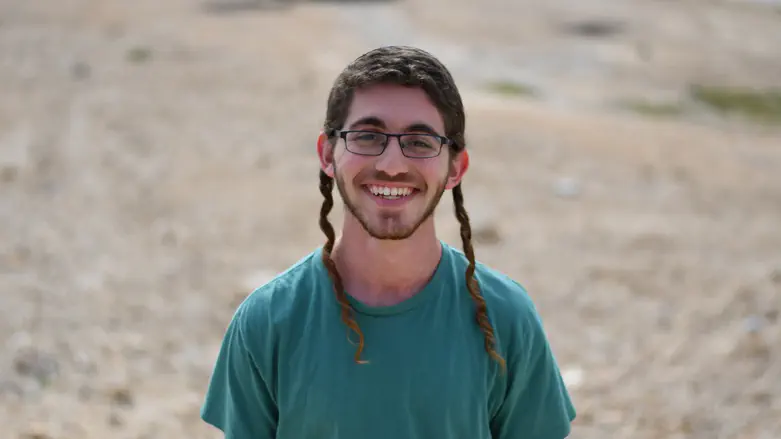
All photographs · 1
In the media
Articles
- A lookout was inaugurated on Mount Ebal in memory of armored corps soldier Ariel Eliyahu, may God avenge his blood
ערוץ 7 ·
- "I live to help others": The family of Ariel Eliyahu, of blessed memory, chooses life | Arutz Sheva
ערוץ 7 ·
- The Sticker Lament of Ariel Eliyahu, of Blessed Memory: “My Cookie Tastes Better When My Friend Eats Some of It” | Israel Hayom
ישראל היום ·
Memorial sites
- Yizkor - Sergeant Ariel Eliyahu
משרד הביטחון - יזכור
- In Memoriam of: Ariel Eliyahu
October7Memorial
Memorial projects
His friends from HaZorim Yeshiva established a lookout in his memory on Mount Ebal. The article reports an inauguration attended by his family and hundreds of people in October 2026.
HaZorim Yeshiva dedicated its library and annual Bible study program to his memory; a star photography workshop was held in which his parents participated with his camera.
A street piano was installed in Mitzpe Yeriho, a Torah scroll was dedicated in Admot Yishai, and baking initiatives, platelet donations and help for others continue in his memory.
Stories told about them
Ariel and his friends used to bake cakes and cookies for the yeshiva students before Shabbat. He studied violin and photography, organized music gatherings and helped others with their studies, and made a point of contacting anyone absent from the daily sharing group.
Life & service
Profile
- Date of birth
- November 19, 2003
- Birthplace
- Mitzpe Yericho
- Date of death
- October 7, 2023
- Age
- 19
- Hometown
- Mitzpe Yericho
Service
- Rank
- Sergeant
- Honours
- Posthumously Promoted
Family
- Father
- Achia
- Mother
- Idit Bruria
Burial
Tributes & remembrance
אריאל אריק ביליה התגורר באופקים ועבד כעובד ביטחון במעבר כרם שלום. ביליה היה אחד מהנרצחים בשבת השחורה. באותה שבת שבה פרצה מתקפת המחבלים, ביליה שהה באותה העת בבית עם אימו, יחד עם אחיו ובנו התינוק, לצד אשתו ושני ילדיו הקטנים, בני ה -4 ו-6. כאשר שמע אריאל את הפריצה לבית הסמוך, הוא לא חשב פעמיים ומיד החל לפעול. אריאל הבריח את בני משפחתו לקומה השנייה של הבית, ומשם דרך חלון החוצה לבית הסמוך. המחבלים ירו פצצת אר.פי.ג'י לעבר הבית, וזרקו רימונים. הם פרצו פנימה כשאריאל היה רק עם מוט ברזל ביד. הוא דאג שכל בני המשפחה יברחו, ובינתיים ניסה להרוויח זמן כשהוא נלחם עם המחבלים, ברגע שהוא ניסה לברוח דרך החלון, המחבלים ירו בו ורצחו אותו. משפחתו של אריאל גילו על מותו לאחר שעות ארוכות בהן שהו במחבוא. במותו הציל אריאל 10 אנשים בגבורה ביניהן את אימו, אשתו, שני ילדיו הקטנים, אחיו, גיסתו וארבעת ילדיהם. אריאל נרצח בידי המחבלים הארורים, ב- 7/10/2023, כ''ב תשרי, תשפ''ד. היום הראשון למלחמת חרבות ברזל. אריאל הותיר מאחור את אשתו, שושנה ושני ילדיהם. בן 28 היה אריאל בנופלו.
לא הכרתי אותך בחיים וזה כל כך חבל! בשעת תרומת טרומבוציטים לזכרך, ביום הולדתך, קראתי עליך כדי להקדיש את התרומה ולהבין מי עומד מאחורי השם והחיוך היפה.
כמה שהעולם איבד בנופלך! יושבת פה בתרומה ובוכה על האדם המדהים שהיית ועל החוסר העצום בלכתך.
יהי זכרך ברוך ומבורך
ילד עם לב טוב וערכים טובים רואה את האחר, כמה אור הספקת לתת לסובבים אותך בזמן כל כך קצר. תודה שהגנת עלינו
יהי זכרך ברוך
אריאל, כמה אור היית.
איזה הפסד לעולם.
תודה למשפחתך וחבריך האצילים על כך שממשיכים להפיץ את אורך.
תודה שהגנת עלינו ותהא נשמתך צרורה בצרור החיים. אמן
אריאל זכית לשמוח, לשמח, לקרב לבבות, תפילתך - לידי בבית הכנסת - היתה תמיד מלאת כוונה.
המשך להעתיר למעלה בעד המשפחה ובעד כלל ישראל, שניגנת כדי לחבר ונפלת כדי להגן עליהם.
תנצבה
יהי זכרו ברוך
חיבוק למשפחת אליהו היקרה
משתתף בצער המשפחה לפני מה שרשום עליך ואני בטוח שזה נכון היית בן אדם זהב אני קיבלתי להקריא בכיתה ״אח תאיר פנים תמיד״ זה ילך איתי עוד הרבה זמן , תודה על זה
אתה זכור שקרבת לבבות
יהי זכרך ברוך
שולחת חיבוק למשפחתך
נשמתו תהיה בגן עדן
בזמן הקצר שלך בעולם הזה הספקת כל כך הרבה השארת רושם והשפעת על כל כך הרבה. האור שלך תאיר לעולם.
בחור שמח עם חיוך מיוחד שתמיד מחפש לעשות טוב לכולם
תליתי מדבקה לזכרו . בחדר שלי . כתוב עליה "אח , תאיר פנים תמיד " אז כל פעם שאני קצת מדוכדכת אני מסתכלת על הקיר . ורואה את המשפט ומתפשט לי חיוך על הפנים . חיוך עם בכי . בכי גדול על כל החיילים שאיבדנו .
היום ערב יום הזכרון לחללי צהל . יום עצוב וקשה . רק עם ישראל יסין מה זה לבכות על משהו שאתה לא מכיר. עם של גיבורים !
יחי זכרך ברוך מסבתא של איתי עסיס פלוגת מלכות החרמון.
בכוחך הענקת לכולנו. השראה לחיים טובים מתוך שממה וחסד
יהי זכרו ברוך
אריאל היקר
כמה געגוע. אחי היקר. היית כל כך טוב
אריאל אחי הטוב- כמה זמן לא נפגשנו
מתגעגעים אליך בבית
ביי ביי מנעם
ניצוצות של אור מפיץ בעולמנו .יהי זכרו ברוך.
אני נדהם כל פעם מחדש מכמות האור שהשארת בעולם בזמן כל כך קצר, ומההורים והחברים שממש ממשיכים ומפיצים את האור שלך בעולם !
ת.נ.צ.ב.ה
עם גיבורי ישראל ינון שמו - עם כל הלוחמים לתקומת ישראל וחילוצו מיד צר - כברכת א-להי מערכות ישראל אשר אסף אליו את נפשו.
יהי זכרך ברוך
השם יקום דמך
תהא נשמתך צרורה בצרור החיים. אמן.
יהי זכרו ברוך.
תודה ששמרת עלינו
השם ינקום דמך
ברוך דעין אמת
היי שמעתי את הסיפור שלך אתה גיבור אמיתי
תודה לך
אריאל, תודה לך
בזכותך אני יכולה להיות פה
הלוואי שאהיה ראויה להקרבה שלך יום אחד
יהי זכרו ברוך! משתתפת בצער הכבד של אחיה ועידית
אני מסתכלת על שמים "אני חושבת תודה שהכרתי אותך "
לדוד שלא הספקתי כל כך להכיר תמיד תהייה חרוט בליבנו
הלב שבור.
גיבור ישראל
יהי זכרך ברוך
He really, really saw the people around him.
Source:ישראל היום
Read the Hebrew original
הוא מאוד מאוד ראה את מי שמסביבו.
It makes me happy to see so many people connect with this
Source:ישראל היום
Read the Hebrew original
זה משמח לראות שכל כך הרבה אנשים מתחברים לזה
This goodness exists
Source:ישראל היום
Read the Hebrew original
הטוב הזה קיים
My prince, my righteous one, how can I say goodbye to you?
Source:משרד הביטחון - יזכור
Read the Hebrew original
נסיך שלי, צדיק, איך אפשר להיפרד ממך?
Ariel, our dear one, with clean hands and a pure heart — what a heart you had.
Source:משרד הביטחון - יזכור
Read the Hebrew original
אריאל, יקירנו, נקי כפים, בר לבב - איזה לב היה לך.
Remembrance Day addresses
יום הזיכרון לחללי מערכות ישראל התשפ"ה – 2025
בכל יום שעובר, אזכור יותר! אזכור, את אלו שיצאו עימי לקרב ולא שבו, ולהם אין מי ידמה ומי ישווה. אזכור, שהכאב לא יעבור לעולם, והזמן, הוא לא מרפה ולא מרפא. אזכור, את שיברון הלב הגובר ואת הבית שבוער. אזכור, את צדקת הדרך, ואשבע שוב, שמה שהיה לא יהיה יותר. אזכור, שיותר מכל דבר אחר – אני חסר! ביום הזה, אני נתקף געגוע לדמותם, לחיתוך דיבורם, לחיוכם, ומדליק נר לזיכרון דרכם ומורשתם!
משרד הביטחון
אגף משפחות, הנצחה ומורשת
יום הזיכרון לחללי מערכות ישראל התשפ"ה – 2025
בכאב, בהצדעה ובתקווה אני מתכבד להדליק נר זיכרון זה. השנה, כשאנו נלחמים במלחמה ארוכה, רב זירתית וצודקת, הזיכרון נושא משמעות עמוקה. ביום זה נעצור ונתייחד עם זכרם של טובי בנינו ובנותינו שנפלו בהגנה על המדינה. מורשתם היא המצפן שמתווה את דרכינו, והיא המעניקה לנו כוח להמשיך ולהגן על מדינת ישראל ותושביה. משפחות יקרות, אנו מרכינים ראשנו ומתחייבים שנעמוד לצידכן תמיד. יהי זכר הנופלים ברוך.
אלוף דדו בר כליפא
ראש אגף כוח האדם, צה"ל
יום הזיכרון לחללי מערכות ישראל התשפ"ה – 2025
בשעה שאנו זוכרים את גודל תרומתם ועומק מסירות נפשם של טובי בנינו ובנותינו, נופלי מערכות ישראל לדורותיהן, ממשיכים צה"ל וכוחות הביטחון במימוש המשימה למענה לחמו ועבורה נפלו: הכרעת אויבינו מדרום, מצפון, ביהודה ובשומרון, וגם בזירות רחוקות יותר. בהערכה רבה ובגאווה אדירה אנו מרכינים ראש בפני הנופלים והנופלות, מאמצים את משפחותיהם אל לבנו, וממשיכים במשימה להבטחת קיומה של ישראל לדורי דורות. יחד נעשה ונצליח.
רב אלוף אייל זמיר
הרמטכ"ל, צה"ל
יום הזיכרון לחללי מערכות ישראל התשפ"ד – 2024
כאשר דגלינו מורדים לחצי התורן וראשינו מורכנים לזכר הנופלים והנופלות במערכות ישראל, ממשיכים לוחמי צה"ל ומפקדיו בלחימה בדרום, בצפון, ביהודה ובשומרון ובזירות נוספות. על כל דור מוטלת המשימה של הגנת העם והארץ – משימה שאף פעם אינה פוסקת. נצדיע בגעגוע ובגאווה לנופלים ולנופלות, נחבק את משפחותיהם, ונמשיך ברוח הציווי שהותירו לנו. עם ישראל חי.
רב ניצב יעקב שבתאי
המפקח הכללי, משטרת ישראל
יום הזיכרון לחללי מערכות ישראל התשפ"ד – 2024
אחיי הנופלים, כל נר הוא זיכרון יחיד ומיוחד, על חיים שהיו ואינם, געגוע שנצרב עמוק בלב, עולם ומלואו. הנרות כולם הם זיכרון של אומה כי לעולם לא עוד, בשורת הציונות וקוממיות ישראל. זיכרון כי הדרך לעם חופשי בארצנו עוברת דרך מסדר הנופלים. אור הנר יזכיר לנו את מסירות נפשכם להציל חיים, להגן על הבית. הנרות מסמנים לנו נתיב גבורה ערכי מחייב שאנו מצווים ללכת לאורו. נמשיך להילחם ולהוסיף אור מתוך אמונה בנצח ישראל.
יואב גלנט
שר הביטחון
יום הזיכרון לחללי מערכות ישראל התשפ"ד – 2024
בהצדעה ובכאב, בשם צה"ל כולו, אני מדליק נר זיכרון. בעיצומה של מלחמה, הזכרון נושא משמעות יום-יומית, שעבר והווה מתלכדים בה. לאורם של הנופלים נמשיך לצעוד, חיילי הסדיר והמילואים. לאורם של הנופלים נמשיך להגן על ארצנו ועל מולדתנו, גם כשהמחיר כבד. להבת-הזכרון תבער בנו בעודנו ממשיכים להלחם ונזכור את הנופלים ואת אומץ ליבם. משפחות יקרות, צה"ל מרכין היום ראש, מצדיע לכן וכואב איתכן. יהי זכר הנופלים ברוך.
אלוף יניב עשור
ראש אגף כוח האדם, צה"ל
יום הזיכרון לחללי מערכות ישראל התשפ"ד – 2024
בהוקרה, בגאווה ובכאב שאין לו סוף, אני מתכבד להדליק נר לזכרם של הנופלים והנופלות במערכות ישראל. סיפור חייהם בארץ הזאת, מסכת שירותם, גבורתם והקרבתם – הם סיפורה של הארץ הזאת, אך גם סיפור המחיר הכבד שהיא תובעת מאוהביה. מחויבותנו לזכר הנופלים ולדרך שהותירו לנו ניצבת תמיד לנגד עינינו. את המשימה שלא זכו להשלים, משלימים כיום, וישלימו, אנשי כוחות הביטחון, הממשיכים בדרכם ולאורם. יהי זכרם של הנופלים ברוך.
משרד הביטחון
אגף משפחות, הנצחה ומורשת
יום הזיכרון לחללי מערכות ישראל התשפ"ד – 2024
בחרדת קודש אני מתכבד להדליק נר לזכרם של חללי מערכות ישראל, חברנו שנפלו, מראשית היציאה מהחומות ולאורך כל שנות עצמאותנו המדינית והציונית, מהווים תמרור זיכרון לדרך חיינו ולמחוייבות הלאומית להנצחת זכרם. דרכם נותרה דרכנו ומורשתם נר להמשך עשייתנו. יהי זכרם ברוך!
בני גנץ
שר הביטחון
יום הזיכרון לחללי מערכות ישראל
נזכור אותם, כולנו יחד. כל אחד ואחת מהם, מדי יום ביומו, והיום ביתר שאת, כך – לנצח. "כי מדי דברי בו זכור אזכרנו עוד"
משרד הביטחון
אגף משפחות, הנצחה ומורשת