
The story
At Kaplan Hospital in Rehovot, on the 25th of Elul, 5763, which was September 22, 2003, a great joy was born. Malka and Efraim Even Shoshan welcomed their third son with open arms, a child who would fill their lives with a different light, a unique laughter, and a song that would accompany them for many long years. Amitai, as they named him, joined his older brothers, Oriel and Liyad, and later, a younger brother, Avishai, would complete the family mosaic. In his early years in Rehovot, their small home buzzed with life. Amitai was a happy, active child, every movement bursting with energy, and every laugh a sweet echo of pure joy. Even as a toddler, before he could form a complete sentence or fully grasp the meaning of words, Amitai was drawn to the world of Torah and prayer. Around the age of two, he would find a quiet corner in the sun-drenched living room, take an old cloth diaper, wrap it ceremoniously over his soft shoulders like a small prayer shawl, open a colorful children's book that served as his prayer book, and mumble words and sounds to himself that resembled prayer. His parents would watch him from the side, a wide smile spreading across their faces, understanding that something special was unfolding within this small child. It was the embodiment of an ancient soul in a young body, a deep curiosity and a natural love for things beyond the ordinary.
When Amitai was four, the family moved from Rehovot to the quiet, green moshav of Azriel, nestled in the heart of the Tel Mond bloc, within the Lev HaSharon Regional Council. The transition from the city to the moshav was, for him, a small and curious child, an experience of a new world opening up. Suddenly, instead of bustling streets and tall buildings, there were open fields, the smell of damp earth after rain, the chirping of birds in the early morning hours, and the distant sounds of tractors plowing the land. He loved the open space, the freedom to run barefoot on the grass, the chance to touch leaves, climb trees, and feel the simple, rich life of the moshav. In Azriel, Amitai found fertile ground for the development of his personality. He was educated at the Noam Amit Kfar Batya religious state school in Ra'anana, where he excelled as an ambitious and high-achieving student. There wasn't a lesson where he wasn't attentive, a learning challenge he didn't embrace wholeheartedly, or a subject he didn't delve into deeply. His greatest love was for religious studies. He didn't just learn them; he immersed himself in them day and night, as if every word and every letter in the Gemara or a Torah scroll were keys to the secrets of the world. He would sit for long hours, his head buried in the ancient pages of the Gemara, often dozing off, but his eyes always gleamed with understanding and enthusiasm.
Amitai was a handsome young man, not only in his outward appearance but also in his inner self. He possessed a captivating personality, one that naturally drew people to him. He was opinionated and independent, always knew what he wanted and how to achieve it, and at the same time, he knew how to navigate any place and any situation, as if born with an internal compass. As a son, he was loving and devoted to his parents, Malka and Efraim. The commandment to honor one's father and mother was not just a written law for him, but a daily way of life, expressed in small and large actions alike—in long conversations late into the night, in constant help around the house, in patient listening to their stories, and in a genuine desire to make them happy in every possible way. When he returned home from the yeshiva, he would call out, "Mom, Dad, I'm back!" in an excited voice, and run to hug them. He was a devoted brother to Oriel, Liyad, and Avishai, a partner in games, secrets, and sometimes even small arguments that always ended in a hug and shared laughter. He always made sure they were well, helped them with their studies, and served as a personal example and source of inspiration for them. His relationships with his extended family were close and warm. He never missed a family event—weddings, circumcisions, birthdays—and was always among the first to offer help with organizing, setting up, or cleaning up. He was the one who brought joy, singing and playing, telling jokes, and making everyone feel an integral part of the celebration.
Amitai was a charming young man, endowed with extraordinary sensitivity towards others. He saw every single person and gave each of his acquaintances the precise attention they needed. He was not indifferent to the pain or distress of others and was always there to help, to offer a supportive shoulder or a kind word. He paid particular attention to teenagers who struggled to integrate socially, those who stood on the sidelines, introverted or embarrassed, and approached them on his own initiative. He didn't wait for them to ask for help; instead, he approached them with a warm smile, asked how they were, and offered good advice or an invitation to a shared activity. "Sometimes," he would say in a quiet voice, "just knowing that someone cares is already half the battle." He was a true friend, one you could lean on with your eyes closed, tell your most intimate secrets, and know that he would always listen, understand, and support. He managed to touch many people, influence them positively, make them laugh with witty jokes, and hug them in difficult moments. He performed countless good deeds, small and large, and created uplifting experiences for everyone in his presence, leaving behind a trail of warmth and love.
The study of Torah and Gemara, prayers, and religious ceremonies were the pillars of Amitai’s life. From a young age, even as a child, he led prayer quorums and services at the moshav synagogue. He volunteered to serve as a cantor and Torah reader, and his pleasant voice, which resonated in various melodies—Yemenite, Carlebach, Ashkenazi—filled the synagogue with majesty and splendor. He recited the Selichot prayers in the Sephardic tradition, transforming prayer into a living, accessible experience for all. He not only knew how to pray but also how to make prayer and study accessible with grace, infinite patience, and a welcoming smile. He helped all synagogue-goers navigate the prayer book, understand the meaning of the words, and enjoy the prayer, even those who attended infrequently. Amitai saw Torah not merely as a textbook but as a complete way of life, illuminating with precious light the lives of individuals and the community. He was the "living Jewish spirit" among his family, his friends, and everywhere he went. He always found time to explain halachot, share words of Torah, and draw those around him into study and prayer, not through coercion, but with love and deep inner conviction.
Beyond his religious studies, Amitai was an active participant in the Bnei Akiva youth movement, in the "Hineni" tribe. As he grew older, he became an admired and beloved counselor in his home moshav of Azriel and in the nearby village of Kfar Ya'avetz. Children and teenagers were drawn to him, looking at him with admiration, listening to every word. In the summer, he was a counselor at "Machane Amihai," a summer camp run by the movement that combined sports activities, challenging hikes, and a rich religious atmosphere. He was the one who ran at the front, leading everyone along the paths of the land, telling stories, and ensuring that everyone felt part of the shared experience. Additionally, he was chosen to be a young *shalach* instructor (Mashatz), a prestigious role in which he led activities and trips on behalf of the Ministry of Education, and later even became an instructor in the Mashatz instructors' course. In his role as a counselor in both these frameworks, his captivating charisma, inner strength, unique sensitivity to see and help each and every participant overcome challenges, and his deep love for the land, which was a fundamental part of his life, were fully expressed. He didn't just talk about the land; he lived it, breathed it, and wanted all his participants to feel the same.
Amitai expressed his love for the land not only through guiding trips but also through private excursions he took with his friends and family. He loved to travel throughout the country, from the green North to the desert South, to experience its diverse landscapes, its scents, and the history etched into every stone. Always, under his bed in his room, a small coffee kit was kept – a gas burner, a finjan, small cups, and a compartment of excellent coffee. When the right moment arrived, in the heart of nature, he would happily pull it out, place it on a flat stone, and prepare fragrant coffee. The hushed hiss of the gas burner, the aroma of coffee spreading through the crisp air, and the deep conversations that would develop around the steaming finjan were magical moments, the highlight of the trip for him. This was his way of connecting with the earth, with friends, and with that moment where everything came together.
Alongside his religious and secular studies, and the demanding afternoon counseling duties, Amitai diligently trained with a combat fitness group in the moshav. He pushed himself to the limit, sweating, striving, and always aiming to be better, stronger, more resilient. He wasn't content with just group training but engaged in independent athletic training, following a strict program he designed for himself, placing combat service in an elite unit as an integral part of his future aspirations. This wasn't just physical training; it was mental preparation, forging his spirit for the great challenge that awaited him. He strived for excellence in every area of his life, aiming to improve constantly on both a spiritual and material level – in his studies, in his counseling, and in his preparations for military service. He set clear goals for himself, both for the near future and the distant one, and maintained an organized to-do list in small notebooks he carried with him. At the top of each notebook, above the list of tasks, he wrote the words "With Strength and Humility." This was his motto – to move determinedly towards his goals, without fear, with faith and self-confidence, but always with humility, attentiveness, and the ability to receive feedback on his performance. He knew how to accept constructive criticism from others without taking offense, and always strived to be a better person. "A man of truth, as his name suggests," his mother said, referring not only to his first name but also to his essence, to the way he lived and conducted himself.
At sixteen, Amitai met Ayala, and they became a couple. Ayala described Amitai as a loving, attentive, and considerate partner. He would arrive at her home on Fridays with a fresh bouquet of flowers and a fine bottle of wine, a small but significant gesture that spoke of thoughtfulness and care. He quickly won the hearts of Ayala's entire family, the Reinzilber family, and became a true member of the household, an inseparable part of their meals, conversations, and shared laughter. Their connection was deep, full of mutual respect and great love, the kind that leaves a lasting mark.
Upon completing his high school studies at the yeshiva, Amitai continued for two years at the "Bnei David" Hesder Yeshiva in the settlement of Eli. This was a period of further immersion in the world of Torah, part of his declared aspiration to be a true Torah scholar and gain significant spiritual strengthening before his enlistment in the army. He was a candidate for the prestigious "Erez" program, which combines combat officer training with a university bachelor's degree, a path considered the pinnacle in the IDF. But Amitai, with his characteristic determination, decided to stick to his original plan – to serve as a regular combat soldier in an elite unit, to experience the field, the combat, the camaraderie of fighters. He wanted to feel the earth beneath his feet, to defend his people and his land in the most physical and tangible way.
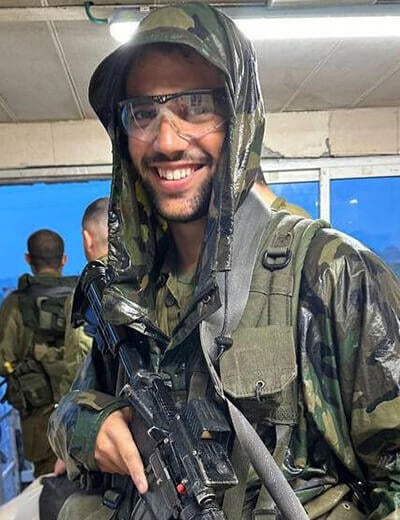
On August 10, 2023, the awaited moment arrived. Amitai enlisted in the IDF, having successfully passed the rigorous selection stages for elite units, and was assigned to the "Egoz" unit (Unit 621) in the "Oz" Commando Brigade (Brigade 89). He began the demanding training course, which lasts one year and four months, during which he underwent basic training and advanced training, and continued to specialized training at the Commando School in "Adam Facility" in the Benjamin mountains. This was a period of immense physical and mental challenges, of few hours of sleep, of long marches under heavy loads, of learning complex combat doctrine. But Amitai, with the motto "With Strength and Humility" etched in his heart, overcame every difficulty with a smile and determination. He did not get to complete his training in full, but throughout all the months of training, he consistently combined the sacred with the mundane. He continued his Gemara studies, utilizing every free moment between one training session and another, between one march and another, to open the books and immerse himself in them. He practically embodied the expression "Safra VeSayfa" – the combination of the book of Torah with the sword, of the world of spirit with the world of action and combat. His mother, Malka, recounted that it took Amitai half a year to read a regular book, but he never put down the Gemara. His father, Efi, shared that leading up to Purim, Amitai and two other teammates decided to complete the tractate "Megillah." Amitai carried the tractate in his pocket everywhere, studying during every break, every moment of rest. When the team entered the Gaza Strip, he went in without the tractate, leaving it behind due to operational restrictions. But he did not give up his aspiration to complete it, and constantly sought ways for someone entering the Strip to bring him the tractate so he could finish his study. His father Efi said with pain, "I don't know if he managed to complete the study."
Shabbat, 22nd of Tishrei, Simchat Torah 5784, the morning of October 7, 2023. At 6:30 AM, the Hamas terrorist organization launched a brutal and unprecedented surprise attack on Israel. Under the cover of a massive barrage of thousands of missiles and rockets from the Gaza Strip towards wide areas of the country, thousands of terrorists infiltrated – by land, sea, and air – and began a murderous assault on the communities surrounding Gaza, on the southern cities of Sderot, Ofakim, and Netivot, on nature party revelers near Kibbutzim Re'im and Nir Oz, on IDF bases, and on those traveling on the roads in the area. The terrorists cold-bloodedly murdered approximately eight hundred civilians in their homes, in their cars, after committing severe and cruel crimes against them. They abducted hundreds of Israelis – women, children, elderly, and soldiers – to the Gaza Strip, and destroyed, looted, and set fire to homes and property. Hundreds of soldiers, police officers, security forces personnel, and members of local emergency response teams fell in the heroic battle to defend their communities. On this terrible morning, a war began.
On that Shabbat, with his training course in full swing, Amitai and his team were urgently called to secure communities in the north of the country. The training was abruptly interrupted, and the new reality of war sent them directly to the front line. Later in the fighting, the "Egoz" training combatants, including Amitai, were transferred to the Gaza sector. Under constant fire, within a hostile and unfamiliar enemy territory, the tension was at its peak. But Amitai, with his special composure and high morale, maintained stability and optimism. He was the one who strengthened his friends, who spread a smile even in the most difficult moments, who reminded everyone of the goal and the importance of their mission.
While in the Gaza Strip, in the midst of an intensive combat operation, Amitai and his commando brigade team embarked on a critical mission: to clear the logistical route in the city of Khan Yunis in the southern Strip, and to establish a security zone that would allow safe passage for forces and equipment. This was a seemingly routine mission, yet it harbored immense dangers. On Friday, April 6, 2024, the 27th of Adar Bet 5784, Saturday afternoon, at 2:30 PM, disaster struck. The team was operating in the Abasan neighborhood in the eastern part of the city, a built-up and ruined area, when suddenly, without warning, terrorists emerged from a tunnel shaft inside a destroyed house. They fired at close range towards the team. Amitai was hit. The injury was fatal, and he was killed on the spot. In this severe incident, the team commander from the Commando School, Captain Ido Baruch, and two other soldiers in training, Sergeant Reef Harush and Sergeant Ilai Tza'ir, were also killed. Amitai Even Shoshan, twenty years old at his fall, died in battle, defending his people and his land, as he had aspired to do his entire life.
The news of Amitai’s fall struck his family, friends, and the entire Azriel community with deep shock. Sergeant Amitai Even Shoshan was laid to rest in the military section of the Tel Mond cemetery. Hundreds of mourners – family members, friends from the moshav, Bnei Akiva trainees, yeshiva students, and commanders and soldiers from the Egoz unit – visited the cemetery to honor his memory and accompanied him on his final journey. The sight was heartbreaking: green fields turned into a field of tears, a large crowd silent in heavy stillness, with only the sounds of weeping disturbing the chilling quiet. He left behind grieving parents – Malka and Efraim – and three heartbroken siblings – Oriel, Liyad, and Avishai. After his fall, Amitai was posthumously promoted from the rank of Private First Class to Sergeant, as a token of appreciation for his actions and devotion. On his gravestone, his loved ones engraved the words "With Strength and Humility," which were his way of life, and the verse from Psalms 15:2, "He who walks blamelessly and does what is right and speaks truth in his heart," which perfectly described his clear and pure character.
A few days after the difficult funeral, Amitai's equipment boxes, which had remained with his unit, were brought to the family home. Opening them was a moment of profound emotion: the boxes were filled with dozens of holy books, Gemarot, and prayer books from which he had studied during his training and operational activities. The books, imbued with the scent of dust and sweat, were silent testimony to Amitai's dual life – a fierce warrior and a cherished Torah scholar. Among the books, the family found the tractate "Megillah," the very tractate Amitai had planned to complete by Purim, and symbolically, he had indeed fulfilled this. During the Shiva, his family and friends gathered and together held the ceremony for the completion of the tractate, the same completion Amitai had intended to do in Gaza, on enemy soil. It was a moving moment, where the sacred and the mundane, life and death, connected through the endless study of Torah.
On Friday during the Shiva, hundreds of students from the "Bnei David" Hesder Yeshiva in Eli, where Amitai had studied before his enlistment in the IDF, gathered in the mourning tent in Moshav Azriel. Along with them came members of the "Tzur Israel" community from the moshav. They prayed together for the elevation of Amitai's soul, accompanied the entrance of Shabbat with strengthening words of Torah, and with Shabbat songs he loved so much, in which his voice was present even in his absence. Hundreds of women from all over the region separated challah and baked challot in honor of Shabbat and for the elevation of his soul, a symbolic act of unity and connection.
At the memorial service marking thirty days since his fall, his mother, Malka, eulogized him with heartbroken words, yet full of pride: "Our beloved son, today we mark thirty days since your fall, and each day feels like an eternity. We are learning how much you accomplished in such a short time. So many mitzvot, good deeds, and good manners. You fell for the sake of the Land of Israel, which you loved to travel, for the people of Israel, whom you were so proud to belong to. A child of values, beautiful in heart and outwardly. A mother's child, a good friend. Rest in peace." The mother's voice continued to echo in the space, describing the lost son, the void that had opened, and the way they would continue to live his legacy.
His father, Efraim, eulogized him with unfathomable pain, describing the daily longing: "You have been gone for a month now, and I find myself, especially on Thursdays or Fridays, waiting for the phone call, 'Dad, come pick me up' from here or there, it didn't matter to me, because it was an experience of togetherness. Two weeks ago, I started the car on Friday morning, and instead of driving where I needed to go, I found myself on the way to 'Adam Facility,' and in the middle, I remembered you weren't there anymore. I stopped the car and lost myself... How much I miss you, how much you are missing from me and from us. Send a sign, come in a dream, something small I can hold onto. I love you, my child, and miss you terribly." These words described the pain of loss, a daily habit that became a painful memory, the emptiness that had opened in a father's life.
His sister, Liyad, shared her deep pain and the feeling of losing a soulmate: "Who will comfort me when things are hard? Who will keep all my secrets? Who will stand with me hand in hand against our parents? I miss you so much. How is it possible that the most alive person there is, is no longer? I don't know how to go on from here, I really don't know. You will have to show me the way, my little angel. All that remains is pain and tears, but now we must create joys. So please, little brother, send them to us so we can walk with them alongside the pain, because it will probably never leave us. I truly love you." In Liyad's words, there was not only sadness but also the hope to continue his path, to find joy amidst the pain.
Ayala, Amitai’s partner, eulogized him with words full of love and longing, describing him as a complete person, one of a kind: "Tuli, you were the funniest in the group, the smartest, the wittiest, the most handsome, the most mischievous, the most serious, the most focused, the one who knew how to say the right words at the right time, the most loving, my most. All the words in the world cannot describe the person you were and our love. Now I am left here, like a flower without a stem, a sun without a sky, a sea without a shore, and a world without a view. Just me, without you. You will forever be my sole pride. I love you to the sky and beyond, your Luli." Ayala’s words were a song of love and pain, describing the immense void Amitai left in her life, the beauty and completeness she saw in him.
Hadar, his mentee in the Bnei Akiva youth movement, eulogized him, expressing her immense admiration: "Without a doubt, you were the best counselor, the best senior, that the moshav and I could have known. Your charisma cannot be described in words. You made me feel a sense of belonging, and you helped me with everything I needed. Thank you for the privilege of knowing you." Amit, a soldier in the Egoz unit and his teammate, struggled to comprehend the loss: "To write about you in the past tense is unbearable. Your tragic death is incomprehensible. I will not forget the many Sabbaths you spent on base, the 'Oneg Shabbat' you led for us, and the last Shabbat we were together. You were the cantor for the Torah reading, the Shabbat before Purim, and you blessed me with a special blessing. I will not forget the Purim party that was actually a farewell to you, when you invited me to dance with you. May God avenge your blood." Zohar, his physical education teacher at the Bnei Akiva Yeshiva in Ra'anana, remembered him as a special student: "A beloved student. I had the privilege of being his physical education teacher throughout his years at the Bnei Akiva Yeshiva in Ra'anana. A talented athlete, a leader, and a person of complete and captivating personality. I will always remember you. May your memory be blessed." Each eulogizer, from every circle of his life, described a different facet of Amitai's complex and illuminated character, and all contributed to a complete picture of an extraordinary person.
Amitai's parents, Malka and Efraim, decided to commemorate his memory not only with words but with actions for the Land of Israel and the unity of the people of Israel, thereby continuing his path and values. His mother, Malka, is currently establishing the "Bri'ut Havaya Ve'Havaya" (Wellness, Being, and Experience) center, in partnership with a friend and therapist, Guy Masad. This center is intended to provide mental and physical healing for war victims and their families, offering them a place of recovery and support, and thus spreading the kindness and giving that characterized Amitai. Concurrently, the family is working to commemorate him in many other ways: they are initiating the establishment of a cultural center in Moshav Azriel, where he grew up, in cooperation with the local committee and the Lev HaSharon Regional Council. The planned building will include a multi-purpose event hall and will also serve as an active Beit Midrash for daily Torah study, a place that will connect community, culture, and spirit, exactly as Amitai did in his life. In addition, the parents are working to pave "The Path of Heroes," a beautiful route for pedestrians and cyclists, which will connect Moshav Ya'af with Tel Mond. This path, which will also serve as a running trail, will allow youth to reach schools or clubs by bicycle, and will be a symbol of connection to the land, health, and physical activity, values that Amitai so deeply believed in.
The family issued a call to the public, both in Israel and worldwide, to adopt one good deed that Amitai used to do, and to persevere in it throughout their lives. Through these good deeds, they wrote, Amitai's soul will ascend, and his light will shine continuously for the merit of the entire people of Israel. Amitai Even Shoshan, the child who loved to study Torah and run in the fields, the young man who connected the sacred with the mundane, and the soldier who fell defending his homeland, left behind a deep and unforgettable mark. His short, yet full and meaningful life, is a story of love for humanity, for the land, and for the Torah. A story of strength and humility, of quiet and true heroism, which serves as a beacon of hope and Israeli pride, and continues to illuminate our path even after his departure.
Moments of a life
All photographs · 1
In the media
Articles
- “He was killed so that I could go on living”: The women who lost their partners in the war have not been left alone | Israel Hayom
israelhayom.co.il ·
- Yaakov Stern Eulogizes: Amitai Will No Longer Take Part in the Siyum
ערוץ 7 ·
- Saying Goodbye to the Fallen: "He Chose to Be a Hero"
ynet ·
- “How do you say goodbye to a perfect child?”: the mother of Sergeant Amitai Even Shoshan, of blessed memory, saluted him at his grave | Israel Hayom
israelhayom.co.il ·
- IDF says 4 commandos killed in southern Gaza ambush
Ynetnews ·
- Caught in an ambush: An officer and three special forces sergeants killed in the Gaza Strip
9tv.co.il ·
Memorial sites
- Yizkor — Sergeant Amitai Even Shoshan
יזכור - משרד הביטחון
- About — Briut Center: Being and Experience
מרכז בריאו״ת
Memorial projects
The Briut Havaya VeHavaya center states that it gives a place of honor to Amitai’s path, inspired by remarks he made about experience and being when taking leave of the yeshiva in Eli. The source describes a connection to the center’s work, without attributing its establishment to family members where the source does not say so.
Stories told about them
Amitai was part of a group that finished studying Tractate Megillah ahead of Purim. The friends planned to hold a completion celebration after returning from Gaza, but he fell before then.
Three days before Amitai’s death, Yaakov Stern gave him volumes of the Gemara for Bava Kamma and Berakhot. Amitai had initially asked to study Bava Batra or Shabbat while in Gaza, wanting to use the time for learning.
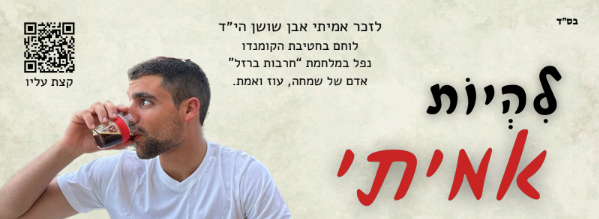
“Be real (Amitai).”
Life & service
Service
- Rank
- Sergeant
- Unit
- Commando Brigade
- Honours
- Posthumously Promoted
- Battle Location
- In the southern Gaza Strip
Family
- Father
- Efraim
- Mother
- Malka
Burial
Tributes & remembrance
נזכור אתכם תמיד
תודה לך, אמיתי היקר,
על כל האור והטוב שהפצת בעולמנו,בעוז ובענווה .
תודה לך שהגנת עלינו במחיר היקר והנורא מכל!
תנחומים מלב כואב לכל אוהביך.
יהא זכרך ברוך, גיבור ישראל !
הי"ד. יהי זכרו ברוך.
גיבור ישראל. יהי זכרך ברוך לעולמים
יהי זכרך ברוך, תהי נפשך צרורה בצרור החיים, ה יקום דמך
גיבור ישראל
בן משפחה יקר ביום הזה הזכרון מאד כואב. ליווינו אותך בדרכך האחרונה כל המשפחה בבאר שבע אנחנו הילדים של יהושוע ז"ל ורחל איצידיסי זוהר אלה איתן וציפי.
יזכור העם את גיבוריו
יהי זכרו ברוך גיבור ישראל
יהי זכרו ברוך
משפחת אבן שושן האהובה, נלקח מכם אמיתי, פרח ומלח הארץ. מחבקים אתכם
יהי זכרך ברוך גיבור ישראל
אמיתי אבן שושן היקר, חסרונך מורגש בכל יום ובכל שעה, לא מאמין שזהו יום הזיכרון השני שאני כותב עליך בלשון עבר אתה חקוק בליבי ובזכרוני, זוכר שהגעת לבאפ לכיש ואז למתקן אדם, היה לי הזכות להיות חלק מהדאגה לבריאותך ולשמירת כשירותך ושל חבריך הלוחמים , זוכר את צניעותך והחיוך על פניך ואת אמירת בוקר טוב , שלום ומה שלומך כשהיית עובר ליד המרפאה, שמור עלינו מלמעלה, חבר אתה חסר ת.נ.צ.ב ה , הי"ד
גיבור ישראל. יהי זיכרו ברוך!
גיבור ישראליהי זכרו ברוך
אמיתי היקר היה בן של חברה אהובה שכל כך אהב את הארץ הזאת ואהב את הטבע ולכן בחרתי לנטוע עץ לזכרו שתמיד יזכיר אותו ואת החיים שהיו בו. לעולם לא יישכח, יהי זכרו ברוך
ילד צדיק ויפה
החיסרון שלך מורגש
מקווים שאתה מחייך אלינו מלמעלה, ושומר עלינו מכל משמר.
מתגעגע אליך ילד
אמיתי הצדיק,
בחור מרשים ומדהים , חשוב ללמוד וללמד עליו ועל מעלותיו. נכנס עמוק ללבנו.. .
יהי זכרו ברוך
לעולם אזכור את צחור חיוכך ואת ההתמדה והשאיפה שלך כשרצנו ביחד בקבוצת הריצה בנתניה,את האהבה שלך לגרביים הצבעוניות והלא זהות שגרבת
לנצח השארת געגוע בלב ואת הידיעה שנפלת צעיר,יפה כל כך וחדור אהבת מולדת ומשפחה
אתה מקור גאווה להוריך ואחייך
לעולם נכנסת לי ללב ולא תצא ממנו
בוקר אדם משכמו ומעלה, צדיק שאין לתאר.
היה תמיד דבוק לתורה.
שמור עלינו מלמעלה.
בחור מדהים! בלב של כולנו. שהמשאלה שלך תתגשם ושתהיה אחדות בעם שלנו. אמן
למרות שלא הייתה לי היכרות אישית איתו, הסיפורים ששמעתי עליו מרחיבי לב. היו בהם חום, נדיבות, אהבת הארץ ואהבת אדם לחברו. אדם מיוחד במינו, כזה שמשאיר חותם בכל מקום אליו הגיע, ושיחסר מאוד לכל מי שהכיר. תודה על שירותך, יהיה זכרך ברוך
ילד....גבר, געגוע עצום לאור שהפצת סביבך, של טוב לב, של עזרה לזולת, של כבוד לכל אדם ואישה באשר הם, לצניעות מחד ולהיותך תמיד במרכז העניינים, השארת חלל עצום בלב של כולנו
אשרינו שזכינו לחייל כמוך
נלחם על המולדת והגן עליה בגופו
יהיה זכרך ברוך
עוד רגע שנה מלכתך.
אמיתי ילד של אור של צחוק של חיוך שלא יורד מהפנים.
איך היית חבר של כולם .
האח הקטן של החברה הכי טובה שלי בעולם נהיית חלק בלתי נפרד מאיתנו.
נוח על משכבך בשלום
תשמור עלינו מלמעלה
ותתן כוח להורים ולאחים שלך הם צריכים את זה הכי !
יהיה זכרו ברוך, מטובי בנינו. בן תורה ,אמת ואהבה. גיבור ישראל ת.נ.צ.ב.ה
תודה ששמרת עלינו
לעולם לא נשכח את תרומתך ושל משפחתך היקרה
גיבור ישראל
יהיה זכרו ברוך
יהי זכרו ברך
גיבור ישראל
מתפללת שנהיה ראויים להקרבה שלך ושל המשפחה היקרה שלך.
יהי זכרך ברוך.
Amitai truly was one of the pillars of the synagogue, first and foremost in everything sacred.
Source:ערוץ 7
Read the Hebrew original
אמיתי ממש היה מעמודי התווך של בית הכנסת, ראש וראשון לכל דבר שבקדושה.
How do you say goodbye to a perfect child?
Source:israelhayom.co.il
Read the Hebrew original
איך נפרדים מילד מושלם?
You were the most loving and the most mine.
Source:israelhayom.co.il
Read the Hebrew original
היית הכי אוהב והכי שלי.
You are the best and the funniest
Source:israelhayom.co.il
Read the Hebrew original
אתה הכי טוב והכי מצחיק
There will be no one to call out 'Nona'
Source:israelhayom.co.il
Read the Hebrew original
לא יהיה מי שיקרא 'נונה'
You were a leading fighter
Source:israelhayom.co.il
Read the Hebrew original
היית לוחם מוביל
There is sadness in every joy of mine
Source:israelhayom.co.il
Read the Hebrew original
בכל שמחה שלי יש עצב
It was an experience of togetherness.
Source:izkor.gov.il
Read the Hebrew original
זו הייתה חוויה של ביחד.
Every day feels like an eternity.
Source:izkor.gov.il
Read the Hebrew original
כל יום נראה כמו נצח.
You made me feel I belonged there
Source:izkor.gov.il
Read the Hebrew original
נתת לי להרגיש שייכת למקום
I will not forget the many Shabbats you spent on base
Source:izkor.gov.il
Read the Hebrew original
לא אשכח את השבתות הרבות שסגרת בבסיס
A talented athlete, a leader
Source:izkor.gov.il
Read the Hebrew original
ספורטאי מוכשר, מנהיג
Remembrance Day addresses
יום הזיכרון לחללי מערכות ישראל התשפ"ה – 2025
בכל יום שעובר, אזכור יותר! אזכור, את אלו שיצאו עימי לקרב ולא שבו, ולהם אין מי ידמה ומי ישווה. אזכור, שהכאב לא יעבור לעולם, והזמן, הוא לא מרפה ולא מרפא. אזכור, את שיברון הלב הגובר ואת הבית שבוער. אזכור, את צדקת הדרך, ואשבע שוב, שמה שהיה לא יהיה יותר. אזכור, שיותר מכל דבר אחר – אני חסר! ביום הזה, אני נתקף געגוע לדמותם, לחיתוך דיבורם, לחיוכם, ומדליק נר לזיכרון דרכם ומורשתם!
משרד הביטחון
אגף משפחות, הנצחה ומורשת
יום הזיכרון לחללי מערכות ישראל התשפ"ה – 2025
בכאב, בהצדעה ובתקווה אני מתכבד להדליק נר זיכרון זה. השנה, כשאנו נלחמים במלחמה ארוכה, רב זירתית וצודקת, הזיכרון נושא משמעות עמוקה. ביום זה נעצור ונתייחד עם זכרם של טובי בנינו ובנותינו שנפלו בהגנה על המדינה. מורשתם היא המצפן שמתווה את דרכינו, והיא המעניקה לנו כוח להמשיך ולהגן על מדינת ישראל ותושביה. משפחות יקרות, אנו מרכינים ראשנו ומתחייבים שנעמוד לצידכן תמיד. יהי זכר הנופלים ברוך.
אלוף דדו בר כליפא
ראש אגף כוח האדם, צה"ל
יום הזיכרון לחללי מערכות ישראל התשפ"ה – 2025
בשעה שאנו זוכרים את גודל תרומתם ועומק מסירות נפשם של טובי בנינו ובנותינו, נופלי מערכות ישראל לדורותיהן, ממשיכים צה"ל וכוחות הביטחון במימוש המשימה למענה לחמו ועבורה נפלו: הכרעת אויבינו מדרום, מצפון, ביהודה ובשומרון, וגם בזירות רחוקות יותר. בהערכה רבה ובגאווה אדירה אנו מרכינים ראש בפני הנופלים והנופלות, מאמצים את משפחותיהם אל לבנו, וממשיכים במשימה להבטחת קיומה של ישראל לדורי דורות. יחד נעשה ונצליח.
רב אלוף אייל זמיר
הרמטכ"ל, צה"ל
יום הזיכרון לחללי מערכות ישראל התשפ"ד – 2024
כאשר דגלינו מורדים לחצי התורן וראשינו מורכנים לזכר הנופלים והנופלות במערכות ישראל, ממשיכים לוחמי צה"ל ומפקדיו בלחימה בדרום, בצפון, ביהודה ובשומרון ובזירות נוספות. על כל דור מוטלת המשימה של הגנת העם והארץ – משימה שאף פעם אינה פוסקת. נצדיע בגעגוע ובגאווה לנופלים ולנופלות, נחבק את משפחותיהם, ונמשיך ברוח הציווי שהותירו לנו. עם ישראל חי.
רב ניצב יעקב שבתאי
המפקח הכללי, משטרת ישראל
יום הזיכרון לחללי מערכות ישראל התשפ"ד – 2024
אחיי הנופלים, כל נר הוא זיכרון יחיד ומיוחד, על חיים שהיו ואינם, געגוע שנצרב עמוק בלב, עולם ומלואו. הנרות כולם הם זיכרון של אומה כי לעולם לא עוד, בשורת הציונות וקוממיות ישראל. זיכרון כי הדרך לעם חופשי בארצנו עוברת דרך מסדר הנופלים. אור הנר יזכיר לנו את מסירות נפשכם להציל חיים, להגן על הבית. הנרות מסמנים לנו נתיב גבורה ערכי מחייב שאנו מצווים ללכת לאורו. נמשיך להילחם ולהוסיף אור מתוך אמונה בנצח ישראל.
יואב גלנט
שר הביטחון
יום הזיכרון לחללי מערכות ישראל התשפ"ד – 2024
בהצדעה ובכאב, בשם צה"ל כולו, אני מדליק נר זיכרון. בעיצומה של מלחמה, הזכרון נושא משמעות יום-יומית, שעבר והווה מתלכדים בה. לאורם של הנופלים נמשיך לצעוד, חיילי הסדיר והמילואים. לאורם של הנופלים נמשיך להגן על ארצנו ועל מולדתנו, גם כשהמחיר כבד. להבת-הזכרון תבער בנו בעודנו ממשיכים להלחם ונזכור את הנופלים ואת אומץ ליבם. משפחות יקרות, צה"ל מרכין היום ראש, מצדיע לכן וכואב איתכן. יהי זכר הנופלים ברוך.
אלוף יניב עשור
ראש אגף כוח האדם, צה"ל
יום הזיכרון לחללי מערכות ישראל התשפ"ד – 2024
בהוקרה, בגאווה ובכאב שאין לו סוף, אני מתכבד להדליק נר לזכרם של הנופלים והנופלות במערכות ישראל. סיפור חייהם בארץ הזאת, מסכת שירותם, גבורתם והקרבתם – הם סיפורה של הארץ הזאת, אך גם סיפור המחיר הכבד שהיא תובעת מאוהביה. מחויבותנו לזכר הנופלים ולדרך שהותירו לנו ניצבת תמיד לנגד עינינו. את המשימה שלא זכו להשלים, משלימים כיום, וישלימו, אנשי כוחות הביטחון, הממשיכים בדרכם ולאורם. יהי זכרם של הנופלים ברוך.
משרד הביטחון
אגף משפחות, הנצחה ומורשת
יום הזיכרון לחללי מערכות ישראל התשפ"ד – 2024
בחרדת קודש אני מתכבד להדליק נר לזכרם של חללי מערכות ישראל, חברנו שנפלו, מראשית היציאה מהחומות ולאורך כל שנות עצמאותנו המדינית והציונית, מהווים תמרור זיכרון לדרך חיינו ולמחוייבות הלאומית להנצחת זכרם. דרכם נותרה דרכנו ומורשתם נר להמשך עשייתנו. יהי זכרם ברוך!
בני גנץ
שר הביטחון
יום הזיכרון לחללי מערכות ישראל
נזכור אותם, כולנו יחד. כל אחד ואחת מהם, מדי יום ביומו, והיום ביתר שאת, כך – לנצח. "כי מדי דברי בו זכור אזכרנו עוד"
משרד הביטחון
אגף משפחות, הנצחה ומורשת