
The story
In Ashkelon, a sun-drenched and salt-infused coastal city, in the late 1980s, on the 25th of Cheshvan 5750, which was November 23, 1989, a child named Amit was born. He was the son of Esther and David, who had established their home in the southern city, and he joined a family that would continue to expand with siblings who came after him – Adiel, Itai, Aviya, and Eilam. The Levi family home was more than just walls and a ceiling; it was a place where they breathed together, shared, and grew, steeped in an atmosphere of love and support. Amit, the eldest or one of the eldest, absorbed from his parents the foundations of the man he would become – a man of values, dedication, and action. He grew up on the city streets, with the sound of waves in the background and the smell of the sea in the air, a curious child whose blue or brown eyes, depending on the light, always sought the next thing to learn, decipher, or simply experience. Evening conversations around the dinner table, often accompanied by children's laughter and deep discussions by the parents, etched in him the feeling of a profound and uncompromising family connection, an understanding that home is an anchor, the place from which one sets out and to which one always returns.
Amit spent his early years among the desks of the Scientific Elementary School in Ashkelon, where he began to develop his natural curiosity and passion for knowledge. He was not a passive student, but one who questioned, investigated, and strove to understand the world in all its complexities. Even then, an exceptional ability was evident in him, not just to absorb information, but also to connect disparate ideas, to see the broader picture. Later, Amit left the southern coast and moved to Jerusalem, the eternal capital, to study at the Bnei Akiva Netiv Meir High School Yeshiva. The transition from Ashkelon's relatively relaxed atmosphere to the Jerusalem reality, with its sanctity and strictness, was another layer in the development of his personality. At the yeshiva, between Gemara lessons and mathematics, between prayers and conversations with friends, he continued to broaden his horizons, not only in formal studies but also in social and value-based circles. He was among those students who were not content with little, who always sought more, pushing themselves beyond defined boundaries.
And so, alongside his academic pursuits, many other interests developed within him, testifying to his generous spirit and active soul. Amit found his place in the Bnei Akiva youth movement, at the Afridar branch in Ashkelon, where he did not settle for the role of a trainee, but became a guide, a role model for younger children. He stood before a group of boys and girls, his eyes sparkling, telling stories, leading games, and gently, respectfully, instilling values of friendship, responsibility, and helping others. He loved the sense of belonging and responsibility that came with the guiding role, the ability to shape and inspire the tender souls of children. Concurrently, Amit entered the world of volunteering with Magen David Adom (MDA), an experience that exposed him to life's less glamorous facets – pain, fear, helplessness, but also hope and human courage. He learned to provide first aid, treat the injured, and stand firm in stressful situations, with adrenaline flowing through his veins. The sound of the siren, the sight of blood, the sharp smell of disinfectants – all these were etched into his consciousness and deepened his sense of mission and desire to lend a hand.
But public service was not the only thing that filled his world. Amit was also a man of sounds and melodies. He played guitar in a small band he formed with his friends, likely in Ashkelon, in dusty rehearsal rooms whose smell combined sweat, dust, and rock 'n' roll dreams. His fingers danced over the strings, drawing out sounds that moved between tenderness and wildness, between familiar tunes and original melodies born from a moment of inspiration. For him, the guitar was not just an instrument, but a gateway to a world of creation, self-expression, and liberation. Rehearsals were moments of unity, where four or five teenagers became a single entity, attuned to each other's inner rhythm. He loved the roar of the amplifiers, the dynamic between the musicians, the ability to create something out of nothing, just from a few notes. His bandmates knew he was the driving force, the one who ensured not only precision in the notes but also coordination between their spirits. When asked how he found time for all these activities, alongside his demanding studies, he replied with a captivating smile that reflected his worldview: "Time is not found, time is made." This simple sentence was not just a clever answer, but a key to understanding his personality – a person who does not wait for things to happen, but initiates, plans, and acts with full vigor to achieve his goals.
Upon graduating from high school, as the sun began to cast warmer rays on his path, Amit chose to deepen his studies in the world of Torah. He enrolled in the "Shavei Hebron" Yeshiva in Hebron, where he spent three years, fully immersed in the unique atmosphere of the yeshiva and the ancient city. Hebron, the City of the Patriarchs, with its narrow alleys and ancient stone, was for him a place of deep connection to roots, history, and tradition. He sat for long hours in the Beit Midrash, engrossed in Gemara books, debating with friends and rabbis, analyzing complex issues, and trying to understand the depth of Jewish law and thought. The smell of old books, the taste of steaming tea on study nights, the pleasant sounds of learning – all became an inseparable part of his experience. He did not view Torah study as a mere intellectual pursuit, but as a way of life, an inexhaustible source of strength and meaning. Even after leaving the yeshiva gates, Amit would continue to persevere in Torah study throughout his life, setting aside time for Daf Yomi (daily page of Gemara) and study partnerships, drawing inspiration, stability, and direction from them. This connection to the sacred, which began in the yeshiva and continued to develop, did not remain an abstract spiritual matter, but guided him in all areas of his life – in his deep connection to the people of Israel and the Land of Israel, and also in building his private home, where he sought to implement the values he learned and live them practically.
At the end of his yeshiva studies, the moment arrived when Amit set aside the Gemara and turned to the military path, driven by a profound sense of mission. He enlisted in the IDF, underwent rigorous screenings that attested to his high physical and mental abilities, and was assigned to the Reconnaissance Company (Palsar) of the Paratroopers Brigade, an elite combat unit in the infantry. The training course in Palsar was particularly challenging, draining physical and mental strength to the fullest. Long days of grueling training in thorny fields and scorching desert, sleepless nights of exhausting navigation, carrying stretchers and heavy equipment, intensive shooting, and urban warfare training – all became part of his daily routine. Amit was not deterred by the difficulty; rather, he saw it as an opportunity to push his limits, forge his personality, and become a better fighter. He learned to know his teammates deeply, to identify each one's strengths and weaknesses, and to build blind trust, the kind required on the battlefield.
When he completed the challenging training course, Amit stood, proud and exhausted, with the combat badge on his chest. He presented this precious badge, a symbol of a long and difficult journey, to his mother, Esther, in deep recognition of her concern for his well-being, a concern that kept her awake throughout the entire course. In warm words that expressed the depth of their bond, he told her: "You didn't sleep at night, you walked with us on navigations, you were with us every moment." He knew that she experienced every difficulty of his as if it were her own, that every step he took in the field was accompanied by her quiet prayer at home. This gesture, more than anything else, revealed his sensitive and connected personality, his ability to see and acknowledge the closeness of the people around him. During his service, impressive command and leadership abilities quickly emerged in him. He was not only an excellent fighter, but also a figure who knew how to motivate people, lead them forward, and instill confidence in them. These qualities did not escape the notice of his commanders, and so he was sent to the squad commanders' course (Makhim), where he learned the intricacies of commanding a small group of fighters. Afterward, he continued to the officers' course, a path that transformed him into a true leader, one who makes crucial decisions in the field. At the end of the course, he was appointed team commander in the Palsar, a role requiring great responsibility, deep tactical understanding, and the ability to lead people even in extreme situations. Subsequently, he served in additional significant roles, including team commander in "Orev" Paratroopers, a unit specializing in anti-tank warfare, and as deputy commander of the Home Front Defense School at BAP Lachish, a role that introduced him to the world of instruction and the development of combat doctrines. In all his roles, two supreme values guided him: uncompromising professionalism and deep care for his soldiers. He saw each of them as a whole world, not just a cog in the system, and cared for their physical and mental well-being alike.
After a significant period of regular service, during which he left his mark and accumulated rich command experience, Amit was discharged. But his detachment from security work did not last long, and he returned to it for a short period, this time as a mechanical engineer for Sayeret Matkal, a highly elite unit. The transition from the field to the technical-engineering world was not unfamiliar to him, as he had shown curiosity and analytical ability from a young age. In this role, he contributed his technical and mechanical skills to the security of the state, demonstrating the same professionalism and dedication to the mission that characterized him as a fighter. Even in reserve duty, where Amit continued to serve faithfully, he did not give up a command role. He was a team commander in the Paratroopers Palsar, and in a move that attested to the special bond he forged with his comrades, he took it upon himself to command his original team from regular service, after they explicitly requested him to be their commander. This was not just a role, but a continuation of a brotherhood, of trust built over years of shared training and missions.
Amidst all these transitions, between battlefields and study desks, between the world of Torah and technology, Chen entered Amit's life. Their love story unfolded naturally, full of mutual understanding and a deep connection. After they married, the couple chose to establish their home in Kibbutz Shomriya in the northern Negev, a quiet communal settlement that combines kibbutz life with a religious community. In Shomriya, between green fields and a desert landscape, the two lived in great love and shared harmony, building their future together. Shomriya became a place where they could settle down, raise a family, and build a community. Fridays were sacred moments for Amit and Chen, when they would spend time together at a small coffee shop in the settlement or in the surrounding nature. These were moments of relative quiet, a slight pause from the rushing torrent of life, where they could converse freely, think together about life, about future plans, and simply be together. Steaming coffee, a fresh pastry, and deep conversation – these were moments that strengthened their bond and made them inseparable.
The couple had four children, two sons and two daughters, who became the center of their world: Tzur, Noa, Yonatan, and Zohar Yehudit. They were the apple of Amit's eye, and he dedicated his best time and energy to them. As a devoted and invested family man, Amit cared deeply for his children and wife. He was not just a present father, but an active father, involved in every single detail of their lives. He knew how to enjoy every small moment with them – playing with them in the yard, reading them stories before bed, teaching them new things, and laughing with them a rolling laughter that permeated every corner of the house. He was a father who would sit with them on the rug, build block towers, or talk with them about the day's affairs, listening patiently to every question and every dilemma. Chen always said that he gave the children a sense of security and peace, that he was a stable anchor in life's storms. He taught them about love of the land, about values, and about the importance of family, not just in words, but primarily by personal example. The principles of "home-family-people-and-state," with which he concluded one of his writings, he applied in his home day by day and hour by hour.
In Shomriya, beyond family life, Amit demonstrated deep community involvement and leadership in many areas. He was not content with being an ordinary resident, but took responsibility for various aspects of community life. He served as an instructor for the settlement's standby squad, a particularly critical role in the area where they lived. He trained the squad members, taught them tactics, emergency procedures, and weapon use, and ensured maximum readiness. He did this out of a deep understanding of the importance of defending the home and its residents. Alongside this, Amit continued to deepen his connection to the world of Torah, this time as part of community life. He was an enthusiastic participant in the Daf Yomi, a daily study of a page of Gemara, and regularly gave Torah lessons and study sessions to the settlement's children. He knew how to make the Torah accessible to everyone, whether to adults in the Beit Midrash or to curious children who came to listen to his stories. He believed that Torah study has the power to connect, strengthen, and build a community. In addition, Amit engaged in various activities for the youth in the settlement, out of a desire to provide them with a value-based and social framework, and to accompany them on their path. He saw the education of the younger generation as a mission of utmost importance.
After his discharge from regular service in the IDF, Amit felt the need to return to his roots, to draw strength from study again. He returned for another year of study at the "Shavei Hebron" Yeshiva, completing a circle and reconnecting with the world of Torah that he loved so much. Afterward, he pursued academic studies, choosing mechanical engineering at Ben-Gurion University of the Negev. He invested himself in his studies with endless dedication, as characterized him in every aspect of his life, and received his bachelor's degree in 2022. Upon completing his studies, he began working as a mechanical engineer in the defense industry, where he combined his technical skills with a sense of national mission. He demonstrated great professionalism and seriousness in his work, and was known for his thorough and meticulous approach. For him, even in the act of practical work, there was deep meaning and a connection to "the call of the hour," to defending and strengthening the state. He saw himself as an engineer in the defense industry as a direct continuation of the mission to defend the people of Israel and the Land of Israel, another way to contribute to the nation's strength and security.
Amit was a complex person who managed to contain different contradictions within himself and be whole with all of them. He provided security and a sense of capability to those around him, radiating strength and inner calm, and at the same time possessed rare gentleness and tenderness. He saw every person in depth, was not content with the external facade, and it was important to him to find what was common, what united rather than what divided. Therefore, he tolerated opinions different from his own, listened attentively to every person, and gave everyone the space and respect to be themselves, without judgment. He was a man of Torah, but at the same time a man of action. He did not settle for theoretical ideas, but sought to implement them in reality, to make the world a better place. He set clear goals for himself and achieved them calmly and humbly, without fanfare. He gave his all to succeed in his missions, without compromise, with steadfastness and meticulous attention to the smallest details. He advocated for meaningful action, one that changes reality, not empty words. Amit was a person who lived his life to the fullest, with all his soul and might, and every encounter with him was an experience of depth, warmth, and inspiration.
And then came that bitter and hasty morning, Saturday, the 22nd of Tishrei, Simchat Torah 5784, October 7, 2023. At six-thirty in the morning, even before the sun had fully illuminated all corners of the land, the Hamas terrorist organization launched a brutal and unprecedented surprise attack on Israel. Under the cover of massive and incessant firing of thousands of missiles and rockets from the Gaza Strip into wide areas of the country, thousands of terrorists infiltrated – by land, sea, and air – and began a murderous assault on the quiet communities of the Gaza envelope, and on the cities of Sderot, Ofakim, and Netivot. They raided nature parties near Kibbutzim Re'im and Nir Oz, IDF bases, and travelers on the roads in the area. The terrorists murdered in cold blood some eight hundred civilians in their homes, in their cars, after committing severe and cruel crimes against them. They abducted hundreds of Israelis – women, children, elderly, and soldiers – to the Gaza Strip, and destroyed, looted, and set fire to homes and property. Hundreds of soldiers, police officers, security forces personnel, and members of local standby squads fell in battle, defending the citizens of the state with their bodies. On this terrible morning, a war began – Operation Iron Swords.
Upon hearing the call, Amit was mobilized for reserve duty. He was called to arms in the Reconnaissance Battalion 6551 of the "Arrows of Fire" formation in the infantry, and returned to his role as a team commander. He had no hesitation whatsoever. This moment, when his full dedication was required, was exactly the moment he spoke of in terms of "the call of the hour" and "defending the state." To his original team, whose fighters he knew well from his regular service and reserve days, a younger team, which had just completed its training, was attached. The challenge was complex: to quickly connect two different teams, with different habits and experience, into one cohesive fighting unit, with very little time for them to get acquainted. But Amit, with his impressive command abilities and his warm and inclusive personality, turned them into a cohesive and familial team. He knew how to identify the strengths of each fighter, dispel fears, instill confidence, and create an atmosphere of mutual trust. The younger soldiers learned from the veterans, and the veterans warmly embraced the fresh spirit of the younger ones.
During the war, Amit was called up for three long and complex reserve tours. He led his soldiers with courage, humility, and a cheerful demeanor in fighting that spanned different sectors. The first tour was in the northern Gaza Strip, where they fought in dense and challenging urban areas. Afterward, the team was transferred to the Metula area, on the Lebanese border, where the threat from Hezbollah was tangible, and vigilance was high. And finally, Amit returned with his team to fight in the central Strip, to the heart of the operational activity. In each of these tours, and in every sector, Amit demonstrated exceptional leadership. He was a caring commander, who attended to all his soldiers' needs, listened to their concerns, and cared for their well-being even under fire. He filled them with fierce motivation, pushed them for continuous professionalism and improvement, and was for them a pillar of stability and faith. His soldiers etched into their hearts his chilling cry – "Hineni" (Here I am), an expression of readiness to go wherever required, without hesitation, with a full heart. And Hannah Szenes' words, which he repeated to them again and again – "A voice called, and I went; I went because the voice called." Words that echoed the deep sense of mission that pulsed within him and them. Amit's brothers, Adiel, Itai, and Aviya, also fighters in the reconnaissance units of the regular Paratroopers Brigade and Brigade 226, served long reserve duties during the war, truly a whole family mobilized for the war effort, each on his own front.
On the night of the 25th of Kislev 5785, which was December 26, 2024, Amit was in the thick of operational activity. He went on a battalion-level raid near the a-Sabra neighborhood in Gaza City. The mission was critical: to locate anti-tank missiles, additional weapons, and intelligence assets of the Hamas terrorist organization, hidden deep within the dense urban area. The teams moved in silence, with utmost caution, under the cover of darkness, every step measured and every movement calculated. The tension was palpable in the air; the smell of dust and smoke mingled with the smell of damp earth. They knew they were operating in the heart of hostile territory, that every corner could hide danger. They advanced from house to house, from alley to alley, their senses alert and weapons ready. Early in the morning, as the first rays of sun slowly began to illuminate the eastern skyline, a precise shot was fired by an enemy sniper. The shot hit Amit. He was killed on the spot. Captain (res.) Amit Levi, thirty-five years old at his fall, fell in battle, leading his soldiers and defending his people and land.
Amit's fall occurred on the first night of Hanukkah, a holiday celebrating the heroism of the Maccabees and the victory of the few against the many, the triumph of light over darkness. It was impossible to ignore the similarity between the Maccabees of old, who fought for their freedom and the sanctity of their home, and the Maccabees of our time, the fighters who give their lives for the security of Israel. Amit, whose entire life was dedicated to action, study, home, people, and state, fell as a hero, illuminated by the light of heroism and devotion. He was laid to rest in the military cemetery on Mount Herzl in Jerusalem, the city where he studied and deepened his roots. He left behind a beloved wife, Chen, two sons and two daughters – Tzur, Noa, Yonatan, and Zohar Yehudit – who were his whole world. He left grieving parents, David and Esther, and three brothers and a sister – Adiel, Itai, Aviya, and Eilam – who shared his path and his mission.
His wife, Chen, broken and in pain yet filled with pride, eulogized him with heartbreaking words that revealed the depth of their love and the intensity of her loss: "How did I reach this moment I feared so much all my life. You are the best, you were the best... and I was so afraid of this. I always knew who I lived with... You were so loving, authentic, healthy, and connected forever. Without being confused by anything external, you lived the greatness of this world with full strength without disconnecting from the sacred. Amitush, we are so one, we always were. How will I live now without you? We never had such small quarrels. Just this week, during your leave, we talked about our perfect lives... My life, how the general and the specific are intertwined, and I just want you with me, with us. Despite the great difficulty, it was so clear to you that this was your, our, role now. You were proud of it, felt connected and a partner in the redemption of Israel. To defend the country and try to help free the hostages. God, how many more Akedat Yitzchak (sacrifices of Isaac) must there be? This is a test that even our father Abraham did not have to face. Amitush, I'm sorry I didn't protect you enough. We will always be with you." Chen's words, which reflected the deep connection to the sacred and the national mission, alongside immense private pain, touched the heart of every listener. They described a person who lived from an inner truth, combined the great with the small, the sacred with the mundane, the national mission with private family life, and always remained connected and loving.
In Amit's memory, and to perpetuate his unique values, a special initiative called "Memorial in Memory of Amit Levi – Coffee Carts" was launched. As part of this project, visitors to coffee carts scattered across the country can scan a special barcode. Through the barcode, they receive rich content and videos on their mobile phones, intended for learning and shared discussion on fundamental topics of human and societal life: home, partnership, family, and child rearing. The underlying goal of the project is to strengthen Jewish-Israeli partnership and home life, exactly as Amit aspired to do in his life. Through coffee, through conversation, through human connection, Amit's spirit continues to live and illuminate. He believed in the power of a small light to dispel much darkness, and the legacy he left behind is indeed a shining point of light, which continues to illuminate our path. Amit Levi, a man of Torah and action, of love and dedication, fell as a hero of Israel, but his spirit and values continue to live in many hearts, guiding us on our path to revival and Israeli pride. May his memory be blessed.
Moments of a life
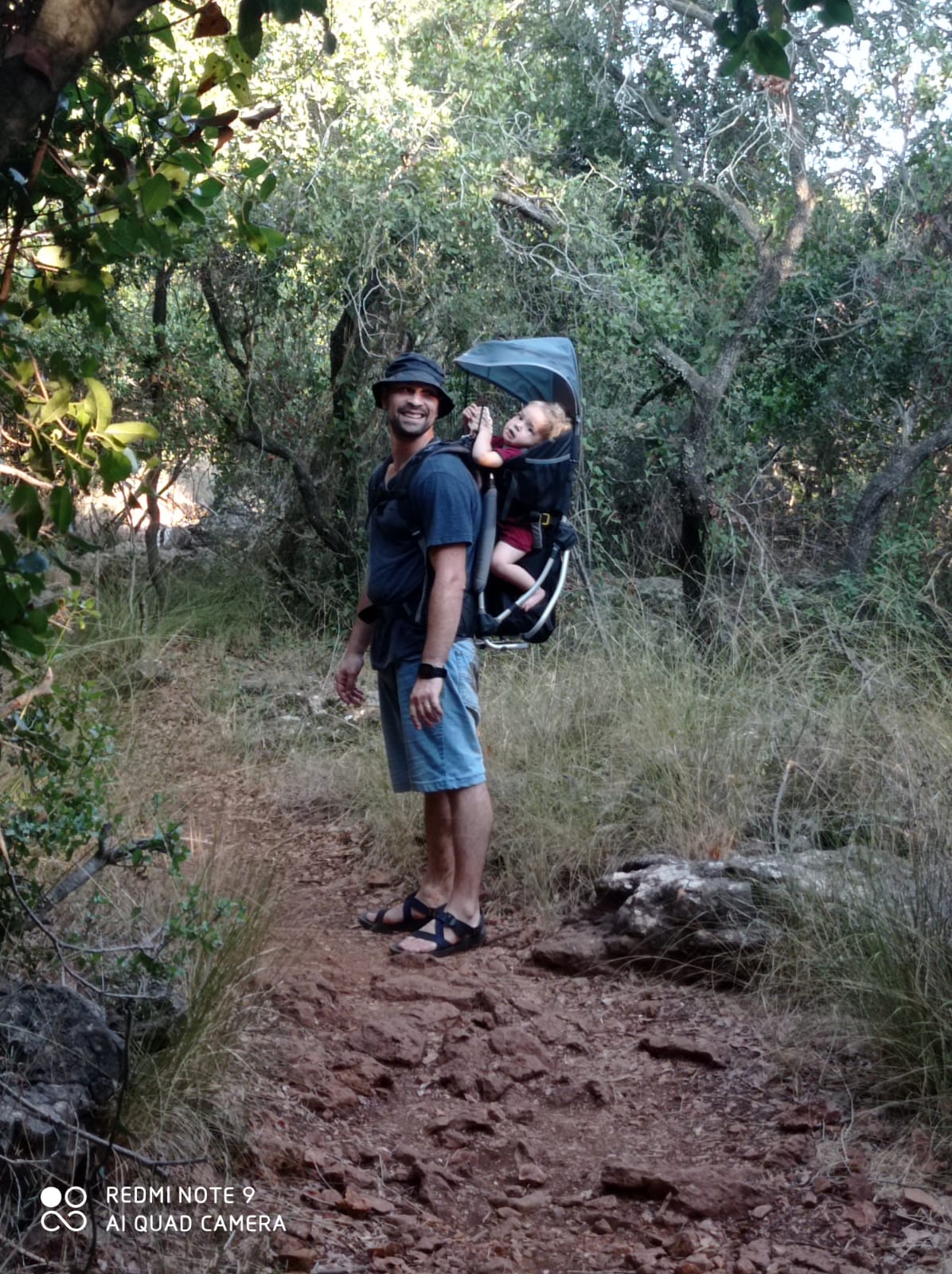
All photographs · 24
Videos and links
In the media
Articles
- “Amit’s Home”: A Renovation Contractor’s Moving Surprise in Memory of a Fallen Brother
עולם קטן ·
- Nati Gabay, the Cousin of Captain (res.) Amit Levy, Who Fell in Gaza, Said: “He Loved His Homeland, He Didn’t Give Up”
וואלה ·
- Brothers remember Amit Levi
Israel National News ·
- Amit Levi Laid to Rest
וואלה ·
- Captain Amit Levi, 35, killed by sniper fire in Gaza
Israel National News ·
- Amit Levy
נופלים
Show all (9)
- Amit Levy Fell in the Netzarim Corridor
ynet
- A memorial initiative at coffee carts
מקור ראשון
- Amit Levy
ynet זיכרון
Memorial sites
- Amit Levy
יזכור
Memorial projects
According to an interview with his sister Aviya in Olam Katan, contractor Nimrod Levi volunteered to build a surprise wooden playhouse for children in her garden in Ashkelon. On its front, he placed a sign reading “Amit’s House” in memory of her brother, alongside his photograph and the motto he lived by.
A project in Amit’s memory at coffee carts lets visitors scan a barcode for material to study and discuss together about relationships, family and raising children.
Stories told about them
His cousin described a hardworking, reliable man who devoted himself to work, respected his parents and loved his children and wife. He said Amit returned to service again and again out of commitment to the country and his family.
Life & service
Profile
Service
- Rank
- Captain
- Service Type
- Reserve Forces
- Battle Location
- Central Gaza Strip
Family
- Father
- David
- Mother
- Esther
Burial
Place of rest
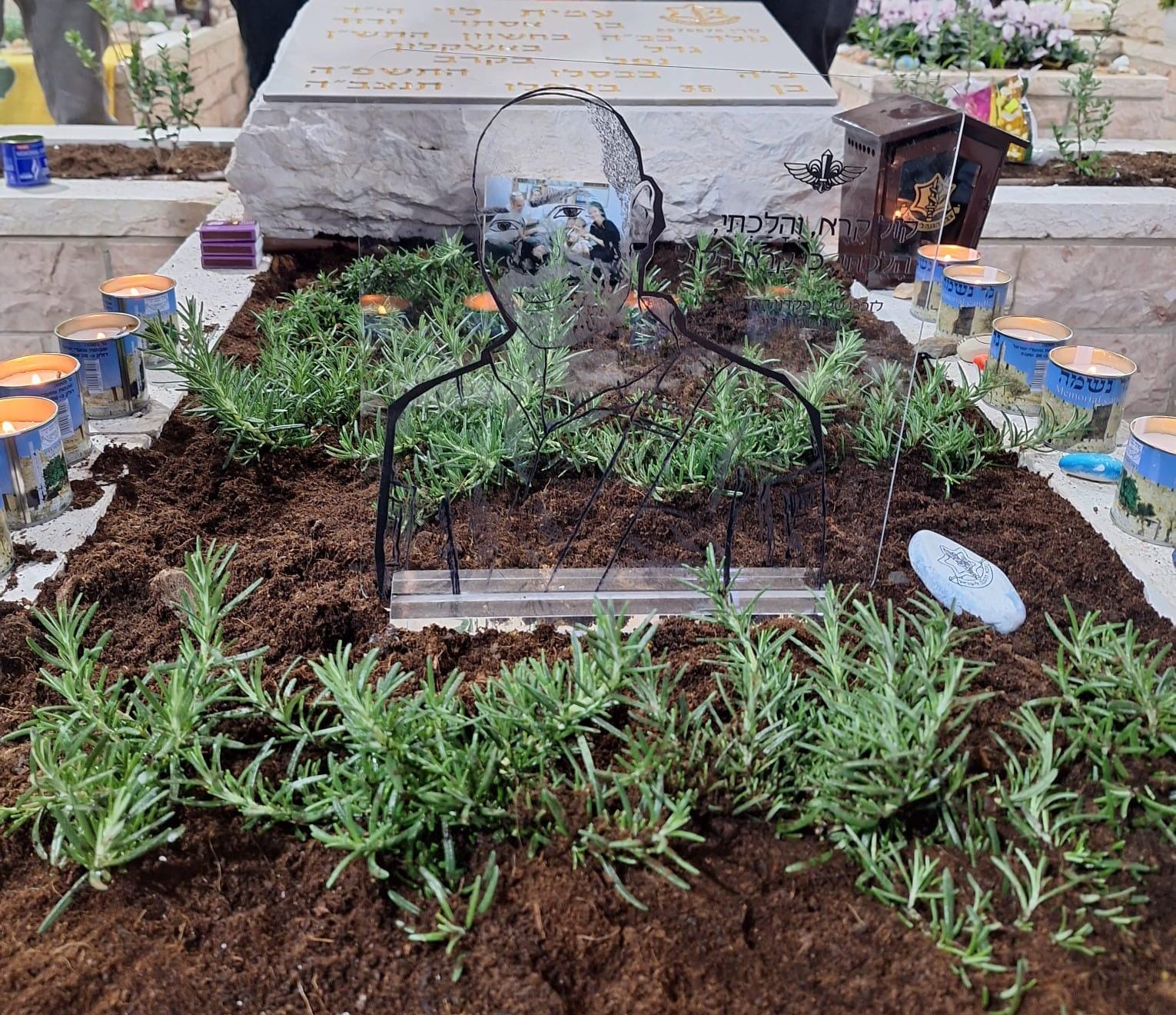
All photographs · 1
Tributes & remembrance
משפחת !IMPACT מרכינה ראשה בדבר נפילתו של הבוגר סרן עמית לוי ז"ל (35). עמית, בוגר הנדסת מכונות באוניברסיטת בן גוריון (2022), היה מפקד צוות בגדס"ר 6551, בחטיבת עוצבת חצי האש (551). הותיר אחריו את אשתו חן, וארבעת ילדיו צור, נעה, יונתן וזוהר. יהיה זכרו ברוך
תהא נשמתם צרורה בצרור החיים
תהא נשמתם צרורה בצרור החיים
שנה עברה, ולצערנו אתה לא איתנו. אוהבים, זוכרים ומעריכים
אתה היית אדם מדהים! דוד אהוב ואב מופלא. אתה לא מבין כמה אתה אוהב בן אדם עד שאתה מאבד אותו. רק אז הבנתי כמה באמת אהבתי אותך. ובאמת אהבתי! לעולם לא אשכח את שמחת החיים והאופטמיות שהייתה בך. יהי זכרך ברוך.
תמיד אזכור אותך כחבר, בחור מוכשר וחברותי, מרכז העניינים תמיד..יום העצמאות עכשיו-תמיד אזכור אותך..למען מה אנחנו כאן..
תודה רבה על הקרבתך, שבזכותך אני קיים.
נזכור
יהי זכרך ברוך
מתגעגע אלייך בן דוד
מתגעגע אלייך,בן דוד
יהי זכרו ברוך
יהי זכרו ברוך
מתגעגע אליך.
אח יקר
חן, נעה, יהונתן וזוהר היקרים,
אני יושב ובוכה על האובדן הקשה שלכם.
כול כך אהבנו את עמית - וזכינו לזמן קצר להיות איתו.
אני מאחל לכם מכול ליבי שתמצאו שמחה ואושר בחייכם - בזכות עמית ובזכות מה שנתן לכם.
אני מאחל לארבעת הילדים שימשיכו לפרוח ולהתעצם - בדרכו של עמית.
יום הזיכרון בחיים לא יראה אותו דבר, מאז שהלכת אח יקר...
לנצח אחי, אזכור אותך תמיד...
מתגעגעים
מתגעגעים אלייך איש יקר
אח, חבר ומפקד אהוב. קשה שאתה לא כאן. מדליק נר זיכרון לזכרך בשם הצוות שכ״כ אהבת ודאגת לשמור. לעד איתך ולעד ניזכור להמשיך את דרכך ולתמוך במשפחה.
אני קצינה בחטיבה 551 בשמי ובשם החטיבה, אני מדליק נר לזכרו של עמית לוי ז"ל.
מורשתו מאירה לנו את הדרך ואנו נמשיך לזכור ולהזכיר את זכרם של נופלי היחידההחטיבה. יהי זכרו ברוך.
עמית, חבר יקר, שכן, איש האמונה והגבורה. לא נשכח את אישיותך המיוחדת ואת הליכותך. בורא הנחמות ישלח ישועות ונחמות למשפחתך ולכולנו. יהי זכרך נצור בליבנו עד בוא משיח צדקנו.
הדמעות לא פוסקות והצער גדול כל כך על אובדן קשה מנשוא שלגיבור ישראל איש יקר אבא ובעל אהוב.
יהי זכרו ברוך
עמית, זכיתי להכיר אותך, את החוכמה והטוב שלך. נזכור אותך תמיד, את הצניעות, החיוך, והאור שלך שעדיין מאיר לנו את הדרך.
בן אדם זהב
לא זכיתי להכיר אותך
רק להתרשם מקריאה על מי שאתה
הערכים והנתינה ,כדי לדעת איזה אדם גדול היית ,תודה וסליחה
גיבור ישראל, יהי זיכרו ברוך
עמית אני מאוד מתגעגע אליך
איש יקר , אדם זהב ועם לב זהב! תמיד תהיה בלב שלי . חבל שרק בזמן מלחמה נפגשנו.
תודה לך על מסירות הנפש וההקרבה.
הלואי שנהיה ראויים.
נפלת בחנוכה ודיווחו בתקשורת שלפני נפילתך הספקת לראות את משפחתך מדליקה נר ראשון של חנוכה.
שתמיד תיזכר בלבבות תפיץ את אורך משמיים תהיה מליץ יושר למשפחה ותרווה ממנה נחת.
מזומנים להיכנס לאתר לזכרו של עמית ז"ל
A son and brother to us all
Source:וואלה
Read the Hebrew original
הבן והאח של כולנו
He always helped us and gave us strength
Source:Israel National News
No one can take his place
Source:Israel National News
He loved his homeland, Israel, and never gave up.
Source:וואלה
Read the Hebrew original
הוא אהב את המולדת, את ישראל ולא ויתר.
To be more like Amit means finding common ground with everyone, looking for what unites rather than what divides.
Source:מקור ראשון
Read the Hebrew original
להיות יותר עמית – זה למצוא את המשותף עם כל אדם, לחפש את המאחד ולא את המפריד.
Amitush, we are so completely one, we always have been. How will I live without you now?
Source:יזכור
Read the Hebrew original
עמיתוש אנחנו כל כך אחד, תמיד היינו. איך אני אחיה עכשיו בלעדיך?
Remembrance Day addresses
יום הזיכרון לחללי מערכות ישראל התשפ"ה – 2025
בכל יום שעובר, אזכור יותר! אזכור, את אלו שיצאו עימי לקרב ולא שבו, ולהם אין מי ידמה ומי ישווה. אזכור, שהכאב לא יעבור לעולם, והזמן, הוא לא מרפה ולא מרפא. אזכור, את שיברון הלב הגובר ואת הבית שבוער. אזכור, את צדקת הדרך, ואשבע שוב, שמה שהיה לא יהיה יותר. אזכור, שיותר מכל דבר אחר – אני חסר! ביום הזה, אני נתקף געגוע לדמותם, לחיתוך דיבורם, לחיוכם, ומדליק נר לזיכרון דרכם ומורשתם!
משרד הביטחון
אגף משפחות, הנצחה ומורשת
יום הזיכרון לחללי מערכות ישראל התשפ"ה – 2025
בכאב, בהצדעה ובתקווה אני מתכבד להדליק נר זיכרון זה. השנה, כשאנו נלחמים במלחמה ארוכה, רב זירתית וצודקת, הזיכרון נושא משמעות עמוקה. ביום זה נעצור ונתייחד עם זכרם של טובי בנינו ובנותינו שנפלו בהגנה על המדינה. מורשתם היא המצפן שמתווה את דרכינו, והיא המעניקה לנו כוח להמשיך ולהגן על מדינת ישראל ותושביה. משפחות יקרות, אנו מרכינים ראשנו ומתחייבים שנעמוד לצידכן תמיד. יהי זכר הנופלים ברוך.
אלוף דדו בר כליפא
ראש אגף כוח האדם, צה"ל
יום הזיכרון לחללי מערכות ישראל התשפ"ה – 2025
בשעה שאנו זוכרים את גודל תרומתם ועומק מסירות נפשם של טובי בנינו ובנותינו, נופלי מערכות ישראל לדורותיהן, ממשיכים צה"ל וכוחות הביטחון במימוש המשימה למענה לחמו ועבורה נפלו: הכרעת אויבינו מדרום, מצפון, ביהודה ובשומרון, וגם בזירות רחוקות יותר. בהערכה רבה ובגאווה אדירה אנו מרכינים ראש בפני הנופלים והנופלות, מאמצים את משפחותיהם אל לבנו, וממשיכים במשימה להבטחת קיומה של ישראל לדורי דורות. יחד נעשה ונצליח.
רב אלוף אייל זמיר
הרמטכ"ל, צה"ל
יום הזיכרון לחללי מערכות ישראל התשפ"ד – 2024
כאשר דגלינו מורדים לחצי התורן וראשינו מורכנים לזכר הנופלים והנופלות במערכות ישראל, ממשיכים לוחמי צה"ל ומפקדיו בלחימה בדרום, בצפון, ביהודה ובשומרון ובזירות נוספות. על כל דור מוטלת המשימה של הגנת העם והארץ – משימה שאף פעם אינה פוסקת. נצדיע בגעגוע ובגאווה לנופלים ולנופלות, נחבק את משפחותיהם, ונמשיך ברוח הציווי שהותירו לנו. עם ישראל חי.
רב ניצב יעקב שבתאי
המפקח הכללי, משטרת ישראל
יום הזיכרון לחללי מערכות ישראל התשפ"ד – 2024
אחיי הנופלים, כל נר הוא זיכרון יחיד ומיוחד, על חיים שהיו ואינם, געגוע שנצרב עמוק בלב, עולם ומלואו. הנרות כולם הם זיכרון של אומה כי לעולם לא עוד, בשורת הציונות וקוממיות ישראל. זיכרון כי הדרך לעם חופשי בארצנו עוברת דרך מסדר הנופלים. אור הנר יזכיר לנו את מסירות נפשכם להציל חיים, להגן על הבית. הנרות מסמנים לנו נתיב גבורה ערכי מחייב שאנו מצווים ללכת לאורו. נמשיך להילחם ולהוסיף אור מתוך אמונה בנצח ישראל.
יואב גלנט
שר הביטחון
יום הזיכרון לחללי מערכות ישראל התשפ"ד – 2024
בהצדעה ובכאב, בשם צה"ל כולו, אני מדליק נר זיכרון. בעיצומה של מלחמה, הזכרון נושא משמעות יום-יומית, שעבר והווה מתלכדים בה. לאורם של הנופלים נמשיך לצעוד, חיילי הסדיר והמילואים. לאורם של הנופלים נמשיך להגן על ארצנו ועל מולדתנו, גם כשהמחיר כבד. להבת-הזכרון תבער בנו בעודנו ממשיכים להלחם ונזכור את הנופלים ואת אומץ ליבם. משפחות יקרות, צה"ל מרכין היום ראש, מצדיע לכן וכואב איתכן. יהי זכר הנופלים ברוך.
אלוף יניב עשור
ראש אגף כוח האדם, צה"ל
יום הזיכרון לחללי מערכות ישראל התשפ"ד – 2024
בהוקרה, בגאווה ובכאב שאין לו סוף, אני מתכבד להדליק נר לזכרם של הנופלים והנופלות במערכות ישראל. סיפור חייהם בארץ הזאת, מסכת שירותם, גבורתם והקרבתם – הם סיפורה של הארץ הזאת, אך גם סיפור המחיר הכבד שהיא תובעת מאוהביה. מחויבותנו לזכר הנופלים ולדרך שהותירו לנו ניצבת תמיד לנגד עינינו. את המשימה שלא זכו להשלים, משלימים כיום, וישלימו, אנשי כוחות הביטחון, הממשיכים בדרכם ולאורם. יהי זכרם של הנופלים ברוך.
משרד הביטחון
אגף משפחות, הנצחה ומורשת
יום הזיכרון לחללי מערכות ישראל התשפ"ד – 2024
בחרדת קודש אני מתכבד להדליק נר לזכרם של חללי מערכות ישראל, חברנו שנפלו, מראשית היציאה מהחומות ולאורך כל שנות עצמאותנו המדינית והציונית, מהווים תמרור זיכרון לדרך חיינו ולמחוייבות הלאומית להנצחת זכרם. דרכם נותרה דרכנו ומורשתם נר להמשך עשייתנו. יהי זכרם ברוך!
בני גנץ
שר הביטחון
יום הזיכרון לחללי מערכות ישראל
נזכור אותם, כולנו יחד. כל אחד ואחת מהם, מדי יום ביומו, והיום ביתר שאת, כך – לנצח. "כי מדי דברי בו זכור אזכרנו עוד"
משרד הביטחון
אגף משפחות, הנצחה ומורשת