
The story
Life always begins at a single, delicate, vibrant point, from which the story's line unfurls, widening and deepening, like a river seeking its path to the sea. For the late Amit Aryeh Regev, this point was a warm summer morning in Modi'in, a city built of light Jerusalem stone, on June 19, 2006. Yael and Yonatan, his parents, welcomed him with open arms, a whole world of anticipation and love concentrated in the softness of a newborn. The house in Modi'in's quiet neighborhood filled with a new light, with sweet, tiny cries, with the scent of a baby, and with the feeling that nothing would ever be the same. His older brother Ido and younger sister Roni, then still small, clung to the crib, gazing in wonder at the tiny new being who had joined the family, unaware of how deeply he would root himself in their hearts, how integral he would become to their identities, and how profound the void would be upon his departure. The birth of a child is always a promise, and this promise hung in the air, against the backdrop of the Shephelah plains and Jerusalem mountains surrounding the city—a city still under construction but already having built a warm and vibrant community, quiet yet full of life, which became Amit's home.
Amit's first years were marked by discovery. Every day was a small adventure, every sound a revelation, every touch a new sensation. Yael and Yonatan's home was a place of warmth and stability, where the dining table was the center of life, where the family gathered in the evenings to share stories, to laugh, and sometimes for sweet, minor disagreements. Amit learned to walk on the polished living room floor, his first steps hesitant, small, then more stable and confident, towards scattered toys or into the embrace of his mother or father. He grew up to the sounds of cheerful morning conversations in the kitchen, the aroma of fresh coffee mingling with the comforting scent of toast, and the sight of soft sunbeams peeking through the blinds and spilling onto the bird's nest in the small garden his parents nurtured. Ido and Roni were his first companions on this journey, his first toys, his first playmates. Together they built block towers that collapsed in tears and were immediately rebuilt with laughter, chased each other along the garden paths, played hide-and-seek among the rose bushes, and shared small childhood secrets, secrets that only siblings can keep, that only they can truly understand. Amit, growing up as the middle child, learned early the art of mediation, the ability to contain the energy of his older brother and the gentleness of his younger sister, to learn from them and to be both a source of inspiration and a supportive shoulder for them. He was a relatively quiet child, but with a penetrating gaze in his eyes, a look that sought to understand, to learn, to decipher the world around him. He loved spending long hours watching ants march in a line on the paved path, or clouds drifting across the sky, his imagination sailing to distant places.
When Amit started kindergarten, he carried with him that same quiet curiosity. He wasn't the loudest child in the yard, but he was always the one who built the tallest sandcastle, or drew the most detailed picture, where every single element received due attention. His kindergarten teachers remembered him as a sensitive child, with a deep willingness to help friends, to offer a hand when someone fell, to share his sandwich when someone forgot theirs. These values – of mutual aid, of giving, of attentiveness to others – were not just words spoken at home, but a way of life he absorbed from his parents. Yael and Yonatan made sure to teach their children the importance of community, the responsibility each of us has towards our surroundings. They took them to volunteer in various city activities, to participate in clean-up campaigns, to plant trees on Forest Day. Amit loved the feel of the earth, the scent of wet leaves after rain, the sense of satisfaction that comes from giving. He didn't care for grand rhetoric, but rather for the act itself, for hands getting dirty, for sweat on his brow, for tangible results. These were the things that spoke to him. He learned to see the beauty in simplicity, the power in small actions, the deep connection between a person and their land, not because it was "holy" in a mystical sense, but because it was home, the place from which life springs, from which belonging emanates.
When Amit reached elementary school, he discovered a new world of knowledge and friends. He sat in class, attentive, absorbing every word, interested in every subject. He wasn't a student quick to raise his hand, but when asked, his answers were reasoned, thoughtful, and often surprising in their depth. He particularly loved nature and science classes, where he could decipher the world's secrets, understand how things worked, dismantle and reassemble. At home, he built plastic airplane models, assembled complex LEGO sets, and always had his own small toolbox, where he collected screws, screwdrivers, and various parts, which he used for minor home repairs or his own "inventions." His classmates appreciated his calm demeanor, his dry sense of humor that appeared at unexpected moments, and his unwavering loyalty. If Amit was your friend, you knew you could count on him. He was there through successes and failures, with quiet support, an understanding gaze, a shoulder to lean on. Afternoons were spent in the backyards of Modi'in homes, improvised soccer games on green lawns, riding bikes on paths, or simply sitting on a bench, talking about life, about future plans, about the dreams beginning to take shape in the souls of maturing teenagers.
Adolescence brought changes, the search for identity, the desire to leave a mark. Amit grew into a tall young man, with an athletic build, and those same intelligent, curious eyes. He continued to cultivate his love for detail, order, and problem-solving, which was also reflected in his hobbies. He developed a strong interest in computers, not just as a tool for games, but as a means for creation, for programming, for understanding a technological world that was evolving at dizzying speed. He spent hours in front of the screen, not just browsing social media, but learning programming languages, trying to build things from scratch, understanding the logic behind the code. This was a reflection of his personality – the desire to understand the fundamentals, the structure, the way things truly work. Concurrently, he made sure to maintain his physical fitness, going for long runs on the city's paths, playing basketball with friends at the neighborhood court, and hiking extensively with his family and friends on trails throughout the country, from the Negev to the Galilee. These trips were not just athletic activities for him, but a way to connect with the landscapes, the scents, the unwritten history of hidden corners, to learn about the flora and fauna, to experience the power of nature and the tranquility it offered.
At the age of mitzvot, Amit celebrated his Bar Mitzvah. It wasn't an extravagant celebration, but a warm family event, wrapped in love and appreciation. He stood on the stage, reading from the Torah portion, his voice clear and confident, aware of the moment's significance. His parents, Yael and Yonatan, watched him with pride, seeing the child who had become a young man, the path he had traveled and the path still ahead of him. In a short speech he wrote himself, Amit spoke of responsibility, of the meaning of being part of a community, and of the desire to contribute his share. He didn't speak in abstract terms, but about the small actions that make up daily life, about the importance of being a good person, a loyal friend, a loving family member. The evening ended with dancing and singing, with smiles and hugs, with a feeling of togetherness, of belonging, of simple and true joy. Ido and Roni stood by his side, accompanying him in this special moment, their sibling bond tightening with each passing year.
High school years were a period of intensification and development. Amit studied at a high school in Modi'in, where he excelled in the sciences, in mathematics and physics. His teachers recognized his high potential, his ability to think outside the box, to analyze complex problems and find creative solutions. He wasn't a "nerd" in the conventional sense, but a sociable young man who easily integrated into any group, knew how to listen and express his opinion respectfully. He was active in the student council, volunteered his time to organize school events, and participated in various social projects. He loved the challenge of problem-solving, whether it was a physical equation or a complex social issue. He was a student who came to learn, not just to get a grade, but to understand, to broaden his horizons. Long conversations with friends over coffee at a neighborhood cafe, or while walking through the city streets, revolved around the future, around military service, around the meaning of being an Israeli in a changing world.
The army was always present in the background, not just as an obligation, but as an arena for the realization of values. In Yael and Yonatan's home, they often discussed the importance of meaningful service, of contributing to the country, of shared responsibility. Amit never doubted for a moment about combat service. He felt it was his calling, the place where he could express all that he had learned and absorbed – his loyalty, his dedication, his ability to face challenges, his desire to protect his home. He was interested in the various corps, inquired, asked, read, and quickly gravitated towards the Armored Corps. The idea of a tank – a complex, powerful machine, requiring precise teamwork and composure – captivated him. He saw in it a combination of advanced technology, high operational capability, and, above all, a human challenge of coping under pressure, of mutual trust, of being part of a "small family" within a mighty steel vehicle. He trained for his enlistment, improved his physical fitness, read about the corps' history and the roles of its combatants. He wanted to arrive prepared, highly motivated, to succeed in every mission.
On December 1, 2024, the moment arrived. A cool but clear December morning, the Bakum gate, bustling with excited parents and expectant recruits. Yael and Yonatan hugged him tightly, their eyes sparkling with pride and quiet worry. Ido and Roni stood by his side, Roni crying softly, Ido trying to be strong for his brother, exchanging a look of understanding with him. Amit, dressed in a white t-shirt, a large bag on his back, looked more mature than ever. He smiled broadly, trying to reassure everyone, but he too felt the flutter in his heart, the edge of a new and significant chapter in his life. "I love you," he whispered to them, "Don't worry. I'll take care of myself." And then, he stepped towards the gate, leaving behind the familiar life, his childhood, his youth, and entered a new world of uniforms, discipline, and great responsibility. The familiar scent of Bakum – a mixture of release, anticipation, and apprehension – filled his nostrils, and he knew this was just the beginning.
Basic training in the Armored Corps was intense and challenging, exactly as he expected. Long days of marches, firing drills, theoretical and practical learning. He learned to dismantle and reassemble a weapon with his eyes closed, to crawl through mud and dust, to absorb instructions with composure, and to withstand physical and mental pressure. The shouts of the commanders, the difficulties of sleeping in the field, the lack of sleep – all these were part of the process that shaped him, hardened him, turning him from a young man into a soldier. Amit didn't complain. He took every task seriously, performed it professionally, and always made sure to help his comrades. He was a quiet but effective combatant, one you could trust implicitly. He exuded calm and confidence, qualities that quickly made him a leading figure in the company. His teammates appreciated his technical abilities, his dry sense of humor that defused tension in difficult moments, and his humanity. In the evenings, after an exhausting day, they would sit together, play guitar, tell jokes, and share their longing for home. The bonds forged there were deep, bonds of brothers-in-arms, bonds they knew would last a lifetime.
After basic training, Amit underwent specialized training as an armored combatant in Battalion 52, part of the 401st 'Iron Tracks' Armored Brigade. He learned the intricacies of the Merkava tank – a complex system of steel, electronics, and firepower. He learned to identify every sound of the engine, to understand the function of every button, every lever. He trained for long hours in simulators, and on the grounds of training bases, on driving, on loading, on aiming and firing. The pungent smell of diesel, the deafening roar of the powerful engine, the jolts of driving over rough terrain – all these became an inseparable part of his daily routine. He learned the dynamics of a tank crew: four people in a confined space, completely dependent on each other, each knowing their role and trusting the others. He understood that a tank crew is a single unit, one mind, and that any malfunction, any mistake, could be critical. He dedicated himself fully to his role, with a deep understanding of the responsibility placed upon him. His commanders saw in him an outstanding soldier, highly motivated, a true professional, with a rapid learning ability and composure even in complex situations. He was Corporal Amit Aryeh Regev, an armored combatant, proud of his role, ready for any challenge.
Amit's military service took place in the shadow of the "War of Revival," a war that erupted following the events of October 7, 2023. Although he enlisted several months after the war began, he entered a reality where the entire country was in a state of emergency, in a state of continuous combat. Conversations in the mess hall, on phone calls home, and during breaks between training, revolved around the security situation, fallen comrades, and complex missions. Amit was not indifferent. He felt the weight of responsibility, the destiny of his generation to protect their home, to rebuild security and hope. He saw himself as a link in a long chain of defenders, part of a social and military fabric designed to ensure the nation's existence. He knew that his training was not just for exercises and learning, but for preparation for the reality of battle, for confrontation with the enemy. He prepared for it mentally and physically, with the understanding that this was his life's mission.
The weeks and months leading up to September 8, 2025, were filled with tension and anticipation. Amit's unit, Battalion 52 of the 401st Brigade, was placed on high alert. Orders changed rapidly; briefings were frequent and urgent. The smell of war hung in the air, palpable and heavy. Amit and his tank crew comrades conducted final checks, ensuring all tank systems were functional, ammunition was ready, and personal equipment was packed and accessible. Phone calls home became shorter, carefully phrased, so as not to worry his parents. "Everything's fine, Mom. We're going out on an operation. Nothing to worry about." This was a constant mantra, a way to shield his loved ones from gnawing anxiety. The last WhatsApp messages were short, concise, full of unspoken love: "Take care of yourself," his mother wrote. "You're our hero," Ido sent him. "Come back soon," Roni added, with a broken heart emoji. Amit replied with a picture of himself in uniform, a small smile on his face, accompanied by the words: "Love you all. Don't worry. See you soon." He didn't know this would be his last message.
The order arrived suddenly, as it always does in war. "Iron Tracks Brigade, Battalion 52, entry into the northern Gaza Strip." Amit and his crewmates boarded the tank, donning their helmets, fastening their safety harnesses. The engine's roar intensified, heavy diesel smoke filled the air. The tank began to move, rolling slowly then gaining speed, towards the border, towards the place where the threat was palpable, where reality clashed with training. The familiar landscape of the Western Negev quickly gave way to a scene of ruins, burned buildings, smoke, and dust. The air was thick with the smell of gunpowder, and the muffled sounds of gunfire and explosions that grew closer and then receded. Inside the cramped, hot tank compartment, everyone knew their role. Amit, as an armored combatant, was an inseparable part of the nervous system of this massive vehicle. His eyes scanned the terrain through the periscopes, searching for any suspicious movement, any sign of the enemy. His hands were on the controls, ready to react, to move the turret, to load the shell, to fire. Radio voices crackled through the air, operational instructions, field reports, calls for assistance. Adrenaline surged through his veins, sharpening his senses, honing his reactions.
The entry into the northern Gaza Strip involved intense fighting. Amit's tank and his comrades moved through a semi-destroyed urban area, between narrow alleys and crumbling structures, exposed to threats from every direction. They encountered terrorist cells, engaged in firefights, destroyed enemy positions. Amit performed with exemplary composure, executing his role flawlessly, in full synchronization with the rest of the crew. He was focused on the objective, determined to carry out the mission, to protect his comrades and the entire force. Amidst the sounds of gunfire and the shouts on the radio, between the dust of collapsing buildings and the roar of shells, he was there, present, doing what needed to be done. He was the professional his training had made him, the person whose values dictated he protect his home and his people. He was not a mythological hero, but a man of flesh and blood, with fears and hopes, who chose to stand on the front lines, chose to fight for his beliefs, for the future of his family and his country.
The battle raged for long hours, intense and unceasing. Suddenly, in the heart of the chaos, amidst the roar of explosions and the clatter of tracks, within the heavy battle dust that covered the sky, it happened. A direct hit, powerful, fatal. One moment of blinding light, of deafening noise, and then silence, a terrible silence that only the surrounding battle could break. Sergeant Amit Aryeh Regev, nineteen years old at his fall, an armored combatant in Battalion 52 of the 'Iron Tracks' Armored Brigade, fell in battle in the northern Gaza Strip. He fell while fighting, while defending, while fulfilling his destiny to the very end. He fell surrounded by his comrades, the people with whom he had shared everything, from the first moment at Bakum to the last moment in battle. Yael and Yonatan, Ido and Roni, his entire family, all his friends, received the bitter news, the news that tore their world apart. The quiet, familiar world of Modi'in was shaken, the home filled with a painful silence. The light went out, leaving behind an immense void.
The official, dry, and laconic message was delivered to his family. Corporal Amit Aryeh Regev was posthumously promoted to the rank of Sergeant, a mark of appreciation and recognition for his service and sacrifice. He was laid to rest in the military plot of the cemetery in Modi'in, his hometown, the city he so loved and wished to protect. Hundreds accompanied him on his final journey – family, friends, commanders, citizens who did not know him but came to pay their respects. The heavy silence of the cemetery was broken only by choked sobs, the trembling voice singing "El Male Rachamim," and volleys of honor fired into the sky. The soil of Modi'in, the very earth where he played as a child, on whose paths he ran as a teenager, received him back, this time for eternal rest.
Sergeant Amit Aryeh Regev left behind parents, a brother and a sister, and an entire community mourning his passing. He left behind an immense void, an emptiness that cannot be filled. He left behind memories of a curious child, a quiet and intelligent young man, a professional and brave soldier. He was only nineteen, yet his short life was rich and meaningful, full of giving, dedication, and responsibility. Amit's story is the story of an entire generation, a generation born into a complex reality, educated on values of love for the land and its defense, and who did not hesitate to confront the most difficult challenges. He fell as a hero, not because of lofty words or rhetoric, but because of his actions, because of his choice, because of his simple and pure humanity, because of the courage that flowed through his veins.
Amit's legacy is not just in the personal memory of his family and friends, but it is an inseparable part of the national narrative of the "War of Revival." He symbolizes the Israeli spirit of youth – combining wisdom and strength, sensitivity and professionalism, a love of life and a willingness to sacrifice. He was a model of a humble and powerful person, who knew his mission. Even when the pain is unbearable, and even when the void seems unbridgeable, Amit's story instills in us a sense of revival. He reminds us that we are a strong nation, a nation that knows how to rise from falls, a nation that knows how to defend itself, a nation that remembers its sons and daughters who fell for its existence. The memory of Amit Aryeh Regev is forever etched in the annals of the State of Israel, as another precious link in the long chain of those who defended our home, and in their deaths bequeathed to us life, hope, and an Israeli pride that knows no bounds. He lives within us, in memories, in values, and in the spirit that inspires us to continue building and flourishing, for his sake and for the sake of future generations.
Moments of a life
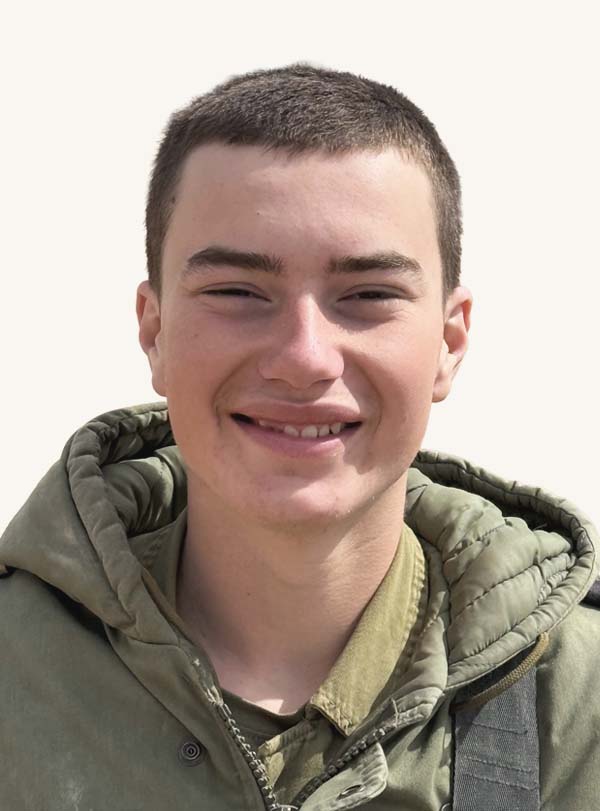
All photographs · 2
In the media
Articles
- The IDF and Shin Bet eliminated a terrorist involved in the deaths of four tank crew members
Dom.co.il ·
- “We hadn’t seen the picture of Amit leaving Gaza; it’s very moving”
ישראל היום ·
- Fourth soldier killed in Gaza attack named as Matan Abramovitz, 21
The Times of Israel ·
- “We Miss the Boy with the Mesmerizing Eyes with Every Breath”: Sergeant Amit Arye Regev’s Family Says Farewell
ישראל היום ·
- “To Us You Will Always Be King of the World”: Sergeant Amit Aryeh Regev Laid to Rest | Israel Hayom
ישראל היום
- Remembering and Commemorating: A Path Named After Amit Regev, of Blessed Memory, Was Inaugurated - Home, News - Modiin Online
modiinonline.co.il
Songs
- At the End of the Day — Harel Skaat / In Memory of Sergeant Amit Regev
עוד מעט נהפוך לשיר
Memorial sites
- Yizkor — Sergeant Amit Regev
משרד הביטחון - יזכור
- Amit Aryeh Regev | IDF website
אתר צה״ל
Memorial projects
Israel Hayom’s Last Photo initiative was created in cooperation with Amit’s family and OneFamily, at the initiative of Liron Ben-Yaakov, his father’s partner. It is dedicated to many of the fallen and is not a memorial account dedicated solely to Amit.
On June 12, 2026, a path in his memory was inaugurated in the garden near Levi Street in Modi'in, along the route he took to school. The local report confirms that the ceremony took place, beyond the municipal reference that did not open in pass 1.
Maccabi Tel Aviv and Hapoel Jerusalem held a joint ceremony in his memory on the court at Menora Mivtachim Arena, with the family and club representatives present; he supported Maccabi, and his twin brother Ido supports Hapoel Jerusalem.
Stickers were produced in his memory, and his family shared a playlist he had compiled, available on Spotify.
As part of the “Od Me’at Nahafoch Leshir” project, the song “Besof Hayom,” performed by Harel Skaat, was released in Amit’s memory. The page tells of the diary he wrote in the tank and which his family found after he fell.
Life & service
Profile
- Date of birth
- June 19, 2006
- Birthplace
- Modiin-Maccabim-Reut
- Date of death
- September 8, 2025
- Age
- 19
- Hometown
- Modiin-Maccabim-Reut
Service
- Rank
- Sergeant
- Honours
- Posthumously Promoted
- Battle Location
- Northern Gaza Strip
Family
- Father
- Yonatan
- Mother
- Yael
Burial
Tributes & remembrance
זה קשה לאבד ילד, רק אורו שלו יכול להאיר את המשך הדרך. יהי זכרו מואר וברוך
"העיניים של עמית היו מהפנטות, ותמיד מלאות באהבה ובשמחה", כך מספרת משפחתו של סמל עמית אריה רגב ז"ל. עמית היה ילד כל כך מיוחד – רגיש, חכם, עם אינטליגנציה רגשית נדירה ונוכחות שקטה אך עוצמתית. אח תאום לעידו, ואח לרוני ולאליענה – עם כל אחד ואחת מהם נרקם קשר עמוק, ייחודי ואוהב. גם בקרב חבריו ומכריו היה עמית נער אהוד ואהוב מאוד. הוא אהב לבלות, אבל יותר מכל, אהב ספורט. במיוחד את מכבי תל אביב, בכדורגל ובכדורסל. היה הולך למשחקים עם עידו ויוני, והקפיד לרכוש מנוי גם בתקופת השירות הצבאי, כדי ש"לא יתפסו את המקום שלי", כפי שאמר. זה היה עמית: חד, מחויב, עם חוש הומור מדויק שידע להצחיק גם ברגעים הכי לא צפויים. לפני הגיוס, עמית התכונן לשירות הצבאי ברצינות. חלומו היה להיות צנחן, כמו אביו. אך כשהתגייס לשריון, כמו סבא, גיורא, עשה זאת בגאווה והאמין בדרך. הוא ידע שמשפחתו גאה בו, בדיוק כפי שהוא היה גאה בה. במהלך השירות הקפיד עמית לשמור על קשר קרוב עם הבית, תמיד עדכן מה שלומו, אבל גם לא שכח לשאול מה שלומם. המשפחה הייתה מרכז עולמו, והקשר עם ההורים, יעל ויוני, היה קשר של אהבה עמוקה, שקטה ונוכחת. עם אמא יעל בילה בהופעות ובקולנוע, ורק לאחרונה יצאו יחד להופעה של עומר אדם, אחד הזמרים האהובים עליו ועם אבא יוני נהג ללכת למשחקי מכבי תל אביב ולצפות יחד בסרטים. ולבסוף, ביקשה המשפחה לשתף במילים האחרונות לעמית: "עמית שלנו, אתה חסר לנו בכל נשימה. אבל אנחנו גאים בך, על הדרך, על הבחירות, על האדם שהיית. ולעולם נאהב אותך. תמיד." עריכה: משתפת את דברי המשפחה, כפי שעברו אלי מדובר עיריית מודיעין.
יהי זכרם ברוך
It was important to him to serve in a combat unit, and contributing to the country meant a great deal to him — that was never in doubt.
Source:ישראל היום
Read the Hebrew original
היה לו חשוב להיות בקרבי, ומאוד היתה חשובה לו התרומה למדינה - זה היה משהו שלא היה מוטל בספק.
You were always there to lend your friends a shoulder.
Source:ישראל היום
Read the Hebrew original
היית שם תמיד לתת כתף לחברים.
You were always quiet and modest.
Source:ישראל היום
Read the Hebrew original
תמיד היית שקט וצנוע.
To us, you will always be king of the world
Source:ישראל היום
Read the Hebrew original
בשבילנו תמיד תהיה מלך העולם
Every picture like this is a story, a memory we have that moves us deeply
Source:ישראל היום
Read the Hebrew original
כל תמונה כזאת היא סיפור, זיכרון שיש לנו ומאוד מרגש אותנו
Amit, I will take care of Mom and Dad, I promise.
Source:משרד הביטחון - יזכור
Read the Hebrew original
עמית, אני אשמור על אימא ואבא, אני מבטיח.
I am so proud to be your sister.
Source:משרד הביטחון - יזכור
Read the Hebrew original
אני גאה כל כך להיות אחות שלך.
You don't give up your Maccabi season ticket
Source:ynet
Read the Hebrew original
על מינוי מכבי לא מוותרים
Remembrance Day addresses
יום הזיכרון לחללי מערכות ישראל התשפ"ה – 2025
בכל יום שעובר, אזכור יותר! אזכור, את אלו שיצאו עימי לקרב ולא שבו, ולהם אין מי ידמה ומי ישווה. אזכור, שהכאב לא יעבור לעולם, והזמן, הוא לא מרפה ולא מרפא. אזכור, את שיברון הלב הגובר ואת הבית שבוער. אזכור, את צדקת הדרך, ואשבע שוב, שמה שהיה לא יהיה יותר. אזכור, שיותר מכל דבר אחר – אני חסר! ביום הזה, אני נתקף געגוע לדמותם, לחיתוך דיבורם, לחיוכם, ומדליק נר לזיכרון דרכם ומורשתם!
משרד הביטחון
אגף משפחות, הנצחה ומורשת
יום הזיכרון לחללי מערכות ישראל התשפ"ה – 2025
בכאב, בהצדעה ובתקווה אני מתכבד להדליק נר זיכרון זה. השנה, כשאנו נלחמים במלחמה ארוכה, רב זירתית וצודקת, הזיכרון נושא משמעות עמוקה. ביום זה נעצור ונתייחד עם זכרם של טובי בנינו ובנותינו שנפלו בהגנה על המדינה. מורשתם היא המצפן שמתווה את דרכינו, והיא המעניקה לנו כוח להמשיך ולהגן על מדינת ישראל ותושביה. משפחות יקרות, אנו מרכינים ראשנו ומתחייבים שנעמוד לצידכן תמיד. יהי זכר הנופלים ברוך.
אלוף דדו בר כליפא
ראש אגף כוח האדם, צה"ל
יום הזיכרון לחללי מערכות ישראל התשפ"ה – 2025
בשעה שאנו זוכרים את גודל תרומתם ועומק מסירות נפשם של טובי בנינו ובנותינו, נופלי מערכות ישראל לדורותיהן, ממשיכים צה"ל וכוחות הביטחון במימוש המשימה למענה לחמו ועבורה נפלו: הכרעת אויבינו מדרום, מצפון, ביהודה ובשומרון, וגם בזירות רחוקות יותר. בהערכה רבה ובגאווה אדירה אנו מרכינים ראש בפני הנופלים והנופלות, מאמצים את משפחותיהם אל לבנו, וממשיכים במשימה להבטחת קיומה של ישראל לדורי דורות. יחד נעשה ונצליח.
רב אלוף אייל זמיר
הרמטכ"ל, צה"ל
יום הזיכרון לחללי מערכות ישראל התשפ"ד – 2024
כאשר דגלינו מורדים לחצי התורן וראשינו מורכנים לזכר הנופלים והנופלות במערכות ישראל, ממשיכים לוחמי צה"ל ומפקדיו בלחימה בדרום, בצפון, ביהודה ובשומרון ובזירות נוספות. על כל דור מוטלת המשימה של הגנת העם והארץ – משימה שאף פעם אינה פוסקת. נצדיע בגעגוע ובגאווה לנופלים ולנופלות, נחבק את משפחותיהם, ונמשיך ברוח הציווי שהותירו לנו. עם ישראל חי.
רב ניצב יעקב שבתאי
המפקח הכללי, משטרת ישראל
יום הזיכרון לחללי מערכות ישראל התשפ"ד – 2024
אחיי הנופלים, כל נר הוא זיכרון יחיד ומיוחד, על חיים שהיו ואינם, געגוע שנצרב עמוק בלב, עולם ומלואו. הנרות כולם הם זיכרון של אומה כי לעולם לא עוד, בשורת הציונות וקוממיות ישראל. זיכרון כי הדרך לעם חופשי בארצנו עוברת דרך מסדר הנופלים. אור הנר יזכיר לנו את מסירות נפשכם להציל חיים, להגן על הבית. הנרות מסמנים לנו נתיב גבורה ערכי מחייב שאנו מצווים ללכת לאורו. נמשיך להילחם ולהוסיף אור מתוך אמונה בנצח ישראל.
יואב גלנט
שר הביטחון
יום הזיכרון לחללי מערכות ישראל התשפ"ד – 2024
בהצדעה ובכאב, בשם צה"ל כולו, אני מדליק נר זיכרון. בעיצומה של מלחמה, הזכרון נושא משמעות יום-יומית, שעבר והווה מתלכדים בה. לאורם של הנופלים נמשיך לצעוד, חיילי הסדיר והמילואים. לאורם של הנופלים נמשיך להגן על ארצנו ועל מולדתנו, גם כשהמחיר כבד. להבת-הזכרון תבער בנו בעודנו ממשיכים להלחם ונזכור את הנופלים ואת אומץ ליבם. משפחות יקרות, צה"ל מרכין היום ראש, מצדיע לכן וכואב איתכן. יהי זכר הנופלים ברוך.
אלוף יניב עשור
ראש אגף כוח האדם, צה"ל
יום הזיכרון לחללי מערכות ישראל התשפ"ד – 2024
בהוקרה, בגאווה ובכאב שאין לו סוף, אני מתכבד להדליק נר לזכרם של הנופלים והנופלות במערכות ישראל. סיפור חייהם בארץ הזאת, מסכת שירותם, גבורתם והקרבתם – הם סיפורה של הארץ הזאת, אך גם סיפור המחיר הכבד שהיא תובעת מאוהביה. מחויבותנו לזכר הנופלים ולדרך שהותירו לנו ניצבת תמיד לנגד עינינו. את המשימה שלא זכו להשלים, משלימים כיום, וישלימו, אנשי כוחות הביטחון, הממשיכים בדרכם ולאורם. יהי זכרם של הנופלים ברוך.
משרד הביטחון
אגף משפחות, הנצחה ומורשת
יום הזיכרון לחללי מערכות ישראל התשפ"ד – 2024
בחרדת קודש אני מתכבד להדליק נר לזכרם של חללי מערכות ישראל, חברנו שנפלו, מראשית היציאה מהחומות ולאורך כל שנות עצמאותנו המדינית והציונית, מהווים תמרור זיכרון לדרך חיינו ולמחוייבות הלאומית להנצחת זכרם. דרכם נותרה דרכנו ומורשתם נר להמשך עשייתנו. יהי זכרם ברוך!
בני גנץ
שר הביטחון
יום הזיכרון לחללי מערכות ישראל
נזכור אותם, כולנו יחד. כל אחד ואחת מהם, מדי יום ביומו, והיום ביתר שאת, כך – לנצח. "כי מדי דברי בו זכור אזכרנו עוד"
משרד הביטחון
אגף משפחות, הנצחה ומורשת