
The story
In Jerusalem at the turn of the millennium, a city where ancient whispers merged with a modern pulse, Amir Tzur was born on Monday, the 2nd of Iyar, 5760, as May 2000 spread its green wings over the red rooftops. He was the son of Esther and Karl Yaniv, a home where the walls breathed culture and knowledge, and children’s laughter filled every corner. The Jerusalem house, with its windows facing a landscape of stone and olive trees, was the crucible for an entire world built around him and his brothers: Ofri, Eitan, and Tomer. Even in infancy, Amir seemed to absorb the sounds and sights of the world with special attention, his large eyes examining every detail, his ears attuned to every nuance. This was not a Jerusalem of rhetoric and prayers, but a Jerusalem of bright daylight, of spice aromas from the nearby market, and of deep conversations around the Shabbat table, where ideas and challenges unfolded. Little Amir would sit and listen, quiet yet present, absorbing the melodies that were an inseparable part of the family’s fabric of life.
Music, it seemed, was an integral part of Amir even before he could utter a word. Perhaps it was his mother’s lullabies, or the tunes his father played on the old piano in the living room, but the sounds seeped into his soul and became a part of him. As a small child, he hummed surprisingly accurate melodies, and his clear, deep voice stood out among the other children in kindergarten circles. As he grew a little older, it was no surprise that Amir found his place in the Efroni Choir, a choir renowned in the Israeli music world. The evening rehearsals in the small hall, the smell of sweat and dust from the stage, and the tension before each performance were a world unto themselves for him. He loved the feeling of harmony, the way dozens of voices merged into one complete and moving creation. He stood there, among his choir friends, his voice blending into the delicate tapestry of sounds, his eyes sparkling with happiness. The conductor, a meticulous yet warm woman, recognized a special talent in him, his ability to understand the text, to feel the music, and to convey it to the audience. He was not just a singer; he was an interpreter, a soul that allowed the voice to emanate from within with clarity and sincerity.
The peak came when he was eleven. One day, after an exhausting rehearsal, the conductor approached him with sparkling eyes and quietly said, "Amir, we are looking for a boy for a solo role in Mozart's 'The Magic Flute.' I think you could be the one." His heart skipped a beat. Opera? Mozart? This world seemed distant and incomprehensible to him. He stood before thousands of people, on the stage of the Israeli Opera, a single spotlight illuminating him as he sang the role of the boy. He remembered the butterflies in his stomach before going on stage, the smell of paint and makeup backstage, the conductor’s last whispers. And then, as the music began and he opened his mouth, everything else vanished. Only the music remained, and the story, and his voice that filled the vast hall. He wasn't acting; he *was* the boy, with his innocence and his strength. The applause at the end of the performance was a mighty thunder, and he stood there, red-faced, astonished by the power. His parents, Esther and Karl, and his brothers, Ofri, Eitan, and Tomer, sat in the front row, their eyes tearful with pride. This performance, more than anything else, taught him about discipline, about standing before an audience, and about how talent, combined with hard work, can create unforgettable moments. The piano at home became his best friend. He spent long hours at the keyboard, his small fingers dancing over the keys, producing delicate and tempestuous melodies in turn. He didn’t just play classical pieces; he also improvised, letting the sounds take him on journeys in his imagination, where he could express his rich inner world.
But music was not the only field where Amir’s talent shone. From a young age, Amir was drawn to the world beyond the walls of his home – to the dusty paths of Jerusalem, to the green hills surrounding it, and to physical and mental challenges. He discovered the world of orienteering, a sport that required a rare combination of high physical fitness, strategic thinking, and exceptional navigational skills. He remembered the first time he held a map in his hand, the feel of the thin paper, the contour lines, the mysterious map symbols. His father, Karl, who took him on many hikes in his childhood, encouraged him to explore, to experiment, and not to fear the unknown. Amir quickly found himself fully immersed in this world: endless runs in the forests, climbing steep hills, crossing wadis, all while his eyes darted between the map and compass, between hidden paths and clear markings. He fell in love with the adrenaline of competition, the absolute silence of the forest, just him, the map, and time. He learned to read the terrain, identify signs, understand the topography, and plan the optimal route in real-time, all while running at a frantic pace.
His talent was quickly evident in this field as well. Amir soon became the national orienteering champion, a name familiar to all enthusiasts of the sport. He proudly represented the State of Israel in world championships in Europe, part of a youth team composed of the best young athletes. He recalled his first trip to Europe, the long flight, the excitement of new landscapes, and the tension before the big competition. He stood at the starting line, his heart pounding, surrounded by competitors from all over the world, dressed in the Israeli national team uniform, a tremendous sense of responsibility surging within him. He wasn't just running for himself, but for an entire nation. The forests in Europe were different, denser, with different vegetation, and he had to adapt quickly. He learned to trust his instincts, his many hours of training, and the vast knowledge he had accumulated. The competition was tough, but he finished it with a deep sense of satisfaction, even if he didn't always win first place. He returned home with fascinating stories, gleaming medals, and above all, a profound sense of belonging to the team, of true friendship. The Eilat Sports Association later wrote about him that "everyone who knew him knew he was a true friend, an orienteer and athlete at heart, an amazing team member who proudly represented the State of Israel." These words reflected his spirit – not just an outstanding athlete, but a person of values, a loyal friend, who contributed to his surroundings no less than to himself.
Amir was a gifted student, one whose curiosity knew no bounds. His studies at school were not a chore for him, but a continuous journey of discovery. He loved intellectual challenges, the puzzle of mathematics, the logic of physics, and the complexity of earth sciences. He spent hours in the library, among piles of books, the smell of old paper enveloping him, and plunged into worlds of knowledge. His teachers quickly recognized the immense potential within him, his ability to think outside the box, to connect different ideas, and to ask profound questions. In 12th grade, already a talented athlete and a promising musician, Amir was chosen to represent Israel in the International Earth Science Olympiad. Again, he found himself on an international stage, this time not with his voice or his legs, but with his sharp and clear mind. The preparation period for the Olympiad was intense: hours of study, laboratory experiments, field trips, and endless discussions with team members and mentors. He learned to work in a team, to listen to others' ideas, to collaborate, and also to lead when required. He loved this dynamic, the way different people, with different backgrounds, united around a common goal.
The Olympiad itself was a formative experience. He and his teammates flew to a distant country, where they met young people from all over the world, all brilliant, all enthusiastic. They competed in a wide range of tasks: theoretical tests, fieldwork, data analysis, and project presentations. Amir excelled in his ability to connect different fields of knowledge, to present things clearly and convincingly, and especially – in his ability to foster an atmosphere of cooperation within the team. The team he was part of won the prestigious "The Most Valuable Team" (MVT) award, given to the team that excelled in all aspects of the competition: knowledge, learning skills, thinking skills, teamwork, leadership, and mutual assistance. In addition, the team members won seven more medals, an impressive achievement by all accounts. Amir returned home with a deep sense of accomplishment, with a belief in the ability of people to cooperate for a good cause, and with an understanding that there is no limit to human capability when combined with determination, friendship, and talent. He did not boast of his achievements, but carried them with characteristic modesty, with a wide smile and kind eyes.
After graduating from high school, Amir chose to take a gap year of service before enlisting in the army. He chose to spend the year in the desert, in the Negev, at Nitzana Educational Community, as a hiking guide. This was a decision that reflected his love for nature, for the expanses of Israel, and his desire to contribute and educate. He arrived in Nitzana, a frontier area with breathtaking landscapes and a deep desert silence. He learned to know every path, every wadi, every acacia tree in the area. He learned to tell the stories of the desert – its history, its geology, its flora and fauna. Guiding hikes was for him much more than just imparting knowledge; it was an opportunity to connect people to the land, to teach them to listen to the silence, to see the beauty in scarcity, and to feel the power in simplicity. He led groups of teenagers, soldiers, and civilians on challenging routes, under scorching sun or in cool evening winds. He taught them about the importance of navigation, teamwork, perseverance, and the human ability to overcome difficulties. He remembered trips where he had to treat campers who were dehydrated or slightly injured, and how the feeling of responsibility overwhelmed him. He learned to be a leader in the field, a person who could be relied upon in any situation, with a calming smile and a kind word. The year of service in Nitzana was a period in which his personality was further shaped, where he honed his interpersonal skills, and where he deeply understood the meaning of giving and commitment to community and country.
On December 11, 2019, laden with talents, knowledge, life experience rich for his young age, and above all – with an intense motivation to serve his country, Amir Tzur enlisted in the IDF. He began his journey in military intelligence, a field that attracted him due to its complexity, the need for sharp analytical thinking, and the ability to connect pieces of information into a complete picture. But Amir, with all the respect he had for intelligence, knew his heart pulled him elsewhere – to the field, to the supreme physical and mental challenge, to the elite units where only the best people are required. He dreamed of Sayeret Matkal, a unit whispered about with awe, a place where only the few and most select succeed in passing the grueling training course. He knew it would be difficult, perhaps the hardest he had ever known, but he was determined. He endured the "gibush," a series of physical and mental tests designed to break the spirit of candidates. He remembered the freezing cold, the unbearable fatigue, the hunger, and the feeling that he had no more strength to continue. But each time he felt he was about to collapse, past moments of success flashed before his eyes – the Efroni Choir, the orienteering championship, the Earth Science Olympiad – and he drew strength from them. He did not give up. He fought with every muscle in his body, every thought in his head, and demonstrated his unwavering determination. Ultimately, he succeeded. He was accepted into Sayeret Matkal.
The training course in Sayeret Matkal was long and arduous, a combination of intense physical training, tactical learning, and the development of operational capabilities at the highest level. Amir, accustomed to excellence, diligently approached every task, every training session, as if his life depended on it. He learned combat in various terrains, weaponry, advanced navigation, camouflage, and survival techniques in harsh conditions. He learned to work in a small team, to trust his comrades blindly, and to know that his life depended on them, and their lives depended on him. The bonds forged in the unit were deeper than anything he had known. These were not just friends, but brothers-in-arms, people who saw him at his strongest and at his breaking points, and were always there. Amir, with his wide smile and modesty, quickly became a beloved and respected figure among his friends and commanders. He was not only an outstanding fighter but also a person with a huge soul, always concerned for the well-being of those around him, ready to help, listen, and support.
After completing the initial training phases, Amir was sent to officer’s course, a path he completed with outstanding distinction. He was not only a natural leader but a leader who knew how to listen, understand, and connect people. He led complex missions, made critical decisions under pressure, and demonstrated exceptional command abilities. Completing the course was not the end of the road, but only the beginning of a new and exciting chapter. Amir returned to the unit as an officer, continuing to serve as a regular combatant, but now with heavier responsibility on his shoulders. He was a First Lieutenant, a rank that symbolized the beginning of his command journey, but a rank that indicated immense potential. He also developed into a unique and critical role within the unit – a paramedic. This combination, of elite combatant and paramedic, was rare and particularly challenging. He carried on his shoulders not only his weapon but also a medical kit, and knew that human lives depended on his ability to provide life-saving medical care on the battlefield, under fire. He underwent additional courses and training, learning about tactical emergency medicine, complex injury treatment, and casualty evacuation. He was the right hand of every combat force, a pillar ensuring that if, God forbid, someone was injured, there would be someone there to provide the best possible care.
On Simchat Torah, the 22nd of Tishrei 5784, October 7, 2023, Amir's world, and that of the entire State of Israel, was turned upside down in an instant. On a quiet and peaceful Saturday morning, as most Israeli citizens were still asleep or preparing to celebrate the end of the holiday cycle, a brutal and unprecedented surprise attack erupted from the south. Amir, who was on leave, likely at his home in Jerusalem or with his family, received the first notifications like many others – Red Alert sirens, initial reports of terrorist infiltration. At first, like many, it was difficult to grasp the scale of the event. But very quickly, WhatsApp messages began to flow rapidly, from shocking photos and videos, through reports of massacres in the Gaza Envelope communities and at the nature party in Re'im, to the mobilization of IDF units. Amir did not hesitate for a moment. He knew his place. He was an officer and a combatant in Sayeret Matkal, a paramedic, and his role was clear – to go to the field, to protect his people, to save lives.
His mobile phone vibrated in his hand. A message from the unit. "Full mobilization, everyone report immediately." No more needed to be said. He quickly gathered his equipment, put on his uniform, and kissed his family goodbye, who were still stunned and frightened by the incoming news. He promised to return, with a calming smile on his face, even if deep down he knew the situation was more severe than ever. The drive south was chaotic. Military vehicles rushed frantically, civilian vehicles sped north in panic. Black smoke rose on the horizon, and the sounds of gunfire and explosions echoed from near and far. His heart pounded fiercely, but his mind was clear. Amir and his unit comrades arrived in the Gaza Envelope area, into the heart of the inferno that was raging there. The sights were unbearable: burned houses, scattered bodies, cries for help. They were sent to one of the largest scenes of horror – Kibbutz Kfar Aza, where a cruel massacre of residents had taken place.
The battle in Kfar Aza was face-to-face, house by house, alley by alley. Amir, as a combatant and paramedic, found himself in the heart of the fire, in every sense of the word. He moved quickly and calmly between the burning houses, shooting, defending, and at the same time identifying wounded, providing first aid, and trying to rescue terrified civilians hiding in safe rooms or protected spaces. He heard the screams of children, the cries of women, the groans of the wounded. He acted on instinct, under inhuman pressure, with all his senses alert. He saw his comrades fighting alongside him, their focused eyes, their unwavering determination. The smell of smoke, blood, and dust filled his nostrils, and the sounds of gunfire and explosions shook the ground beneath his feet. He did not think about personal danger, but only about the mission – to save as many lives as possible, to stop the inferno.
In the absolute chaos of the battle, while trying to rescue a family from a burning house, under heavy terrorist fire, Captain Amir Tzur fell. He fell as a hero, in the line of duty, defending the residents of Kfar Aza, fighting for their lives, and sacrificing his own life for his people. He was only twenty-three years old, but he left behind a legacy of courage, professionalism, and boundless dedication. He was a ray of light in the darkness, a symbol of that Israeli spirit that does not surrender, that even in its most difficult moments, knows how to rise and fight for its life and its values. After his fall, Amir was posthumously promoted to the rank of Captain, in recognition of his heroism, his leadership, and his immense contribution to the security of the state.
Amir's fall left a huge void in the hearts of his parents, Esther and Karl, his brothers, Ofri, Eitan, and Tomer, and his many friends. He was laid to rest in the civilian cemetery in Kibbutz Ga'ash, a place of quiet and greenery, far from the tumult and cruelty of the battle from which he did not return. The air on that funeral day was heavy, laden with grief, but also with a deep sense of pride. Thousands accompanied him on his last journey, people from all walks of Israeli society – his friends from the choir, from the orienteering team, from the Olympiad, from his gap year of service, and from Sayeret Matkal. All came to pay tribute to a man who was so many things to so many people.
His brothers eulogized him with words that moved everyone to the depths of their souls: "Amiri, you will always be a source of strength for belief in humanity. For the belief that it can truly be good. You will always be our ray of light and the bird of our soul, you will always remain all heart and a great soul." These words described Amir's essence – a person who, even in a world of competition and difficulties, maintained his good heart, his faith in people, and his great soul. Sigal Atzmon, who knew him, added: "Amir always had a wide smile on his face. Always quietly and modestly interested in your well-being. He was talented in so many fields. We lost a young man who could have been one of our country's most talented leaders." Her words reflected the feeling shared by many – that Amir was not just a hero who fell in battle, but a person of immense potential, a born leader, with a rare combination of talents, high emotional intelligence, and inspiring modesty.
The story of Amir Tzur is a story of excellence, of giving, and of courage. It is the story of a Jerusalem boy who loved music and nature, who became an elite athlete, a gifted student, a dedicated hiking guide, and finally – a combatant and paramedic in Sayeret Matkal. He lived a full and intense life, in which every moment was utilized to the fullest, and every talent developed to its utmost potential. He did not seek glory, but acted out of a deep sense of mission, of commitment to his people and his country. His legacy is not just the memory of a fallen hero, but a call to action, an inspiration for a life of meaning, of striving for excellence, of unconditional giving, and of faith in the good in humanity. He fell in the War of Revival, a war in which Israel rose anew from the great devastation, and Amir, with his wide smile, with his great soul, and with his endless dedication, is an inseparable part of this story of revival. His memory and his deeds will continue to live in the hearts of all who knew him, and serve as a beacon of hope and faith for a better future.
Moments of a life
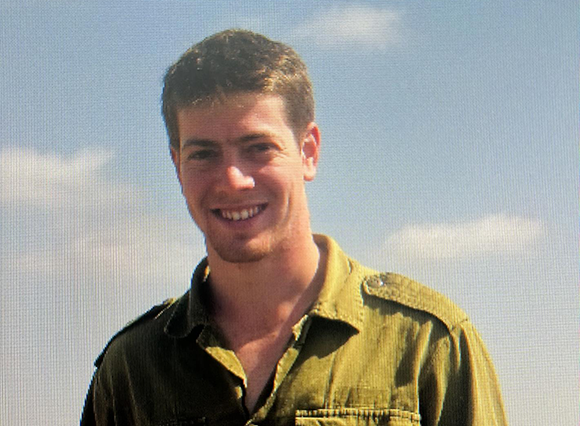
All photographs · 1
In the media
Articles
- “His smile was his trademark” – The life and heroism of Captain Amir Tzur from Malha
כל העיר ירושלים ·
- Cpt. Amir Zur, 23: ‘You will always be our guardian angel’
The Times of Israel ·
Podcasts
Memorial sites
- Amir Tzur - Memorial Page
כאן 7.10.360
- Amir Tzur — My Life Story
סיפור חיי
Stories told about them
Ofri described a deep bond with her younger brother despite an eight-year age gap. She said he was a tall, strong Negev machine gunner while also gentle, affectionate and thoughtful, and that he excelled in his unit’s fitness test as well.
According to the article, Amir was Israel’s orienteering champion in his youth and also competed internationally. It also describes him as an outstanding pianist who graduated from the officers’ course with highest honors.
Life & service
Profile
Service
- Rank
- Captain
- Unit
- Sayeret Matkal
- Honours
- Posthumously Promoted
Family
- Father
- Karl Yaniv
- Mother
- Esther
Burial
Cemetery
Ga'ash
Tributes & remembrance
אמיר צור הוא דוגמא לאהבת חינם ואהבת האדם. יהי זכרך ברוך מלאך גיבור
תהא נשמתך צרורה בצרור החיים וב"ה תזכה לקום בתחיית המתים.
נזכור אותך לעד
ת.נ.צ.ב.ה לעד, מחבקים אתכם אסתר יניב וכל המשפחה!
אמיר, מלח הארץ, ברוך כשרונות, כואבת את חסרונך
אמיר. אותך לא הכרתי.
קראתי עליך והתרשמתי מדמותך המיוחדת ומעוררת ההשראה. אובדן ענק.
אמירי, תלמידי לפסנתר! תמיד תשאר בליבי נער מחייך, מוכשר בנגינה, צנוע, גנטלמן.
הסחלב שהבאת לי לפני גיוס עדיין אצלי שמור.....השיר " הסתיו הזה" שכתבתי לך עם דורית זיו להנצחתך תמיד יתנגן ונזכור.....
היי אמיר, אותך לא יצא לי להכיר. במקרה נתקלתי בכתבה עלייך. הייתי יכול לכתוב כאן גם שעה על הבן אדם הטוב שהיית ומה שעשית, אבל אם הייתי רואה אותך הייתי מסכם את זה בחיבוק גדול ואמירת תודה, כי אני כאן ואתה לא לצערי.
יש לי גיבוש בקרוב, ומקווה שאעבור, כי הגיע תורי להילחם, בדיוק כמו שהיה תורך.
אמיר צור נפל בעת מילוי תפקידו כלוחם קצין ופרמדיק בסיירת מטכ"ל בזמן הקרבות על חילוץ והצלת אנשי קיבוץ כפר עזה. אמיר, זמר במקהלת העפרוני בילדותו, נגן פסנתר, אלוף הארץ בריצת נווט שייצג אותנו באליפות העולם באירופה כמו גם באולימפיאדה לנוער במדעי כדור הארץ. מדריך טיולים בשנת השירות בניצנה מסיים קורס קצינים בהצטיינות ועוד ועוד שעוד ייכתב... וברגע זה בוחרת משפט שאמיר כתב לחבר: "לעשות בראש re-start אחרי כל תרגיל לא טוב. להגיד לעצמי מילים טובות, לעודד את עצמי ולהגיד לי שאני טוב. מאוד טוב והכי טוב ושטעויות קורות וזה בסדר." "אמירי תמיד תהיה מקור כוח לאמונה באדם. לאמונה שאפשר... שאפשר שיהיה באמת טוב. תמיד תהיה אמירי קרן האור שלנו וציפור נפשנו תמיד תשאר כולך לב ונשמה גדולה"
בחור מדהים למשפחה מדהימה יהי זכרכך ברוך
התמונה שלך מחייך לא יוצאת לי מהראש ואני אפילו לא מכיר אותך.
לא יודע למה, יש בך משהו מיוחד.
לקרוא את הסיפור חיים שלך זה מדהים מצטער שלא יצא לי להכיר אותך אתה נראה אדם מדהים.
יהיה זכרו ברוך.
החותם שהשארת על כולם מחזק וימשיך עוד הרבה קדימה.
אוהבת אותך, מעריכה אותך, מתגעגעת אלייך.
יהיה זכרו ברוך
סבא יוסי מחבק אותך.
אתה קרוב לליבו וללב של כולנו.
ילד יקר .
כואב כי רק במותך התוודעתי לדמותך
כואב כאילו מכיר שנים.
נוח בשלום על משכבך.
גאווה לעם ישראלבלתי נתפס
יהיה זכרו ברוך..הי"ד.
יהיא זכרו ברוך גיבור ישראל
גיבור ישראל , יהי זכרו ברוך
יהי זכרו ברוך.
תודה ששמרת עלינו
השם ינקום דמך
עילוי. הצליח בכל אשר חפץ. אלוהים נתן לו כל שאפשר. יופי חכמה נועם הליכות. לו אך נתת לו חיים.
משפחת צור היקרה. קראתי עכשיו על דמותו של יקירכם אמיר דרך מכון דוידסון ומבלי להכירו מרגישה שנפער לי בור בלב. אבידה תהומית של יצירת מופת. אשריכם שהייתם "בית גידול" לנשמה ככ מיוחדת ומאירה. לא יודעת למה קרה מה שקרה. אין מילים שמספיקות כאן. שולחת חיבוק גדול. ולך אמיר יקר, תודה על האור שהכנסת לעולם הזה. רק מקריאה על חייך, אני מרגישה שהפכתי לאדם טוב יותר....
בבקשה תשמור עלינו מלמעלה, והרעף עלינו טוב.
אמיר,שנים רבות חלפו מאז ראיתך כתינוק נישא על כתפי אחיך איתן,והגר שלי היתה הבבייבי סיטר שלך בילדותך,ובגרת וחלפו השנים ,ודבר הידיעה שנפלת בקרב היכתה בנו,צורבת ומכאיבה.ת.נ.צ.ב.ה
יהי זכרו ברוך.
למשפחה של אמיר היקרה,
קראתי עליו עכשיו ולא יכולתי שלא לכתוב. חסרונו הגדול של אמיר ושל רבים כמוהו יורגש. ואני אשתדל שאני וילדיי נהייה ראויים להקרבה שלו.
יהי זכרו ברוך
אמירי מתגעגעים אליך בשבתות
סיפור חייו השאיר עליי רושם עז! יחיד במינו,
אמן ונהייה ראויים למותו, יהי זכרו ברוך!
אינני יודע מדוע, אולי כי היה פרמדיק, אולי כי היה שוחר מדע, אולי כי היה בעל עיניים טובות. אך שמו של הבחור לא יוצא מראשי מאז שנחשפתי לטפח מסיפור חייו. מצד אחד בור ללא תחתית שכאלה איבדנו, אך בו זמנית תחושת תקווה ושליחות לעתיד טוב יותר. שנהיה ראויים לך אמיר. משתתף בצער וביגון האין סופי של משפחתו וסביבתו.
איש שכולו רק טוב. הלך הרבה יותר מדי מוקדם. תודה על הכול.
בחור מרשים, מלח הארץ, מעורר השראה
יהי זכרו ברוך
Amiri’s smile was his status symbol
Source:כל העיר ירושלים
Read the Hebrew original
החיוך של אמירי היה סמל הסטטוס שלו
A rare ability to make the viewer look at reality from another angle.
Source:שלא נצא בורים - לזכר אמיר צור
Read the Hebrew original
יכולת נדירה לגרום למתבונן להביט על המציאות מזווית נוספת.
Amir, you will always be our guardian angel.
Source:The Times of Israel
Remembrance Day addresses
יום הזיכרון לחללי מערכות ישראל התשפ"ה – 2025
בכל יום שעובר, אזכור יותר! אזכור, את אלו שיצאו עימי לקרב ולא שבו, ולהם אין מי ידמה ומי ישווה. אזכור, שהכאב לא יעבור לעולם, והזמן, הוא לא מרפה ולא מרפא. אזכור, את שיברון הלב הגובר ואת הבית שבוער. אזכור, את צדקת הדרך, ואשבע שוב, שמה שהיה לא יהיה יותר. אזכור, שיותר מכל דבר אחר – אני חסר! ביום הזה, אני נתקף געגוע לדמותם, לחיתוך דיבורם, לחיוכם, ומדליק נר לזיכרון דרכם ומורשתם!
משרד הביטחון
אגף משפחות, הנצחה ומורשת
יום הזיכרון לחללי מערכות ישראל התשפ"ה – 2025
בכאב, בהצדעה ובתקווה אני מתכבד להדליק נר זיכרון זה. השנה, כשאנו נלחמים במלחמה ארוכה, רב זירתית וצודקת, הזיכרון נושא משמעות עמוקה. ביום זה נעצור ונתייחד עם זכרם של טובי בנינו ובנותינו שנפלו בהגנה על המדינה. מורשתם היא המצפן שמתווה את דרכינו, והיא המעניקה לנו כוח להמשיך ולהגן על מדינת ישראל ותושביה. משפחות יקרות, אנו מרכינים ראשנו ומתחייבים שנעמוד לצידכן תמיד. יהי זכר הנופלים ברוך.
אלוף דדו בר כליפא
ראש אגף כוח האדם, צה"ל
יום הזיכרון לחללי מערכות ישראל התשפ"ה – 2025
בשעה שאנו זוכרים את גודל תרומתם ועומק מסירות נפשם של טובי בנינו ובנותינו, נופלי מערכות ישראל לדורותיהן, ממשיכים צה"ל וכוחות הביטחון במימוש המשימה למענה לחמו ועבורה נפלו: הכרעת אויבינו מדרום, מצפון, ביהודה ובשומרון, וגם בזירות רחוקות יותר. בהערכה רבה ובגאווה אדירה אנו מרכינים ראש בפני הנופלים והנופלות, מאמצים את משפחותיהם אל לבנו, וממשיכים במשימה להבטחת קיומה של ישראל לדורי דורות. יחד נעשה ונצליח.
רב אלוף אייל זמיר
הרמטכ"ל, צה"ל
יום הזיכרון לחללי מערכות ישראל התשפ"ד – 2024
כאשר דגלינו מורדים לחצי התורן וראשינו מורכנים לזכר הנופלים והנופלות במערכות ישראל, ממשיכים לוחמי צה"ל ומפקדיו בלחימה בדרום, בצפון, ביהודה ובשומרון ובזירות נוספות. על כל דור מוטלת המשימה של הגנת העם והארץ – משימה שאף פעם אינה פוסקת. נצדיע בגעגוע ובגאווה לנופלים ולנופלות, נחבק את משפחותיהם, ונמשיך ברוח הציווי שהותירו לנו. עם ישראל חי.
רב ניצב יעקב שבתאי
המפקח הכללי, משטרת ישראל
יום הזיכרון לחללי מערכות ישראל התשפ"ד – 2024
אחיי הנופלים, כל נר הוא זיכרון יחיד ומיוחד, על חיים שהיו ואינם, געגוע שנצרב עמוק בלב, עולם ומלואו. הנרות כולם הם זיכרון של אומה כי לעולם לא עוד, בשורת הציונות וקוממיות ישראל. זיכרון כי הדרך לעם חופשי בארצנו עוברת דרך מסדר הנופלים. אור הנר יזכיר לנו את מסירות נפשכם להציל חיים, להגן על הבית. הנרות מסמנים לנו נתיב גבורה ערכי מחייב שאנו מצווים ללכת לאורו. נמשיך להילחם ולהוסיף אור מתוך אמונה בנצח ישראל.
יואב גלנט
שר הביטחון
יום הזיכרון לחללי מערכות ישראל התשפ"ד – 2024
בהצדעה ובכאב, בשם צה"ל כולו, אני מדליק נר זיכרון. בעיצומה של מלחמה, הזכרון נושא משמעות יום-יומית, שעבר והווה מתלכדים בה. לאורם של הנופלים נמשיך לצעוד, חיילי הסדיר והמילואים. לאורם של הנופלים נמשיך להגן על ארצנו ועל מולדתנו, גם כשהמחיר כבד. להבת-הזכרון תבער בנו בעודנו ממשיכים להלחם ונזכור את הנופלים ואת אומץ ליבם. משפחות יקרות, צה"ל מרכין היום ראש, מצדיע לכן וכואב איתכן. יהי זכר הנופלים ברוך.
אלוף יניב עשור
ראש אגף כוח האדם, צה"ל
יום הזיכרון לחללי מערכות ישראל התשפ"ד – 2024
בהוקרה, בגאווה ובכאב שאין לו סוף, אני מתכבד להדליק נר לזכרם של הנופלים והנופלות במערכות ישראל. סיפור חייהם בארץ הזאת, מסכת שירותם, גבורתם והקרבתם – הם סיפורה של הארץ הזאת, אך גם סיפור המחיר הכבד שהיא תובעת מאוהביה. מחויבותנו לזכר הנופלים ולדרך שהותירו לנו ניצבת תמיד לנגד עינינו. את המשימה שלא זכו להשלים, משלימים כיום, וישלימו, אנשי כוחות הביטחון, הממשיכים בדרכם ולאורם. יהי זכרם של הנופלים ברוך.
משרד הביטחון
אגף משפחות, הנצחה ומורשת
יום הזיכרון לחללי מערכות ישראל התשפ"ד – 2024
בחרדת קודש אני מתכבד להדליק נר לזכרם של חללי מערכות ישראל, חברנו שנפלו, מראשית היציאה מהחומות ולאורך כל שנות עצמאותנו המדינית והציונית, מהווים תמרור זיכרון לדרך חיינו ולמחוייבות הלאומית להנצחת זכרם. דרכם נותרה דרכנו ומורשתם נר להמשך עשייתנו. יהי זכרם ברוך!
בני גנץ
שר הביטחון
יום הזיכרון לחללי מערכות ישראל
נזכור אותם, כולנו יחד. כל אחד ואחת מהם, מדי יום ביומו, והיום ביתר שאת, כך – לנצח. "כי מדי דברי בו זכור אזכרנו עוד"
משרד הביטחון
אגף משפחות, הנצחה ומורשת