
The story
In Ramat HaSharon, in the early nineties, enveloped by the green canopy of pecan trees and the gentle hum of quiet suburban life, a small baby was born on a bright day in May, on the 2nd of Iyar 5752, and was named Amir. He was the eldest son of Haya and Avi, who had built their home amidst the sleepy tranquility of garden-filled streets, and he arrived into a world that had yet to know the dizzying pace of today, a world where childhood was still a sprawling backyard, creaking bicycles, and the scent of Friday night dinners wafting through the air. In their home, whose doors were always open to relatives and friends, Amir's journey began, surrounded by warmth and love that shaped his foundations. He grew up within walls that absorbed laughter and conversations, learning the secrets of his small world from the warm gaze of his parents, who made sure to instill in him values of respect, perseverance, and love for humanity, not through grand words but through daily actions, in the way they treated each other, their neighbors, and their children.
As a young boy, he was remembered for his intense curiosity and discerning eyes, which missed no detail. He would run around the yard, his hands always dirty with soil, trying to decipher the secrets of the gnomes hiding among the plant leaves, or the paths of ants marching in an orderly procession. When his younger brothers, Yitzhak, Shmary, and Lior, came into the world, Amir's status changed. From a child who received full attention, he became an elder brother, and upon his young shoulders, naturally and almost imperceptibly, a certain weight of responsibility was placed. He learned to share his toys, to protect his younger brothers from imaginary monsters and from minor bumps from falling off the swing, and to show patience even when the noise in the house grew louder. He would join their games, finding himself leading the small group of children in the yard, inventing entire worlds of adventures for them, navigating among them with an innate talent, a blend of gentle authority and a playful spirit. He often spent his afternoons climbing the ancient mulberry tree in the garden, sitting among the branches, looking at the world from above, purple mulberries staining his fingers, and thinking about things children his age might not yet have considered, letting his imagination drift to distant realms.
The move from Jerusalem, the eternal city, to Ramat HaSharon happened at some point in his childhood, and he quickly adapted to it. Jerusalem, with its history-soaked streets, its warm basalt stone, and its unique sounds, shaped his inner landscape. He loved the special light reflected from the city walls in the twilight hours, the distinct scent of pine trees and the crisp air coming from the mountains. He learned to know its hidden alleys, its ancient neighborhoods, and the diverse people who lived there. In Jerusalem, school was more than an educational institution; it was a melting pot of cultures and opinions, and there Amir continued to develop. He was a curious student, who loved to learn and explore, not only the academic material but also the people around him. He would listen attentively to his teachers' stories, interested in history and geography, and finding creative ways to approach complex problems. His friends remember him as a relatively quiet teenager, yet full of humor, with a captivating smile and a penetrating gaze, who knew how to listen and be there for them. He wasn't a loud leader, but one whom people tended to follow because of his judgment, integrity, and his ability to see the bigger picture. He was the one people turned to for advice, to resolve conflicts between friends, or simply for a supportive shoulder in difficult moments.
In his youth, Amir developed a deep love for hiking and nature. He would go with his friends on long treks in the Judean Mountains, inhaling the scent of hyssop and sun-baked rocks, connecting with the quiet of the desert visible from the peaks. There, among the dusty trails and breathtaking landscapes, he found peace and clarity of thought. He learned to navigate using maps, to read the terrain, and to trust his instincts. These trips, which demanded physical fitness and determination, forged his body and spirit, and provided fertile ground for developing the qualities that would serve him faithfully in the future. He wasn't overtly competitive, but always strived for personal excellence, to push his limits one step further. When he reached high school, discussions about joining the IDF began to fill conversations in the hallways and among friends. While many deliberated about their future, for Amir, things were clear. He knew he would serve a meaningful service, contributing his part in the best way he could. He trained for his enlistment, not only physically, but also mentally, reading books on military history, interested in technology and strategy, preparing himself for a journey he knew would be challenging.
On March 14, 2011, a bright day yet full of anticipation, Amir boarded the famous bus to the induction center. He bid farewell to his parents and siblings with a warm embrace, trying to calm the apprehension in their eyes with a confident gaze. The unique smell of the induction center, the new uniforms that were still stiff and unfamiliar, and the bustle of hundreds of young people like him, all were part of a formative experience. He knew he was leaving his familiar world and entering a new, demanding one, but also full of opportunities. Amir began his military service in intelligence. This choice was not accidental. It reflected his intellectual curiosity, his ability to analyze complex situations, and his desire to influence in ways not necessarily visible to the eye. Within the intricate intelligence system, Amir quickly found his place. He proved to be a sharp-minded soldier, with a rare ability to connect seemingly unrelated details, identify patterns, and draw accurate conclusions. He spent long hours in front of computer screens, in quiet briefing rooms, where every word was carefully weighed and every piece of information examined under a magnifying glass. He learned the importance of accuracy, the need for confidentiality, and the immense impact correct intelligence analysis could have on national security. He stood out not only for his professional skills but also for his team spirit, his ability to support his comrades and take responsibility beyond the demands of his role.
But within the world of intelligence, for all its importance, another fire burned within Amir, a deeper drive for action, a desire to influence more directly, to be at the forefront of security operations. He yearned for a more extreme physical and mental challenge, a place where body and mind were pushed to their limits. Thus, after a significant period in intelligence, Amir made the decision to compete for a place in the most elite unit in the IDF – Sayeret Matkal. This was a tremendous leap, a journey of thousands of words without headings, which required him not only to learn new skills but also to reshape himself. The long and arduous selection process, the famous "gibush" (selection camp), was a relentless test of physical fitness, mental resilience, ability to think under pressure, and leadership skills. Long days and nights of treks, complex exercises, and extreme pressure situations, where every small detail was meticulously examined. Amir successfully passed all stages, not thanks to superior physical strength, but thanks to a rare combination of uncompromising stubbornness, creative thinking, and the ability to remain calm and focused even when exhaustion and pain threatened to overwhelm him. He became a combatant in Sayeret Matkal, a unit whose reputation precedes it, whose secrets are well-guarded, and whose soldiers are among the finest sons of the land.
In Sayeret Matkal, Amir found his calling. He was not just a combatant; he was an officer, a leader, a figure they knew they could trust implicitly. He completed officer's training, climbed the ranks, and became a Major, a role he filled with uncompromising responsibility and professionalism. His years in the unit were filled with intensive, complex, and classified training, which required him to be at the peak of his physical and mental fitness at all times. He developed expertise in a wide range of fields – from navigating difficult terrain, through counter-terrorism, to special operations behind enemy lines. He learned to meticulously plan operations, analyze risks, and lead small teams of skilled combatants in dangerous situations. The bond with his unit comrades was deep and unshakeable, a bond built on absolute trust, close cooperation, and the clear understanding that one's life depended on the other's. They were a second family to him, a group of strong, determined men with shared values, committed to defending the security of the state at all costs. Amir was known for his ability to maintain composure even in the most dramatic moments, to project calm and confidence to those around him, and to find creative solutions to unexpected problems.
Alongside his demanding military career, Amir also built his personal life. He met Yona, an extraordinary woman, who was a partner on his journey, understanding and supportive even in the face of the unique challenges of life alongside a Sayeret Matkal combatant. Their relationship was built on deep love, mutual respect, and the ability to maintain open communication even when words were scarce. She knew when to give him quiet and when to hug him tight, when to ask and when to let things be. Their wedding was a joyous event, where two families merged, promising together to build a shared future. The home they established together in Jerusalem was a place of warmth and love, a safe haven to which Amir would return after long weeks of training and operational activities. He would shed his combat fatigues and the mask of the tough commander, and become an ordinary man, a husband, and soon, a father.
Amir's greatest happiness came with the birth of his daughters, Avigail and Naama. The moment he first saw them, he felt his heart expand to new dimensions. He was a devoted, loving, and present father, despite all the constraints and difficulties imposed by his military routine. He found ways to be an active part of their lives, reading them bedtime stories, building towering block structures with them, and playing with them in the playground. He would bend down to their height, listening attentively to their stories about kindergarten or school, and giving them a sense of security and unconditional love. The house would fill with their sweet laughter and the sounds of their play, and Amir would draw strength from it to face the complex tasks awaiting him outside the door. He tried to be there for every important moment, every holiday, every birthday, to ensure they felt his presence and his love. He taught them the importance of family, the value of helping others, and the courage to stand their ground. He would take them on short walks in the forest near their home, showing them the blooming flowers and chirping birds, and passing on his love for nature, just as he himself had loved it in his childhood.
Relative tranquility prevailed in the lives of Amir, Yona, and their daughters in Jerusalem. Amir, as a Major in Sayeret Matkal, combined his routine of training and operational activities with a rich family life. He would return home, shed his uniform, and dedicate himself entirely to his family. In the evenings, after the girls had fallen asleep, he would sit with Yona, discussing the day that had passed, their plans for the future, and their shared dreams. They were a quiet couple, yet full of deep understanding for each other, who knew how to support one another even when words were lacking. Amir was an active community member, often volunteering in local activities, and always ready to lend a helping hand. He didn't talk much about his work, as secrecy was an integral part of it, but his friends and acquaintances knew he possessed depth, inner strength, and quiet determination. He loved to read books, keep up with the news, and engage in intellectual discussions on a variety of topics, from global politics to the philosophy of existence. He was a broad-minded person, with well-formed opinions, but always open to listening to different viewpoints and learning from them.
The Shabbat of the 22nd of Tishrei 5784, October 7, 2023, began as a normal, quiet, and peaceful Shabbat, like many Sabbaths in Jerusalem. Amir, Yona, and the girls prepared for a day of shared rest. Breakfast was filled with children's laughter and the smell of fresh coffee, the Jerusalem sun illuminating the house with a pleasant light. Amir might have been sitting and reading a newspaper, or playing with the girls, surrounded by love and family tranquility. But this quiet shattered abruptly. Around 6:30 in the morning, initial, strange, and incomprehensible reports began to arrive about sirens in the south and the infiltration of terrorists. At first, the reports were vague, hard to digest, something that didn't sound like it could happen in reality. But as the minutes passed, the picture became clearer, and it was more horrifying than any imagination. WhatsApp messages began to flow rapidly in military groups, in an increasingly urgent and frantic tone. The words "call-up," "multi-arena event," "everyone who can get there – immediately," began to echo.
Amir, accustomed to sudden call-ups, knew immediately that this was something different, more severe than anything he had experienced before. He saw the worried looks in Yona's eyes, tried to reassure her with a steady gaze, as he already began to get ready. With quick, professional movements, which had become second nature to him throughout his years of service, he put on his uniform, gathered essential equipment, and checked his weapon. He approached Yona, hugged her tightly, a long embrace that said everything without words, and promised he would return soon. He kissed his sleeping daughters, whispering "Daddy loves you," trying to instill in them, even in their sleep, a sense of security, despite the storm raging within him. The way out of the house was urgent. He got into his car, his heart pounding, and drove quickly south, into the inferno that had begun to unfold. On the way, his phone didn't stop vibrating. Difficult reports, incomprehensible images, calls for help from all directions. He heard about massacres in communities, about widespread infiltrations, about innocent civilians being murdered in their homes. The sights and sounds flowing to him were unbearable, and the need to act, to protect, to stop the atrocity, burned within him with unparalleled intensity.
When he arrived at the combat zone, the chaos was absolute. Thick smoke rose from burning communities, incessant gunfire from all directions, and cries of wounded and survivors echoed in the air. Amir and his team, skilled and experienced Sayeret Matkal combatants, were immediately thrown into the heart of the events. The mission was clear: fight the terrorists, clear the area, save lives. They operated on many fronts, moving from community to community, from house to house, encountering fierce resistance and unspeakable horrors. Amir led his soldiers with courage and composure, making quick decisions under fire, navigating them through the thicket of threats. He was the one who ran first, who pushed forward, who set a personal example of supreme bravery. He fought valiantly, defending his comrades and civilians with fierce determination, sparing no effort and no risk. He knew that every second counted, that every action he took could save lives.
Amidst the unimaginable inferno of that day, as he led his combatants in a bloody battle, Major Amir Skuri fell. He was killed in action, protecting the citizens of Israel, his home, his family, with his body. His fall was swift, instantaneous, in the heart of the chaos, but it left behind a huge void. He fell as a hero, as one who chose life and chose to defend it, even at the cost of his own life. He was thirty-one at his death, at the peak of his strength, at the peak of his accomplishments, with a young family waiting for him at home.
The news of his fall struck his family and loved ones like a bolt from the blue, leaving them stunned and heartbroken. Yona lost her beloved husband, the young daughters, Avigail and Naama, lost their father, his parents, Haya and Avi, lost their eldest son, and his brothers, Yitzhak, Shmary, and Lior, lost a dear brother and soulmate. The house in Jerusalem, once filled with laughter and joy, was now filled with deep mourning and an incomprehensible sense of loss. But along with the immense pain, the understanding of the magnitude of his sacrifice and heroism began to grow. Amir was laid to rest in the military cemetery in Netanya, with thousands of people accompanying him on his last journey, the Israeli flag draped over his coffin. The afternoon sun illuminated the mountain, and a heavy silence fell upon the crowd, a silence broken only by deep weeping and hushed prayers.
The void left by Amir Skuri in the lives of his family, friends, and unit is immense and irreplaceable. But the story of his life, the story of a curious boy from Jerusalem who became a daring combatant and commander in Sayeret Matkal, a loving father and devoted husband, continues to resonate. He left behind a legacy of courage, integrity, uncompromising professionalism, and deep love for his homeland. His daughters, Avigail and Naama, will grow up and come to know their father through the stories, pictures, and memories that their mother and grandparents will tell them. They will know that their father was a hero, not in the sense of legends, but in the true and poignant sense of the word – a man who chose to stand on the front lines, to defend his home and his people, and paid the ultimate price for it. The memory of Amir Skuri, Major in Sayeret Matkal, 31 at his fall, will continue to live in the hearts of all who knew and loved him, and will serve as a source of inspiration and strength in the unending struggle for our existence and resurgence in this land. He is a symbol of Israeli courage, of the deep sense of responsibility that many of our sons and daughters carry on their shoulders, and of the heavy price of the security in which we seek to live.
Moments of a life
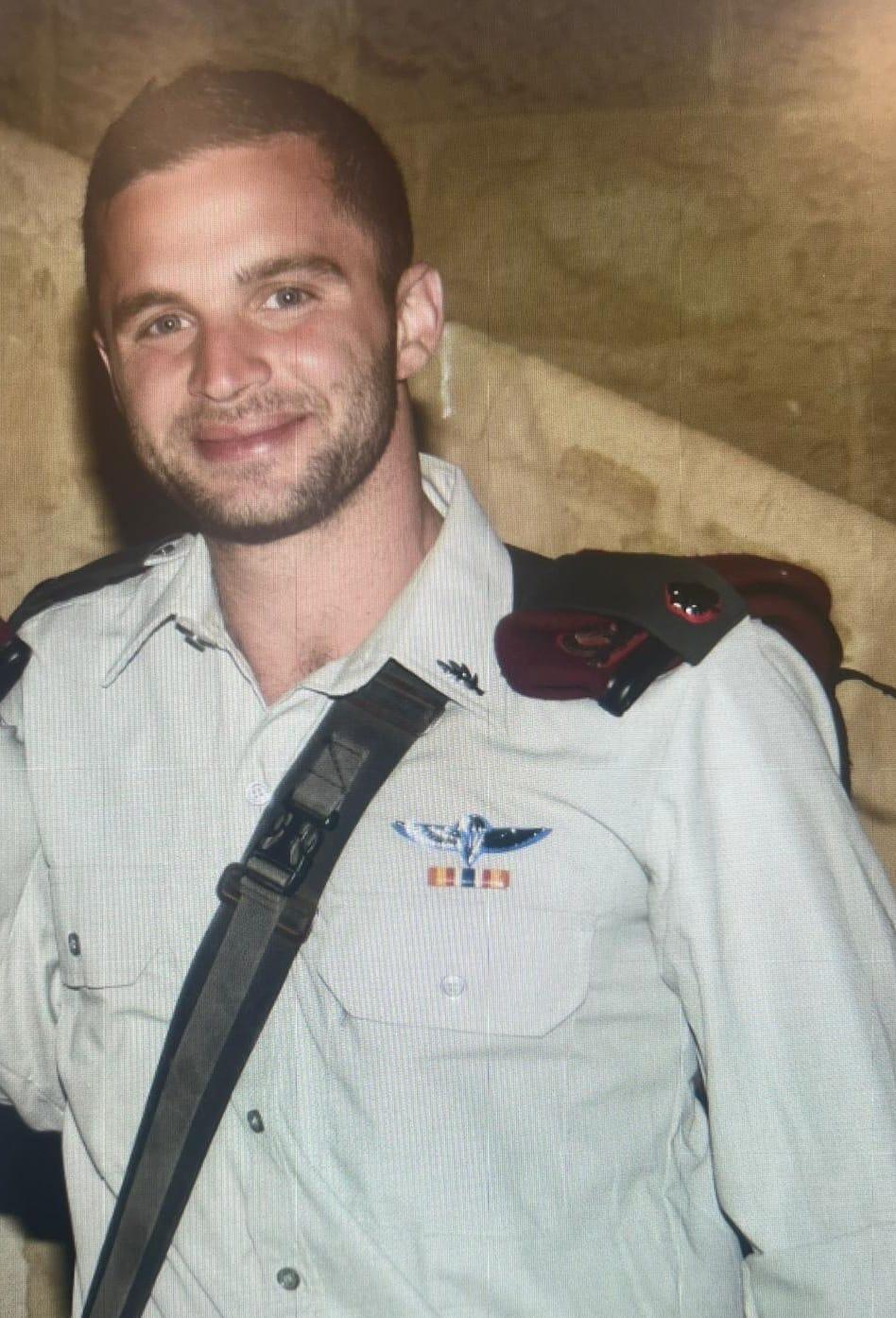
All photographs · 1
In the media
Articles
- ‘We want students who ask wonderful questions – that’s more important than having all the right answers’
The Jewish Chronicle ·
- Maj. Amir Skoury, 31: Sayeret Matkal soldier who was ‘all-in’ on life
The Times of Israel ·
- A WhatsApp recording from the start of the war gave rise to a song
ערוץ 7 ·
- IDF adds to the list of soldiers killed in fighting with terrorists
NEWSru.co.il ·
- Daniel, who was killed last night, told the team about his childhood friend Amir, who was killed on October 7: “Brothers by choice” | The moving video
ynet
- The Amir Skouri Scholarship for Excellence
המרכז האקדמי שלם
Songs
- Aviram Shukron - Points of Light
אבירם שוקרון - הערוץ הרשמי ·
Memorial sites
- Amir Skuri — memorial page
כאן 7.10.360
Memorial projects
His cousin Lital began sharing details of families sitting shiva to encourage condolence visits in his memory.
The artist Aviram dedicated the song “Nekudot Shel Or,” produced by Almog Tabeka, to his memory.
Shalem College announces the establishment of an excellence scholarship fund in his name, initiated by his mother, Chaya; the scholarship is intended for the final year of study. The page does not confirm that it has already been awarded.
Stories told about them
After twelve years of service, Amir began studying at Shalem College. Alongside the army and family, he competed in triathlons and Ironman events; his cousin Lital initiated the distribution of information about families sitting shiva in his memory to encourage condolence visits.
Life & service
Burial
Cemetery
Netanya Military Cemetery
Tributes & remembrance
אמיר אחשלי היקר אתה הכנסת אותי לנשמה שלך אתה חינכת אותי שקית שבמבה בטבע לעולם לא תתכלה תפילת הדרך המבין יבין כשגדלתי חזרתי בתשובה וגיליתי אחרי שנפטרת ששמך זה אמיר מאיר וזה אותם אותיות מראה כמה שלא משנה מאיזה צד תמיד היית אור אמא או אבא אוהב אותך לעולמי עד המדרייך בני עקיבא הכי טוב בעולם שבשבילי יהיה לעולם המדריך לחיים תודה חיימשלי אתה אהבת חיי אהבת חיי אהבת חיי הצלת את חיי תודה שהצלת את חיי תודה
תודה רבה לך אתה גיבור שבנופלו הציל חיים של רבים יהי רצון שילכו רבים לאורך ויגלו עוז וגבורה בהצלת עם ישראל הקדשנו את הפעילות היום לזיכרך ולעילוי נשמתך
היינו שכנים .. זוכרת את החיוך שלך .
הי"ד
כשאדם טומן זרע באדמה
אי אפשר לדעת מה יגדל.
אולי יגדל עץ גדול
אולי עץ קטן.
אולי עץ דק
או עץ עבה.
אולי בכלל יצא סיח ולא עץ.
אולי עץ שמוציא פרי
ואולי עץ סרק.
אולי הזרע לעולם לא יגדל.
אולי.
אבל האיש שזורע זרע באדמה
הוא איש מאמין.
מאמין בכל ליבו בזרע.
נותן אותו בשמחה.
חושב על הזרע, מדמיין את הזרע
ומייחל לו אהבה.
הוא איש עם לב טוב ושיער זהב.
תודה לך איש יקר.
הקשר הראשון שלך.
היום התוועדתי לסיפור הגבורה של אמיר.
ליבי עם משפחתכם.
בזכותו ובזכות אנשים מיוחדים כמוהו נצח ישראל מובטח.
יהי זכרו ברוך.
מן השמים תנוחמו
גיבור אמיתי שנפל על קידוש ה!
אמיר סקורי, חד ורענן, מלא חיים ומרץ. אזכור אותך, עוד מימים של התיכון. הלכת והשתבחת. תודה לך על שהיית בשביל המדינה, בשביל כולנו.
יהי זכרו ברוך לעד גיבור ישראל
יהי זכרו ברוך.
אמיר המהמם
בן דוד שאני ככ כאה להיות קשורה אליו
תודה על מי שהיית ומה שהקרבת למעננו
זוכרים תמיד ולא נשכח!
אוהבים כולנו
פשוט אין מילים ילד שכל אמא יכול ליות גה בילד טוב כזה חבל
הכרתי את אמיר ביב"ע רעננה. כבר אז ראו את האכפתיות שלו מאחרים, את ההגדלת ראש שלו. יהי זכרו ברוך.
יהי זכרו ברוך
יהיה זכרו ברוך.
מן השמים תנחמו
מ"פ שהיה מלח הארץ גדל בגבעתי עקב פציעה ביום סיירות ואחרי סיום תפקיד קצונה המשיך לחלומו בשיטת ומטכ"ל איש עם מידות תרומיות גדל מחינוך דתי, שאף למצוינות תמיד תישאר המ"פ האגדי שהיה לי
מדהים כמה הכאב לא עובר, רק קהה מעט
היית אור איתן בעולם, שמור עלינו בן דוד אהוב
העצב אין לו סוף..
נער חביב אוהב אלוהים ואדם, חוקר ליבות וכליות של הסובב אותו, אמיץ וקדוש!
אמיר היקר,
מפקדי הנערץ
הייתי חייל תחתיך הבאח בטירונות סבאח גבעתי איי שם במרץ 12 . מהיום הראשון עד שעזבת אותנו לקורס קצינים הערכתי אותך . תמיד עם חיוך , 0 עצבים ו100 אחוז דבקות במשימה ובדאגה לאנשים. היום בו עזבת לקצינים זה היה יום ארור שלא הפסקתי לבכות . שלא תהייה המפקד שלי יותר .בעבור השנים שמרנו על קשר מדי פעם והתייעצתי איתך על כל מיני דברים אישיים. היום בו נפלת היה יום שחור . לא אשכח אותך לנצח
אבא למופת. אדם מאיר פנים. יהי זכרך ברוך
ושוב נפלה בחלקי הזכות לקרוא פרקי תהלים
לעילוי נשמתך הטהורה,אמיר-מאיר היקר.
תודה לך שוב ותמיד על שהגנת עלינו במסירות נפש במובן האמיתי של הביטוי.
תודה וסליחה על הקרבתך הנוראה מכל.
תנחומים לכל יקיריך.
יהא זכרך ברוך,גיבור ישראל.
נזכור את אמיר הגיבור לנצח
טופלת במשמרת שלי, והלוואי שעל הצד הטוב ביותר.
מבטיח להשתדל ללמוד על האור והטוב שעשית בחייך והשארת לנו בעולם.
זה מהקצת שלמדתי עליך
חדור מטרה ברמה נדירה. אפילו בזמן האפטר הקצר חשב ללכת להתנדב במקום הביתה לאשתו וילדותיו. נחבא אל הכלים וכנראה לכן בקושי מצאתי עליו סיפורים. לוחם סיירת. נהרג בשמחת תורה בהגנה על בארי.
תודה מקרב לב.
ת.נ.צ.ב.ה
חבר לטירונות שירתנו יחד בגבעתי תמיד היה שאפתן וחייל למופת , כואב הלב
השם יקום דמך מלאך .
יהי זכרו ברוך.
תודה שדחפת אותי לקצה.
השם יקום דמו.
תודה על שירותך, תודה שהיית איש וחייל למופת, מהטירונות ובכל המשך חייך.
היה לי הכבוד לשרת תחתיך ולהכיר אדם כמוך אדם מיוחד
היה לי הכבוד לשרת תחתיך ולהכיר אדם כמוך
לא נשכח את אמיר לעולם. בן אדם מיוחד, יפה בפנים ובהוץ, גיבור אמיתי. הקריב את החיים שלו למדינה שלנו.
אדם יקר, אבא אוהב. זכיתי להכיר אותך אך במעט. תודה.
It is hard to put into words the bond with a friend who is like a brother.
Source:ynet
Read the Hebrew original
קשה להגדיר במילים קשר של חבר שהוא כמו אח.
he was less about talking and more about doing
Source:The Times of Israel
To go back to another hug and another kiss and just more you
Source:The Times of Israel
He remains forever in the moment when all possibilities are open before him, yet none of them has been chosen,
Source:The Jewish Chronicle
Remembrance Day addresses
יום הזיכרון לחללי מערכות ישראל התשפ"ה – 2025
בכל יום שעובר, אזכור יותר! אזכור, את אלו שיצאו עימי לקרב ולא שבו, ולהם אין מי ידמה ומי ישווה. אזכור, שהכאב לא יעבור לעולם, והזמן, הוא לא מרפה ולא מרפא. אזכור, את שיברון הלב הגובר ואת הבית שבוער. אזכור, את צדקת הדרך, ואשבע שוב, שמה שהיה לא יהיה יותר. אזכור, שיותר מכל דבר אחר – אני חסר! ביום הזה, אני נתקף געגוע לדמותם, לחיתוך דיבורם, לחיוכם, ומדליק נר לזיכרון דרכם ומורשתם!
משרד הביטחון
אגף משפחות, הנצחה ומורשת
יום הזיכרון לחללי מערכות ישראל התשפ"ה – 2025
בכאב, בהצדעה ובתקווה אני מתכבד להדליק נר זיכרון זה. השנה, כשאנו נלחמים במלחמה ארוכה, רב זירתית וצודקת, הזיכרון נושא משמעות עמוקה. ביום זה נעצור ונתייחד עם זכרם של טובי בנינו ובנותינו שנפלו בהגנה על המדינה. מורשתם היא המצפן שמתווה את דרכינו, והיא המעניקה לנו כוח להמשיך ולהגן על מדינת ישראל ותושביה. משפחות יקרות, אנו מרכינים ראשנו ומתחייבים שנעמוד לצידכן תמיד. יהי זכר הנופלים ברוך.
אלוף דדו בר כליפא
ראש אגף כוח האדם, צה"ל
יום הזיכרון לחללי מערכות ישראל התשפ"ה – 2025
בשעה שאנו זוכרים את גודל תרומתם ועומק מסירות נפשם של טובי בנינו ובנותינו, נופלי מערכות ישראל לדורותיהן, ממשיכים צה"ל וכוחות הביטחון במימוש המשימה למענה לחמו ועבורה נפלו: הכרעת אויבינו מדרום, מצפון, ביהודה ובשומרון, וגם בזירות רחוקות יותר. בהערכה רבה ובגאווה אדירה אנו מרכינים ראש בפני הנופלים והנופלות, מאמצים את משפחותיהם אל לבנו, וממשיכים במשימה להבטחת קיומה של ישראל לדורי דורות. יחד נעשה ונצליח.
רב אלוף אייל זמיר
הרמטכ"ל, צה"ל
יום הזיכרון לחללי מערכות ישראל התשפ"ד – 2024
כאשר דגלינו מורדים לחצי התורן וראשינו מורכנים לזכר הנופלים והנופלות במערכות ישראל, ממשיכים לוחמי צה"ל ומפקדיו בלחימה בדרום, בצפון, ביהודה ובשומרון ובזירות נוספות. על כל דור מוטלת המשימה של הגנת העם והארץ – משימה שאף פעם אינה פוסקת. נצדיע בגעגוע ובגאווה לנופלים ולנופלות, נחבק את משפחותיהם, ונמשיך ברוח הציווי שהותירו לנו. עם ישראל חי.
רב ניצב יעקב שבתאי
המפקח הכללי, משטרת ישראל
יום הזיכרון לחללי מערכות ישראל התשפ"ד – 2024
אחיי הנופלים, כל נר הוא זיכרון יחיד ומיוחד, על חיים שהיו ואינם, געגוע שנצרב עמוק בלב, עולם ומלואו. הנרות כולם הם זיכרון של אומה כי לעולם לא עוד, בשורת הציונות וקוממיות ישראל. זיכרון כי הדרך לעם חופשי בארצנו עוברת דרך מסדר הנופלים. אור הנר יזכיר לנו את מסירות נפשכם להציל חיים, להגן על הבית. הנרות מסמנים לנו נתיב גבורה ערכי מחייב שאנו מצווים ללכת לאורו. נמשיך להילחם ולהוסיף אור מתוך אמונה בנצח ישראל.
יואב גלנט
שר הביטחון
יום הזיכרון לחללי מערכות ישראל התשפ"ד – 2024
בהצדעה ובכאב, בשם צה"ל כולו, אני מדליק נר זיכרון. בעיצומה של מלחמה, הזכרון נושא משמעות יום-יומית, שעבר והווה מתלכדים בה. לאורם של הנופלים נמשיך לצעוד, חיילי הסדיר והמילואים. לאורם של הנופלים נמשיך להגן על ארצנו ועל מולדתנו, גם כשהמחיר כבד. להבת-הזכרון תבער בנו בעודנו ממשיכים להלחם ונזכור את הנופלים ואת אומץ ליבם. משפחות יקרות, צה"ל מרכין היום ראש, מצדיע לכן וכואב איתכן. יהי זכר הנופלים ברוך.
אלוף יניב עשור
ראש אגף כוח האדם, צה"ל
יום הזיכרון לחללי מערכות ישראל התשפ"ד – 2024
בהוקרה, בגאווה ובכאב שאין לו סוף, אני מתכבד להדליק נר לזכרם של הנופלים והנופלות במערכות ישראל. סיפור חייהם בארץ הזאת, מסכת שירותם, גבורתם והקרבתם – הם סיפורה של הארץ הזאת, אך גם סיפור המחיר הכבד שהיא תובעת מאוהביה. מחויבותנו לזכר הנופלים ולדרך שהותירו לנו ניצבת תמיד לנגד עינינו. את המשימה שלא זכו להשלים, משלימים כיום, וישלימו, אנשי כוחות הביטחון, הממשיכים בדרכם ולאורם. יהי זכרם של הנופלים ברוך.
משרד הביטחון
אגף משפחות, הנצחה ומורשת
יום הזיכרון לחללי מערכות ישראל התשפ"ד – 2024
בחרדת קודש אני מתכבד להדליק נר לזכרם של חללי מערכות ישראל, חברנו שנפלו, מראשית היציאה מהחומות ולאורך כל שנות עצמאותנו המדינית והציונית, מהווים תמרור זיכרון לדרך חיינו ולמחוייבות הלאומית להנצחת זכרם. דרכם נותרה דרכנו ומורשתם נר להמשך עשייתנו. יהי זכרם ברוך!
בני גנץ
שר הביטחון
יום הזיכרון לחללי מערכות ישראל
נזכור אותם, כולנו יחד. כל אחד ואחת מהם, מדי יום ביומו, והיום ביתר שאת, כך – לנצח. "כי מדי דברי בו זכור אזכרנו עוד"
משרד הביטחון
אגף משפחות, הנצחה ומורשת