
The story
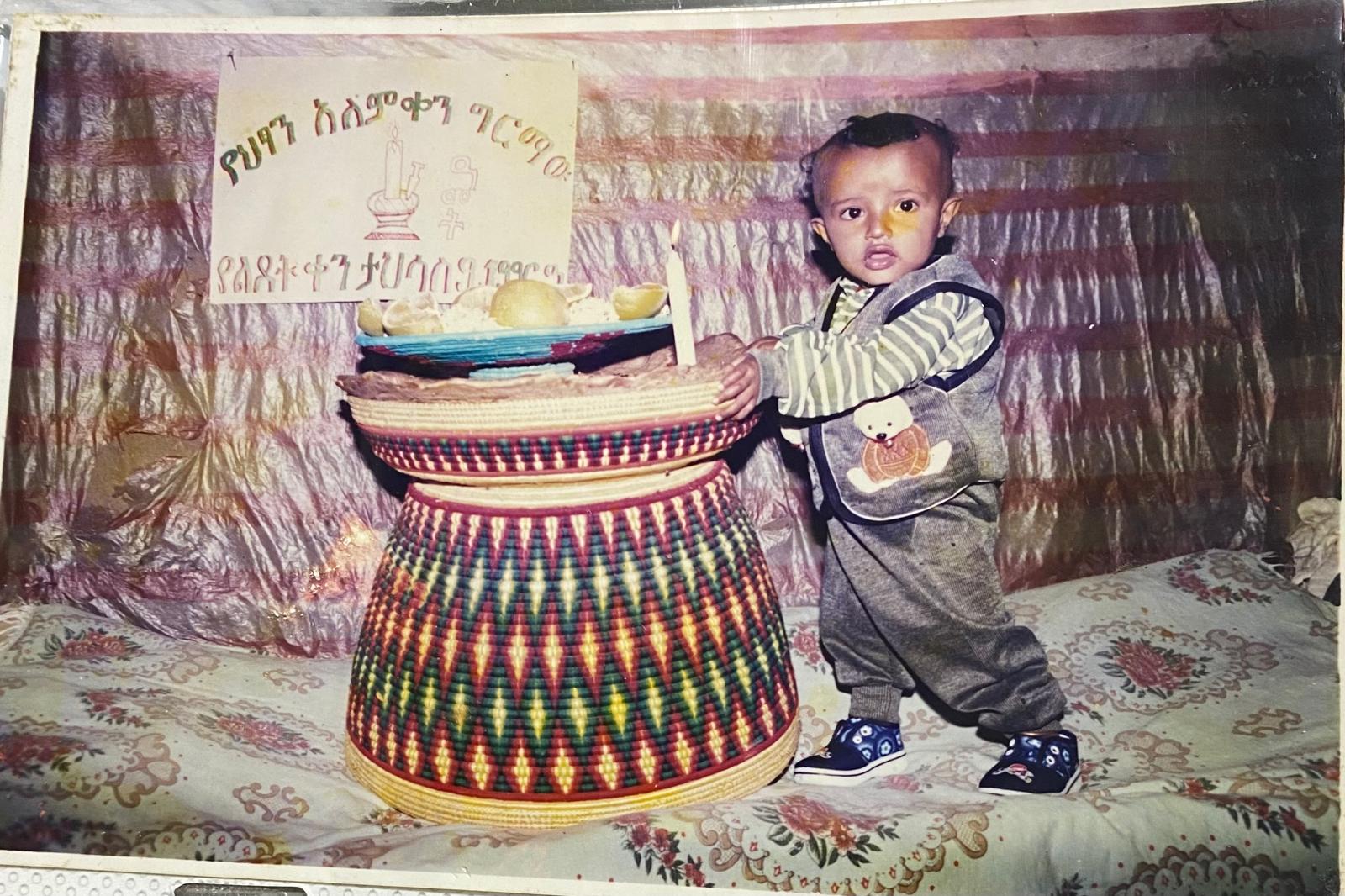
On that morning, the 13th of Tevet, 5763, corresponding to December 18, 2002, in one of Ethiopia's sun-drenched villages, Almakan Abate Tarfa was born. He was the eldest son of Astachila and Girmaw, a child whose arrival breathed new life and great expectations into the young family. Even then, his large, curious eyes promised a world of discoveries, and the gentle smile that spread across his face as he slept, cradled in his mother's arms, was a harbinger of good things to come. The modest home, filled with the aromas of local dishes and the melodic sounds of Amharic conversations, welcomed him with open arms. There, he spent his early infancy, absorbing the warmth of his family and the simple yet profound rhythm of life in that place. Two years later, little Almakan was already walking with relative confidence, running in the yard, calling out in childish tones to his sister Esther and his brothers Yonatan and Shalav, who were yet to be born, when the family made a decision that would forever alter the course of his life. In 2004, barely a year and a half old, Almakan immigrated to Israel with his parents, boarding a giant airplane that soared into the unknown, towards a new land, a foreign language, but with immense hope in their hearts.
The first two years in Israel were a period of delicate adjustment, of learning and new beginnings, as the family settled in an absorption center in Mevaseret Zion. Almakan, with the wondrous adaptability of children, quickly absorbed the new sights and sounds, running through the center's corridors, attempting to articulate Hebrew words he heard from other children, and finding ways to communicate even without a shared language. He learned to identify the varied smells of food in the communal dining hall, the sounds of new games in the courtyard, and the slow but steady acclimatization of his parents. After two years at the absorption center, the family found their permanent home in the Kiryat Menachem neighborhood of Jerusalem. The new apartment, the white walls, the urban landscape so different from the Ethiopian village, quickly became the center of his world. Jerusalem, with its layers, its sounds, and its myriad people, embraced him.
In that home, in the heart of Kiryat Menachem, the foundational stones of Almakan's personality began to form. As the eldest son, he naturally carried a certain responsibility on his young shoulders, but he also received the full measure of attention and love. His grandparents, who had also immigrated to Israel, saw him as their first grandchild, the first flower to blossom in the new soil, and were captivated by his every step. His uncle often called him "the family's flower," and stories of his good heart began to accumulate from a young age. One story, in particular, was often recalled: Almakan was playing soccer with his friends in the neighborhood, energetically chasing the ball, his eyes fixed on the goal. Suddenly, in the middle of a lively game, he caught sight of his grandmother in the distance, slowly approaching, her hands laden with heavy shopping bags. Without a second thought, without anyone asking him, he stopped the game, left the ball where it was, and ran towards her. He took the heavy bags from her, and continued the walk home with her, his determined steps accompanied by her satisfied smile and a proud look in his eyes. That was Almakan – seeing a need, and acting.
Honoring his parents was not merely a commandment or an obligation for him, but a supreme value that permeated his very being and guided all his actions. He witnessed his parents grappling with the Hebrew language, which was not yet fluent for them, and with the complex bureaucracy of their new country, and he was always there to help. Whether it was translating a word or a sentence they struggled with, or filling out tedious forms that seemed like a riddle, Almakan always stepped forward with patience and understanding. He was not just a son to them, but a true right-hand man, helping them above and beyond what was expected, and easing the burden of their acclimatization. His mother, Astachila, who recognized his strength and maturity prematurely, affectionately called him "Abate" – "my father" in Amharic. She saw in him not only her eldest son but her closest friend, someone she could rely on, consult with, and even learn a great deal from. This bond was deep and unique, accompanying them throughout his life.
As an elder brother, Almakan also cared for his younger siblings, Esther, Yonatan, and Shalav, loving them deeply and playing with them at every opportunity. He knew how to be a role model, a pillar of support, and also a partner in mischief and laughter. When he returned home from the base on weekends, the entire house would come alive. He would blast music – rhythmic, joyful, filling the space – and immediately get everyone in the house dancing, no matter the hour. This was his way of bringing joy home, connecting everyone, and dispelling the tension of routine. The house would shake with laughter, shouts of joy, and impromptu dance moves, with Almakan at the center, his captivating smile infecting everyone with his boundless energy.
Almakan completed his early schooling at Kibbutz Reshit Elementary School in Jerusalem, an educational institution that emphasized values and community. There, amidst the classroom desks and the spacious yard, his prominent traits began to solidify: his kindness, his curiosity, and his ability to easily connect with anyone. He was a relatively quiet child, yet his presence was felt, always with a small smile on his face, ready to help a friend or listen to a teacher. For high school, he chose to attend Himmelfarb Yeshiva High School in the city, an institution known for its high academic standards. There, too, Almakan stood out. His teachers loved him, not only for his good grades but for his pleasant personality, his eagerness to learn, and the way he treated his friends and the teaching staff. He loved to read and write, and it was natural for him to choose literature as his major. He enjoyed immersing himself in the pages of books, losing himself in other worlds, analyzing characters and plots, and expressing his thoughts and feelings through the written word. The world of literature opened new horizons for him, deepening his understanding of the human psyche and different cultures.
But Almakan was not just a diligent student. He was a vibrant teenager, seeking balance and ways to express his energy. Soccer was a great love in his life. In every spare moment, he would find himself on the neighborhood pitch, running, passing, kicking, feeling the adrenaline coursing through his veins. He did this with great enjoyment and skill, always radiating joy when surrounded by his teammates. Often, he would stay on the field even after his friends had tired and left, practicing alone, refining his skills, kicking again and again at an imaginary goal. He didn't just play; he was also an avid fan of the Barcelona football club, diligently following their games, knowing the players' names by heart, and getting excited by every victory as if it were his own.
Beyond soccer, music was an inseparable part of his life, a true refuge, a source of calm and tranquility. Whenever he could, Almakan would listen to music, surrendering to the sounds, letting them wash over him. He once wrote: "No matter how I feel, whether I'm sad, angry, or nervous, music helps me breathe and relax." It was a tool for him to cope, a way to process emotions, and to find his quiet center amidst life's storms. He loved a wide range of styles, and every song could tell him a story, transport him to another place, or simply give him the inspiration and strength to continue.
In his youth, as adulthood began to knock on his door, Almakan felt an inner urge to contribute, to be part of something greater. He joined the activities of the "Acharei! – Youth Leading Change" association, an organization designed to develop young leadership and prepare youth for life's challenges and military service. Within the association, he participated in the "Acharei! in the Field" program, which included challenging hikes, meaningful social action, and leadership encouragement. He walked the trails of the land, carrying weights, grappling with difficult terrain, and each time discovered another layer of inner strength he didn't know he possessed. These hikes, under scorching sun or pouring rain, taught him about teamwork, perseverance, and the ability to push himself beyond familiar limits. He also participated in the "Acharei! to the Army" course, which combined physical and mental preparation for military service with young leadership training. Almakan excelled in his groups. He was goal-oriented, performing challenging tasks like long and arduous stretcher marches, complex field days, and survival days that demanded resourcefulness and composure. He never gave up on himself and always strived for excellence. But more than anything, he knew how to empower other trainees, to motivate them in difficult moments, to smile at them and offer a kind word, to wipe sweat from a tired friend's brow, and to push forward those who thought of giving up.
Responsibility for his family was deeply ingrained in him. As a teenager, he helped support his family in every way he could. During one summer vacation, for example, he guided children in an educational enrichment camp. He arrived at the camp with plans and ideas, and immediately won the hearts of his campers. The children loved him, learned a great deal from him, and enjoyed his abundant sense of humor. He knew how to combine humor with learning, play with seriousness, and create an atmosphere where every child felt comfortable to flourish and learn. His captivating smile, his rolling laughter, and his ability to connect with children at eye level made him a beloved and appreciated instructor.
Upon completing high school, instead of rushing to enlist, Almakan chose an additional path of preparation and personal development – he enrolled in the six-month pre-military academy "Ma'ase b'Negev" in Netivot. This was a formative period in his life, where he received support, guidance, and an environment that significantly advanced him. He arrived at the academy with clear goals and objectives he had set for himself: improving self-confidence and public speaking. He devoted himself entirely to the process, diving deeply into it, and was not afraid to confront his weaknesses. He learned to accept mistakes and difficulties, not seeing them as failures, but as opportunities for growth. "The process I underwent at the academy was about gaining confidence and daring – not being afraid to venture and try. Come on, so I stand in front of an audience," Almakan wrote with satisfaction, a sentence that expressed the long journey he had traveled and the personal breakthrough he had achieved. He stood before audiences, spoke, made his voice heard, and felt the power of his words.
During his time at the academy, Almakan was appointed head of exits, a role requiring judgment, responsibility, and trust. He reviewed requests from trainees to go home, weighed the reasons, and decided whether to approve them. Soon, he became a dominant figure at the academy. His fellow trainees recounted that he was someone who never argued with anyone, no matter what happened. He maintained good relations with everyone, avoided confrontations at all costs, and always knew how to cheer up his friends in moments of difficulty and sadness. He always had a smile on his face, a motto that stuck with him: "Always be joyful, and most importantly, smile." He became a quiet leader, without much fanfare. He advised everyone, took an interest in everyone, and was a significant figure for each and every person at the academy.
At the end of his studies at the academy, standing on the threshold of military service, Almakan wrote a sentence that expressed his deep aspiration and the moral compass that guided him: "In the future, I want to rehabilitate my neighborhood and the youth there, because these are truly children who can go the farthest. The only problem is that there's no one to pick them up when they fall, and I want them to see me in uniform with a weapon and want to too, and know that they can also succeed." This was not just a dream; it was a promise to himself and his surroundings, a plan of action that expressed the depth of his social commitment and his desire to serve as a personal example. He saw himself as a bridge, as someone who could pave the way for future generations, to show them that any dream could be achieved, even if the starting point was challenging.
Almakan, a modest and quiet young man, kind and caring, was blessed with a captivating smile and a joy for life that was infectious. He knew how to make people laugh and improve their mood even in difficult moments, and always focused on the half-full glass. He easily got along and connected with everyone, regardless of religion, race, or gender. He was a good friend, loyal and beloved, and with his friends, he knew how to be very serious when required, but also a true "prankster," rolling with laughter and making everyone laugh. Honesty, justice, and truth were ingrained in him, and he weighed his words and actions carefully, which is why his acquaintances trusted him implicitly and placed full confidence in him. He was intelligent, wise, discerning, and sharp-minded, excelling in every field he touched, and therefore served as a role model for many. In the neighborhood, the younger kids looked up to him with admiration, seeing him as "someone who actually dreams and does, breaking stigmas."
By nature, he was ambitious. From a young age, he decided to walk a positive path, looking ahead to the long term, setting clear goals and objectives, investing tireless effort, dreaming and achieving. He believed with all his heart that he led his own life and that the choice of what kind of person he would be was in his own hands. "If there's a book you want to write and it hasn't been written yet, write it yourself," he used to say, a phrase that reflected his active and initiative-taking worldview. He dreamed of studying medicine and becoming a surgeon, driven by a deep aspiration to contribute to society and help people. He planned to limit his post-army trip to just three months so he could start university as quickly as possible. He already envisioned himself studying, specializing, standing in an operating room, saving lives.
Almakan's greatest aspiration in the military was to be a combat soldier in the Golani Brigade and proudly wear the brown beret, a symbol of strength, tradition, and determination. And indeed, on March 31, 2022, Almakan enlisted in the IDF. He underwent a rigorous selection process, where he proved his high physical and mental capabilities, and was assigned to the Golani Brigade's reconnaissance company (Palasar Golani) in the infantry. This was an elite unit, demanding exceptionally high capabilities from its soldiers, and Almakan felt he had found his rightful place. He completed the challenging training path, which was filled with intensive physical drills, grueling navigations, extended field weeks, and in-depth learning of combat professions. Throughout the entire path, he maintained a positive attitude, infectious optimism, and a constant smile, even when utterly exhausted. He completed the training with exceptional distinction, proving his extraordinary abilities to everyone.
At the end of the training, Almakan went on to a squad commanders' course (Makhim), another step towards fulfilling his aspirations. During the course, he set clear goals for himself: acquiring extensive knowledge, specializing in all areas of combat and command, quality in leadership, the ability to lead, taking full responsibility, and continuously improving his physical fitness. All this stemmed from a strong goodwill and a deep desire to gain experience and test his strength as a commander. He immersed himself in the material, studied diligently, and applied every principle he learned. His fellow course participants remembered him as someone who was always ready to help, explain, and support. He completed the course with distinction, and his assignment as a squad commander at the Brigade Training Base (Bah Golani) testified more than anything to the high regard his commanders held for him. It was a significant role, in which he was expected to train the next generation of the brigade's combat soldiers.
Despite the esteemed assignment and the great trust placed in him, Almakan, with his characteristic modesty, asked his commanders to return to a combat team. He argued, in a humble tone, that he was "not good enough" to be a commander at the Bah. His commanders, who knew his abilities well, laughed in response. They told him that his functional and leadership skills were so high that he could be a company commander and open an entire new cycle of recruits. But Almakan insisted; he wanted to return to the front, to the team, to operational field work. He wanted to feel the pulse of combat, to be there with his friends, to defend the country in the most direct way. Ultimately, his request was approved, and he returned to a combat team in Palasar Golani.
As a combat soldier, Almakan carried out his missions with uncompromising professionalism, great thoroughness, and high motivation. He felt a deep unit pride and was connected to his team with every fiber of his being. He treated the soldiers in his unit like his brothers, inquiring about their well-being, caring for them in minute detail, and was the first to approach and help anyone in distress or difficulty. Whether it was a soldier struggling on a march, or a teammate in low spirits, Almakan was always there, offering help, a kind word, or a comforting smile. His friends knew they could turn to him when needed, that he would always be there to listen, advise, and assist. They described him as "an anchor, the psychologist, and the person you could lean on," expressions that attest to the depth of their connection and trust. He was also described as "the team's linchpin," someone who made sure to unite the team, doing so partly through music, dancing, and laughter. He knew how to lift the atmosphere even in difficult times, to instill hope and joy even when fatigue and tension were at their peak. He was the one who played loud music in the armored personnel carrier, making everyone sing and dance, to forget the difficulties for a moment.
During weekend leaves, when he returned home to Jerusalem, Almakan shared his service experiences with his family, told stories from the field, and shared with them the world he lived in. He never forgot to visit his extended family, who were an inseparable part of his life. He made sure to call his parents regularly, to ask about their well-being, and to inquire about his siblings. And when he returned on weekends, he always made sure to bring them a fresh bouquet of flowers, a small but significant symbol of his love and care. The house would once again fill with rhythmic music, loud songs, and spontaneous dances. He also continued to play soccer, his old love, so upon arriving home, he would quickly change into his soccer uniform, head to the neighborhood field, and maintain his excellent physical fitness. He loved this combination – between the harsh world of combat and the warmth of home, music, and sports.
And then came that morning, Saturday, the 22nd of Tishrei, Simchat Torah 5784, October 7, 2023. It was six-thirty in the morning, and the silence was abruptly shattered. The Hamas terrorist organization launched a murderous surprise attack on Israel. Under the cover of massive barrages of thousands of missiles and rockets from the Gaza Strip towards wide areas of the country, thousands of terrorists infiltrated – by land, sea, and air. They raided the communities surrounding Gaza, Sderot, Ofakim, and Netivot, massacred revelers at nature parties near Kibbutzim Re'im and Nir Oz, attacked IDF bases, and harmed passersby on roads in the area. The terrorists murdered approximately eight hundred civilians in their homes, in their cars, after committing grave atrocities against them. They abducted hundreds of Israelis to the Gaza Strip, destroyed, looted, and set fire to homes and property. Hundreds of soldiers, police officers, security forces personnel, and members of local standby squads fell in battle on that terrible day. On this morning, the face of the country changed, and a war erupted whose content and consequences will accompany all of us for many years to come.
Before the outbreak of the war, Almakan participated with his unit in intensive training in northern Israel. When the first reports of the attack in the south began to come in, the atmosphere changed instantly. Phones vibrated, WhatsApp messages streamed at a dizzying pace, and the commanders' faces tightened. The unit, which was prepared and ready, remained to guard and defend the northern border, understanding that the threat could come from any direction. The tension was palpable, the soldiers were alert, and they knew that any moment could bring the call to battle. Almakan, with the experience and mental calm he had acquired, was a pillar of strength for his friends, radiating confidence and seriousness.
With the commencement of the ground maneuver in the Gaza Strip in late October 2023, Almakan's unit received orders to move south. They departed from the northern border, boarded their vehicles, and drove towards the main combat zone. For three exhausting months, they remained there, fighting valiantly, day and night, in hostile territory, against a cruel enemy. Almakan, accustomed to challenges, found himself in a completely different reality – a reality of face-to-face battles, constant danger, and immense responsibility.
In moments of brief respite, in an improvised shelter or inside a darkened APC, Almakan found time to write, to express his thoughts and feelings. "When I look back in time to 'Protective Edge' (a military operation in the summer of 2014), I remember seeing the fallen soldiers, and it felt so distant from me," he wrote, his inner voice echoing on the pages, "And now it's me, now it's my turn to defend my country. I am still a boy, but I am also an adult. I am exactly at the age and in the place where one makes that transition from a boy to a man, and now it is this man's turn to defend his people." In these words, he expressed his deep sense of responsibility, his accelerated maturation, and a clear understanding of his purpose. He was no longer a boy; he was a man, and he stood in a place where he was required to defend his family, his people, and his country.
During the difficult days of the war, Almakan made sure to reassure his family. He called at every opportunity, his voice quiet and confident, radiating his usual optimism. He did not let them feel the weight of the situation, the looming danger. He felt a deep commitment and devotion to the army and the country, and was fearless in the face of challenges. His teammates recounted that even in the toughest moments, he was there to boost morale, to smile, to tell a joke, or simply to listen. He believed in what he was doing, loved his team deeply, and gave his all, to the very end, without giving up on himself or on the tasks that needed to be done, or on the friends around him.
In late September 2024, the IDF began a ground maneuver in southern Lebanon, aiming to protect the northern communities and remove the threat hovering over them. Almakan's unit, the Golani Reconnaissance Company, was called to the area of the village of Maroun al-Ras, a village considered a strategic point, and integrated into the intense fighting. The soldiers moved through the territory, cautiously and professionally, under enemy fire. Soon, the reconnaissance company took control of several important points, and established a fortified position – a stronghold – at a strategic location that overlooked the surroundings. The tension was at its peak; every movement was carefully weighed, and every soldier knew the importance of his role.
On October 1, 2024, the evening before he fell, Almakan called home. In a final phone call, his voice quiet but resolute, he said: "We draw strength from each other in the team, and our 'why' also keeps us going with spirit and morale. My 'why' is my mother, my father, my siblings, the country, and what happened on October 7th." He spoke of inner strength, of the deep motivations that propelled him and his friends forward. These words, spoken from a warrior's heart, expressed the depth of his connection to his family, to the country, and the unforgettable lesson from the terrorist attack. He knew for whom he was fighting, and what he was defending.
The next day, on the 29th of Elul, 5784, corresponding to October 2, 2024, while staying in the stronghold the soldiers had built, an anti-tank missile was fired at their position. The missile struck with immense force, a massive explosion tearing through the silence, leaving behind destruction and ruin. Staff Sergeant Almakan Abate Tarfa was killed instantly, twenty-one and a half years old at the time of his fall. Alongside him, Staff Sergeant Ido Breuer also fell, and four other soldiers were wounded. That morning, when Almakan, the man with the captivating smile and the generous heart, went out to defend his home, became the day he sacrificed his life for everyone. He fell as a hero, in every sense of the word, defending his people and his land.
The bitter news reached the family home in Jerusalem, turning their world upside down. The light in the house went out, the songs ceased, and the dancing stopped. Almakan, the family's flower, the pillar of support, the eldest brother and beloved son, left behind broken parents – Astachila and Girmaw – a sister and two brothers – Esther, Yonatan, and Shalav – and an immense void that cannot be filled. He was laid to rest in the military cemetery on Mount Herzl in Jerusalem, overlooking the Jerusalem hills, surrounded by his loved ones, friends, and family, and with a vast crowd of people who came to pay their last respects.
His commander eulogized him at the funeral, his voice breaking but his words sharp and poignant, expressing the depth of respect and love he felt for him: "Today I want to be a man. A man like you. A man who holds an entire household on his shoulders while also serving meaningfully and demandingly, who goes to the tax authorities and to the bank. You could have given up, but you didn't want to. You could have spoken up, but you didn't. You could have explained to everyone how much you move and buy and arrange and care, but no, you chose to continue in your quiet way. And in between, you would go out with us as if there were no tomorrow... Where are there such beloved fighters? One day you are a team commander, one day a combat soldier, one day a staff sergeant, wherever you are needed, you are there... Only from the strength you left us can we somehow recover from this. I love you, appreciate and admire you." These words painted a complete picture of Almakan – a man of quiet action, of uncompromising responsibility, of deep love for his family and friends, and of boundless self-sacrifice.
The legacy of Almakan Tarfa, of blessed memory, continues to live on. His combat team, which was like a second family to him, was named after him – "Tarfa Team," and his memory accompanies them every step of the way. In the Kiryat Menachem neighborhood where he grew up and lived, a seating area was dedicated in his memory, with benches and a colorful graffiti wall, a place where young people can sit, talk, dream, and look at the image of Almakan, their hero, who "actually dreamed and did, and broke stigmas." Almakan excelled in everything: the best friend, the best joker but also the most serious, the best student, the best son, the best brother, and the best soldier. He believed that he chose what kind of person to be, and that he led his own life, and he indeed led it on a path of aspirations, goals, and many dreams and foresight from a young age. He dreamed of being a doctor, a surgeon, to contribute significantly to the world and help people. Almakan, with his captivating smile, infectious joy for life, kindness, caring, and modesty, left an indelible mark on everyone he met. He was a beacon of humanity, dedication, and heroism that stemmed from the reality and truth of his life. His memory will forever be etched in the hearts of his family, friends, the academy, his team, the neighborhood, and the entire people of Israel, as a symbol of revival, pride, and the precious cost of our freedom. May his memory be a blessing.
Moments of a life
All photographs · 26
Videos and links
In the media
Articles
- Himmelfarb: Jerusalem school staying resilient after losing so many in a year of war
The Jerusalem Post ·
- Jerusalemite IDF St.-Sgt. Almken Terefe falls in Lebanon
The Jerusalem Post ·
- Under fire and heavy fog: 30 terrorists killed in heroic Lebanon battle that claimed 6 IDF commandos
Ynetnews ·
- A sad New Year: Eight soldiers killed in southern Lebanon
9tv.co.il ·
- Almekan dreamed of rehabilitating the neighborhood where he grew up — and fell in Lebanon; young people carry on in his spirit
ישראל היום
- Ten lives, one school: The fallen heroes of Himmelfarb High
Ynetnews
Show all (7)
Memorial sites
- Yizkor — Staff Sergeant Almekan Abte Terfa
יזכור – משרד הביטחון
- Staff Sergeant Almakan Terefe, of blessed memory — remember.bio
remember.bio
- Staff Sergeant Almekan Terefe, of blessed memory — Beitar JerusalemStaff Sergeant Almekan Terefe, of blessed memory — Beitar JerusalemB3E99432-4D9A-4936-ADED-9C90F3F575EA
בית״ר ירושלים
Memorial projects
About twenty high school students from Kiryat Menachem began building Ein Almekan in Emek HaShkediyot in Jerusalem. The project includes an artificial pool, a lookout, a vegetable garden, seating and commemoration; at the time of the article, construction and fundraising were underway.
Stories told about them
His uncle said that during a football game, Almekan saw his grandmother carrying groceries, stopped playing and ran to carry them for her. He regularly helped his parents with translation and bureaucracy and planned to help teenagers in his neighborhood.
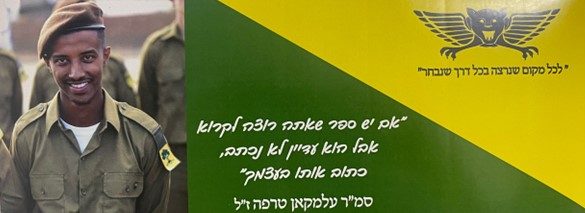
“If there's a book you want to read but it hasn't been written yet, write it yourself.”
Life & service
Profile
Service
- Rank
- First sergeant
- Unit
- Golani Brigade
- Battle Location
- Southern Lebanon
Family
- Father
- Girmao
- Mother
- Ascila
Burial
Tributes & remembrance
יהי זכרו ברוך
תודה לך, עלמקאן יקר ומקסים,
על כל הטוב שהפצת בעולמנו.
תודה לך על שהגנת עלינו במחיר ההקרבה הנוראה מכל .
תנחומים מלב כואב לכל יקיריך.
יהא זכרך ברוך, גולני שלנו, גיבור ישראל !
איש טוב יהי זכרו ברוך
יהי זכרו ברוך גיבור חייל
יהי זכרו ברוך
תודה על המסירות וההקרבה הגדולה.
תודה לך גיבור ישראל. מקווה שאנחנו ראויים.
שנה לנפילתו. יהי זכרו ברוך.
יהיה זכרך ברוך, תודה על מה שעשית בשבילנו, גיבור
יהי זכרו ברוך
בזכותו ושכמותו אנחנו חיים
אחי היקר אוהב מלא נתראה בצד השני
תודה
יהי זכרך ברוך,גיבור ישראל!
משפחה יקרה אחים יקרים
תודה על הבן המדהים שגידלתם ועל ההקרבה הלא נתפסת
איתכם בלב היום ותמיד
יזכור
יהי זכרו ברוך גיבור
צדיק ייסוד עולם. תהיה נשמתו הטהורה והיפה צרורה בלבבות כל עם ישראל לנצח נצחים.
זכיתם ההורים לגדל מלאך צדיק
זכותו תגן עלינו
עליו נאמר אשרי יולדתו
שמעתה ועד עולם יישמע בביתכם קול ששון וקול שמחה . אמן.
זוכר אותך מהמגרש , פשוט לא להאמין
תודה רבה רבה על הכל אח אהוב
תודה על ההקרבה שלך, אתה גיבור להשראה
יהי זכרו ברוך לעולמי עד
יהי זכרו ברוך גיבור ישראל
תודה על מה שאתה ונזכור אותך תמיד גיבור שלנו!
תודה לך
יהי זכרך ברוך גיבור ישראל!
אדם מדהים, לב שכולו זהב, לא הכרתי אותך יותר מדיי במהלך השנת שירות בה הייתי בשכונה שלך, אבל בקצת שראיתי ושמעתי מהחברים. אתה אדם משפחתי, מוצלח מאוד וחביב על כולם
עלמקאן היקר, זוכרת אותך כנער נעים הליכות ובוגר, קשוב לעולם, לאנשים ולספרים. מרגש לקרוא על דרכך במכינה ובצבא ועצוב מאוד על החיים והחלומות שנגדעו. יהי זכרך ברוך.
עלמקאן נשמע בחור כל-כך מדהים,
הלוואי שהייתי זוכה להכיר אותו ולחוות מהטוב שהיה בו. לקחתי ממנו כיבוד הורים וכל פעם שאנסה לכבד אותם יותר אחשוב עליו! משפחה שלו, אני אוהבת אתכם מאוד למרות שלא מכירה אתכם. תודה לכם ותודה לעלמקאן.
הילה, ידידה של אסף קרן שנייה
יהי זכרו ברוך
גיבור ישראל
יהי זכרו ברוך! לקרוא את סיפור חייו ולהבין איזו אבדה . אדם משכמו ומעלה, טוב לב, עניו, משפחתי, חברותי, חרוץ ומאוד מסור.
אסצ׳ילה אהובה, משתתפת בצערך העמוק.
תמיד נזכור את בנך הגיבור.
יהי זכרו ברוך
יהי זכרו ברוך
עאלמקן אחי בן אדם שיעזור לך לא משנה איזה סוג של עזרה אתה צריך ויעזור לך כי הוא רוצה לא כי לא נעים לו עלמקאן אחי כל יציאה איכשהו בסוף הוא יוצא הכוכב של הערב והעיקרי שמדברים עליו יום למחרת תמיד מרכז העניינים תמיד מחייך תמיד רוקד ונהנה מכל הלב עלמקאן אחי האיש הכי סתלבטן ורציני באותו זמן עלמקאן אחי איש שטוב בכל דבר שהוא נוגע בו בקטע לא נורמלי ובחיים לא מדבר על זה עלאמקן אחי בחיים לא אבין איך אני מדבר עליך בלשון עבר לא אשכח אותך לעולם אחי היקר והגיבור אוהב אותך מאוד ומתגעגע למרות שזה מוזר כי עדיין הראש לא קולט שאתה לא פה 💔💔💔
בדוק הצעת לשמוע מנימוס אבל תיהיה חזקה זה קצר
בגדול התגייסתי 2 מחזורים לפניו וברגע שהוא הגיע ללוחמים המסורת זה שהצוות הבוגר מקבל את הצוות הצעיר עושים מסעות ובעיקר גיבושים .
ברגע שהוא הגיע הרגשנו שאנחנו הולכים להנות ביחד אני ועלמקאן היינו בתפקידים פיקודיים אז חנכתי אותו קצת במשימות ובמקום שאני ילמד אותו למדתי ממנו הרבה מאוד על איך לקחת משימות ויותר מזה איך להיות בן אדם ומה שהכי אהבתי שהיינו מאוד דומים בהכל הייתי מסתכל עליו ואני עדיין מסתכל עליו ורואה את עצמי .
הוא היה בן אדם מאוד מלמד נעים וכיפי
שנתן לשירות הצבאי שלי רקע של משפחה .
בן אדם שמשדר שמחה והכי כיף לשבת לידו ואפילו לא לדבר איש עם הרבה מאוד יכולות . היה בשבילי חבר אח קטן ומורה דרך
“הוא הצטיין בכל דבר שהוא עשה וכך גם בסיירת גולני”, כך אמר לי גירמאו, אביו של סמ”ר עלמקאן טרפה הי”ד מירושלים, שנהרג בערב ראש השנה בקרב בדרום לבנון.
כבר כשהיה ילד קטן, כך סיפר לי דודו של עלמקאן, כששאלו אותו מה הוא רוצה לעשות כשיהיה גדול, הוא אמר שהוא רוצה לעזור לאנשים.
עלמקאן היה תלמיד מצטיין בתיכון הימלפרב בירושלים ותכנן ללמוד רפואה לאחר השחרור.
עלמקאן היה אהוב על כולם גם חבריו מהמכינה מספרים איך בכל הזדמנות הוא היה חושב איך אפשר לעזור להם.
תהי נשמתו של סמ״ר עלמקאן טרפה צרורה בצרור החיים.
We, the young people, will maintain this place
Source:israelhayom.co.il
Read the Hebrew original
אנו בני הנוער נתחזק את המקום
His dream was to be a surgeon, and he would’ve made it
Source:The Jerusalem Post
You could have given up, but you didn't want to. You could have spoken, but you didn't.
Source:יזכור – משרד הביטחון
Read the Hebrew original
יכולת לוותר, לא רצית. יכולת לדבר, לא דיברת.
Remembrance Day addresses
יום הזיכרון לחללי מערכות ישראל התשפ"ה – 2025
בכל יום שעובר, אזכור יותר! אזכור, את אלו שיצאו עימי לקרב ולא שבו, ולהם אין מי ידמה ומי ישווה. אזכור, שהכאב לא יעבור לעולם, והזמן, הוא לא מרפה ולא מרפא. אזכור, את שיברון הלב הגובר ואת הבית שבוער. אזכור, את צדקת הדרך, ואשבע שוב, שמה שהיה לא יהיה יותר. אזכור, שיותר מכל דבר אחר – אני חסר! ביום הזה, אני נתקף געגוע לדמותם, לחיתוך דיבורם, לחיוכם, ומדליק נר לזיכרון דרכם ומורשתם!
משרד הביטחון
אגף משפחות, הנצחה ומורשת
יום הזיכרון לחללי מערכות ישראל התשפ"ה – 2025
בכאב, בהצדעה ובתקווה אני מתכבד להדליק נר זיכרון זה. השנה, כשאנו נלחמים במלחמה ארוכה, רב זירתית וצודקת, הזיכרון נושא משמעות עמוקה. ביום זה נעצור ונתייחד עם זכרם של טובי בנינו ובנותינו שנפלו בהגנה על המדינה. מורשתם היא המצפן שמתווה את דרכינו, והיא המעניקה לנו כוח להמשיך ולהגן על מדינת ישראל ותושביה. משפחות יקרות, אנו מרכינים ראשנו ומתחייבים שנעמוד לצידכן תמיד. יהי זכר הנופלים ברוך.
אלוף דדו בר כליפא
ראש אגף כוח האדם, צה"ל
יום הזיכרון לחללי מערכות ישראל התשפ"ה – 2025
בשעה שאנו זוכרים את גודל תרומתם ועומק מסירות נפשם של טובי בנינו ובנותינו, נופלי מערכות ישראל לדורותיהן, ממשיכים צה"ל וכוחות הביטחון במימוש המשימה למענה לחמו ועבורה נפלו: הכרעת אויבינו מדרום, מצפון, ביהודה ובשומרון, וגם בזירות רחוקות יותר. בהערכה רבה ובגאווה אדירה אנו מרכינים ראש בפני הנופלים והנופלות, מאמצים את משפחותיהם אל לבנו, וממשיכים במשימה להבטחת קיומה של ישראל לדורי דורות. יחד נעשה ונצליח.
רב אלוף אייל זמיר
הרמטכ"ל, צה"ל
יום הזיכרון לחללי מערכות ישראל התשפ"ד – 2024
כאשר דגלינו מורדים לחצי התורן וראשינו מורכנים לזכר הנופלים והנופלות במערכות ישראל, ממשיכים לוחמי צה"ל ומפקדיו בלחימה בדרום, בצפון, ביהודה ובשומרון ובזירות נוספות. על כל דור מוטלת המשימה של הגנת העם והארץ – משימה שאף פעם אינה פוסקת. נצדיע בגעגוע ובגאווה לנופלים ולנופלות, נחבק את משפחותיהם, ונמשיך ברוח הציווי שהותירו לנו. עם ישראל חי.
רב ניצב יעקב שבתאי
המפקח הכללי, משטרת ישראל
יום הזיכרון לחללי מערכות ישראל התשפ"ד – 2024
אחיי הנופלים, כל נר הוא זיכרון יחיד ומיוחד, על חיים שהיו ואינם, געגוע שנצרב עמוק בלב, עולם ומלואו. הנרות כולם הם זיכרון של אומה כי לעולם לא עוד, בשורת הציונות וקוממיות ישראל. זיכרון כי הדרך לעם חופשי בארצנו עוברת דרך מסדר הנופלים. אור הנר יזכיר לנו את מסירות נפשכם להציל חיים, להגן על הבית. הנרות מסמנים לנו נתיב גבורה ערכי מחייב שאנו מצווים ללכת לאורו. נמשיך להילחם ולהוסיף אור מתוך אמונה בנצח ישראל.
יואב גלנט
שר הביטחון
יום הזיכרון לחללי מערכות ישראל התשפ"ד – 2024
בהצדעה ובכאב, בשם צה"ל כולו, אני מדליק נר זיכרון. בעיצומה של מלחמה, הזכרון נושא משמעות יום-יומית, שעבר והווה מתלכדים בה. לאורם של הנופלים נמשיך לצעוד, חיילי הסדיר והמילואים. לאורם של הנופלים נמשיך להגן על ארצנו ועל מולדתנו, גם כשהמחיר כבד. להבת-הזכרון תבער בנו בעודנו ממשיכים להלחם ונזכור את הנופלים ואת אומץ ליבם. משפחות יקרות, צה"ל מרכין היום ראש, מצדיע לכן וכואב איתכן. יהי זכר הנופלים ברוך.
אלוף יניב עשור
ראש אגף כוח האדם, צה"ל
יום הזיכרון לחללי מערכות ישראל התשפ"ד – 2024
בהוקרה, בגאווה ובכאב שאין לו סוף, אני מתכבד להדליק נר לזכרם של הנופלים והנופלות במערכות ישראל. סיפור חייהם בארץ הזאת, מסכת שירותם, גבורתם והקרבתם – הם סיפורה של הארץ הזאת, אך גם סיפור המחיר הכבד שהיא תובעת מאוהביה. מחויבותנו לזכר הנופלים ולדרך שהותירו לנו ניצבת תמיד לנגד עינינו. את המשימה שלא זכו להשלים, משלימים כיום, וישלימו, אנשי כוחות הביטחון, הממשיכים בדרכם ולאורם. יהי זכרם של הנופלים ברוך.
משרד הביטחון
אגף משפחות, הנצחה ומורשת
יום הזיכרון לחללי מערכות ישראל התשפ"ד – 2024
בחרדת קודש אני מתכבד להדליק נר לזכרם של חללי מערכות ישראל, חברנו שנפלו, מראשית היציאה מהחומות ולאורך כל שנות עצמאותנו המדינית והציונית, מהווים תמרור זיכרון לדרך חיינו ולמחוייבות הלאומית להנצחת זכרם. דרכם נותרה דרכנו ומורשתם נר להמשך עשייתנו. יהי זכרם ברוך!
בני גנץ
שר הביטחון
יום הזיכרון לחללי מערכות ישראל
נזכור אותם, כולנו יחד. כל אחד ואחת מהם, מדי יום ביומו, והיום ביתר שאת, כך – לנצח. "כי מדי דברי בו זכור אזכרנו עוד"
משרד הביטחון
אגף משפחות, הנצחה ומורשת