
The story
The sun, that ancient, wide eye in the Ethiopian sky, cast its golden light upon the humble village where Almenau Emanuel Felleke first opened his eyes on the third day of Nisan, 5761, a date corresponding to March 27, 2001. His first world was woven from deep earthy sounds—the rich, dark scent of the soil after a rare, heavy rain; the smoky aroma of cooking fires; the sweet, pungent smell of herbs drying in the sun. The sounds, too, were primal: a distant bleating of sheep, the rhythmic thud of a mortar and pestle, and the deep hum of Amharic voices, punctuated by children's laughter. He was born into the warm embrace of Mamay and Andiaho, a family whose future would be defined not only by their deep roots in that distant land, but also by a profound and hopeful journey that still lay ahead. He arrived as a beloved youngest son to Noam, whose vibrant presence already filled the small home, and in time, Emanuel would grow to be the protective older brother of Yoav, nicknamed Birhanu, of Sara, known to all as Yimker, and of Leah, the youngest of all, who earned the nickname Nigist. His early years were a gentle unfolding, a period of absorbing the unique rhythms of a life intertwined with community and tradition, a tapestry woven with strong, vibrant threads of familial love and unspoken, shared dreams for a better future.
When Emanuel was just three years old, a monumental shift occurred. The Felleke family, driven by an ancient longing that had echoed for generations and a modern hope for a new beginning, embarked on their arduous journey to Israel in 2004. It was a journey steeped in faith and determination, as they left behind the familiar, sun-drenched landscapes of Ethiopia for the unknown horizons of their historical homeland. The first chapter in their new country unfolded at an absorption center in Be'er Sheva, a temporary and bustling haven where the sharp, unfamiliar sounds of Hebrew began to blend with the softer rhythms of their native Amharic. For a year, the family navigated the winding complexities of cultural assimilation, each day a small triumph in a new land. Emanuel, a toddler with wide, curious eyes, absorbed the new world around him with the endless wonder of childhood. He saw the faces of the many new people, heard the cascade of unfamiliar words, and sensed the subtle, yet palpable, shifts in his parents' demeanor, who worked tirelessly, with quiet dignity, to build a new and stable foundation for their children. This initial period, though relatively brief, deeply imprinted upon his young spirit a primal sense of resilience, an instinctive adaptability, and a deep, unspoken understanding of the sacrifices made for a dream—qualities that, in time, would come to define the essence of his remarkable life.
From the arid desert city, the Felleke family moved north, seeking a different welcome, to the vibrant, bustling city of Bat Yam. Here, amidst the teeming streets, the crashing waves of the Mediterranean, and the colorful hustle and bustle of city life, Emanuel truly began to blossom. His friends, instinctively drawn to his infectious spirit and genuine warmth, quickly adopted the affectionate nickname "Manu," a name that would cling to him like a second skin throughout his formative years. Even then, as a young boy navigating the playgrounds and classrooms of Bat Yam, he possessed a captivating blend of qualities: a sharp sense of humor that could, with a well-timed joke or a mischievous grin, instantly lighten any room; an approachable and open demeanor that seemed to effortlessly draw people into his orbit; and a smile so genuine and warm, it seemed to promise an endless wellspring of good will. Yet, beneath the playful and approachable surface, resided a quiet modesty, almost a shyness, a gentle avoidance of drawing attention to himself, which subtly concealed a natural leadership quality. He was never the loudest voice in the room, nor the most boisterous, but somehow, almost imperceptibly, he was always at the center of the group, a natural magnet for his friends, guiding them often without even realizing the extent of his influence. His presence was a comforting anchor, his quiet strength a stabilizing force.
As a child of new immigrant parents, Emanuel found himself shouldering responsibilities that often extended beyond his tender years. The intricate dance of bureaucracy, the subtle nuances of a new language, and the many daily challenges of integrating into a different society often fell upon his young, capable shoulders. He became, almost out of necessity, the family's impromptu translator, his clear and developing Hebrew a vital bridge between his parents' Amharic and the rapid-fire conversations of officials, the patient explanations of teachers, and the everyday transactions with shopkeepers. This crucial role, though undoubtedly demanding, instilled in him a profound and remarkably mature sense of responsibility. He became, through the crucible of this experience, the "responsible adult" not just within his immediate family, but in almost every social circle he belonged to, whether with friends, at school, or in the wider community. He felt a deep, intrinsic obligation to look out for everyone, to ensure that tasks, however small or seemingly simple, were executed with meticulous care, with unwavering dedication, and with a quiet sense of purpose. He didn't just meet expectations; he consistently, almost instinctively, exceeded them. There was, for instance, the memorable incident when his younger brother, Yoav, approached him one day, perhaps a little stressed, asking Emanuel for help printing some pages for a school assignment, a rather routine request. Instead of simply finding a print shop or borrowing a neighbor's device, Emanuel, driven by his inherent desire to anticipate and fulfill needs, made a more far-reaching decision. He reasoned that a household with several school-aged children should have its own printer, a permanent solution to a recurring need. And so, with quiet determination, he saved his pocket money, meticulously researched different models, and finally, with a triumphant smile, brought home a small, humming machine, transforming a minor inconvenience into a permanent and convenient solution for all family members. It was a seemingly small act, yet it vividly illustrated his proactive and selfless nature, his foresight, and his deep desire to improve the lives of those he loved.
And yet, despite this developing seriousness and remarkable maturity, Emanuel never lost his youthful exuberance. His sense of humor was a finely tuned instrument, capable of eliciting genuine, deep laughter from everyone in his vicinity. He could deliver a perfectly timed witty remark, his eyes twinkling with mischief, or mimic a funny situation with an infectious grin, instantly defusing any tension or simply lighting up a moment with pure, unadulterated joy. This beautiful and harmonious balance between profound responsibility and lighthearted joie de vivre made him exceptionally approachable, easy to connect with, and universally beloved by all who had the privilege of knowing him. He was the friend you could absolutely rely on for anything, big or small, the quiet anchor in a storm, and simultaneously, the one who would make you laugh until your stomach ached, a constant and gentle reminder that even the most serious endeavors, the heaviest burdens, could and should be approached with a smile, with warmth, and with an unwavering belief in the good that existed in people.
Emanuel's formal education began to unfold within the welcoming corridors of Harel Elementary School, where his bright, inquisitive eyes and eager mind quickly absorbed the lessons presented. He was a diligent student, often excelling, but it was outside the classroom walls, in the rich and vibrant tapestry of everyday life in Bat Yam, that his true character, his inherent goodness, shone most brightly. His elementary years were marked by an almost boundless, intrinsic desire to give, an endless wellspring of generosity and an unconscious need to reach out for the well-being of others. It wasn't something he was taught or had to be reminded of; it was simply his essence, a natural inclination. Whether it was volunteering to collect donations for a school charity event, staying after the last bell to help a tired teacher tidy the classroom, or being the first to offer a strong hand to a classmate struggling with an overly heavy backpack, Emanuel was always there, a quiet, reliable force for good, his presence a comforting reassurance. This powerful altruistic spirit was not confined to his immediate circle of family and friends. As soon as he reached the appropriate age, he became a regular blood donor, understanding with a clarity beyond his years that a simple, painless act on his part could be a lifeline, a second chance, for an unknown individual, struggling for survival in a hospital bed. His compassion extended to everyday observations in his neighborhood; he would often notice elderly neighbors, their shoulders stooped and faces etched with effort, struggling under the weight of heavy shopping bags on their way home from the market. Without a moment's hesitation, his warm, reassuring smile would appear, and he would approach them, offering to carry their burdens to their very doorstep. The profound gratitude in their eyes, the soft, heartfelt "thank you, my son" whispered in return, were his only reward, and they were, for Emanuel, more than enough. These small, yet consistent acts of kindness, built around him a quiet reputation, a silent testament to his compassionate heart.
After school hours, when most children would rush home to immerse themselves in games, television, or homework, Emanuel found another vital outlet for his boundless energy and deep desire to contribute: the municipal fire station. The unique, potent smell of smoke and diesel that clung to the air, the gleaming, impressive red trucks, and the palpable sense of camaraderie among the firefighters captivated his imagination and resonated deeply with his developing sense of purpose and responsibility. He volunteered there, not as a thrill-seeker drawn to excitement, but as a dedicated and diligent helper, assisting with everything from meticulous equipment maintenance to thorough station cleaning, performing any task that would lighten the load on the brave men and women who stood ready to protect his city. He observed their unwavering dedication, their quiet readiness to face danger, and it resonated profoundly with his developing sense of purpose and responsibility. In these seemingly mundane, yet deeply meaningful acts, Emanuel cultivated the quiet, unassuming heroism that would define his entire life. He understood, instinctively, that true strength, true impact, lay not in grand, attention-grabbing gestures, but in consistent, selfless giving, in the quiet, persistent effort to make the world around him a little better, a little safer.
His profound commitment to community and service further extended to his active and enthusiastic involvement in the Bnei Akiva youth movement. Here, amidst the vibrant energy of friends and peers, he seamlessly transitioned from an active participant to a reliable, admired, and deeply beloved counselor. His group of trainees, young children who looked up to him with wide-eyed adoration, were far more than just charges under his supervision; they were, in his heart, like younger brothers and sisters. He approached his role as a mentor with an extraordinary level of sensitivity and empathy, possessing an almost uncanny ability to discern the unspoken needs and hidden anxieties of each child. He knew, with intuitive understanding, when one child needed a gentle word of encouragement, when another required a subtle, guiding push in the right direction, and when a third simply needed a patient, listening ear and a calming, comforting presence. He didn't lecture from a distance; he connected on a deep, personal level. He didn't just teach values through abstract concepts; he embodied them, demonstrating through his every action the true meaning of responsibility, kindness, unwavering friendship, and a profound communal spirit. The infectious laughter that echoed from their weekly meetings, the shared stories of their adventures, and quiet, impactful moments of mentorship, forged bonds that would last long after their time in the movement concluded, leaving an indelible mark on the hearts of his young trainees.
By the time he reached the twelfth grade at the Bnei Akiva Adar't Yeshiva High School, Emanuel's unique and captivating blend—an intrinsic humility, natural leadership, and infectious sense of humor—made him undeniably stand out among his peers. It was no surprise, therefore, when he was chosen, by unanimous consent and reverence, to serve as his graduating class's "Purim Rabbi." This was a cherished and ancient tradition within the yeshiva, a symbolic passing of the torch to one of the most prominent, respected, and charismatic students in the entire grade. For the duration of the joyous Purim holiday, the "Purim Rabbi" would temporarily step into the esteemed shoes of the Rosh Yeshiva, leading the boisterous celebrations, delivering humorous yet surprisingly profound "words of Torah," and generally setting the tone for the vibrant, festive atmosphere. It was a role that demanded not only quick wit and natural charisma, but also a deep, nuanced understanding of the yeshiva's values and an effortless, innate knack for commanding respect without any need to demand it. Emanuel embraced the challenge with his characteristic blend of enthusiasm and humility, his self-deprecating humor and genuine warmth making him an unforgettable and universally beloved "Purim Rabbi," a living, breathing reflection of the remarkable leader he was becoming. The experience further solidified his deep sense of identity and his secure place within his community, a powerful testament to the young man who had grown from a shy, observant immigrant child to an undeniably quiet yet strong pillar in his local world, radiating warmth and purpose.
The year 2019 ushered in another significant transition for Emanuel and his beloved family. The bustling, and at times chaotic, streets of Bat Yam gradually gave way to the quieter, more community-oriented atmosphere of Kiryat Gat. This move, while geographically significant, perfectly coincided with Emanuel's accelerating journey towards adulthood and his meticulous preparations for military service. Having successfully completed his demanding high school studies, he actively sought an environment that would further cultivate his spiritual depth and intellectual growth, an institution that would prepare him not only physically, but also mentally, emotionally, and morally, for the profoundly challenging path of service in the IDF. His conscious choice led him to the renowned Bnei David pre-military academy, nestled within the rugged, sun-drenched beauty of the Binyamin mountains, in the tranquil settlement of Eli.
The year Emanuel spent at the mechina in Eli proved to be a deeply formative and empowering period in his young life. Surrounded by a cohort of like-minded young men, each equally devoted to both rigorous Torah study and unwavering service to the nation, he discovered a place where his deepest values resonated in almost perfect harmony. The crisp, clean mountain air, refreshing and invigorating, seemed to sharpen his focus during the intense study sessions that often stretched late into the night, illuminating ancient texts with fresh understanding. The rigorous physical training, designed to push both body and mind to their limits, further contributed to shaping the resilient and principled young man he was becoming. It was here, in this unique crucible of dedicated Israeli youth, that Emanuel's distinct background, his Ethiopian heritage, found a special and profound resonance. As the Jewish community across Israel prepared to celebrate the Sigd holiday, a deeply significant tradition to the spiritual life of Ethiopian Jews, Emanuel was approached with a request—to share its profound meaning with his fellow students, many of whom were unfamiliar with its nuances. Initially, a wave of his characteristic shyness washed over him. Public speaking, especially about such a personal, sacred, and profound aspect of his heritage, was not his natural inclination; he preferred to listen, to observe, to act rather than to speak. But his inherent sense of duty, his deep respect for the rich history of his community, and the quiet encouragement of his peers, ultimately overcame his initial reluctance.
He stood before his peers in the study hall, perhaps a little nervous at first, his gaze sweeping across the expectant faces. But as he began to speak, his voice, soft at first, gradually gained strength and confidence, imbued with a quiet power. As he spoke, his eyes, usually so modest, truly began to sparkle, reflecting an inner flame. He described, in vivid detail, the ancient, almost unbearable yearning for Zion that once pulsed in the hearts of his ancestors for thousands of years, the fervent prayers whispered for generations in the remote, sun-drenched mountains of Ethiopia, a longing so intense it transcended time and distance. He spoke of the arduous, often perilous journeys and the immense sacrifices made by his people in their unwavering, generational quest to reach Jerusalem, the spiritual heart of their faith. He conveyed the emotional weight of a people separated from their spiritual homeland for countless centuries, and the almost miraculous, breathtaking fulfillment of this profound dream in modern times. His words, imbued with personal experience, ancestral memory, and a deep spiritual connection, painted a vivid and moving picture for his classmates, many of whom were hearing this perspective, this living history, for the first time. They saw not merely a historical account, but a living, breathing connection to deep spiritual yearning, a testament to unwavering faith, and through Emanuel's sparkling eyes, they understood a deeper, more personal layer of the grand Israeli story. This moment, where he shared his heritage with such raw honesty, passion, and quiet pride, was a powerful testament to his growing inner strength, his unwavering authenticity, and his blossoming confidence in his unique and rich identity. It was a moment of profound connection, a bridge built between different facets of the Israeli experience, forged in his earnest voice.
Following a truly formative year at the mechina, a year that deepened his faith and sharpened his resolve, Emanuel’s tireless intellectual curiosity and profound spiritual devotion led him to the Atteret Mordechai advanced yeshiva in the ancient and mystical city of Safed. The city itself, with its labyrinthine narrow, cobblestone streets, centuries-old synagogues, and an almost palpable air of deep sanctity, became his beloved new home. Here, amidst the echoes of kabbalists and sages, he delved even deeper into the intricate and endless study of Torah. He loved the intellectual rigor of the complex debates, the meticulous and painstaking analysis of ancient texts, and the profound, timeless wisdom contained within the sacred pages. He would often remain in the bustling, yet somehow serene, study hall long after his peers had retired for the night, the soft, warm glow of a single lamp illuminating his open books as he delved into complex legal arguments, philosophical inquiries, and ethical dilemmas, often until the early hours of the morning. He wasn't merely accumulating knowledge, though he did so with fervor; he was seeking understanding, seeking deeper meaning, seeking practical avenues for personal growth and spiritual refinement. In the margins of his meticulously organized class notes, alongside scholarly annotations and cross-references, he would often jot down his private thoughts and personal reflections. These were not academic notes, but intimate, personal directives—small reminders, in his own hand, to himself on how to cultivate better character traits, how to be more patient with others and with himself, how to be more humble in his achievements, more forgiving of perceived slights. They were a quiet, enduring testament to his relentless and deeply personal journey of self-improvement, a private, internal dialogue with his own soul, constantly, gently pushing him to be a better, more refined version of himself, always grounded in the timeless ethical teachings he so admired. His time in Safed solidified his spiritual foundations, preparing him for the challenges ahead, and granting him a quiet strength that was about to be tested in ways he could not have imagined.
The scorching summer heat of August 2022 marked not just another season, but the beginning of a new and defining chapter in Emanuel's life, one he had prepared for with unwavering focus and quiet, almost understated, determination. On the eleventh day of that month, he willingly exchanged his yeshiva attire, the comfortable and familiar clothes of a student, for the crisp, green uniform of the IDF, commencing his military service, specifically as a combat soldier in the elite Duvdevan Unit, a prestigious and demanding unit within the Commando Brigade. This was not merely a military enlistment; it was the culmination of years of meticulous preparation, a tangible, concrete expression of his deep commitment to the nation he now proudly called his own, a nation he felt instinctively connected to and bound to protect.
The training regimen in Duvdevan was notoriously challenging, a veritable crucible designed precisely to forge the toughest, most capable, and most resilient combat soldiers. Days merged into nights, filled with an endless circuit of grueling physical drills, intricate and intense tactical exercises that demanded both mental acuity and physical endurance, and a constant, pervasive mental pressure that tested every fiber of a soldier's being. And yet, through every trial, every drop of sweat, every moment of exhaustion, Emanuel remained a pillar of unwavering strength and resilience. He never allowed a complaint, a grumble of dissatisfaction, to escape his lips, nor did he ever seek an advantage, a shortcut, or an easier path for himself. His personal standard was absolute, uncompromising excellence, and he applied it with meticulous consistency to every task, however difficult or seemingly simple. His dedication, however, extended far beyond his individual performance; he consistently, almost instinctively, poured his energy into actively supporting his company and tirelessly assisting his fellow combatants. He was always there, a steady and reassuring presence, ready with a word of encouragement, a strong, helping hand, or practical, resourceful assistance, and often far beyond what was explicitly expected of him. His deeply impressed and grateful comrades often spoke of a particular trait that vividly illustrated his selfless nature: despite being known, almost universally, as the fastest and most enduring runner in the entire company, Emanuel never used his superior speed to leave others struggling behind. Instead, with quiet, deliberate grace, he would routinely fall back, adjusting his pace to run alongside the stragglers, those who were struggling the most, his steady pace and calm, encouraging voice propelling them forward, urging them to overcome their deep exhaustion and reach the finish line, together, as a team. He understood, with intuitive wisdom, that the true strength of the unit, its unbreakable core, lay not in individual glory but in the collective, and that his individual capability was best utilized to uplift, to motivate, and to empower those around him, ensuring that no one was left behind.
As a combat soldier, Emanuel was a quiet force of nature—resolute in his purpose, intensely focused on his objectives, and meticulously precise in the execution of every task. Challenges, rather than deterring him or causing him to hesitate, seemed to ignite within him a deeper, stronger resolve, a spark of stubbornness. He was consistently the first to step forward, to volunteer for the most demanding and often dangerous missions, never hesitating, never questioning the inherent difficulty or danger. His commanders, keen observers of talent and potential, recognized in him a rare and invaluable combination of raw, natural talent and an uncompromising, almost spiritual, commitment to his role, identifying him as a soldier who could be absolutely relied upon to perform under the most extreme pressure and to inspire those around him through his actions. He embodied, in his quiet, powerful way, the very essence of what an elite combat soldier should be, quietly setting an elevated example for all who served with him.
Even amidst the relentless and pervasive demands of his military service, the long, grueling weeks away from the comforting familiarity of home, and the profound, exhausting fatigue that often accompanied his brief, precious leaves, Emanuel never wavered in his deep commitment to his family. The moment he stepped through the door of his home, the disciplined, uncompromising demeanor of the soldier would visibly soften, replaced by a loving, attentive son and a devoted older brother. He made it a point to dedicate every precious moment of his limited time to his parents, conversing with them warmly, listening patiently to their stories, and sharing carefully considered snippets of his own life, always with a gentle, intentional aim to shield them from the harsher, darker realities of his military service. He always, without exception, carved out special, memorable moments for his younger sister, Leah, taking her on shared outings, listening with interest and patience to her childhood stories, and simply being fully present for her, offering her his undivided attention and affection. And true to his unchanging, deeply ingrained nature, he continued to be an unwavering source of support and assistance for any friend or acquaintance who reached out to him for help. Whether it was a practical favor that required his strength or resourcefulness, thoughtful advice offered with quiet wisdom, or simply a steady, comforting shoulder to lean on during a difficult time, Emanuel was always there, unequivocally demonstrating that even during the most demanding and pivotal periods of his life, his boundless capacity for empathy, compassion, and selfless service remained unblemished, a constant, radiant beacon of human connection in a world that often, by its very nature, demanded detachment and stoicism. His humanity always shone through.
The quiet serenity of a crisp autumn morning, the twenty-second day of Tishrei, Simchat Torah 5784, dawned on October 7, 2023, carrying with it a deceptive, almost cruel, calm. At precisely six-thirty AM, that fragile tranquility was shattered with brutal, irreparable force. The Hamas terrorist organization, with chilling sophistication and ruthless efficiency, launched an unprecedented, meticulously coordinated assault on Israel. A deafening barrage of missiles and rockets, fired indiscriminately from the Gaza Strip, tore across the early morning skies, tracing fiery arcs as they targeted vast, unsuspecting areas of the country, from the southern communities to the heart of the center. Under the chaotic, smoke-filled cover of this massive and sustained fire, thousands of heavily armed terrorists breached Israel's meticulously guarded borders—by land, by sea, and even by air, via paragliders. What ensued was an unimaginable rampage of calculated cruelty, cold-blooded murder, and unspeakable atrocities, aimed with chilling precision at the unsuspecting communities surrounding Gaza, the vibrant towns of Sderot, Ofakim, and Netivot, and at the helpless young people celebrating life and music at outdoor parties near Kibbutz Re'im and Nir Oz. Military bases were swiftly overrun, their defenses breached, and countless civilians traveling on the region's roads were ambushed, dragged from their cars, and slaughtered. The terrorists, devoid of any semblance of humanity, murdered approximately 800 innocent civilians in their homes, in their cars, and in the fields, committing heinous crimes difficult to describe. Hundreds more Israelis, entire families, young children and the elderly alike, were brutally abducted and dragged into the Gaza Strip, their fates unknown, their terrified faces etched into the national consciousness. Homes were ransacked, systematically looted, and then set ablaze, leaving behind a scorched trail of destruction, despair, and irreparable loss. In the face of this unprecedented and barbaric attack, hundreds of brave soldiers, dedicated police officers, security personnel, and local quick-response team members, armed with unwavering determination, fell in fierce battles, defending their communities, their families, and their beloved nation. On that morning, a war, unlike anything Israel had known for generations, a war for its very existence, began with horrifying and searing intensity.
As the attack erupted, plunging the entire nation into a chasm of shock and grief, Emanuel was in the final, most arduous and challenging stages of his training in the elite Duvdevan unit. The air at the base was thick with palpable tension, heavy with uncertainty, and the sounds of distant explosions and urgent sirens punctuated the disciplined military routine. The war had abruptly and violently changed everything, including his unit's eagerly anticipated graduation ceremony. Instead of a joyous, celebratory event shared with proud, smiling families, it became a somber, expedited affair, stripped of all usual pomp, speeches, and communal triumphs. It was a stark, grim reflection of the brutal reality unfolding just beyond the base's perimeter, a quiet acknowledgment that the graduates had not merely completed a training phase, but had stepped directly, with grim determination, into a raging maelstrom of conflict.
As the brief, truncated graduation ceremony concluded, a natural, almost primal urge swept through the freshly minted combatants: to instinctively reach for their phones, to desperately call their anxious families, to connect with loved ones, to try and process the overwhelming intensity of what was unfolding outside their immediate bubble. But Emanuel, always the "responsible adult," the one whose inner compass always pointed towards duty and service, diverged from this natural inclination. While others sought comfort and reassurance in urgent connection, he, driven by his deeply ingrained sense of duty and order, remained behind. He was not explicitly asked to do so; he simply stayed, a quiet, solitary figure amidst the departing throng. He took it upon himself, without any directive, to meticulously tidy and clean the entire area, ensuring that everything remained in perfect, military order, a small, yet profoundly meaningful, act of devotion and control in a world that seemed to be rapidly descending into chaos. It was a seemingly minor gesture, perhaps, but it spoke volumes about his unwavering character, his steadfast commitment to his responsibilities, even as the very foundations of the world around him seemed to be crumbling.
During this somber and unforgettable ceremony, Emanuel received special recognition for his exceptional performance and exemplary conduct throughout the grueling training. He was awarded a company commendation—a fitting testament to his extraordinary talent, his natural leadership abilities, and his unwavering dedication. His commanders, keen observers of talent and potential, had already earmarked him for officer's course, a clear and open path to further advancement and significant leadership within the military hierarchy, a future of command and influence. However, when the opportunity was formally presented to him, Emanuel, with his characteristic humility yet absolute, unwavering conviction, politely but firmly declined. His answer, delivered with quiet sincerity yet deep confidence, was unequivocal and echoed the urgency of the moment: "Right now it's wartime." *Now it's wartime*. He articulated, with a clarity that transcended any personal ambition, that he could not, in good conscience, pursue a personal career path, however promising, while his comrades, his beloved brothers-in-arms, were being sent directly into the heart of the raging conflict. His place, he knew with absolute certainty, was with them, shoulder to shoulder, on the front lines, sharing their burdens and their dangers. He chose, without a moment's hesitation, to defer the officer's course, and instead to immediately join the ground forces preparing to push deep into the Gaza Strip, a decision that cemented his identity as a selfless warrior.
And so, with the resolute spirit that characterized him, Emanuel plunged, alongside his comrades, into the intense, dangerous, and often brutal reality of urban warfare. He fought with a bravery that stemmed not from reckless impulsivity, but from a deep, ingrained sense of purpose and a clear understanding of the stakes. His actions in combat were marked by precise professionalism, a direct reflection of his rigorous training and countless hours of drills, combined with an uncompromising, almost intrinsic, determination. He navigated the treacherous and booby-trapped alleys, the rubble-strewn streets, and the convoluted multi-story buildings of Gaza, facing an unseen enemy that lurked in the shadows and emerged from tunnels. His focus remained unwavering, his commitment to his mission absolute, his every movement calculated and precise. Every step he took, every split-second decision he made, every burst of fire he unleashed, was a testament to his profound courage and his deeply held belief in the absolute righteousness of their cause—the defense of his homeland and his people.
Days stretched into grueling weeks, each one a relentless cycle of intense fighting, constant vigilance, and moments of quiet, desperate hope. And then, on Tuesday, December 5, 2023, Emanuel found himself, as he had so often before, at the very forefront of the forces, leading his unit deep into the southern Gaza Strip, pushing towards the heart of Khan Yunis, a city known for its intricate and deeply entrenched terror infrastructure. As the combatants cautiously advanced into the urban labyrinth, their senses heightened, a deadly barrage of fire suddenly erupted from unseen positions. Snipers, skillfully camouflaged within the dense, complex urban environment, lay in wait, ambushing the advancing forces with lethal precision. In that critical, chaotic, and terrifying moment, Emanuel's finely honed instincts, sharpened by months of intense training and weeks of relentless combat, took over with lightning speed. He was the first to react, immediately raising his weapon and returning fire, engaging the hidden threat without a moment's hesitation. It was an act of raw, selfless courage, a split-second decision to physically and professionally place himself between his unit and the deadly enemy fire, in an attempt to draw attention away from his comrades and neutralize the immediate danger. Tragically, in that very heroic moment, as he returned fire and defended his unit, he was also the first to be struck by enemy bullets.
He fell, mortally wounded, his injuries catastrophic. Medics, trained for such dire moments, rushed to his side.
Moments of a life
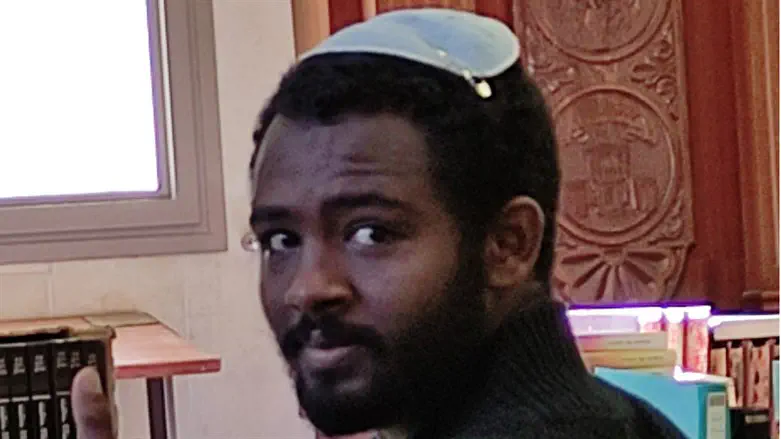
All photographs · 1
In the media
Articles
Podcasts
Memorial sites
- Yizkor — Staff Sergeant Almanew Emanuel Feleke
יזכור
- Almenaw Emanuel Feleke Carrying On the Path of Almenaw Emanuel Feleke, of Blessed Memory — Visit “Commemorate Through Action” — Filling the Void
male-halal.co.il
- Staff Sergeant Almenaw Emanuel Feleke, of blessed memory — Memorial and remembrance page
noflim.org.il
- Alemnew Emanuel Feleke
Ot.Hayim
Memorial projects
“Beit Manu”—a youth learning center initiated by his friends, commanders, and Kiryat Gat Municipality; a font in the Ot.Hayim project; a Torah scroll at Emet LeYaakov synagogue; a Lego Hanukkah menorah called “HaOr Shel Manu”; and an episode of the podcast “Shim'u Sipur.”
Stories told about them
When his brother asked Emanuel to print a few pages, he bought a printer for the whole family to use. In yeshiva and the army, he continued to help others, and during training he ran alongside those at the back even though he was the fastest in the company.
Although he was the fastest runner in the company, Emanuel would run with those at the back and encourage them. When his brother asked him to print some pages for him, he bought a printer for everyone in the household to use.
Life & service
Profile
- Date of birth
- March 27, 2001
- Birthplace
- Kiryat Gat
- Date of death
- December 6, 2023
- Age
- 22
- Hometown
- Kiryat Gat
Service
- Rank
- Staff Sergeant
- Unit
- Commando Brigade
- Honours
- Posthumously Promoted
- Battle Location
- Southern Gaza Strip
Family
- Father
- Andiyahu
- Mother
- Mamay
Burial
Tributes & remembrance
עלם חמודות יפה תואר מבפנים ומבחוץ. חייבים לכם גיבורי ישראל וגיבורות ישראל שלנו יהי זכרכם ברוך.תהיי נשמתכם צרורה בצרור החיים .שנזכה להיות ראויים לכם ולהישתדל להיות טובים יותר.תודה לך עמנואל אלמנאו יקר על מתן הגנתך עלינו תושבי מדינת ישראל.
עמנואל תלמידי היקר והאהוב!
תמיד היית הכי טוב בכל מה שעשית
היית מנהיג, ענו וצנוע , ביישן ושובה לב.
הגעתי לשיקום ולמחרת בשעה 600 בבוקר ראיתי בטלוויזיה את הבשורה הנוראית!!
יהיה זכרך מבורך ילד קדוש שלי.
אוהבת לעד
המורה שער הילה
ומוסרת את תנחומיי הכנים למשפחה הנפלאה!
יהי זכרך ברוך
ת.נ.צ.ב.ה
לא נשכח את מנו, עמנואל פלקה,
לוחם, גיבור, ישראלי,
אוהב אדם וצנוע,
מנהיג, מוביל, תמיד בראש,
דוגמה ומופת לחבריו.
יהי זכרו ברוך.
לא נשכח!!!
זוכרים ולא שוכחים, יהי זכרך ברוך, גיבור.
איש שאמר הנני בכל מקום וזמן
זכיתי להיות חלק בחייך
גיבור
מנו אהוב, לנצח תישאר בליבנו
עלמנאו עמנואל אהוב , תודה לך על מתן הגנתך עלינו ואף על תרומתך הכפולה גם בתרומת איבריך הקדושים כדי להציל חיי אדם .ואכן הצלת צדיק וחסיד בתרומתך הכפולה חיי רבים וטובים.תודה לך גיבור ישראל תהיי נשמתך צרורה בצרור החיים. יהי זכרך ברוך קדוש וטהור
יהי זכרו ברוך
עמנואל צדיק שלנו קדוש וטהור . נחבא אל הכלים .צנוע חסיד ובד בבד גיבור ישראל.נזכור חיוכך המאיר .לא נשכח .ולא נסלח.יהי זכרך ברוך .תהיי נשמתך צרורה בצרור החיים. קדוש.
עמנואל יקר שלנו .השבוע חלה יום אזכרתך. אני אציין את יום זה בכל מעשה טוב שאעשה וכל תפילה וצדקה לעילוי נשמתך .נזכור דמותך גיבור ישראל שלנו.תודה לך ולבני משפחתך על מתן הגנתך עלינו.יהי זכרך ברוך.תהיי נשמתך צרורה בצרור החיים קדוש וטהור
ציור לזכרו מופיע באתר
www.m-l-art.com
בדף הגלריה
מנו זוכרים אותך תמיד 3
אתה הגיבור שלנו אתה לא מכיר אותי אבל אני כן אני עצוב וגם אתה הלב של המשפחה אתה בטח מכיר את סבא שלי אבל אותי לא
אתה גיבור חייל
נזכור אותך תמיד
כואב הלב,
תנחומים וחיזוקים להורים למשפחה ולחברים
יהי זכרך ברוך לעולמי עד
יהי זכרו ברוך
״שלא נתפחד כלל כי עמנו-אל״
מנו, עלמנאו עמנואל פלקה,
אתה תמיד בליבנו, לא נשכח את גבורתך וצניעותך, גיבור ישראל.
יהי זכרך ברוך.
גיבור ישראל ראיתי איתך אני אח של נבו אחבר שלך
יהי זכרך ברוך גיבור שלנו
מצדיעים לך !
ה יקום דמך.
עמנואל שהיה לך טוב שם למעלה בגן עדן עשיתה ונלחמתה למען המדינה הזאת
אני זוכרת אותך מצויין עמנואל ילד טוב ביישן. הבן שלי דוד למד איתך בכיתה בבית ספר הראל. תודה ששמרת עלינו ועל כל עם ישראל. יהיה זכרך ברוך לעד
למשפחת פאלקה היקרה!
כמה כמה הלב דואב בלכתו של עמנואל שלנו.
זכיתי ללוות אותו כמחנכת ביסודי בכיתות ג - ה בבי"ס ממ"ד הראל בבת ים.
ואח"כ לפגוש אותו כמדריך לתלמידיי האחרים בבני עקיבא בעיר בת ים.
היה ילד נעים הליכות, חכם מאד, עינייו היו מפיקות תמיד אור ואהבה לכולם. החיוך שלו היה מחמם את הלב.
כמה הצטערתי לשמוע בטלוויזיה על לכתו מאיתנו, הרגשתי שמשהו מפלח את ליבי !
יהי זכרו ברוך ת.נ.צ.ב.ה
המחנכת שע הילה
תלמידי כיתה ה1 בחמ"ד הרא"ל בבת־ים
מדליקים נר לזכר סמל ראשון עמנואל פלקה
בוגר בית ספרנו
אנו מרכינים ראש ומוקירים את אומץ לבך ועוז רוחך,
לומדים וזוכרים אותך.
נשתדל להיות ראויים לקורבנך הגדול.
הלב לא מעכל שככה הלכתה הבן אדם הכי טהור שהכרתי
ת.נ.צ.ב.ה
גיבור ישראל אתה חסר לנו
Although it was not the miracle we had hoped for, a miracle did happen — your body saved four people
Source:יזכור
Read the Hebrew original
אמנם לא היה הנס שציפינו לו אבל כן קרה נס – גופך הציל ארבעה אנשים
was always modest and very much liked to help. He gave of himself all the time, over and over.
Source:The Times of Israel
You never felt the need to draw attention to yourself. You never refused any request from your teammates or commanders.
Source:יזכור
Read the Hebrew original
מעולם לא הרגשת צורך להבליט את עצמך. מעולם לא סירבת לשום בקשה מחבריך לצוות וממפקדיך.
Remembrance Day addresses
יום הזיכרון לחללי מערכות ישראל התשפ"ה – 2025
בכל יום שעובר, אזכור יותר! אזכור, את אלו שיצאו עימי לקרב ולא שבו, ולהם אין מי ידמה ומי ישווה. אזכור, שהכאב לא יעבור לעולם, והזמן, הוא לא מרפה ולא מרפא. אזכור, את שיברון הלב הגובר ואת הבית שבוער. אזכור, את צדקת הדרך, ואשבע שוב, שמה שהיה לא יהיה יותר. אזכור, שיותר מכל דבר אחר – אני חסר! ביום הזה, אני נתקף געגוע לדמותם, לחיתוך דיבורם, לחיוכם, ומדליק נר לזיכרון דרכם ומורשתם!
משרד הביטחון
אגף משפחות, הנצחה ומורשת
יום הזיכרון לחללי מערכות ישראל התשפ"ה – 2025
בכאב, בהצדעה ובתקווה אני מתכבד להדליק נר זיכרון זה. השנה, כשאנו נלחמים במלחמה ארוכה, רב זירתית וצודקת, הזיכרון נושא משמעות עמוקה. ביום זה נעצור ונתייחד עם זכרם של טובי בנינו ובנותינו שנפלו בהגנה על המדינה. מורשתם היא המצפן שמתווה את דרכינו, והיא המעניקה לנו כוח להמשיך ולהגן על מדינת ישראל ותושביה. משפחות יקרות, אנו מרכינים ראשנו ומתחייבים שנעמוד לצידכן תמיד. יהי זכר הנופלים ברוך.
אלוף דדו בר כליפא
ראש אגף כוח האדם, צה"ל
יום הזיכרון לחללי מערכות ישראל התשפ"ה – 2025
בשעה שאנו זוכרים את גודל תרומתם ועומק מסירות נפשם של טובי בנינו ובנותינו, נופלי מערכות ישראל לדורותיהן, ממשיכים צה"ל וכוחות הביטחון במימוש המשימה למענה לחמו ועבורה נפלו: הכרעת אויבינו מדרום, מצפון, ביהודה ובשומרון, וגם בזירות רחוקות יותר. בהערכה רבה ובגאווה אדירה אנו מרכינים ראש בפני הנופלים והנופלות, מאמצים את משפחותיהם אל לבנו, וממשיכים במשימה להבטחת קיומה של ישראל לדורי דורות. יחד נעשה ונצליח.
רב אלוף אייל זמיר
הרמטכ"ל, צה"ל
יום הזיכרון לחללי מערכות ישראל התשפ"ד – 2024
כאשר דגלינו מורדים לחצי התורן וראשינו מורכנים לזכר הנופלים והנופלות במערכות ישראל, ממשיכים לוחמי צה"ל ומפקדיו בלחימה בדרום, בצפון, ביהודה ובשומרון ובזירות נוספות. על כל דור מוטלת המשימה של הגנת העם והארץ – משימה שאף פעם אינה פוסקת. נצדיע בגעגוע ובגאווה לנופלים ולנופלות, נחבק את משפחותיהם, ונמשיך ברוח הציווי שהותירו לנו. עם ישראל חי.
רב ניצב יעקב שבתאי
המפקח הכללי, משטרת ישראל
יום הזיכרון לחללי מערכות ישראל התשפ"ד – 2024
אחיי הנופלים, כל נר הוא זיכרון יחיד ומיוחד, על חיים שהיו ואינם, געגוע שנצרב עמוק בלב, עולם ומלואו. הנרות כולם הם זיכרון של אומה כי לעולם לא עוד, בשורת הציונות וקוממיות ישראל. זיכרון כי הדרך לעם חופשי בארצנו עוברת דרך מסדר הנופלים. אור הנר יזכיר לנו את מסירות נפשכם להציל חיים, להגן על הבית. הנרות מסמנים לנו נתיב גבורה ערכי מחייב שאנו מצווים ללכת לאורו. נמשיך להילחם ולהוסיף אור מתוך אמונה בנצח ישראל.
יואב גלנט
שר הביטחון
יום הזיכרון לחללי מערכות ישראל התשפ"ד – 2024
בהצדעה ובכאב, בשם צה"ל כולו, אני מדליק נר זיכרון. בעיצומה של מלחמה, הזכרון נושא משמעות יום-יומית, שעבר והווה מתלכדים בה. לאורם של הנופלים נמשיך לצעוד, חיילי הסדיר והמילואים. לאורם של הנופלים נמשיך להגן על ארצנו ועל מולדתנו, גם כשהמחיר כבד. להבת-הזכרון תבער בנו בעודנו ממשיכים להלחם ונזכור את הנופלים ואת אומץ ליבם. משפחות יקרות, צה"ל מרכין היום ראש, מצדיע לכן וכואב איתכן. יהי זכר הנופלים ברוך.
אלוף יניב עשור
ראש אגף כוח האדם, צה"ל
יום הזיכרון לחללי מערכות ישראל התשפ"ד – 2024
בהוקרה, בגאווה ובכאב שאין לו סוף, אני מתכבד להדליק נר לזכרם של הנופלים והנופלות במערכות ישראל. סיפור חייהם בארץ הזאת, מסכת שירותם, גבורתם והקרבתם – הם סיפורה של הארץ הזאת, אך גם סיפור המחיר הכבד שהיא תובעת מאוהביה. מחויבותנו לזכר הנופלים ולדרך שהותירו לנו ניצבת תמיד לנגד עינינו. את המשימה שלא זכו להשלים, משלימים כיום, וישלימו, אנשי כוחות הביטחון, הממשיכים בדרכם ולאורם. יהי זכרם של הנופלים ברוך.
משרד הביטחון
אגף משפחות, הנצחה ומורשת
יום הזיכרון לחללי מערכות ישראל התשפ"ד – 2024
בחרדת קודש אני מתכבד להדליק נר לזכרם של חללי מערכות ישראל, חברנו שנפלו, מראשית היציאה מהחומות ולאורך כל שנות עצמאותנו המדינית והציונית, מהווים תמרור זיכרון לדרך חיינו ולמחוייבות הלאומית להנצחת זכרם. דרכם נותרה דרכנו ומורשתם נר להמשך עשייתנו. יהי זכרם ברוך!
בני גנץ
שר הביטחון
יום הזיכרון לחללי מערכות ישראל
נזכור אותם, כולנו יחד. כל אחד ואחת מהם, מדי יום ביומו, והיום ביתר שאת, כך – לנצח. "כי מדי דברי בו זכור אזכרנו עוד"
משרד הביטחון
אגף משפחות, הנצחה ומורשת