The story
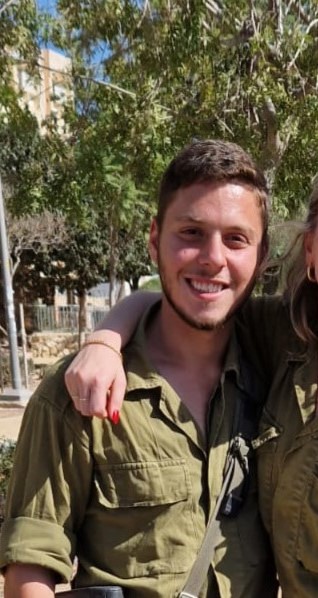
In a home in Haifa, on the slopes of Mount Carmel overlooking the blue expanse of the Mediterranean Sea, Achia Daskal was born on a cold day in early January 2004, the 9th of Tevet 5764. He was the child of Shlomit and Amos, joining a deeply rooted and warm family that would soon number nine children: Menashe, Avigail, Tehila, David, Atara, Avishai, Yitzhak, and Rachel. The house was always alive with the laughter of children, the buzz of conversations and debates, the smells of cooking, and the sounds of prayer. Amidst this vibrant commotion, young Achia grew up, a quiet child by nature, observing more than speaking, yet with large, radiant eyes that told a story of a rich inner world and boundless curiosity. His smile was illuminating, a perpetual half-smile that hinted at a hidden mischievousness and a subtle, unique sense of humor.
Even in his childhood, a unique trait was evident in him – a delicate sensibility combined with profound seriousness. He wasn't a child who constantly ran and shouted; instead, he would sit to the side, attentive to adult conversations, absorbing knowledge and impressions. When he spoke, his words were measured and precise, often surprisingly deep. He loved his role as an older brother to some of his younger siblings and found great satisfaction in caring for his nieces and nephews when they came into the world. He would sit with them for hours, reading stories in a soft voice, playing with them with endless patience, and always finding a way to make them laugh. His touch was gentle, and he always made sure they lacked nothing. At home, everyone knew they could rely on him, that he would always pitch in to help, whether by taking out heavy trash bags without being asked or assisting a parent who was struggling. He never waited to be told; he simply saw the need and acted. Parents and friends alike found in him a sympathetic ear, a confidant with whom they could consult on any matter, knowing he would treat it with gravity and sincerity. He wasn't verbose, but his advice was always sharp and focused, based on a deep understanding of the situation.
Achia spent his early years at Moriah-Barkai Elementary School in Haifa in quiet yet enthusiastic learning. He was an excellent student, not the type who stood out loudly in class, but one who immersed himself in books, examining every detail, and thoroughly internalizing the material. Afterward, he moved to Yavne High School in Ramat Alon, an institution that instilled in him values of Torah and labor, alongside a high-quality academic education. There, between Talmud lessons and mathematics, between morning prayers and nature hikes, his personality was further shaped. In addition to formal studies, Achia was active in the Bnei Akiva youth movement, where he found close friends and participated in social and educational activities that strengthened his sense of belonging to the community and the nation. Bnei Akiva's trips, with sleeping bags on the cold ground and songs around the campfire, were moments when he connected with the land and its landscapes, deepening his love for nature and journeys.
Achia's curiosity was boundless, and he was an unparalleled autodidact and diligent learner. He wasn't content with what he learned in class but independently explored a vast array of subjects: history in all its shades, profound philosophy, fascinating astronomy, complex economics, and exact sciences. He would be absorbed in books for long hours, his hands gliding across the pages, his mind absorbing every piece of information, his large eyes reading in the dim light of a bedside lamp. One of the interests that particularly captivated him was military history. He didn't just read about it but delved deeply into complex battles from World War II, watched documentaries repeatedly, analyzed strategic maps, and tried to understand the motivations and decisions that led to various maneuvers. He traced different theories of warfare, imagining himself on the battlefield, trying to decipher the mindset of commanders and soldiers. His army friends, years later, would call him a "walking Wikipedia" – a title that came from a deep appreciation for the vast knowledge he had accumulated.
Alongside his intellectual pursuits, Achia also had a great love for classical music. He found solace and inspiration in the rich, harmonious sounds of the great composers' works. He taught himself to play the piano by watching videos online. He spent long hours at the keyboard, his fingers practicing the notes, trying to emulate the sounds he heard. He would record himself playing, watching the recordings repeatedly, analyzing every mistake, improving his technique, and finding ways to perfect his performance. But even here, he wasn't content with mere playing; he delved deeply into the lives of the composers, the historical and cultural contexts in which they created, and even learned German so he could understand the original texts and the sources of inspiration for their works, to feel the spirit of the words as they were written. The piano at home became his private corner, where he could escape into a world of sounds and emotions, translating his inner complexity into music.
The connection to the land and nature was an integral part of his personality. Achia loved hiking and fieldcraft and felt particularly at ease under the open sky. For three consecutive summers, he participated in *Mashatzim* courses – young field and homeland guides – where he acquired deep knowledge in navigation, field first aid, survival, and everything related to being in nature. He fell in love with the physical and mental challenge these courses offered. After being certified as a *Mashatz*, he guided and accompanied school trips, walking at the head of the group, explaining about plants and animals, showing the way, and instilling confidence in the young people with him. He loved the feeling of the sun on his skin, the smell of the earth after rain, the long walks on ancient paths, and the echoing silence of the desert or the forest. He could sit for hours watching the sunset, absorbing the colors and light, finding peace and a deep connection to his surroundings.
After finishing high school, Achia made a significant decision that testified to his independent and determined character: he chose to study at the Hesder Yeshiva in Kiryat Shmona in the north. Unlike many of his friends who preferred to stay with a familiar group, Achia chose to go his own way, arriving at the yeshiva alone, not knowing anyone. It was important for him to be connected to his studies and the place, to make his personal mark, and not to rely on existing social circles. This decision reflected his self-confidence and his deep desire to learn for its own sake, to devote himself to Torah directly. And so it was; his studies at the yeshiva brought him great pleasure, and he invested endless time and energy in them. He would sit in the study hall for long hours, immersed in ancient books, amidst the whispering sounds of ceaseless Torah study. He always sought to understand the written texts deeply and directly before turning to various interpretations. He believed that this method of study, listening directly to the source, was the most correct way to acquire and internalize words of Torah. He would argue with himself, with the text, with his friends, to reach the depth of truth.
But Achia was not just a man of books and Torah. He was also a man of action and determination. In the hours after his studies at the yeshiva, when many of his friends went to rest or socialize, he participated in an intensive training program to improve his physical fitness in preparation for his enlistment in the IDF. He was determined to succeed, to reach peak physical condition, and trained without compromise. Long runs in the northern fields, strength training in an improvised gym, endurance training – he pushed himself to the limit every single day. He set ambitious goals for himself, and one of them was participating in the Jerusalem Marathon. He trained for months for the event and ultimately finished with an excellent result, further testament to his uncompromising willpower and perseverance. Running was not just physical training but also mental training, a lesson in patience and coping with difficulties.
As his enlistment date approached, Achia faced another crossroads. He was supposed to enlist with his yeshiva friends in the Nahal Brigade, as was customary in the Hesder track. But he felt a strong desire to serve specifically in the Golani Brigade, and more precisely, to reach the Egoz reconnaissance unit. He saw Golani as the spearhead, the place where he could contribute most significantly, to face the toughest challenges. The decision was not easy; it required him to leave the Hesder track in his second year of studies, to enlist alone, without the friends with whom he had spent the last two years. But Achia, true to himself and his values, did not hesitate. He knew what was the right path for him and was willing to pay the price. He left the yeshiva, said goodbye to his friends and teachers, and in March 2023, he enlisted in the IDF, a combat soldier in Battalion 51 of the Golani Brigade. He was excited, but also determined, ready for any challenge that came his way.
Already during the intensive Golani basic training, Achia stood out with his impressive abilities. The supreme physical fitness he had acquired through his personal training manifested in an exceptional way, and he received a perfect score of 100 on the grueling Bar-Or test – a rare score indicating extraordinary endurance and strength. He earned the title of outstanding company soldier in this field, but due to his characteristic modesty, he did not tell his parents about it. He simply saw it as a natural matter, part of the path he had to take. Beyond his physical fitness, his commanders also recognized his leadership potential, his ability to lead and inspire, despite his relative quietness. Therefore, he was chosen for a command track and to continue to the squad commanders' course immediately after completing his training. This was a significant step, a testament to the great trust his commanders placed in him.
His humble nature and kindness were also evident in his military service. Achia was a man of action, not words. He spoke little but did much, and always without complaint. In basic training and advanced training, when fatigue was palpable and tension high, he volunteered for tasks no one else wanted to take on. Whether it was guard duties during uncomfortable shifts, in the small hours of the night, under freezing rain or scorching heat, or washing dirty dishes after a heavy meal. When a dispute arose among the soldiers about a particular chore, Achia was the first to volunteer and take on the task, diffusing the tension and allowing the other soldiers to continue their routine. He also volunteered to stay on base on Sabbaths so that others, who wanted to return home to their families, could do so. He saw this as a mission, a way to contribute and help, without expecting anything in return. These quiet, unpublicized actions earned him deep respect and appreciation from both his friends and commanders.
Despite the difficulties and demands of military service, Achia did not abandon his sacred studies. The path of Torah guided him, giving him strength and meaning. Every Sabbath he stayed on base, he made sure to go to the synagogue, to pray and study Torah, even at the expense of his meager rest time. He not only studied himself but also encouraged his friends to do so, showing them the way to the books and the lessons. He connected with a parallel unit of *bnishim* (yeshiva students) on base, and whenever he could, he joined them for joint Torah study, finding comfort and inspiration in the spiritual world alongside the physical and challenging world of the army. Study was an anchor for him, a point of quiet and elevation amidst the hustle and bustle of training and military routine. He drew strength from it, strengthening his soul and spirit, and continuing on his path with faith and determination.
And then came that morning, a dark morning that will be remembered forever in the history of the Jewish people. Saturday, the 22nd of Tishrei, Simchat Torah 5784, October 7, 2023. At 6:30 AM, even before the sun had fully risen and illuminated the sky, the Hamas terrorist organization launched a brutal surprise attack on Israel. Heavy barrages of missiles and rockets were fired non-stop from the Gaza Strip, reaching wide areas of the country, providing cover for thousands of terrorists who infiltrated Israeli territory – by land, sea, and air. They raided the communities surrounding Gaza, Sderot, Ofakim, and Netivot, innocent partygoers at nature festivals near Kibbutzim Re'im and Nir Oz, IDF bases, and passersby on the roads. The terrorists brutally murdered some eight hundred civilians in their homes, in their cars, committing horrific crimes against them. They abducted hundreds of Israelis – men, women, children, and elderly – to the Gaza Strip, and destroyed, looted, and set fire to homes and property. Hundreds of soldiers, police officers, security forces personnel, and members of local emergency response teams fell in battle, trying to defend their people and their land. On this morning, amidst chaos and terror, a war began.
The war broke out just three weeks before the end of Achia's company's training. The company, which had not yet completed its full training process, arrived on Sunday at the staging areas around Gaza, ready to go into action. But because it was a "young" company, they were told they would be the fifth company in the battalion, a reinforcement company. The commanders' decision was that only a third of the company's soldiers would enter Gaza at a time, and the rest would wait in the staging areas. Achia, who had prepared his whole life for such moments, who dreamed of serving at the forefront and defending his people, desperately wanted to enter and participate in the ground fighting. He saw it as a great mission, his true calling. But to his dismay, his commanders ordered him to stay out, as he was slated to go to the squad commanders' course. Frustration gripped him. He was very disappointed and refused to go to the course before entering Gaza. "There's a war against the people of Israel, and I'll be playing at training?" he said, his voice agitated, a sense of urgency burning in his bones. He couldn't reconcile himself with the thought of sitting on the sidelines while his brothers fought. Therefore, even when the soldiers were released for a refreshing leave at home, Achia chose to remain in the staging areas. He didn't want to miss any opportunity to enter Gaza, to join the fighting, to be there, on the front lines. He sat with his friends, listening to the news, to stories from the field, gritting his teeth and praying for his turn to come.
On November 30, 2023, the news Achia had so longed for finally arrived. He was informed that he was entering the fighting in Gaza. Supreme joy washed over him. He felt that he had been given the opportunity to fulfill his destiny, to fight for the people and the land, to defend his home. He entered Gaza in Namer armored personnel carriers, vehicles that provided some protection against the constant threat. For the first ten days, the advance through Gaza was in these vehicles, passing through ruined landscapes, heaps of rubble, and constant tension in the air. Every step was calculated, every movement measured, as the danger of gunfire and explosives lurked around every corner. After ten days of armored combat, the company's soldiers joined the infantry forces engaged in the Sisyphean and dangerous task of clearing houses in the Shuja'iyya neighborhood – a dense and complex neighborhood that was a terrorist stronghold. They searched for tunnel shafts, located explosives, and cleared the area of terrorists. The mission was difficult, exhausting, and dangerous, requiring absolute vigilance and composure.
Amidst the chaos and complexity of the fighting, Achia's squad was divided into three smaller teams to allow for more efficient progress in the built-up area. And despite his short time in the army, and despite his young age, Achia was appointed to command one of them. This was clear evidence that his commanders saw him as a natural commander and leader, someone who could be relied upon, someone who knew how to make decisions under pressure, someone who could lead soldiers on a mission. His friends trusted him implicitly. He was quiet, yet authoritative, knew how to direct, guide, and maintain high morale.
The day was December 12, 2023, the 29th of Kislev 5784. A team under the command of the platoon commander, along with Achia and his friends, entered a suspicious house in the Shuja'iyya neighborhood. The tension was palpable in the air, every soldier alert, weapon ready, eyes scanning every corner. Upon their entry into the house, an RPG missile was fired at them. A powerful explosion shook the structure. The platoon commander was hit in the chest, and the three soldiers with him were wounded. Moments of chaos spread through the air, dust and shrapnel filled the space. Achia, without hesitation, understood that he now had to function as the platoon commander. His command instincts awoke in full force. With incredible composure, he contacted the company commander, reported the incident, asked the medic to treat the wounded, and quickly divided the sectors among the other soldiers to secure the area and prevent further harm. He acted quickly and efficiently, instilling a sense of security in the soldiers around him, despite the difficult situation.
Shortly thereafter, the company commander arrived at the scene. He asked for two volunteers to enter the house with him to extract the casualties. The danger was clear and immediate – the house was booby-trapped, and terrorists could still be in the vicinity, ready to shoot again. Achia, without a second thought, was the first to volunteer. He didn't hesitate for a moment, didn't think about his personal well-being. He saw the mission, the need to save lives, and ran forward. As they entered the house, another RPG missile was fired at them. This time, the hit was fatal. Sergeant Achia Daskal was killed on the spot, nineteen years old when he fell. Along with him, the company commander and the medic were also killed. He fell as a hero, leading from the front, risking his life for his comrades. His father's words, "He sought this, he purified himself for it, and he ran there with great joy, and even there he sought contact and fought until his last moments without any thought for his personal well-being," took on a chilling significance.
Sergeant Achia Daskal was laid to rest in the military cemetery in Haifa, his hometown, at the foot of Mount Carmel that he so loved. He left behind grieving parents, Shlomit and Amos, and four brothers and four sisters with broken hearts. After his fall, he was promoted to the rank of Sergeant, in recognition of his heroism and extraordinary contribution.
The pain of loss was immense, but along with it, a deep sense of pride erupted over Achia's life and death. His father, Amos, eulogized him with words that touched everyone's heart: "We are a God-fearing family and from that understanding, we know that each of us has a mission in the world, each with their role. We don't always understand what our role in the world is, but it is clear to us, clear to the whole world, and clear to Achia now, what his role in the world was. Achia completed his role with outstanding excellence. He sits there now by the Throne of Glory and watches over all of us. Achia's good qualities, which characterized him throughout his short life, were precisely his conduct in battle, and for that, my heart is full of pride." The father described his son as one who pushed with all his might and being to join the war, as one who sought contact with the enemy and fought until his last moments without any thought for his personal well-being. He emphasized another characteristic that defined Achia – his exceptional respect for his parents. "You captured my heart, and every time I was in your presence, by your unique way of honoring us, even though I never asked it of you, you never let me carry anything, not even a trash bag, or carry the tallit on the way to and from the synagogue, you would literally snatch what was in my hand, no matter what state you arrived in, even if you arrived on a Friday during basic training, close to Shabbat, and perhaps someone else would expect to be served and lie down to rest, you did not." These words painted a vivid picture of a person who was entirely giving, humble, and respectful.
His rabbi at the Hesder Yeshiva in Kiryat Shmona also eulogized him, noting that "the phrase most identified with him is 'Say little and do much.'" The rabbi spoke of Achia who arrived at the yeshiva alone, a decision not to be taken for granted, and "within seconds he became loved by everyone." He mentioned Achia's choice to go to Golani, while his friends went to a Nahal core group, a choice that was "very significant for him." The rabbi summed up his character: "He always had a half-smile, and in everything he did, in his studies and in the army, he always chose to 'speak less and do more.' Shortly before the fighting, we were in touch and he said he would return to the yeshiva when possible, unfortunately, he will not return." The image of the half-smile, expressing the combination of seriousness and playfulness, humility and determination, remained etched in the memories of all who knew him.
Achia's legacy, of such a young soul, continues to live on. In his memory, his family, in collaboration with "Meshek Achia" in Samaria, which produces and markets natural products such as wine and oil, initiated a moving memorial project. The farm produced two special packages, containing products Achia loved, named after him: "Achia's Package for the Public – Achia Daskal H.Y.D." and "Healthy Package – Achia Daskal H.Y.D." Each package also includes a symbolic gift from the Golani Brigade, another tribute to his path. The proceeds from the sale of the packages are donated to the Golani Association, for the commemoration of the brigade's fallen soldiers and its heritage. Thus, Achia's path continues to influence, give, and contribute, even after his passing. His name is woven into the story of the land, the story of the people, in the deep connection between earth, Torah, and love of humanity. He remains a symbol of human heroism, humility, giving, and boundless dedication, his memory forever etched in the hearts of all who knew him and in the story of the entire nation, as a hero of revival.
Moments of a life
All photographs · 4
In the media
Memorial sites
- Sergeant Ahiya Daskal, May God Avenge His Blood — Or Latkuma
אור לתקומה
- Sergeant Achia Daskal HY"D | ktmmontreal
Kollel Torah MiTzion Montreal
- In Memoriam of: Achia Daskal
October7Memorial
Memorial projects
An initiative to establish an educational military gym in his memory at Kiryat Shmona Hesder Yeshiva; the page lists a requested budget of NIS 80,000, not confirmation that construction has been completed.
An option to plant a tree in his memory as part of the Kollel Torah MiTzion initiative in Montreal, ID H70; the page provides no evidence that a specific tree has already been planted.
The family’s collaboration with Meshek Achiya: packages bearing his name, with proceeds going to the Golani association to commemorate the brigade’s fallen.
His parents published an appeal for support to renovate and expand the study hall at Kinor David Yeshiva in his memory; completion of the work was not verified.
Stories told about them
Achiya taught himself piano with the help of videos and was interested in history and classical music. He also studied German to explore the sources he read more deeply.
Life & service
Service
- Rank
- Sergeant
- Unit
- Golani Brigade
- Honours
- Posthumously Promoted
- Battle Location
- In the northern Gaza Strip
Family
- Father
- Amos
- Mother
- Shlomit
Burial
Tributes & remembrance
נזכור אתכם תמיד
נתקלתי במדבקות של "אמור מעט ועשה הרבה" עם תמונתו של אחיה ומשהו בו מגנט אותי ומאז אני מנסה ללכת בדרכו ולפעול לעילוי נשמתו
אינני מכירה אך מוקירה את מה ששעשה למעני
יהי זכרו לנצח ברוך ותהא נשמתו צרורה בצרור החיים. אמן.
יהי זכרו ברוך.
אחיה היקר והאהוב
שלח כוחות לאמא שלך שתמשיך להחזיק את המשפחה והבית
תמיד חייך
שלומית יקרה שולחת לך חיבוק באהבה ביום הקדוש הזה.
אחיה דסקל היקר, בן השכונה היקר ה יקום דמך . זכיתי להקדיש השנה טיול לזכרך בנחל עובדיה
ולספר עליך לחברים במסגרת טיולים מוקדשים לנופלים. שנזכה ללכת לאורך, תנוח בשלום על משכבך.
לזכר עלם חמודות שעשה הכל כדי להיות לוחם ונלחם עבורנו.
עלם חמודות הי"ד
זכיתי להיות בזיכרון בסלון עליו
ברור שמדובר בילד מיוחד ומדהים
אבידה גדולה
מדליקה נר לזיכרו של אחיה דסקל ז"ל שאת
סיפור חייו קראתי לא מזמן וכן שמעתי על הקרב בו נפל. כבוד הוא לי לדעת ולו מעט על חייך, מסירותך ופועלך.
ליבי אתכם. הורים גיבורים לילד גבור. ה ישלח נחמה ורפואת הלב ונזכה לתחיית המתים בקרוב ולגאולה שלמה
יפה עיניים ואמיץ לב
לנצח נזכור ולא נשכח
תודה לך חייל יקר, גיבור ישראל. תנוח על משכבך בשלום.
ביום א הגעתי לבית המשפחה במסגרת מיזם מנציחים ביחד ונחשפתי לסיפור על בחור מיוחד במינו.. מסוג אלו שכותבים עליהם שירים כמו "איפה ישנם עוד אנשים כמו האיש הזה..." וגם למדתי על הבית והמשפחה שגידלו ילד מיוחד שכזה. הדרך שלי להמשיך את ההנצחה היתה למחרת כשהנחיתי קבוצה טיפולית במכון הלאומי לשיקום נוירופסיכולוגי. סיפרתי למשתתפים את סיפורך ועכשיו אתה חי בעוד לבבות... יהי זכרך ברוך!
פנים מקסימות ומאירות
תשמור על עם ישראל
גיבור ישראל
נזכור לעד את גבורתך ואת מסירות הנפש שלך למען המשך קיומנו!
הצבי ישראל על במותיך חלל איך נפלו גיבורים.
מנשרים קלו מאריות גברו!
גולנציק . גיבור . מצדיע ומתפלל שנהיה ראויים
לזכרך אחיה
אמי גם ממשפ דסקל, כולנו אחים
יהי זכרך ברוך ומבורך
אחיה, אמנם לא זכיתי להכיר אותך אישית למרות שאנחנו גרים באותה שכונה, אבל אני שומעת הרבה סיפורים עליך, בכל סיפור מבינים ישר שמדובר בבן אדם מיוחד.
אני מבטיחה ללכת בדרכך, תמיד לחשוב על האחר, לכבד את האחר, לקבל את השונה, לשים לב מי צריך אותי ואיך אפשר לעזור ולתרום במקום לחשוב מה מגיע לי. להתחשב, לרדוף אחר המשמעות ולחפש להשפיע, אבל בלי רעש וצילצולים.
תודה על הזכות ללמוד ממך, תשמור עלינו שם למעלה.
היי אחיה אנחנו אתה לא ממש מכיר אותנו אבל אנחנו עושות עליך עבודה שתעריך את כל מה שעשית בשביל המדינה היפה שלנו. אנחנו לא יודעות אם זה ממש אפשרי אבל רק מלקרוא עלייך כבר התחברנו אנחנו מאחלות ומקוות שהכי טוב לך שם למעלה וגם ששם אתה עדיין שומר עלינו מלך שלנו מאחלות לך חג חירות שמח ואנחנו מבטיחות לך שאנחנו נעביר לאנשים את כל הטוב שעשית בעולם שלנו אנחנו מקוות שאת נהנה למעלה
גיבור. אוקיר אותך לנצח יחד עם כל עם ישראל לדורותיו
אחיה דסקל הי״ד
עד לא ממזמן לא הכרתי אותך ואת הסיפור שלך עד שהכרתי את אחותך הטובת לב מלאת נתינה רחל, היא כל הזמן אחיה מזכירה אותך בכל דבר קטן שהיא עושה, אם זה לפני שבת שהיא מעלה בסטטוס ומנציחה אותך או בפורים מעלה תמונות שלך ומשפחתכם ומנציחה אותכם, איך מתארת את החיוך שלך,את ההשקעה שלך ובעיניה היית האח הכי טוב עם החיוך הכי יפה.
תודה על מי שהיית, אזכור ואעשה תמיד את המשפט ״אמור מעט ועשה הרבה״
לזכרו.
שמור על עצמך גיבור,
תודה על כל מה שקרבת עבורינו,
מקווה שיום יבוא ונהיה ראויים לך.
איש מדהים מצדיע לו ולמשפחתו
יהי זכרו ברוך
אני תמיד אחכה לך בבית שתחזור עם התיק על הגב מהצבא אתה חסר מתגעגעת ומחכה שתחזור
The people of Israel look at themselves and remember the strength within them, thanks to you, thanks to all of you.
Source:רדיו חיפה
Read the Hebrew original
עם ישראל ניצב מול עצמו ונזכר מה העוצמות שנמצאות בו בזכותך, בזכותכם.
Always shows up and helps, no matter what.
Source:רדיו חיפה
Read the Hebrew original
בכל מצב מגיע, עוזר.
A wonderful family, the salt of the earth, with very deep roots.
Source:רדיו חיפה
Read the Hebrew original
משפחה נפלאה, מלח הארץ עם שורשים עמוקים מאוד.
Achiya's integrity always called out to me, always cried out to me.
Source:ישראל היום
Read the Hebrew original
יושרו של אחיה תמיד צעק אליי ותמיד זעק אליי.
Generations will grow up on the story of your heroism and that of your comrades
Source:ישראל היום
Read the Hebrew original
על סיפור גבורתך וגבורת חבריך עוד יגדלו דורות
Remembrance Day addresses
יום הזיכרון לחללי מערכות ישראל התשפ"ה – 2025
בכל יום שעובר, אזכור יותר! אזכור, את אלו שיצאו עימי לקרב ולא שבו, ולהם אין מי ידמה ומי ישווה. אזכור, שהכאב לא יעבור לעולם, והזמן, הוא לא מרפה ולא מרפא. אזכור, את שיברון הלב הגובר ואת הבית שבוער. אזכור, את צדקת הדרך, ואשבע שוב, שמה שהיה לא יהיה יותר. אזכור, שיותר מכל דבר אחר – אני חסר! ביום הזה, אני נתקף געגוע לדמותם, לחיתוך דיבורם, לחיוכם, ומדליק נר לזיכרון דרכם ומורשתם!
משרד הביטחון
אגף משפחות, הנצחה ומורשת
יום הזיכרון לחללי מערכות ישראל התשפ"ה – 2025
בכאב, בהצדעה ובתקווה אני מתכבד להדליק נר זיכרון זה. השנה, כשאנו נלחמים במלחמה ארוכה, רב זירתית וצודקת, הזיכרון נושא משמעות עמוקה. ביום זה נעצור ונתייחד עם זכרם של טובי בנינו ובנותינו שנפלו בהגנה על המדינה. מורשתם היא המצפן שמתווה את דרכינו, והיא המעניקה לנו כוח להמשיך ולהגן על מדינת ישראל ותושביה. משפחות יקרות, אנו מרכינים ראשנו ומתחייבים שנעמוד לצידכן תמיד. יהי זכר הנופלים ברוך.
אלוף דדו בר כליפא
ראש אגף כוח האדם, צה"ל
יום הזיכרון לחללי מערכות ישראל התשפ"ה – 2025
בשעה שאנו זוכרים את גודל תרומתם ועומק מסירות נפשם של טובי בנינו ובנותינו, נופלי מערכות ישראל לדורותיהן, ממשיכים צה"ל וכוחות הביטחון במימוש המשימה למענה לחמו ועבורה נפלו: הכרעת אויבינו מדרום, מצפון, ביהודה ובשומרון, וגם בזירות רחוקות יותר. בהערכה רבה ובגאווה אדירה אנו מרכינים ראש בפני הנופלים והנופלות, מאמצים את משפחותיהם אל לבנו, וממשיכים במשימה להבטחת קיומה של ישראל לדורי דורות. יחד נעשה ונצליח.
רב אלוף אייל זמיר
הרמטכ"ל, צה"ל
יום הזיכרון לחללי מערכות ישראל התשפ"ד – 2024
כאשר דגלינו מורדים לחצי התורן וראשינו מורכנים לזכר הנופלים והנופלות במערכות ישראל, ממשיכים לוחמי צה"ל ומפקדיו בלחימה בדרום, בצפון, ביהודה ובשומרון ובזירות נוספות. על כל דור מוטלת המשימה של הגנת העם והארץ – משימה שאף פעם אינה פוסקת. נצדיע בגעגוע ובגאווה לנופלים ולנופלות, נחבק את משפחותיהם, ונמשיך ברוח הציווי שהותירו לנו. עם ישראל חי.
רב ניצב יעקב שבתאי
המפקח הכללי, משטרת ישראל
יום הזיכרון לחללי מערכות ישראל התשפ"ד – 2024
אחיי הנופלים, כל נר הוא זיכרון יחיד ומיוחד, על חיים שהיו ואינם, געגוע שנצרב עמוק בלב, עולם ומלואו. הנרות כולם הם זיכרון של אומה כי לעולם לא עוד, בשורת הציונות וקוממיות ישראל. זיכרון כי הדרך לעם חופשי בארצנו עוברת דרך מסדר הנופלים. אור הנר יזכיר לנו את מסירות נפשכם להציל חיים, להגן על הבית. הנרות מסמנים לנו נתיב גבורה ערכי מחייב שאנו מצווים ללכת לאורו. נמשיך להילחם ולהוסיף אור מתוך אמונה בנצח ישראל.
יואב גלנט
שר הביטחון
יום הזיכרון לחללי מערכות ישראל התשפ"ד – 2024
בהצדעה ובכאב, בשם צה"ל כולו, אני מדליק נר זיכרון. בעיצומה של מלחמה, הזכרון נושא משמעות יום-יומית, שעבר והווה מתלכדים בה. לאורם של הנופלים נמשיך לצעוד, חיילי הסדיר והמילואים. לאורם של הנופלים נמשיך להגן על ארצנו ועל מולדתנו, גם כשהמחיר כבד. להבת-הזכרון תבער בנו בעודנו ממשיכים להלחם ונזכור את הנופלים ואת אומץ ליבם. משפחות יקרות, צה"ל מרכין היום ראש, מצדיע לכן וכואב איתכן. יהי זכר הנופלים ברוך.
אלוף יניב עשור
ראש אגף כוח האדם, צה"ל
יום הזיכרון לחללי מערכות ישראל התשפ"ד – 2024
בהוקרה, בגאווה ובכאב שאין לו סוף, אני מתכבד להדליק נר לזכרם של הנופלים והנופלות במערכות ישראל. סיפור חייהם בארץ הזאת, מסכת שירותם, גבורתם והקרבתם – הם סיפורה של הארץ הזאת, אך גם סיפור המחיר הכבד שהיא תובעת מאוהביה. מחויבותנו לזכר הנופלים ולדרך שהותירו לנו ניצבת תמיד לנגד עינינו. את המשימה שלא זכו להשלים, משלימים כיום, וישלימו, אנשי כוחות הביטחון, הממשיכים בדרכם ולאורם. יהי זכרם של הנופלים ברוך.
משרד הביטחון
אגף משפחות, הנצחה ומורשת
יום הזיכרון לחללי מערכות ישראל התשפ"ד – 2024
בחרדת קודש אני מתכבד להדליק נר לזכרם של חללי מערכות ישראל, חברנו שנפלו, מראשית היציאה מהחומות ולאורך כל שנות עצמאותנו המדינית והציונית, מהווים תמרור זיכרון לדרך חיינו ולמחוייבות הלאומית להנצחת זכרם. דרכם נותרה דרכנו ומורשתם נר להמשך עשייתנו. יהי זכרם ברוך!
בני גנץ
שר הביטחון
יום הזיכרון לחללי מערכות ישראל
נזכור אותם, כולנו יחד. כל אחד ואחת מהם, מדי יום ביומו, והיום ביתר שאת, כך – לנצח. "כי מדי דברי בו זכור אזכרנו עוד"
משרד הביטחון
אגף משפחות, הנצחה ומורשת