
The story
The air in Buenos Aires, in that year of nineteen sixty-seven, carried the scent of spring blossoms and the muffled hum of a bustling city, but in the Koren family home, there was always a warm atmosphere, brimming with anticipation. Sara and Moshe, Avraham Gavriel’s parents, eagerly awaited their firstborn son, and on the 25th of Adar I – March 7th – a smiling baby entered the world, quickly filling the house with light and joy. They named him Avraham, but over time, everyone called him Avi. He grew up in a home where the mother tongue was indeed rich Spanish with a rolling Argentinian accent, yet the heart beat to a Hebrew rhythm, and the soul was deeply rooted in Jewish tradition and a Zionist dream. In his children’s room, alongside toys and dolls, one could always find Hebrew books, slightly torn from much reading, and a framed picture of Israeli landscapes, with a blue Kinneret and ancient olive trees that seemed to breathe life through the glass. His parents, who were second and third-generation Jewish immigrants who had fled Europe, made sure to instill in him and his three younger siblings – Hagit, Daniel, and Ariel – the stories of their grandparents, of the communities they left behind, of the long journey to new lives in Argentina, and of the unwavering hope for a complete and independent Jewish life in their own land.
Avi was a child it was hard not to love. His wide smile was infectious, and his sparkling eyes reflected an endless curiosity for everything around him. He loved to run in the green parks of Buenos Aires, his wild black hair blowing in the wind, feeding pigeons and playing soccer with his friends until the sun began to set. But beyond innocent childhood games, Avi was very attentive to the adult conversations at home. Around the Shabbat table, always set with white tablecloths and laden with delicacies, lively discussions often revolved around the situation in Israel, immigration, the challenges, and the promise. Avi absorbed these things like a sponge, and from a young age, he knew that Jewish life had a center, and it wasn't in Buenos Aires, beautiful as it might be. When he reached school age, he was sent, like all his siblings after him, to the "Shalom Aleichem" Zionist school network. He first attended "Ramat Shalom" elementary school, where the school day was divided into two: mornings were dedicated to general core subjects, like any Argentinian child, while in the afternoons, as the sun began to cast golden rays over the schoolyard, the classrooms filled with the sounds of Hebrew, Bible stories, and Jewish history. Avi particularly loved these hours. He was fascinated by the stories of past heroes and imagined himself walking the paths of Israel, breathing its air, and holding its future in his hands. The teachers, new immigrants or emissaries from Israel, brought with them the scents of a distant land – the smells of strong coffee, black pepper, and great hope. Avi learned not only the language but also the nuances of the Hebrew soul, its passion, and its dream.
After completing his studies at "Ramat Shalom," Avi continued to "Shalom Aleichem" High School, where he further deepened his Jewish and Zionist knowledge. His high school years were a period of identity formation, of big questions, and a search for meaning. Alongside his studies, Avi was a member of the "Nof Esh" youth movement, a movement affiliated with the "Labor" stream in Israel. In "Nof Esh," Avi found a second home – a place where theoretical ideas turned into actions, and aspirations became concrete plans. There, around burning bonfires on cool winter evenings, or during long trips across Argentina, Avi was educated on values of love for the land, Hebrew labor, equality, and social justice. The counselors, movement graduates, many of whom were already planning their aliyah to Israel, spoke of building a new society, of agricultural settlement as a deep expression of connection to the land, and of pioneering as a way of life. Avi, with his eternal smile and sparkling eyes, absorbed all of this. He saw the kibbutz not just as a utopian idea, but as a living, breathing model of a rectified society, where everyone contributed their part for the common good, and the individual's life intertwined with a rich communal fabric. The thought of hands touching the earth, the smell of mud after rain, of strenuous yet satisfying physical labor, filled him with a sense of purpose. He knew, without a shadow of a doubt, that this was where he wanted to build his life. The dream of making aliyah to Israel, which began as grandparents' stories at home, became a real action plan in "Nof Esh."
When Avi turned twenty, the dream came true. He joined a garin of olim, a group of enthusiastic young people like himself, who packed their lives into suitcases and set out on the long journey to a new land, to an unknown but promising reality. The farewell from his parents, siblings, and friends in Buenos Aires was difficult and painful. Long hugs, warm tears, and whispers of "take care of yourself" accompanied him to the airport. On the long flight, looking down at the vast ocean, Avi felt a mixture of apprehension and excitement. He had left behind everything he knew, the language, the culture, the security of home, and ventured into the unknown. But within him burned a fire of faith and hope. When the plane landed at Ben Gurion Airport, and Avi stepped onto Israeli soil, he felt a deep sense of belonging, as if he had returned home after a long journey. The scent of the land – a mixture of dry earth, basil, and the Mediterranean – was etched into his memory.
The garin Avi belonged to was initially directed to a kibbutz near Jerusalem, an established and well-rooted place, with green fields and a quiet communal life. But Avi, with his pioneering spirit, sought the challenge, the thrill of building from scratch. He wanted to establish, to construct, to leave his mark in a place where every brick would be the fruit of his labor. Therefore, he preferred a younger kibbutz, one still struggling for its existence, demanding investment and a spirit of volunteerism. And so, he settled in Holit, a small, young kibbutz bordering the southern Gaza Strip. Holit, at that time, was a place of shifting sands, desert winds, and a certain sense of isolation, but also of a warm community, of people with burning eyes and a shared vision. Avi immediately felt at home. He loved the simplicity, the directness, the hard work the place demanded. He remembered the conversations in "Nof Esh" about agricultural settlement, and here, in Holit, he felt he had fulfilled those dreams. He worked in the fields, learned the rhythm of the seasons, the secrets of irrigation, the way to coax life from the barren land. His strong hands, which until then had mainly held textbooks and soccer balls, now felt the touch of damp earth, the weight of the hoe, the roar of the tractor engine as it plowed the fields at six in the morning, even before the sun shone at its full intensity. The feeling of satisfaction from a day of physical labor under the scorching sun was deep, a kind of primal and strong connection to the essence of the land.
Soon after, Avi enlisted in the IDF. For him, military service was not just an obligation but a natural continuation of the path he had been educated on and grown up with. As a new immigrant, he served as a non-commissioned officer for new immigrants in the Nahal brigade. His role was to help other new immigrants, young people like himself, adapt to the military framework, learn the language, and understand the complex cultural codes of Israeli society. He was a listening ear, a supportive shoulder, and a personal example of what it meant to be a Zionist fulfilling his dream. He knew exactly what they were going through – the longing for family, the linguistic difficulties, the fear of the unknown – and he was there for them, with his wide smile and optimistic approach. He saw this role as a mission, another way to contribute to the building and strengthening of the land. After his military service, the choice to stay in Holit was obvious. The kibbutz was not just a place of residence, but a home, a community, a family. He was already an integral part of the human and physical landscape of the place.
1996 was a significant year in Avi's life. That year, he married Vered, a young and energetic woman who had also arrived at the kibbutz as part of a Nahal garin. Vered, like Avi, came with dreams and a strong desire to build a meaningful life in Israel. They met against the backdrop of shared work, in the atmosphere of a young kibbutz where everyone knew everyone, and soon a deep bond formed between them. They built their shared home in the kibbutz, not just four walls and a ceiling, but a warm nest where love, mutual understanding, and dreams for the future prevailed. Their home was always open to friends, to family, and was always filled with laughter and lively conversations. On the shelves stood books, pictures from trips, and small objects they had collected together, each telling a story of a shared moment.
In 2003, a wonderful and joyful turning point occurred in Avi and Vered’s lives: they had triplets – Ido, Ella, and Yahel. Overnight, the quiet house transformed into a kingdom of baby laughter, crying, diapers, and endless exciting moments. Avi was a family man through and through, a devoted father who loved his children with a deep and uncompromising love. He was not the kind of father who only played with his children on weekends; he was a full partner in every aspect of their lives. He folded small laundry, changed diapers without batting an eye, woke up at night to feed, and told bedtime stories in a deep, calming voice. He was there to celebrate every first step, every new word, every innocent drawing. As they grew a little older, he would take them on long walks in the kibbutz fields, explaining about the plants, the birds, the way the earth yields life. He loved to photograph, and the camera was always an inseparable part of their trips. He documented every moment, every smile, every small discovery of his children, and through the camera lens, saw the world through their curious eyes. The photos he took were more than just documentation; they were an expression of his great love, his deep connection to nature, and his desire to instill that same love in his children. He guided them in this way, teaching them to respect the environment, to listen to the sounds of nature, and to find beauty in every leaf and every stone.
Avi was a lover of people and a lover of the land. These two principles were deeply rooted in his soul and dictated his way of life. He believed with all his heart that peace was the only way to live in this region, and he worked towards this goal in many ways, even if quietly and without publicity. He was a person easy to connect with – always surrounded by people who loved him for his captivating smile, his good heart, and his unwavering willingness to lend a helping hand. If someone in the kibbutz needed help fixing something at home, assistance in the field, or just a listening ear – Avi was there. He was one of those who woke up in the morning with a sense of responsibility towards the entire community, not just his nuclear family. He was very active in kibbutz life. He worked in maintenance, a role that required good hands, technical understanding, and patience, and he fulfilled it with dedication. He was the one who would fix the leaking faucet, the creaking door, the broken machine, and always did so with a smile and willingness. He was also an active participant in the construction of the kibbutz's new cowshed, a huge project that required hard physical labor, meticulous planning, and cooperation. The sweat that dripped from his brow as he worked with his friends on erecting the structure, the noise of the tools, and the feeling of shared creation – all these were an inseparable part of who he was. He saw every job, small or large, as a way to build and strengthen the community he loved so much.
Beyond his daily work and social activities, Avi was also a member of the kibbutz’s rapid response team. This role, which was particularly essential in a settlement located on the Gaza Strip border, demanded constant vigilance, regular training, and a willingness to sacrifice himself for the community’s security. But another role, which became an inseparable part of his identity, was the coordinator of current security – the "Ravshatz." From the early 2000s, Avi served in this position, and it brought him great pleasure and a deep sense of fulfillment. The Ravshatz is not just a title, but a role that demands immense responsibility, judgment, leadership skills, and the ability to act under pressure. Avi saw this role as a sacred mission – to protect the home and the community, his family and his neighbors. He was the one who was first up with every alarm, the one who checked the fences in the small hours of the night, the one who coordinated with the army, and the one who ensured that every resident felt safe. He learned every corner of the kibbutz, every path, every bush, as if they were a part of him. He knew the defense systems, the security protocols, and the terrain inside and out. He did not see it as a burden, but as a privilege. Being the Ravshatz of Holit was for him the pinnacle of fulfilling the Zionist dream – not just to make aliyah and build a home in the land, but also to defend it with his body and soul. He conducted regular training with the rapid response team, ensured their readiness, and forged deep connections with each of them. They were not just his friends, but true partners in the mission, and he cared for them and their safety just as he cared for his family’s safety. The role of Ravshatz in Holit, a small and exposed settlement, was not an office job with documents. It was a role of the field, of presence, of direct connection with the land and the people. Avi was there, always, a pillar of security and peace of mind for everyone.
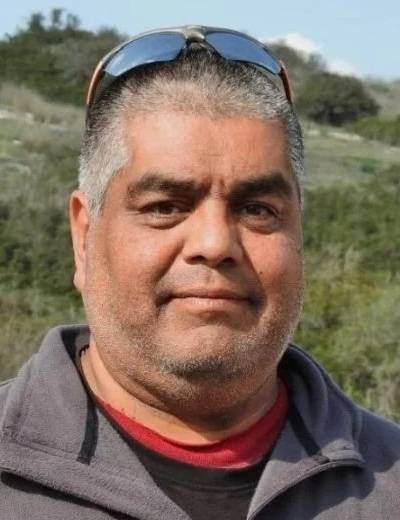
Abraham Gabriel Korin, community security coordinator in Holit, was 56 when he fell.
In Holit, as in many other communities, the silence was shattered instantly. A few minutes before seven in the morning, when the full extent of the horror unfolding around them was not yet completely clear, Avi, the Ravshatz, was already on alert. He received initial reports, sounds of gunfire from the direction of the border, a deep feeling that something terrible was happening. The phone was in his hand, as he tried to coordinate, to understand, to warn. And then, the specific report came: "A group of people on motorcycles are advancing towards the kibbutz." These were his last words. The last sound of his voice. His voice was tense, yet clear, professional, conveying the most vital information in these critical moments. He had no hesitation. The next moments were split seconds of decision, in which the father, the family man, the lover of people and land, transformed into a fighter, a protector, a human shield. He hastily parted from Vered and the children, perhaps with a quick hug, perhaps with a look that contained a whole world of love and concern. He knew that every second counted. Without a second thought, he put on his protective vest, took his weapon, and went out of his home, onto the familiar paths of the kibbutz, which instantly became a death trap.
He ran to the place from which the gunfire was heard, to the fence, to the kibbutz’s first line of defense. The festive morning silence was replaced by the jarring noise of machine gun fire, screams, and explosions. On his way, amidst the confusion and chaos, Avi encountered a group of terrorists. He was alone, facing superior force. But the Ravshatz of Holit, with all the years he had trained, prepared, and protected, did not hesitate. He entered the battle. It was a difficult, uncompromising battle, for every meter of land, for every home in the kibbutz. He fired at them, moved from cover to cover, trying to protect what was most precious to him. He fought with supreme bravery, not for glory or praise, but out of a deep sense of mission, out of an endless love for his family, his community, his country. He struggled until his last breath, until the very last moment. At the end of the bloody battle, Avi was hit. He fell in battle, on the cursed Saturday of the 22nd of Tishrei 5784, October 7th, 2023. He was fifty-six years old when he fell, a man in the prime of his life, with a loving family, dreams, and a future brutally cut short.
The news of the fall of First Sergeant Major Avraham Gavriel (Avi) Koren struck Holit and all of Israel like a bolt from the blue. He was laid to rest in the military cemetery in Kfar Saba, accompanied by a multitude of people – his grieving family, his friends from the kibbutz, his friends from the army, and hundreds of people who came to pay their last respects. He left behind three beloved children – Ido, Ella, and Yahel – who were his whole world, his parents Sara and Moshe, and his three siblings – Hagit, Daniel, and Ariel – who lost a brother, a friend, and a partner on their path. After his fall, Avi was promoted to the rank of Advanced First Sergeant Major, a sign of appreciation and recognition for his heroism and devoted service to the state.
The void Avi left behind is immense, not only in his family home and in the hearts of his loved ones, but also in the entire community of Holit. His calming voice, his infectious smile, his working hands, and above all – the sense of security he provided to everyone as Ravshatz, all are deeply missed. But his legacy continues. In the stories told about him, in the memories shared by his friends, and especially – in the way his children will continue to grow. They will remember a loving father, connected to nature, who loved to hike and photograph, who taught them about life through the camera lens and through touching the earth. They will know that their father did not hesitate, and in the moment of truth, went out to defend their home, their kibbutz, the entire country. He was one of thousands who fell defending the land in the Negev lowlands, part of a human and moving story of heroism. His family in Israel and Argentina, and everyone who knew him, are forever proud of him. His memory and the memory of all of Israel's fallen will be deeply rooted in the heart of the nation, a source of inspiration and resurgence, a testament to the power of the Israeli spirit to face any challenge, to build and protect the home, even at the highest cost. Avi Koren, the Ravshatz of Holit, will remain etched in memory as a true hero, whose bravery stemmed from his immense love for humanity, for the land, and for life itself. The landscape around Holit, the sands, the fields, and especially the community, will cherish his story, a story of a life full of meaning, of fulfilling a dream, and of supreme sacrifice.
Moments of a life
All photographs · 1
In the media
Articles
- Universidad Ariel. Exposición itinerante en memoria de Abi Korin llega al Consejo Regional Eshkol
Itón Gadol ·
- El discurso completo de Daniel Korin, el hermano de Abi, asesinado por la Organización Terrorista Hamás
Por Israel / Vis a Vis ·
- Continuing Avi's path, of blessed memory: The barn owl project returns to Holit
ynet
- On the Morning of Simchat Torah, Four Civilians from Kibbutz Holit Fought One Hundred Terrorists
מקור ראשון
Videos
Memorial sites
- Avraham Gavriel (Avi) Korin — Abraham Gabriel (Abi) Korin
Izkor Soldados Latinos ·
- Yizkor - Master Sergeant Avraham Gabriel-Avi Korin
משרד הביטחון – יזכור
- Korin Avraham (Avi), of blessed memory | Kibbutz Holit
קיבוץ חולית
Memorial projects
An update on the tour of his photography exhibition: according to the announcement, it had already been shown at Sholem Aleichem School in Buenos Aires, after opening at Ariel University. The announcement invites people to an evening in Avshalom in the Eshkol Regional Council on October 11, 2026, at 7:00 p.m.; this verifies the invitation, not that the event took place.
On May 7, 2026, Ariel University opened an exhibition of photographs by Avi Korin in his memory, with family members attending and his brother Ariel giving a speech. The report mentions plans to show it later at the Sholem Aleichem School in Buenos Aires; whether that next stop took place was not verified here.
Kibbutz Holit renewed its barn owl nesting boxes in memory of Avi, who, together with Yair Goldin, was among the founders of the project about twenty years before his death. The commemoration continues his work in biological pest control and the environment.
Stories told about them
Korin immigrated from Argentina at twenty and chose to settle in Kibbutz Holit. Before seven o’clock on October 7, he reported approaching motorcyclists, went out to defend the kibbutz and was hit in battle.
Anat Dimshitz recalls calling Avi when her car got stuck in the sand with the children in the heat. He came to rescue her, and on another occasion before Operation Shield and Arrow, he helped her again when she ran into trouble on an unfamiliar route.
Life & service
Service
- Rank
- Sergeant major (res.)
- Service Type
- Reserve Forces
- Honours
- Posthumously Promoted
Family
- Father
- Moshe
- Mother
- Sara
Burial
Cemetery
Military Cemetery Kfar Saba
Tributes & remembrance
יהי זכרו ברוך, גיבור ישראל
אתה גיבור וראיתי את הסרט על חולית . אתה הציונות
זכיתי להכיר את אמא שרה היקרה
ת.נ.צ.ב.ה
חבר עם לב טהור שלי אתה חסר לי ותחסר לעד. מתגעגעת אליך
אבי, נפגשנו רק פעם אחת - במהלך צוק איתן. נראת לי איש גדול מהחיים.
ארועי 7 באוקטובר הוכיחו שאכן כזה היית.
מודה על ההזדמנות שנתנה לי, כדי להוקיר ולהנציח את זכרך.
החיוך שלך ילווה אותי עוד שנים רבות.
תודה
הלב שבור. אתה חסר בעולם הזה
תמיד בלבנו נגריטו
בן דוד יקר שלי.
גיבור ישראל
אנצור אותך בילי לנצת.
גיבור ישראל, אוהב טבע וצילום, נזכור אותך לנצח
Desde Derej La Ofek seguimos extrandote.
Querido Abi. Te recuerdo siempre.
הדלקתי נר זיכרון לאבי ,יהיה זכרון ברוך !!
Q. Su alma sea preservadas y honrada
Cunto te extrao
No se pasa el tiempo igual
שרה יקרה
איתך בזיכרון של אבי גיבור ישראל לנצח
חושבים עליך וזוכרים אותך תמיד, גיבור ישראל, מלח הארץ!
זוכרים את אבי שלנו, הגיבור, שלא פחד אף פעם, לצאת , ראשון, בכל התקפת טילים! גם ב 7 לאוקטובר, היה הראשון לצאת לקראת המחבלים, שפלשו לקבוץ חולית! זוכרים אותו באהבה רבה! חסר לנו מאד
אבי שיגועים היקר שלנו. תמיד נזכור אותך בליבנו
אתה חסר חבר, מתגעגע..
תשמור על כולם למעלה,
איזו נבחרת אתם, פשוט לא להאמין
כמה אתה חסר לי לשיחות על קפה..
מחר ניפגש לקפה קטן..
לצידכם, משפחת בהל״ג
חבר אתה חסר
אדם עם הרבה כוח מראה על נכונות אמינות ומישהו שככה נלחם גאה לשרת במדינה שחייל כזה שירת והדהים אותי תודה.
משתתפים בצערך המשפחה אוהבים ומעריכים חי״ר גבולות
יהיי זכרו ברוך
משתתפת בצער המשפחה האבלה שלא תדעו עוד צער
חבר שלי אתה חסר לי. הלכת בלי להיפרד, בלי קפה אחרון, בלי שיחה אחרונה...ככה, ביום שבת אחד שחור ואכזרי.....לנצח אתה בלב שלי.
Te recuerdo con mucho cario
נזכור ולא נשכח
אבי בן דודי האהוב, לא נשכח אותך לעולם גיבור שלנו
Tio, te amo y extrao todos los das. Tu legado vive en mi, para vivir la vida con paz, amor y cuidar a la familia. S que nos segus acompaando desde donde estes.Por siempre tu sobrino y admirador. B
Abi te quiero y extrao siempre !!!
He was a good man, incapable of hurting anyone.
Source:Por Israel / Vis a Vis
I didn't want a hero dad. I want my dad with me
Source:Por Israel / Vis a Vis
He acted courageously, sought to engage the enemy and fought terrorists throughout the kibbutz
Source:מקור ראשון
Read the Hebrew original
פעל באומץ לב, חתר למגע, נלחם במחבלים ברחבי הקיבוץ
He was someone who got involved in every environmental initiative, a good person and a good friend.
Source:ynet
Read the Hebrew original
הוא איש שהתחבר לכל היוזמות הסביבתיות, איש טוב וחבר טוב.
He was happy with the barn owls
Source:ynet
Read the Hebrew original
היה לו טוב עם התנשמות
In his death, he left us a legacy of devotion, courage and hope
Source:ynet
Read the Hebrew original
במותו הוריש לנו את רוח המסירות, האומץ והתקווה
You were a son with a kind and open heart; you loved your family
Source:AJN Agencia de Noticias
The family in Israel and Argentina are proud of him, and we will remember him forever as one more fighter among thousands who fell defending the country on the plains of the Negev.
Source:משרד הביטחון – יזכור
Read the Hebrew original
המשפחה בארץ ובארגנטינה גאים בו ונזכיר אותו לעד, כעוד לוחם בין אלפים שנפל על הגנת הארץ בערבות הנגב.
Remembrance Day addresses
יום הזיכרון לחללי מערכות ישראל התשפ"ה – 2025
בכל יום שעובר, אזכור יותר! אזכור, את אלו שיצאו עימי לקרב ולא שבו, ולהם אין מי ידמה ומי ישווה. אזכור, שהכאב לא יעבור לעולם, והזמן, הוא לא מרפה ולא מרפא. אזכור, את שיברון הלב הגובר ואת הבית שבוער. אזכור, את צדקת הדרך, ואשבע שוב, שמה שהיה לא יהיה יותר. אזכור, שיותר מכל דבר אחר – אני חסר! ביום הזה, אני נתקף געגוע לדמותם, לחיתוך דיבורם, לחיוכם, ומדליק נר לזיכרון דרכם ומורשתם!
משרד הביטחון
אגף משפחות, הנצחה ומורשת
יום הזיכרון לחללי מערכות ישראל התשפ"ה – 2025
בכאב, בהצדעה ובתקווה אני מתכבד להדליק נר זיכרון זה. השנה, כשאנו נלחמים במלחמה ארוכה, רב זירתית וצודקת, הזיכרון נושא משמעות עמוקה. ביום זה נעצור ונתייחד עם זכרם של טובי בנינו ובנותינו שנפלו בהגנה על המדינה. מורשתם היא המצפן שמתווה את דרכינו, והיא המעניקה לנו כוח להמשיך ולהגן על מדינת ישראל ותושביה. משפחות יקרות, אנו מרכינים ראשנו ומתחייבים שנעמוד לצידכן תמיד. יהי זכר הנופלים ברוך.
אלוף דדו בר כליפא
ראש אגף כוח האדם, צה"ל
יום הזיכרון לחללי מערכות ישראל התשפ"ה – 2025
בשעה שאנו זוכרים את גודל תרומתם ועומק מסירות נפשם של טובי בנינו ובנותינו, נופלי מערכות ישראל לדורותיהן, ממשיכים צה"ל וכוחות הביטחון במימוש המשימה למענה לחמו ועבורה נפלו: הכרעת אויבינו מדרום, מצפון, ביהודה ובשומרון, וגם בזירות רחוקות יותר. בהערכה רבה ובגאווה אדירה אנו מרכינים ראש בפני הנופלים והנופלות, מאמצים את משפחותיהם אל לבנו, וממשיכים במשימה להבטחת קיומה של ישראל לדורי דורות. יחד נעשה ונצליח.
רב אלוף אייל זמיר
הרמטכ"ל, צה"ל
יום הזיכרון לחללי מערכות ישראל התשפ"ד – 2024
כאשר דגלינו מורדים לחצי התורן וראשינו מורכנים לזכר הנופלים והנופלות במערכות ישראל, ממשיכים לוחמי צה"ל ומפקדיו בלחימה בדרום, בצפון, ביהודה ובשומרון ובזירות נוספות. על כל דור מוטלת המשימה של הגנת העם והארץ – משימה שאף פעם אינה פוסקת. נצדיע בגעגוע ובגאווה לנופלים ולנופלות, נחבק את משפחותיהם, ונמשיך ברוח הציווי שהותירו לנו. עם ישראל חי.
רב ניצב יעקב שבתאי
המפקח הכללי, משטרת ישראל
יום הזיכרון לחללי מערכות ישראל התשפ"ד – 2024
אחיי הנופלים, כל נר הוא זיכרון יחיד ומיוחד, על חיים שהיו ואינם, געגוע שנצרב עמוק בלב, עולם ומלואו. הנרות כולם הם זיכרון של אומה כי לעולם לא עוד, בשורת הציונות וקוממיות ישראל. זיכרון כי הדרך לעם חופשי בארצנו עוברת דרך מסדר הנופלים. אור הנר יזכיר לנו את מסירות נפשכם להציל חיים, להגן על הבית. הנרות מסמנים לנו נתיב גבורה ערכי מחייב שאנו מצווים ללכת לאורו. נמשיך להילחם ולהוסיף אור מתוך אמונה בנצח ישראל.
יואב גלנט
שר הביטחון
יום הזיכרון לחללי מערכות ישראל התשפ"ד – 2024
בהצדעה ובכאב, בשם צה"ל כולו, אני מדליק נר זיכרון. בעיצומה של מלחמה, הזכרון נושא משמעות יום-יומית, שעבר והווה מתלכדים בה. לאורם של הנופלים נמשיך לצעוד, חיילי הסדיר והמילואים. לאורם של הנופלים נמשיך להגן על ארצנו ועל מולדתנו, גם כשהמחיר כבד. להבת-הזכרון תבער בנו בעודנו ממשיכים להלחם ונזכור את הנופלים ואת אומץ ליבם. משפחות יקרות, צה"ל מרכין היום ראש, מצדיע לכן וכואב איתכן. יהי זכר הנופלים ברוך.
אלוף יניב עשור
ראש אגף כוח האדם, צה"ל
יום הזיכרון לחללי מערכות ישראל התשפ"ד – 2024
בהוקרה, בגאווה ובכאב שאין לו סוף, אני מתכבד להדליק נר לזכרם של הנופלים והנופלות במערכות ישראל. סיפור חייהם בארץ הזאת, מסכת שירותם, גבורתם והקרבתם – הם סיפורה של הארץ הזאת, אך גם סיפור המחיר הכבד שהיא תובעת מאוהביה. מחויבותנו לזכר הנופלים ולדרך שהותירו לנו ניצבת תמיד לנגד עינינו. את המשימה שלא זכו להשלים, משלימים כיום, וישלימו, אנשי כוחות הביטחון, הממשיכים בדרכם ולאורם. יהי זכרם של הנופלים ברוך.
משרד הביטחון
אגף משפחות, הנצחה ומורשת
יום הזיכרון לחללי מערכות ישראל התשפ"ד – 2024
בחרדת קודש אני מתכבד להדליק נר לזכרם של חללי מערכות ישראל, חברנו שנפלו, מראשית היציאה מהחומות ולאורך כל שנות עצמאותנו המדינית והציונית, מהווים תמרור זיכרון לדרך חיינו ולמחוייבות הלאומית להנצחת זכרם. דרכם נותרה דרכנו ומורשתם נר להמשך עשייתנו. יהי זכרם ברוך!
בני גנץ
שר הביטחון
יום הזיכרון לחללי מערכות ישראל
נזכור אותם, כולנו יחד. כל אחד ואחת מהם, מדי יום ביומו, והיום ביתר שאת, כך – לנצח. "כי מדי דברי בו זכור אזכרנו עוד"
משרד הביטחון
אגף משפחות, הנצחה ומורשת